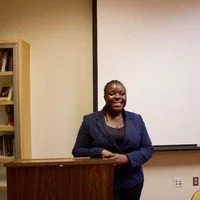
Reclaiming Space and Transcending Time
Dr. Felicia Jamison on vanessa german’s three-day performance series titled Future Histories of Emancipation at the Speed Art Museum.
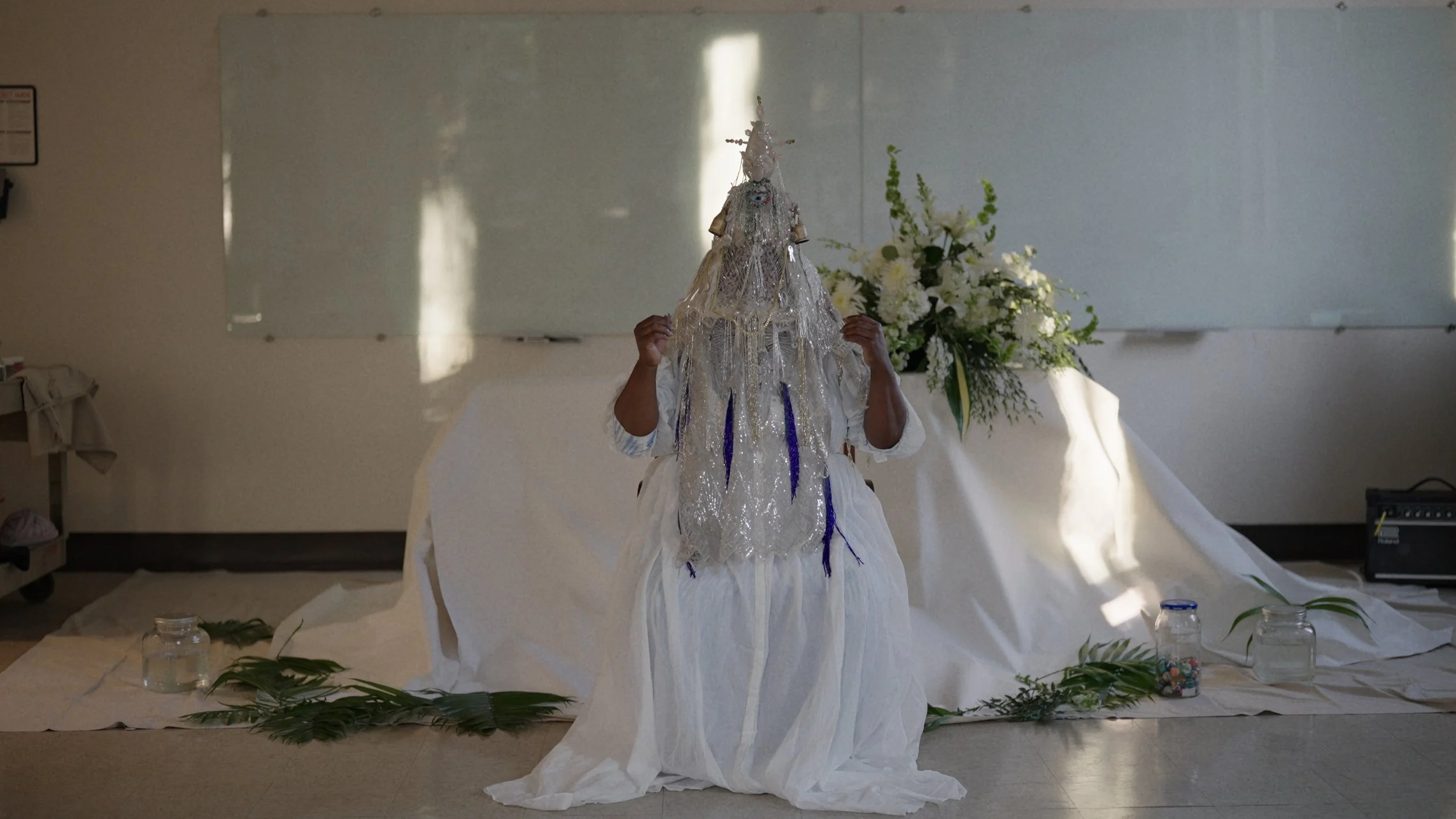
vanessa german performs in a multi-media headrest on the 3rd floor of Gottschalk Hall. Photo by Katya Gimro.
“I have crafted a counter-narrative liberated from the judgment and classification that subjected young Black women to surveillance, arrest, punishment, and confinement, and offer an account that attends to beautiful experiments – to make living art – undertaken by those often described as promiscuous, reckless, wild, and wayward.”
From October 24th - 26th, 2025, vanessa german’s “Future Histories of Emancipation” blended dance, violin, and poetry in a series of three performances. As part of the Sam Gilliam Visiting Artist Program at the Speed Art Museum, each act prompted audience members to participate in reclaiming the performance space, across a college classroom, historic theater stage, and museum hall. german’s approach mirrors scholar Saidiya Hartman’s practice of using archival records to honor historically marginalized people.
The first performance took place in the third-floor classroom of Gottschalk Hall, one of the oldest buildings at the University of Louisville. The building opened in 1896 and served as the Colored Girls’ Dormitory of the Louisville Industrial School of Reform, an institution that imprisoned “wayward” children until 1923. Those who walk the campus are often unfamiliar with this history, a lack of awareness that german’s performance aimed to remedy.
During the performance, I had the pleasure of narrating the building’s history. The classroom, typically used to teach history courses, smelled of paint and was dimly lit. Some audience members leaned against the back walls and a few sat at desks, but all were tentatively watching. As I spoke, german, four Black women dancers, and Grammy-nominated violinist Veronica Camille Ratliff (VCR) interpreted an escape attempt in July of 1913 where six girls tied bed sheets together and climbed out of the third floor window. The dancers shuddered and convulsed, breathing life into the harrowing experience of the young Black girls that descended from the third-floor in the pursuit of new freedoms. Audience members eagerly watched, some nodding occasionally and others humming in approval as they witnessed the artists attempting to liberate the girls in real time.
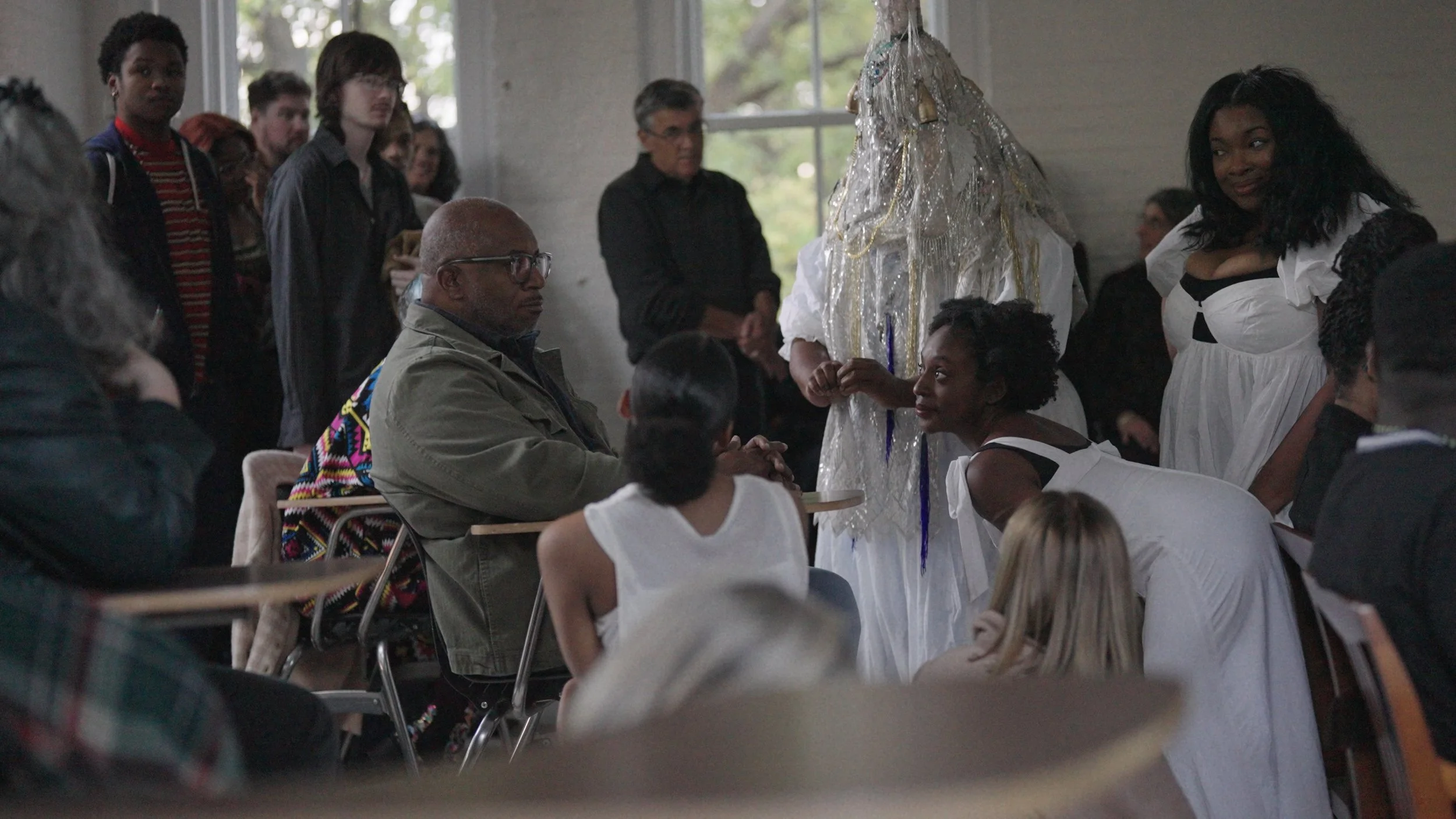
vanessa german and dancers (Brittany Renee, Michaiah Peebles, Alexus Heard, and Taleah Gibson) question a participant on their freedom. Photo by Katya Gimro.
The next performance occurred at the Belknap Playhouse Theater, a late-19th-century chapel now used by the University of Louisville’s African American Theater Program. The University’s African American Theatre Program (AATP) is the first graduate program of its kind in the nation, that concentrates on the significant contributions of African Americans to the field. Attendees were directed to come on stage upon entering the theater. Audience members sat in a circle of chairs. In the center was a blank canvas, a cart with paints of various colors, and a quilt.
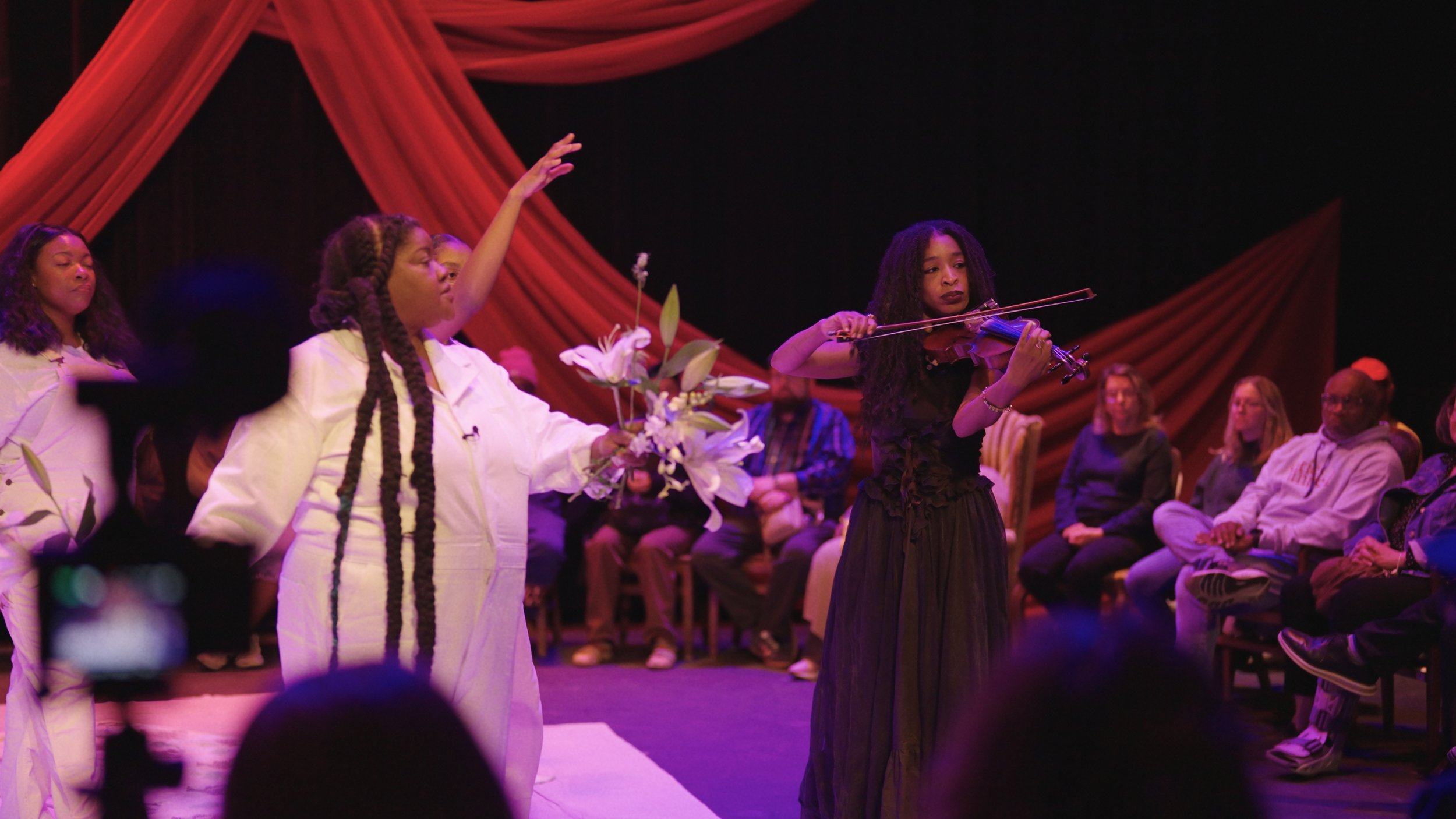
vanessa german, VCR, and dancers (Alexus Heard and Michaiah Peebles) perform at the Playhouse Theater. Photo by Katya Gimro.
Throughout the evening, individual volunteers tentatively entered the circle, verbalizing their feelings of hopelessness, fear, and unworthiness. Each person then selected a color and painted the remedies to their problems. Reds, whites, and purples were emphatically brushed on the canvas. german, VCR, and the dancers cultivated a judgment-free and cathartic environment using music and the movements of their bodies.
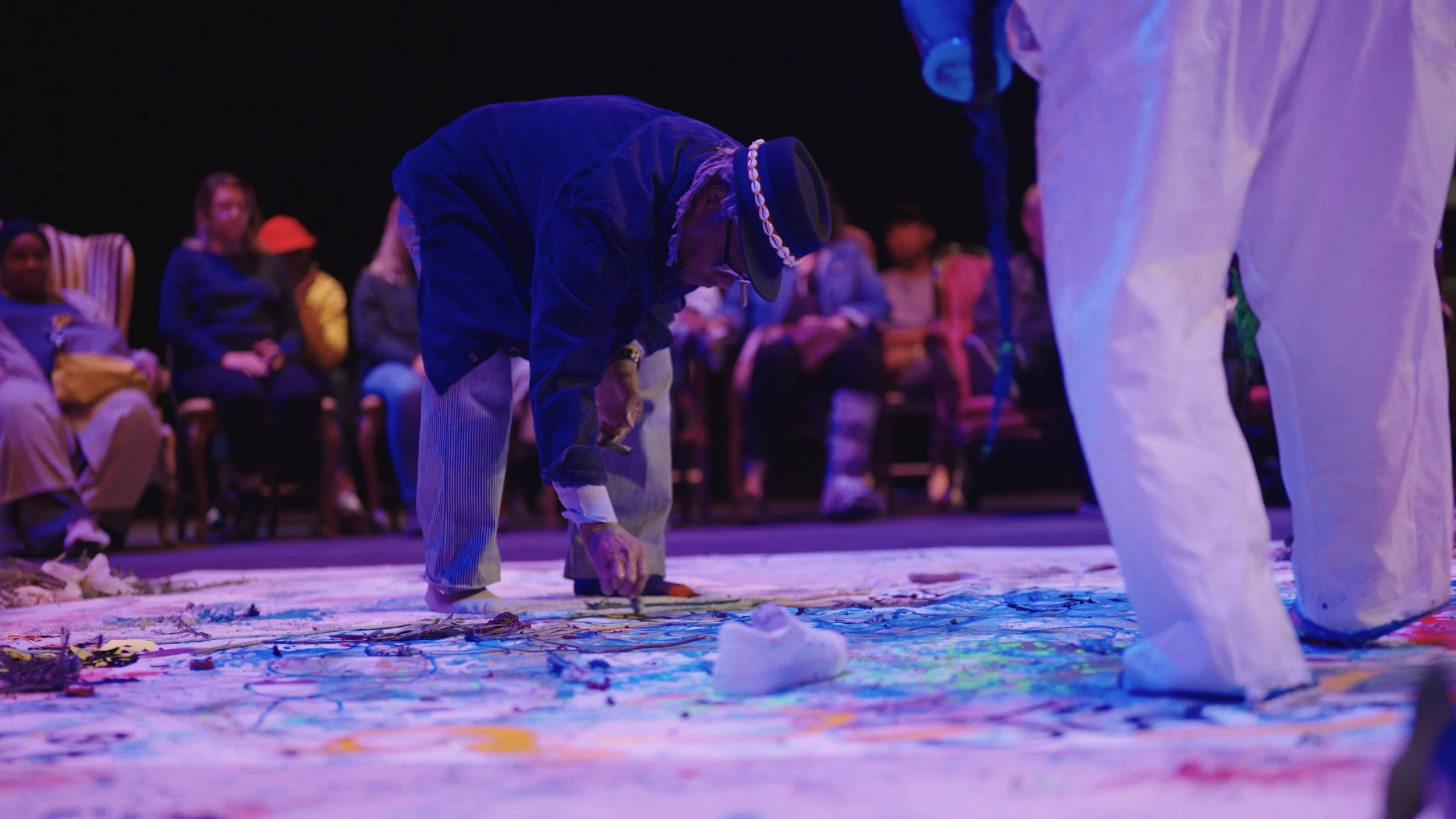
Edward “Nardie” White, a member from the audience, paints on a canvas. Photo by Katya Gimro.
On Sunday afternoon, we slowly filed into the Speed Art Museum to witness the final performance. Chairs were arranged in a circle, with two placed alone in the center. german and a pair of dancers moved gracefully around the room. VCR played a calming melody on her violin, further welcoming us into the space. german then asked individuals to sit in a chair opposite her. One by one, people sat and shared their personal, and at times painful, stories in a room full of strangers; together, these interactions culminated in a piece that felt poetic.
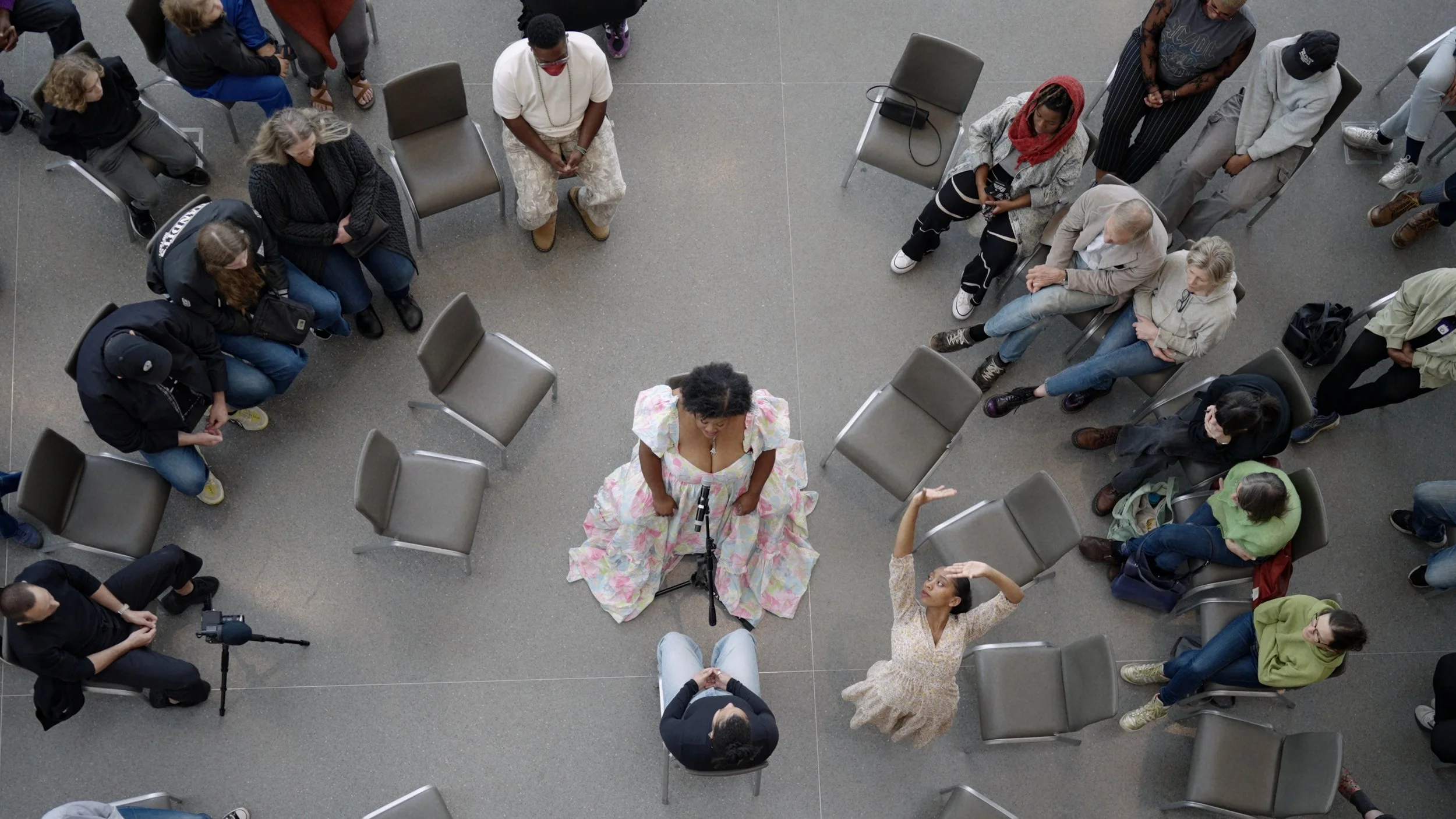
vanessa german speaks with a collaborator at the Speed Art Museum. Photo by Katya Gimro.
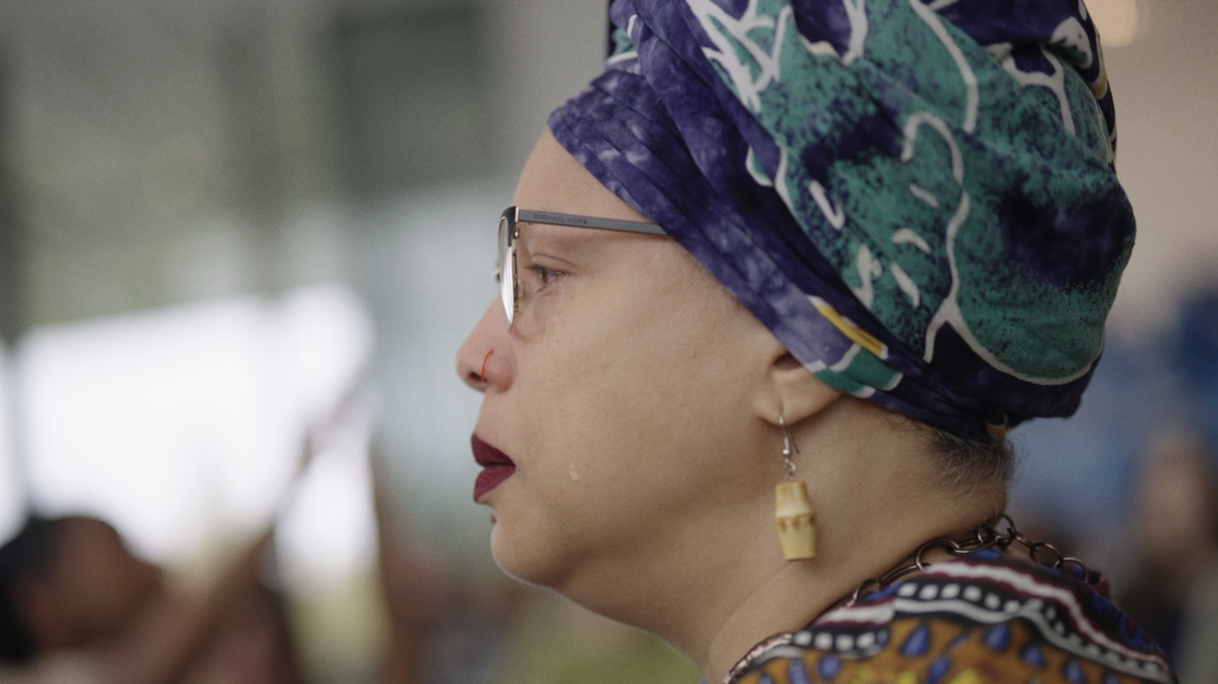
A participant becomes emotional conversing with vanessa german at the Speed Art Museum. Photo by Katya Gimro.
I expected a typical art show, where we watched performances and perhaps discussed the art afterward. Instead, everyone became part of the art-making process. It became a space where early 20th-century Black girls could laugh and dance without fear or a stage where people may paint away their doubts and anxieties.
The physical artwork created during the performances will be displayed at the Speed Art Museum in the spring of 2026.
The artist’s name appears in lowercase throughout this text in accordance with her preference.