

TOPOGRAPHY OF SOUND
The ambient music of Kentucky.
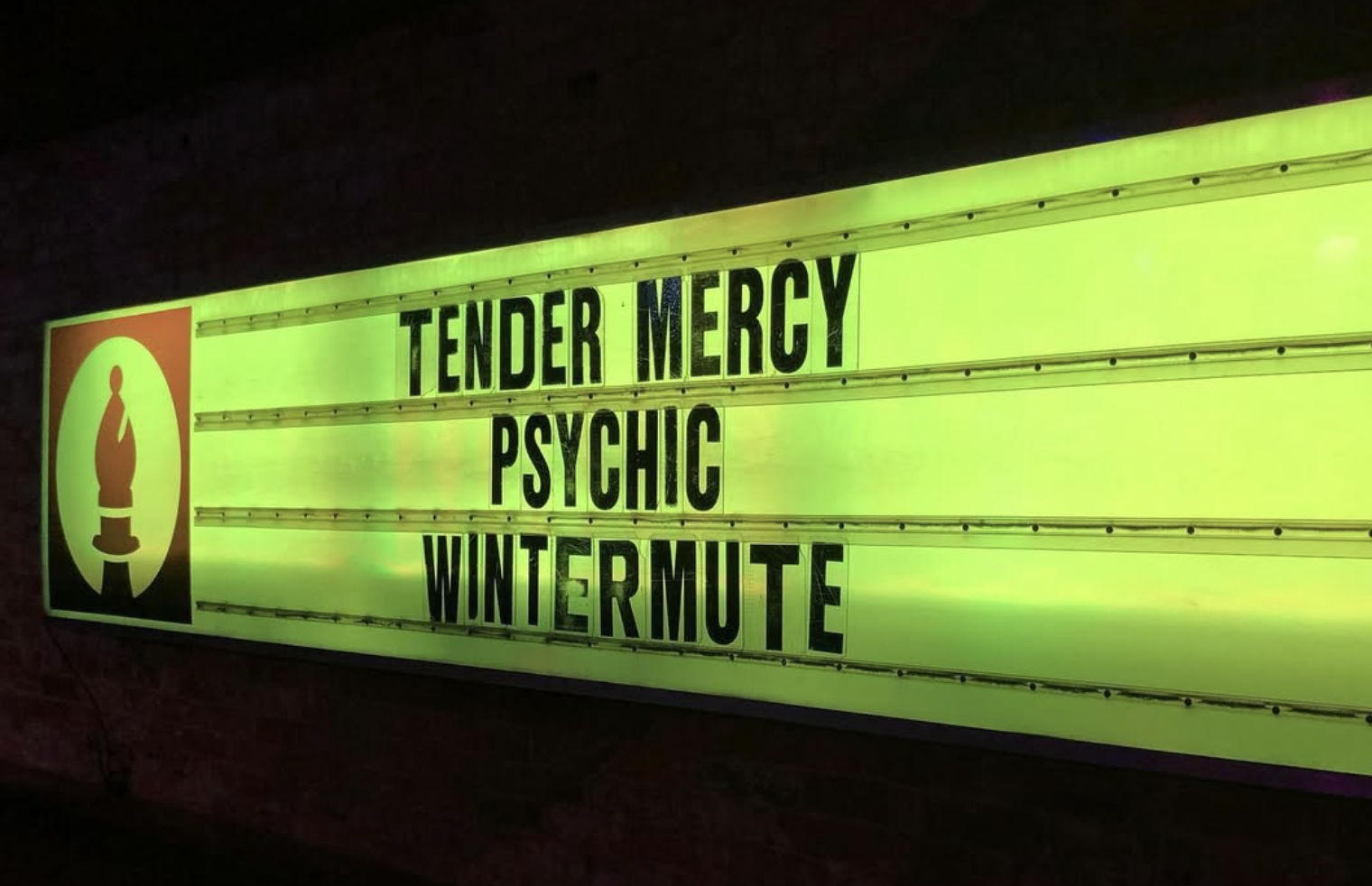
Tender Mercy playing at the Bishop Bar in Bloomington, Indiana. Photo via Tender Mercy/Mark Kramer on Instagram.
Ambient music may not be the first thing that comes to mind when thinking of Kentucky; however, I'd argue the close proximity to vibrant ecosystems, close-knit communities, and a somewhat ingrained restlessness positions our musicians to explore the unique interplay of music and place. Ambient music is fueled by landscapes and those that reside within them. This influential symbiotic exchange between makers and their homes has been present in the music since the genre’s origins.
French composer Erik Satie understood how music affected a space. Often, he would find himself attempting to enjoy a quiet meal out, only to be acoustically assaulted by a raucous jazz band. This disconnect between music and place irritated him greatly. This frequent situational dissonance led Satie to the concept of musique d’ameublement (furniture music). Pieces like Chez un "Bistrot" (At a Bistro)were written to soundtrack a specific setting. Each score was composed to enhance the mood of a space, and play in tandem with the naturally occurring sounds of an occasion. In essence, to create ambiance. Satie’s creative solution to overstimulating dining experiences is the precursor of what would become known as ambient music.

Portrait of Erik Satie. Photo via Wikimedia Commons.
Ambient music, a term coined by visual artist and musician Brian Eno, is often used as a catch-all for various genres that make use of expansive sounds, repetition, loose structures, and gradually shifting tones. Ambient compositions are more likely to explore varied emotional states and create atmosphere, rather than craft a catchy hook. Much of this music is solely instrumental without vocals. Unbeholden to the prescriptive narrative of lyric-driven music, ambient pieces allow the listener’s mind to wander about the created space, resulting in a listening experience that stimulates the mind’s eye, invoking a whole world’s worth of imagery.

Showing of the album 77 million paintings by Brian Eno in St. Petersburg at the festival Yota Space. Photo via Wikimedia Commons.
Layers of sustained chords reflect the ascent of a mountain range. A slow building tone crests like the sun peering over the horizon. Reverb-soaked sounds carve out caverns. As long as humans have been making music, instruments and certain qualities of sound have had imagery attached to them. Ambient music takes advantage of these associations, and creates new ones. Ultimately though, the interpretation is left to the listener, giving us license to paint our own mental images. This effort to provoke visualization is an essential component of the ambient experience—a sentiment shared by many of my peers in Kentucky’s ambient music scene who I spoke with for this piece.
Spanning our conversations were references to painting and sculpting, with words like color, shape, and texture appearing frequently to describe ambient music. In Louisville-based musician Mike Seymour’s piece “halocline (version)”, one can imagine a sculptor’s hand as Seymour fluidly manipulates the sounds as if they were malleable wet clay. At moments, they are molded into elegant forms, though most prominently featured are ominous shapes that feel akin to the grotesque visage of a gargoyle. This oscillation between moods adds an engaging emotional complexity. The track “ [] “ from Seymour’s album [1] could feel like diving underwater–the panning sounds behaving like rays of light piercing the water’s surface and the low wavering chords in the background like the murkier, darker depths below. Again, we see the duality in Seymour’s work that lends itself to aesthetic and emotional depth. With sound alone, Seymour crafts compelling narratives with vivid cinematic visuals.
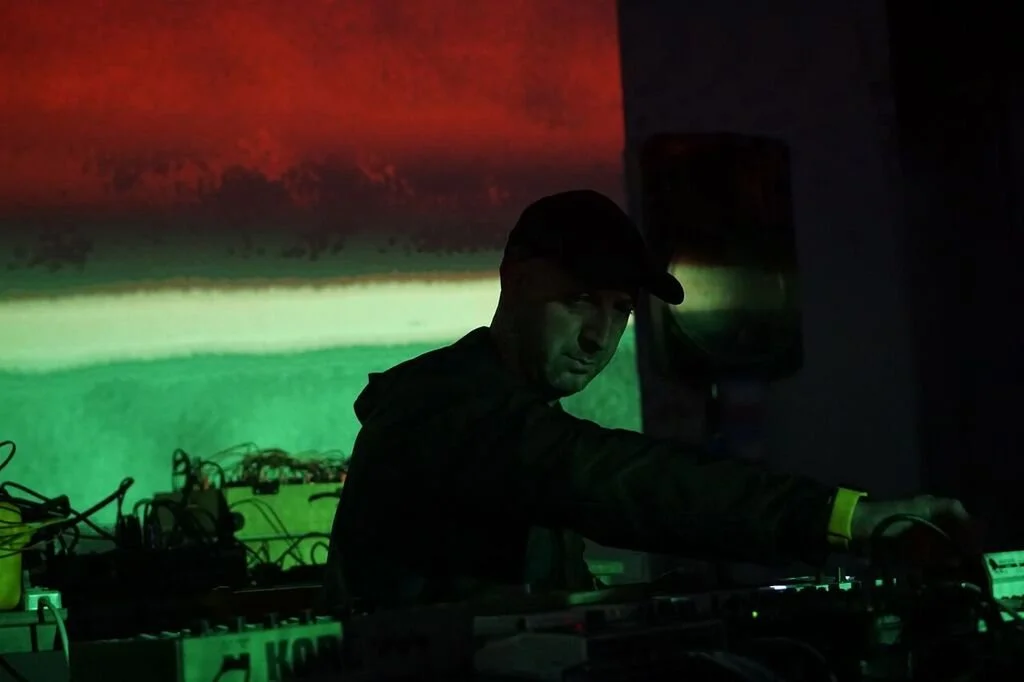
Louisville-based ambient artist Mike Seymour. Photo via Mike Seymour on Bandcamp.
It's clear that ambient music has the capacity to inspire visual stimuli, but sometimes the reverse is also true. Upon first viewing Letitia Quesenberry’s Hyperspace series, sound artist Aaron Rosenblum recalls hearing sounds that weren't there coming from the work. I had a similar reaction to the Hyperspace light boxes–the changing colors convincing me that I was hearing notes melt into one another. The slowly brightening lights seemed to build like a pleasant crescendo, the waxing and waning glow like the curves of a sine wave. You see it and know that there is sound there.

Work from Letitia Quesenberry’s series Hyperspace (2014-ongoing). Photo via Letitia Quesenberry.
Quesenberry and Rosenblum’s collaboration, A Brief Elaboration of a Tube, is the realization of Aaron’s first impressions of Letitia’s work in the form of an immersive multimedia installation. In this large-scale version of Quesenberry’s light boxes, the viewer stares down a tunnel of vibrant, shifting colored lights as a droning tone emanates from the piece. Under this rumble is a layer of textured chatter and a pulse much like fading bird calls. The lights and audio flow in partnered choreography, adding multimedia depth to this visual experience. Each auditory element is a field recording from around Kentuckiana—there’s the hum of a chemical plant in Louisville’s West End, the thrum of trains from Old Louisville, and the gentle vocalization of birds from Southern Indiana. These recordings all come together in a soundtrack that’s quite familiar to Louisvillians.
Though ambient sound can be used to craft imagined environments, many composers choose to mirror existing ones. No genre exemplifies this more than kankyō ongaku (environmental music). Birthed from Japan during the 1980s economic boom, environmental music blends minimal electroacoustic music with recorded sounds from nature. The works of musicians such as Takashi Kokubo and Hiroshi Yoshimura are colored with regional bird songs, crashing tides, traditional Japanese instruments, and modern sounds like the buzz of hypermetropolitan Tokyo. It’s a sonic reflection of a specific time and place, perfectly encapsulating the feeling of that moment.
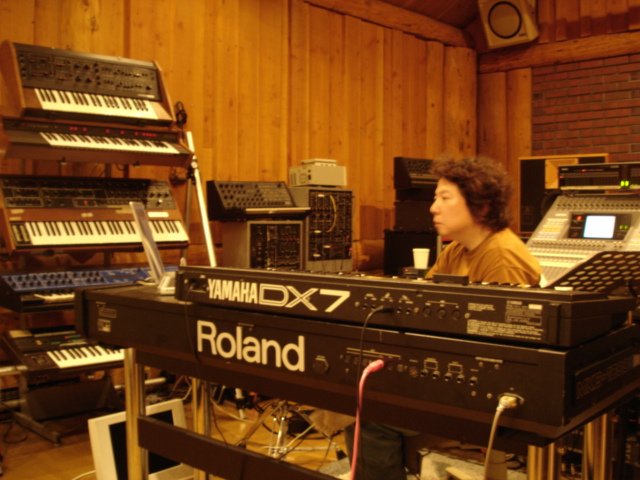
Takashi Kokubo in his studio. Photo via The Vinyl Factory.
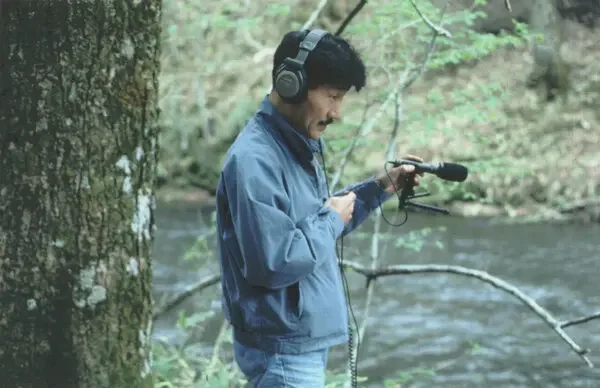
Hiroshi Yoshimura recording audio. Photo by Nuvola Yoko Yoshimura via Bandcamp.
On the other side of the world, Kentucky artists have their own version of environmental music. In my work as Psychic Skin, I often find myself emulating the spaces where I grew up. The track “Earth & Air” is a recreation of a specific memory from a Red River Gorge trip. The piece opens with a field recording from a cabin porch, the creaks of floorboards coupled with the faint caws of crows in the distance. You feel the dampness as the ting of bells come in like the last drops of the prior night’s rain. The murmur of my cabinmates is almost imperceptible in the background when repeating clarinet loops emerge, illustrating the dissipating morning fog. The slow decay of this instrument mimics the gradual reveal of the once hidden terrain. Soon, melodica drones join in, mirroring the newly illuminated scenery. This mix of crafted music and field recordings depict the Gorge as it wakes from yet another night’s slumber. The mysteries of Kentucky’s wilderness continue to be a muse for much of what I do.

Psychic Skin (Joyce Barbour). Photo via Psychic Skin on Bandcamp.
Nods to the natural environment are a running theme with many other local musicians such as Mark Kramer of Tender Mercy, whose work speaks of both Kentucky’s environmental landscapes as well as the urban ones. When discussing the region’s influence on his music, he commented on the unique quietness of the state’s natural spaces. He reminisced about his childhood home and the nearby highway that, at 3 a.m., felt like a sound piece with long silences finally broken by dragging car innards or a semi horn’s bellow. This experience comes through in the work as it evokes a loneliness one might feel on the open road during the witching hour. In his music, Kramer utilizes effects-laden guitar to craft minimal ballads that navigate expansive soundscapes. The plucks of his guitar strings stretch out forever accompanied by his unhurried voice, eventually wrapping the listener in a blanket of sound. These pieces are like audible wind at night, conjuring visions of dark spaces. As Tender Mercy, Kramer embodies the quiet that has left such a mark on him.
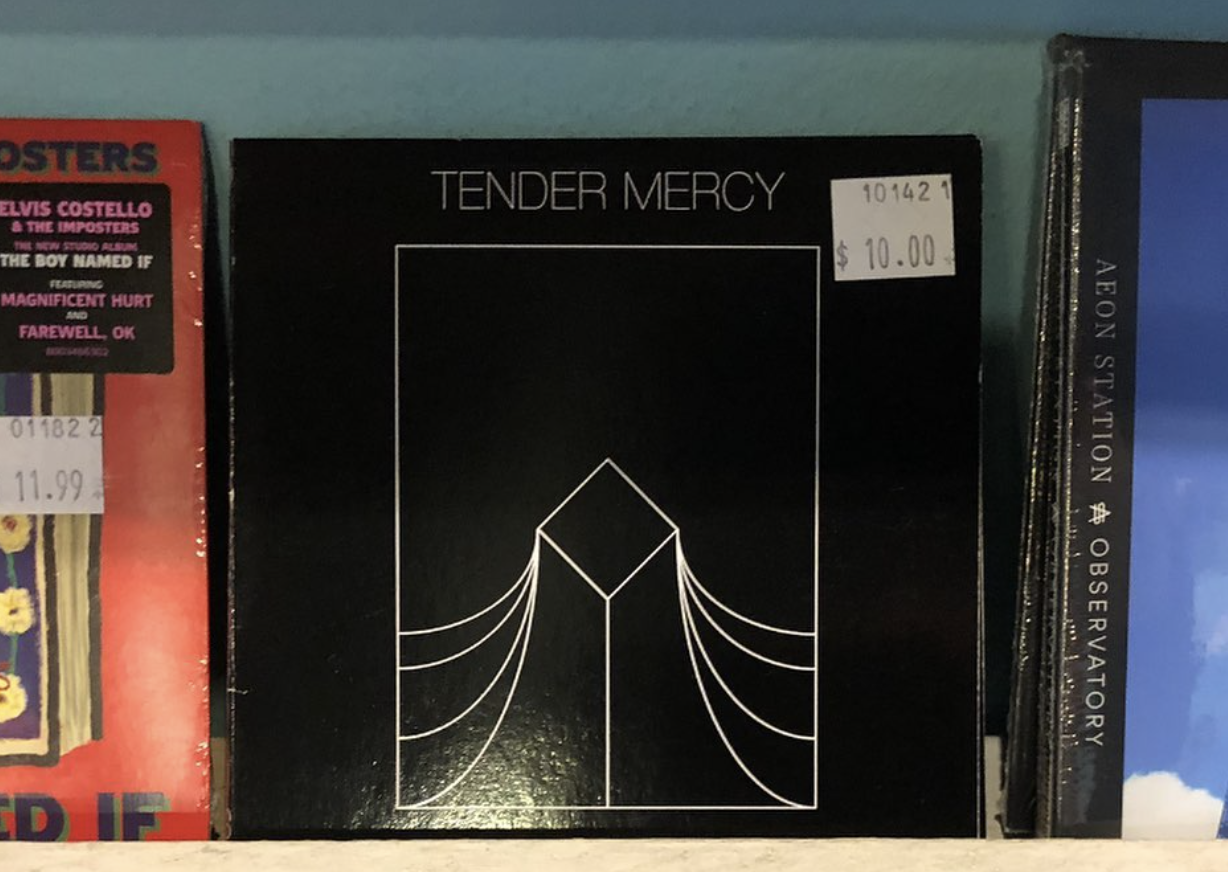
Tender Mercy’s limited edition compact disc of his album, The Veil Falls. Photo via Tender Mercy/Mark Kramer on Instagram.
Beyond their physical surroundings, the people of Kentucky also act as inspiration for these musicians. Some spoke of Louisville’s diverse music community, with Connor Bell of Shedding specifically citing the city’s punk scene. Bell admires the scene’s ethos of pushing against music tradition and embracing experimentation without compromise. For ambient music, which is often amorphous, this feels correct. The socio-political climate of Kentucky, and the US more broadly, informs the work of Jason Lamoreaux of the Corrupting Sea. With his track “Sadness and Loathing in a god filled Country”, Lamoreaux gives us a piece with an obvious air of despair, but there is also beauty. The instrumentation consists of sparkling chimes, the sluggish strums of a guitar, and the endless resonance of overdubbed cymbals. The song offers a glimpse at an exhausted activist in a moment of rest, bathed in dappled light. Tracks like these are a reminder that the songs of the natural world co-exist with the noise of man.
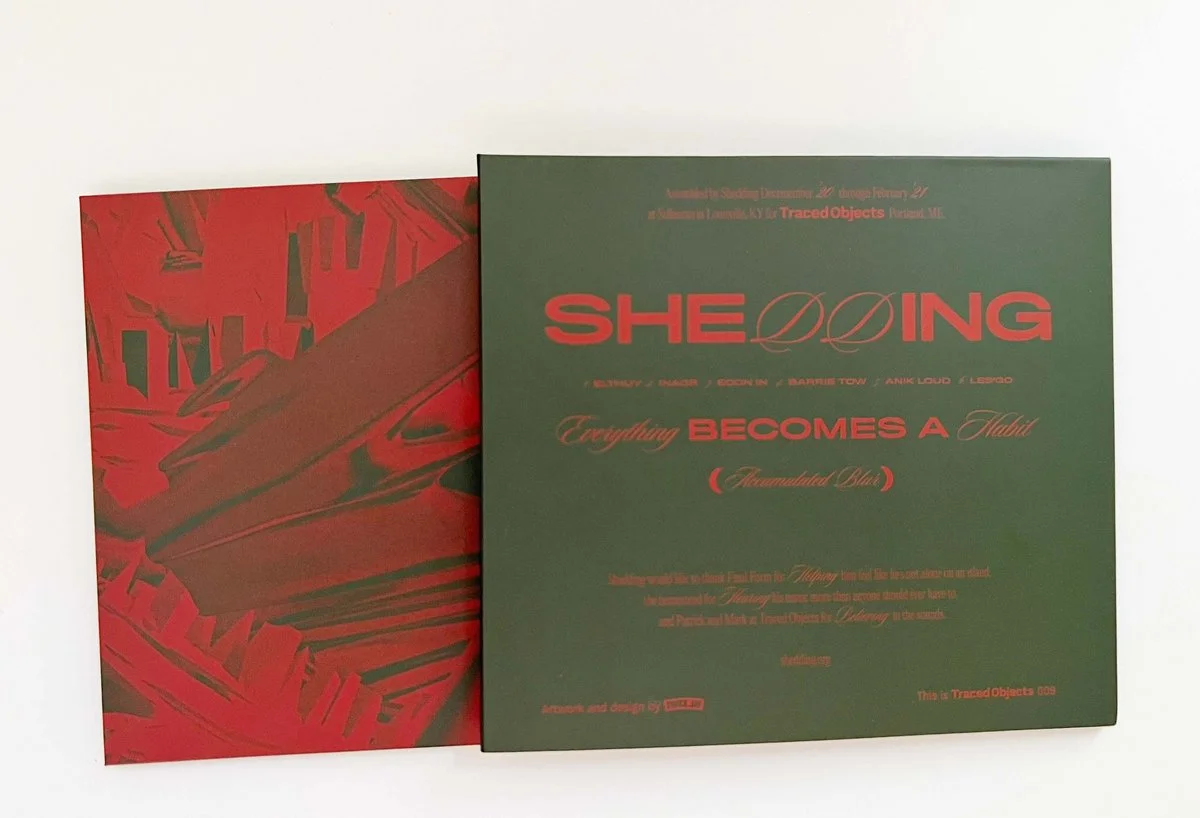
Everything Becomes a Habit (Accumulated Blur) vinyl album by Shedding, produced by Traced Objects. Photo via Traced Objects on Bandcamp.

Somnambulate limited edition cassette on Katuktu Collective by the Corrupting Sea. Photo via the Corrupting Sea on Bandcamp.
For many Kentuckians, our childhoods were spent in rural areas or small towns. In these areas with tiny populations, you often found yourself surrounded by acre upon acre of fields, woods, and rolling knobs. You were more likely to be in the company of trees than crowds of people. Here, even in the city, you're never more than a short drive from natural wonders so immersive you can almost lose yourself. This kind of place instills a spirit of exploration in you. Right outside your door could be a creek bed that leads to a mossy cave entrance. Maybe out your window lies a labyrinth of corn. Maybe your youth was spent investigating abandoned rickhouses. The same pull that draws you to a natural arch is what brings you to ambient music. It comes as no surprise that this music has flourished here in the Ohio Valley. It is the music of deeply thoughtful people, whose minds and bodies have roamed countless hours. Who had the space to run free. The space to discover. The space to reflect. Ambient music is yet another world to traverse–and those with this Kentucky-born wanderlust can’t turn away.
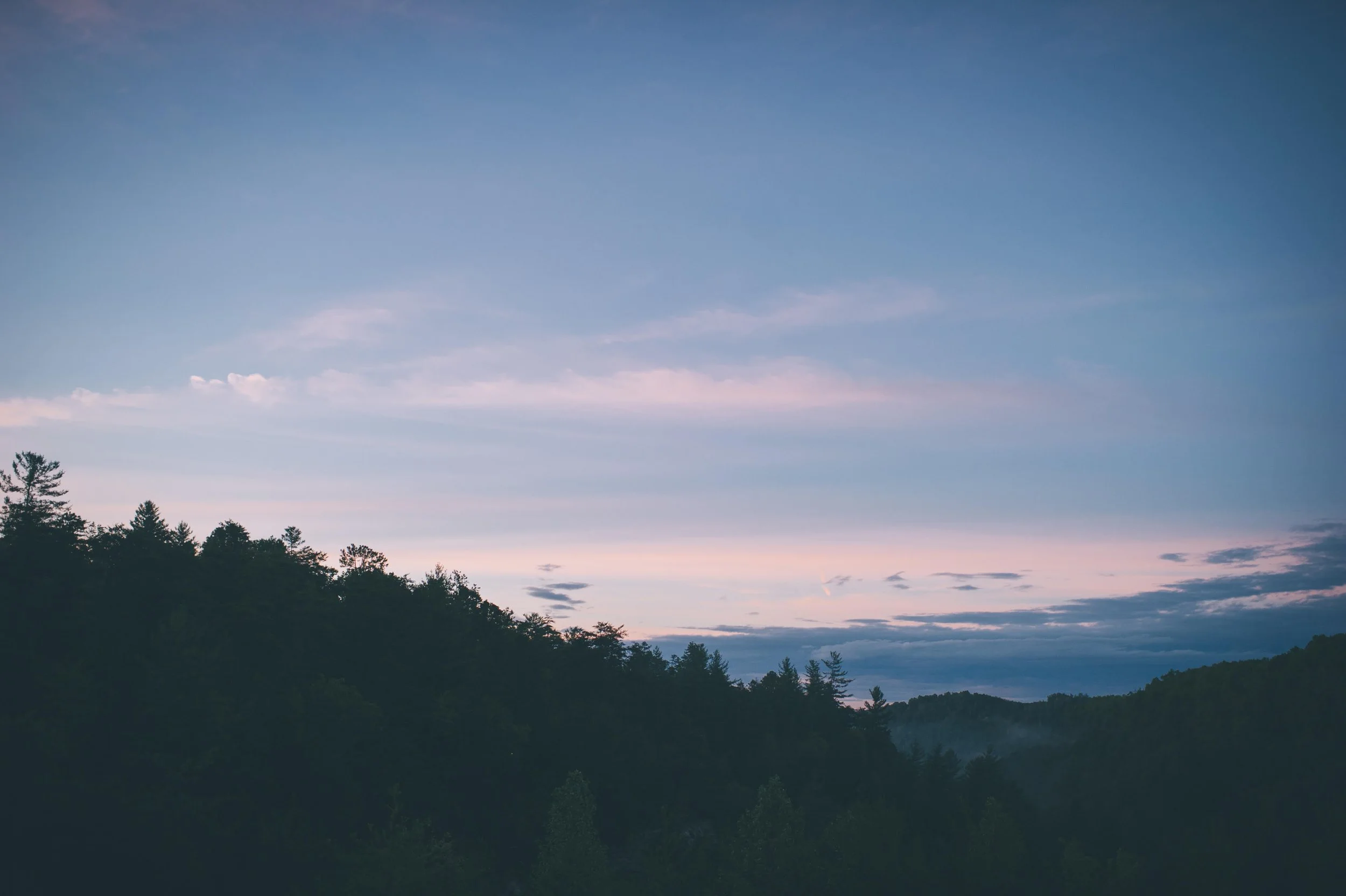
Photo by Sarah Katherine Davis, via Joyce Barbour.