

ABEX: THE WOMEN
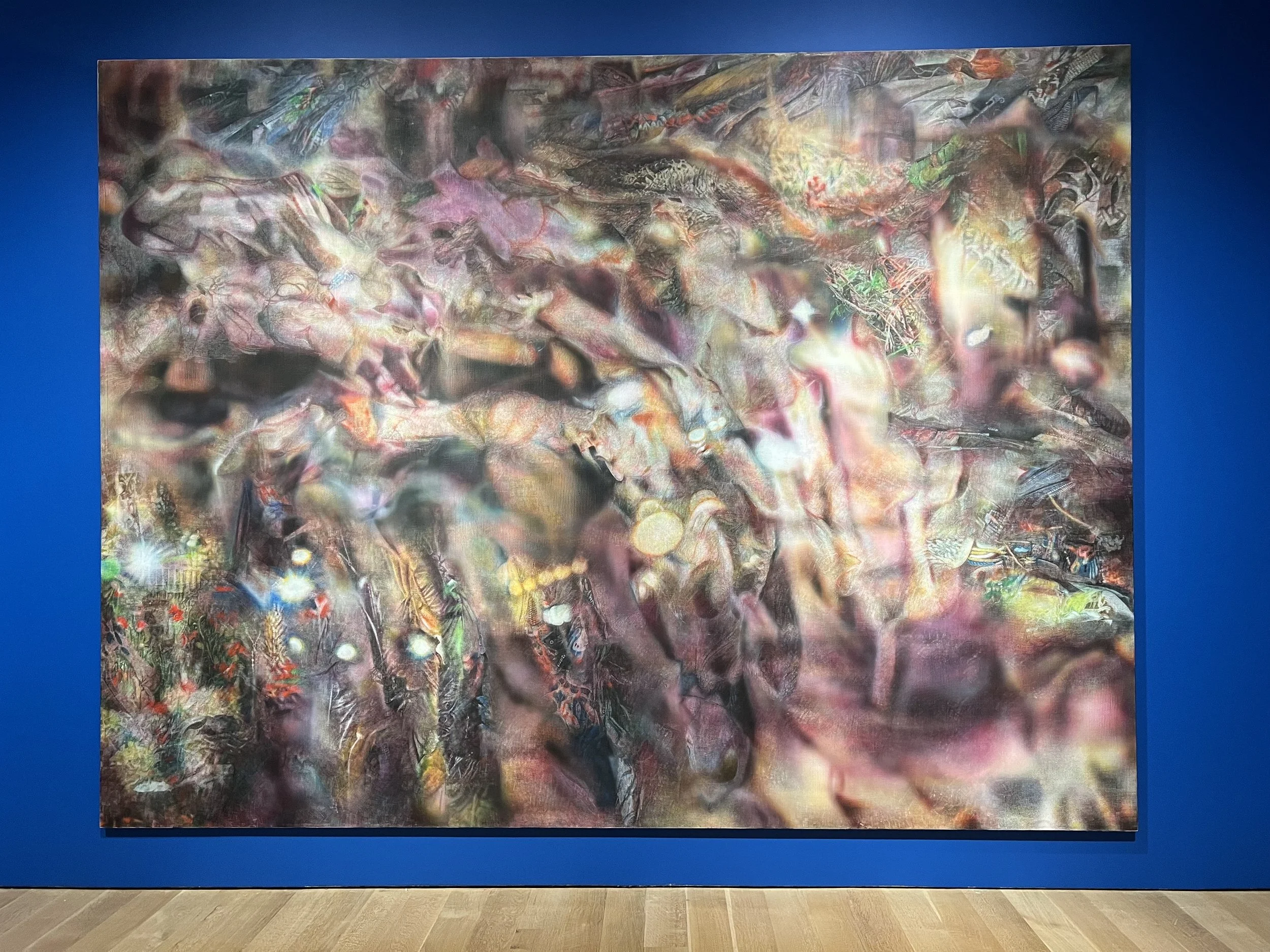
Bai Yiyi, Crowds Drift With The Wind, Gradually Dissipating Like A Whisper (2024). Acrylic on canvas.
Here’s the deal. Abstract Expressionists: The Women was exactly what I expected it to be. It is a show of truly exemplary paintings by artists with two things in common – they were part of the mid-century American painting movement known as Abstract Expressionism; and they were women. There have been countless shows on the movement – so essential to the canon of art history that it is shortened to AbEx – featuring works by Jackson Pollock, Willem de Kooning, Mark Rothko, Barnett Newman, Cy Twombly, and Ad Reinhardt, amongst other men.
While occasionally a piece by Helen Frankenthaler may make an appearance, and more recently Lee Krasner, it is true that our popular understanding of the movement is almost entirely defined by artworks by men. Walking through the exhibition, I was reminded of Justice Ruth Bader Ginsburg’s famous quote: “I’m sometimes asked when will there be enough [women on the Supreme Court]. And I say when there are nine, people are shocked. But there’d been nine men, and nobody’s ever raised a question about that.”
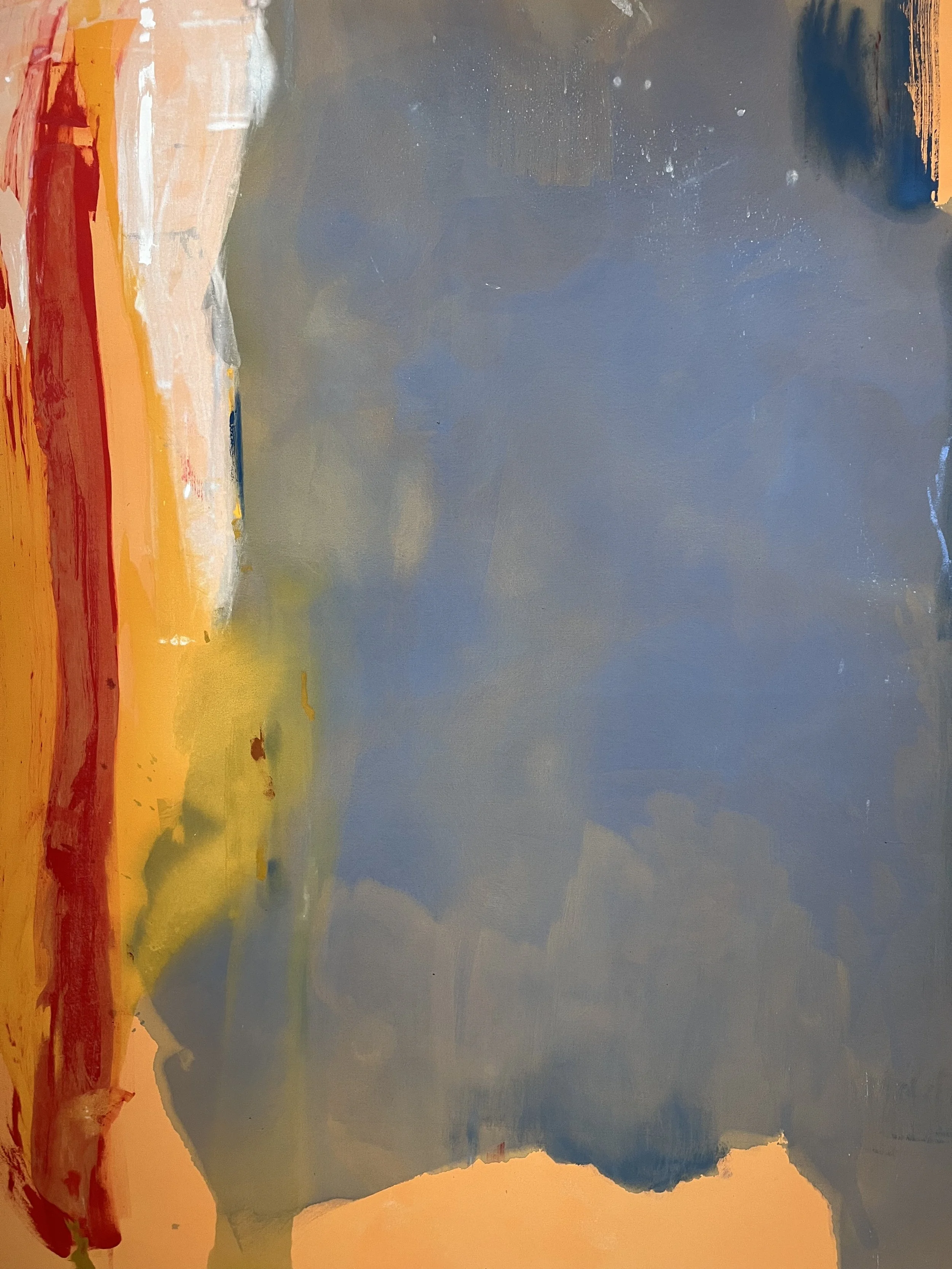
Helen Frankenthaler, Bending Blue (1977). Acrylic on unsized, unprimed canvas.
However, to present an exhibition as “groundbreaking” based solely on the fact that it includes women feels as shallow as the cast of Secret Lives of Mormon Wives’ claim that #MomTok uplifts and empowers women. It would be naive of me, though, to expect one single museum show to correct decades of canonical discrimination. I certainly did not walk into the Speed Art Museum expecting anything of the sort. However, the exhibition felt lacking. Griselda Pollock says it better than I could: “Token women are merely offered for re-introduction into a canon, whose own construction by exclusion on the grounds of the sex of the artist renders that canon already a gendered and gendering discourse and thus will always position artists who are women as marked, othered, as women artists.” ¹
Even in an exhibition so dedicated to women, it is impossible to divorce the influence that men had on the movement. The catalog of the exhibition connects Mercedes Carles, Perle Fine, Helen Frankenthaler, Yvonne Thomas, and Judith Godwin as participants in Hans Hofmann’s Provincetown art classes and points out the relationships that formed between artists and critics; the most famous being those between Elaine and Willem de Kooning, Lee Krasner and Jackson Pollock, and Helen Frankenthaler and Clement Greenberg.² Why not, then, just include the women in AbEx surveys going forward? As previously stated by (Griselda) Pollock, separating women from men functions less as an equalizer and more as an isolator, reinforcing their status as “other” rather than part of the story.
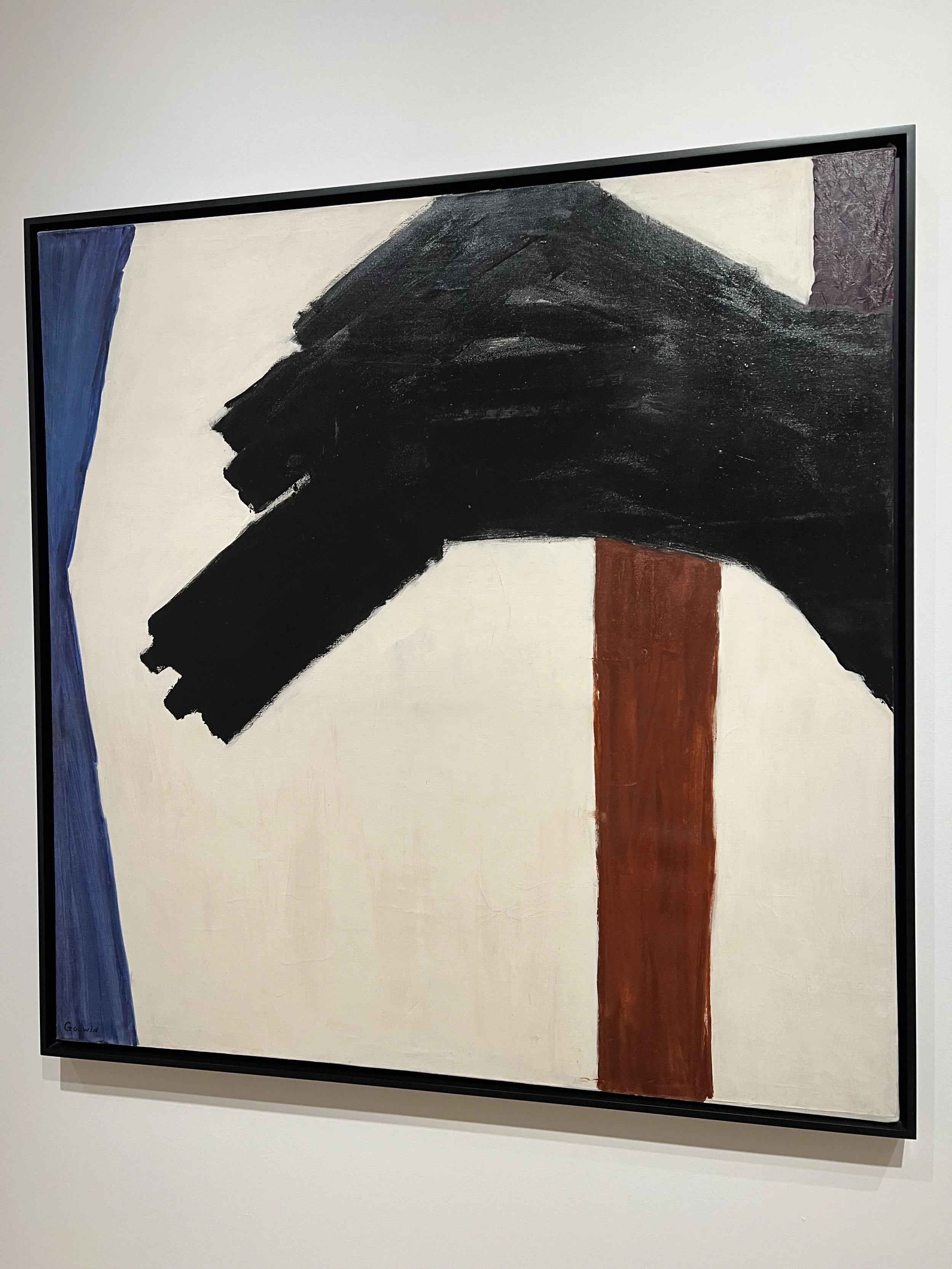
Judith Godwin, Black Pagoda (1958-59). Oil on canvas.
What I really yearned for was an expansion of the canon. There is no doubt that a majority of the artists in the exhibition came from privilege – Frankenthaler and Mitchell notably came from wealth and were raised in cosmopolitan environments with early access to education and culture. While their particular privilege stands out, it can’t be discounted that many of the artists in the exhibition lived near major cultural centers, traveled extensively, and/or were well connected. Many of them reached a critical point in their careers around the same time the FDA approved the first birth control pill, allowing them greater bodily autonomy than the women who came before them. Most were white. But how many other women were barred from “greatness” because they spent much of their adult lives performing unpaid domestic labor? When their children grew up and they had more free time to pursue a career in art, how many were discounted due to their age? How many were barred from an art education due to gender, race, or class? Or because they didn’t live on the East Coast and within easy reach of New York City? How, even, do we define “greatness,” and how has our patriarchal, white supremacist, capitalist society influenced that definition? These were the questions that I wished the exhibition would have asked.
We can look to the generations of quilters of Gee’s Bend as a case study for what could be if the canon were expanded to include a multiplicity of definitions. Living in a small and secluded bend of the Alabama River, the residents of Gee’s Bend are descendants of enslaved Africans whose quilts bear a striking resemblance to modern painting with their flat, geometric blocks of color. Their non-embrace of quilt patterns, eschewed in favor of improvisation and experimentation, echoes the spirit of Abstract Expressionism. Why, then, were these Black women living in the American South excluded from the history books? And if painting is, at its essence, pigment applied to fiber, why are quilts – also fiber – relegated to “craft” instead of “fine art?” (And why is craft such a bad word?)
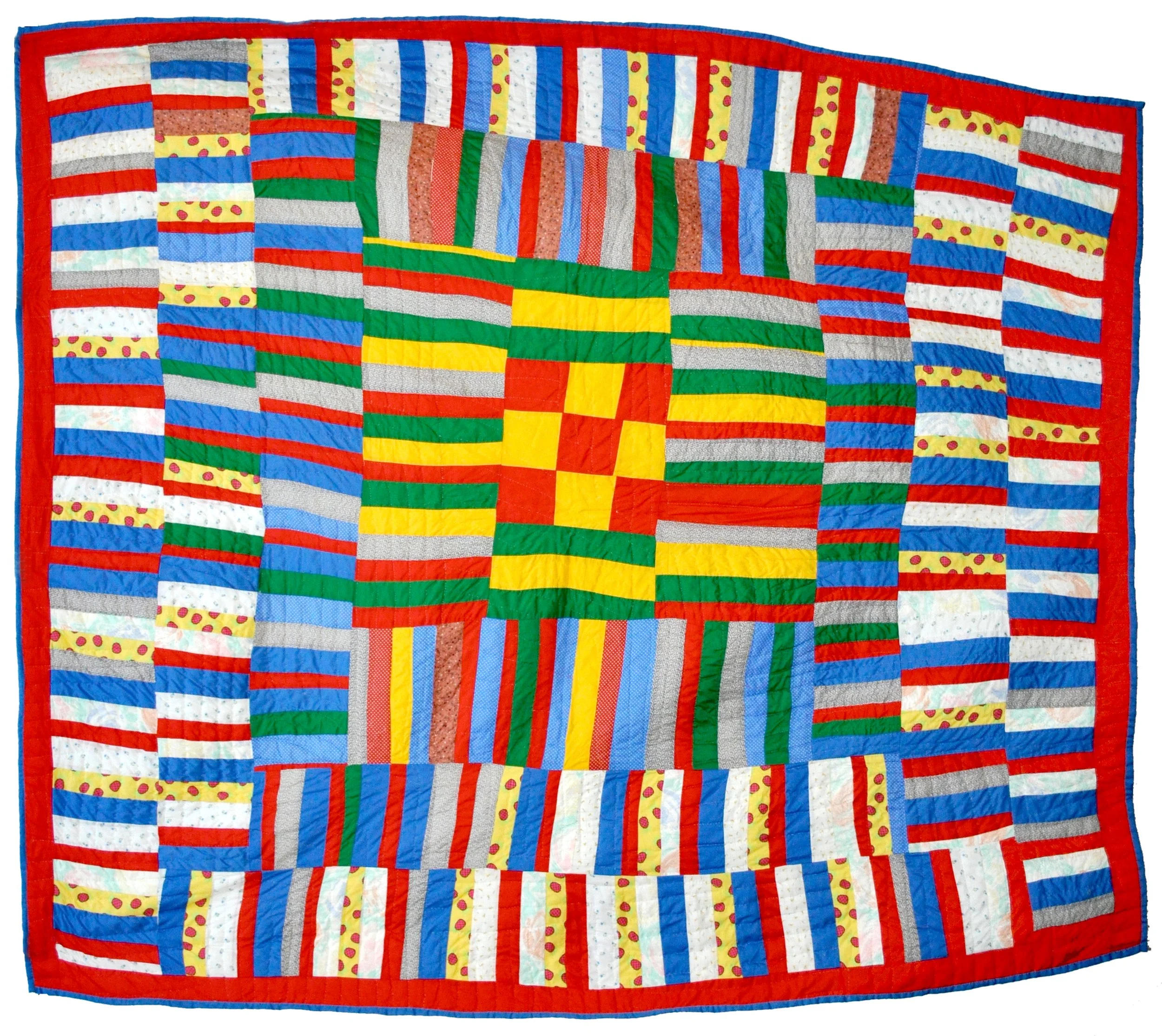
1979 quilt by Lucy Marie (Young) Mingo of Gee’s Bend. Photo via Wikipedia.
These questions are rhetorical. We know why. The canon is still, in 2026, defined by white, patriarchal standards. It is defined by the MFA industrial complex, by valuation based on market prices, by proximity to coastal cities. It does not make room to consider the artists that openly defy the myth of the genius artist, working alone and without outside influence or community. It does not make room for the artists who lack a formal education, whether by choice or otherwise. If you have never been to La Biennale, if you don’t show with a commercial gallery, if you cannot leave your family to attend a residency because you are their sole caretaker, the canon has no room for you.
I get it, I work in a museum. Which is why I understand the responsibility that the museum has. It is the museum catalog that is listed as a primary source in the textbooks, and the encyclopedic museum survey that attracts the most attention from the public. And by no means am I saying that the Speed Art Museum is not taking their responsibility seriously. They are, after all, the few that have shown quilts by artists from Gee’s Bend, and the list of institutions joining those ranks continues to grow. I also greatly appreciated their companion show that featured contemporary abstraction with pieces from their collection.
With that said, it is not enough to dig through the archives and “rediscover” the women who were working within the Abstract Expressionist movement. We need to critically consider the conditions that prevented them from being included in the canon and expand the canon to make room for the artists who don’t fit the mold. In a time when the non-male, non-white, non-hetero body is facing increasingly alarming threats of violence and control, there’s a lot at stake that mere representation is unable to address. After all, we can acknowledge that it probably isn’t a feminist win that the most outwardly fascist administration in our nation’s history has a fair amount of women at the table.
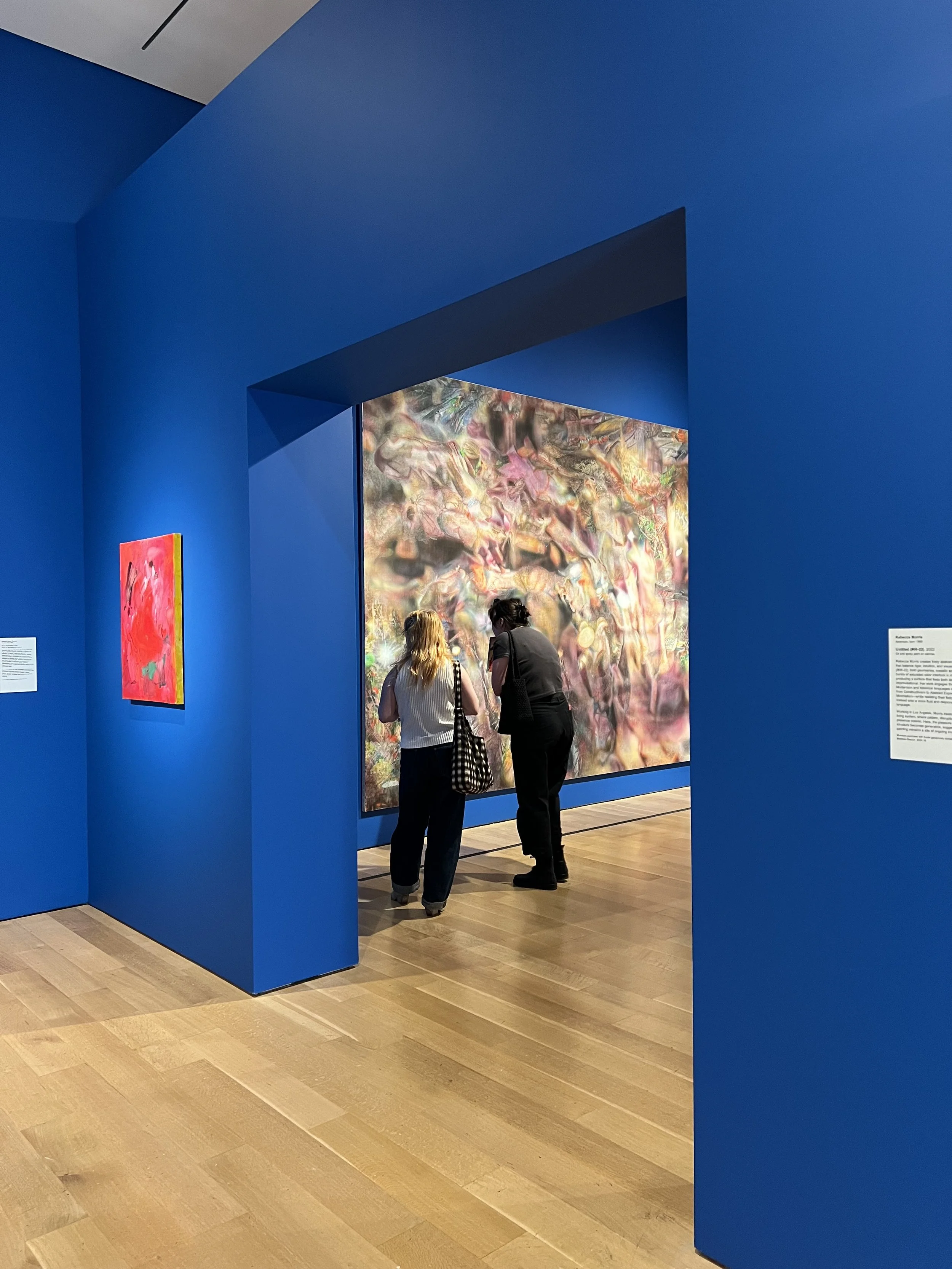
Installation view of Abstract Expressionists: The Women, featuring (L to R): Year of Decision (Kwamé Azure Gomez, 2025) and Crowds Drift With The Wind, Gradually Dissipating Like A Whisper (Bai Yiyi, 2024).
I want to make it clear that I did not hate this show. In fact, I loved it. It felt like every few minutes I would turn to my partner, exclaiming, “This is my favorite… no, this one is!” As a museum professional myself (who has had two internships at the Speed), I know that a very dedicated team worked very hard to secure all the loans, sort out transportation and packing logistics, catalog and condition the work, and ultimately install it all. By no means am I saying this is a “bad show.” But, in the immortal words of Dance Moms’ own Abby Lee Miller: You were good, I’m waiting for you to be great.
¹ Griselda Pollock, Vision and Difference (Routledge, 2003), xx.
² Ellen G. Landau and Joan M. Marter, Abstract Expressionists: The Women. Merrell, 2023. See esp. “Working ‘In A Different Way’: Women and Abstract Expressionism” and “Chronology.”
As of this article’s publication date, Anna Blake is on the Kudzu jelly Board of Directors.