
THE NEW STUFF IS WILD: RECENT PRINTS BY ROBERT BEATTY
Recent Prints on view at Institute 193 in Lexington, KY.
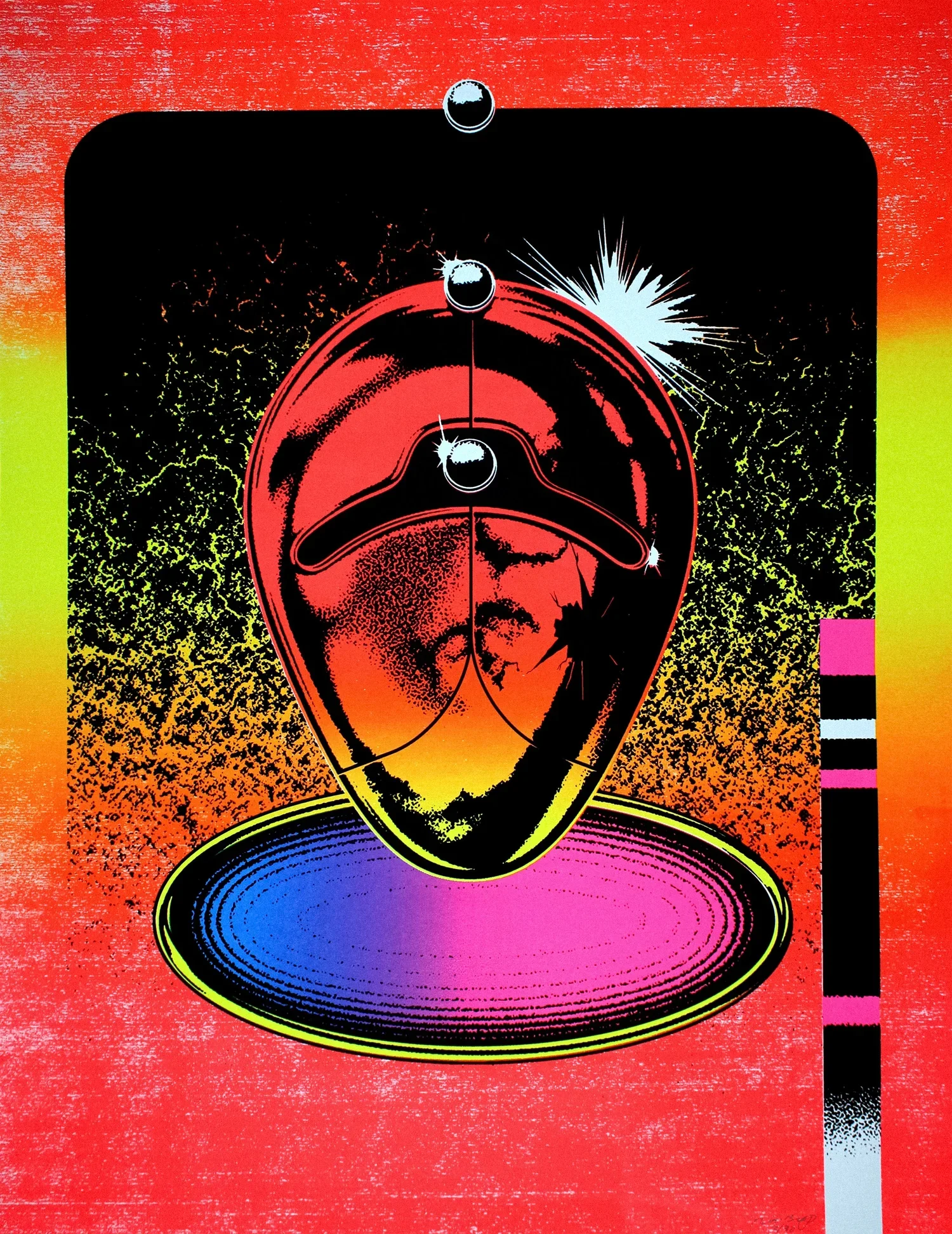
Robert Beatty, Sentinel Diode, 2025, silkscreen, 18 ¾ x 24 ¼ inches, edition of 30. Photo via Institute 193.
The latest work from Robert Beatty is on display at Institute 193. On the surface, Beatty’s work at Institute 193 is a no-frills affair, simply the most recent work from a prolific artist. Beatty introduces the show—humbly titled Recent Prints—with an explanatory statement giving credit to where he made the work and who helped him make them.
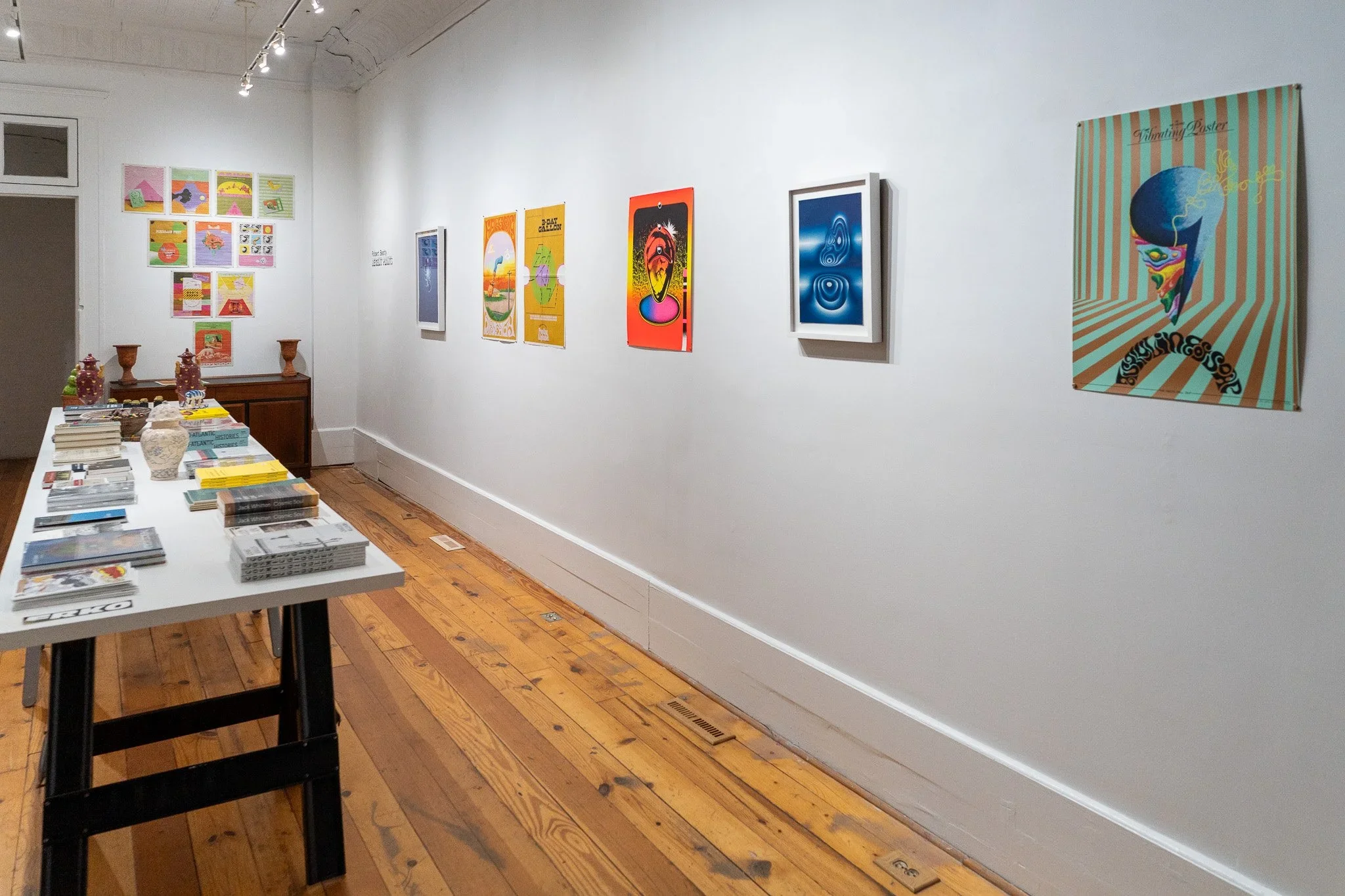
Photo via Institute 193.
That’s it. No pomp. No overstated grand artistic vision. Perhaps that’s because Beatty’s work speaks so loudly on its own and in languages and modes difficult to describe in any text. The new prints inhabit our world, but they feel as if they came from somewhere else.
To put it as plainly as Beatty’s show statement: The new stuff is wild. It’s work that is as much a mood as anything else, that’s inherently interactive with the audience, and that defies most any kind of literal interpretation. Anyone familiar with Beatty knows his work is striking in its technique, content, and style, and those unfamiliar with this Kentucky artist (best known for being one of the most in-demand album cover artists since the 2010’s) is in for a surreal, incongruous, and compelling experience.
The show is a mix of two silkscreen prints, two cyanotypes, and digital offsets on newsprint (as well as his latest self-published newsprint tabloid, featuring 11 digital offsets).
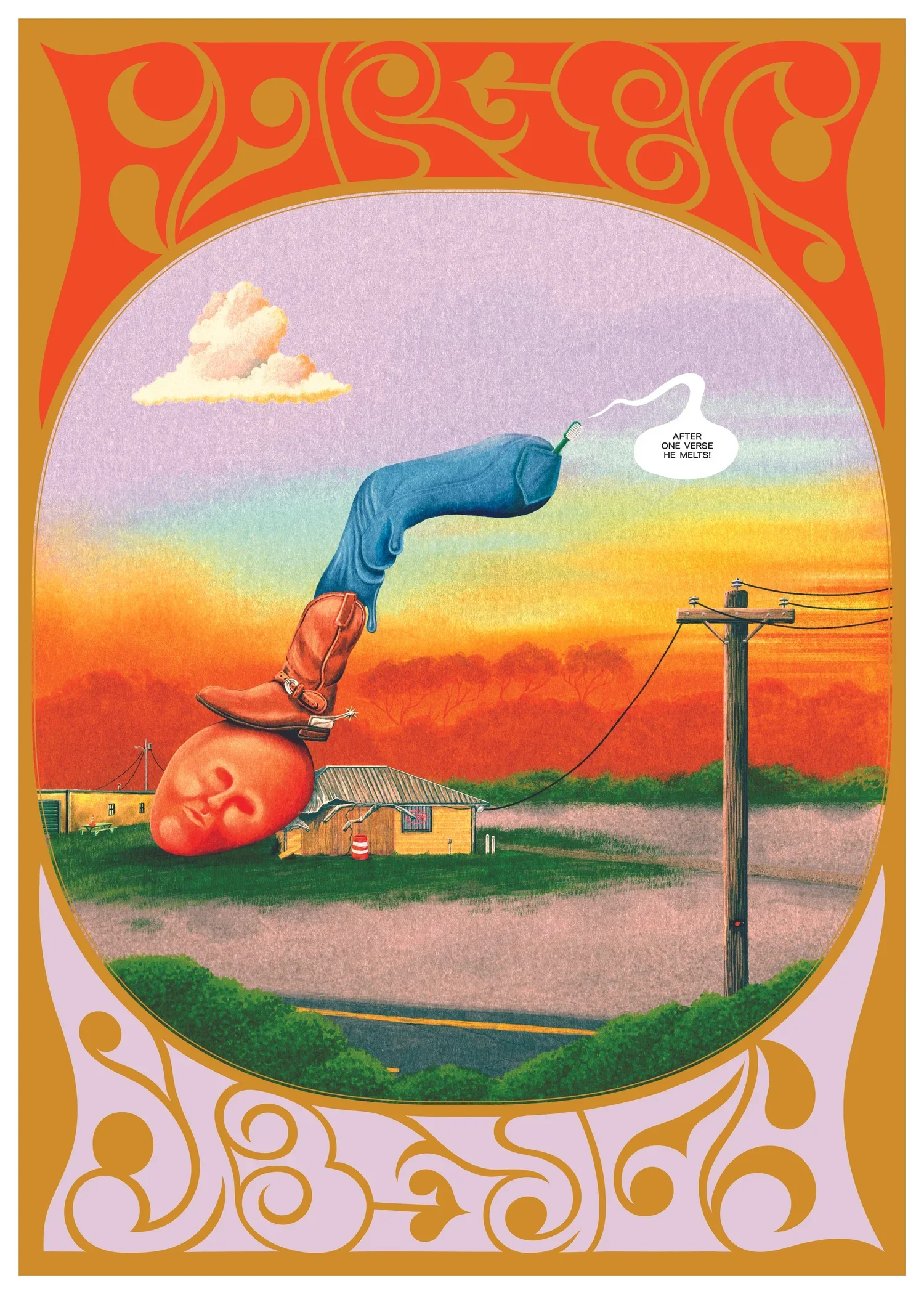
Robert Beatty, 3-Day Gallon, 2026, digital offset on newsprint, 27 ½ x 19 ½ inches. Photo via Institute 193.
Beatty’s new work features psychedelic forms and shapes that harken back to the airbrushed gloss of the 1970’s, and it’s paired with a healthy serving of Americana symbolism and language. Some of the work, especially his pieces on newsprint, are essentially advertisements from an alternate reality. The subject matter is familiar, but the content is twisted enough to render the themes fresh and disarming to any cynic.
3-Day Gallon (2026) is a perfect example of this mash up. A disembodied leg, clothed with jeans and a cowboy boot complete with spur, sits on an egg-shaped head that is leaning against what seems to be a roadside honky-tonk. A toothbrush peeks from the back pocket of the jeans and states (via speech bubble), “After One Verse He Melts!”
Pick your favorite surrealist, and you’ll see some of their work in this print’s layered image. This scene is framed by playful distorted text that a Dead Head would struggle to read. The background is a careful and beautiful sunset gradient. Distant trees fade into a heavy, orange glow. It’s something that anyone with a connection to a rural place (especially a sweltering, southern home) would identify as warm and familiar. The print is a universe unto itself. A humble and lonely roadhouse on a heavy summer day, that just so happens to be inhabited by a floating leg and a talking toothbrush. It’s pastoral. It’s delightfully disturbing. It rocks.
The two cyanotypes, Phantom Passthrough (2025) and Phosphenes (2025), on the other hand feel more straightforward and technically stunning. Each depicts waves and ridges, depth and abstract shapes reminiscent of the airbrush-style Beatty often favors. Imagining how these two polished pieces were printed with the sun is astonishing. It’s incredibly controlled, seeming like a digital production more than a cyanotype.
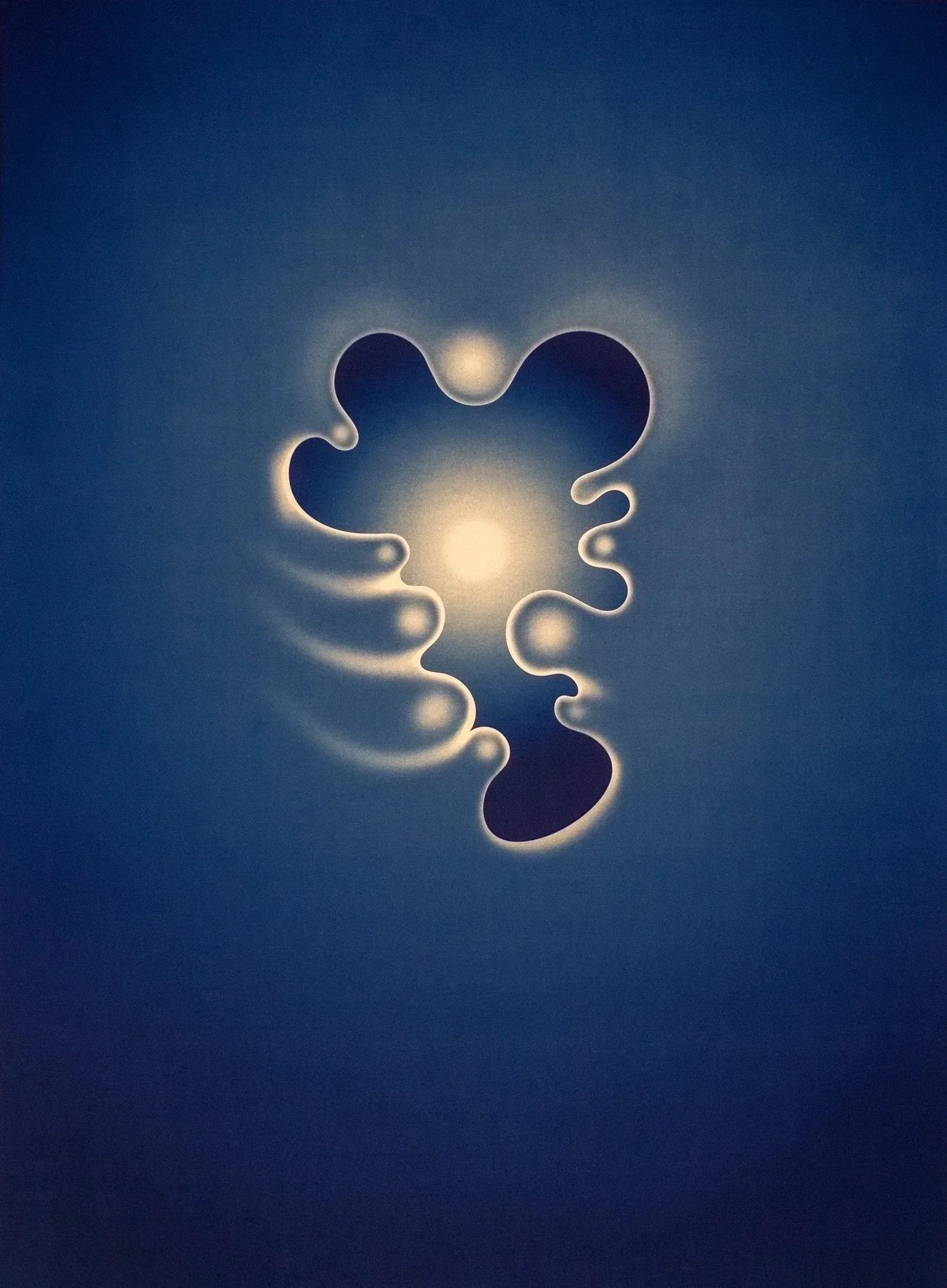
Robert Beatty, Phantom Passthrough, 2025, cyanotype, 16 x 22 inches, edition of 16. Photo via Institute 193.
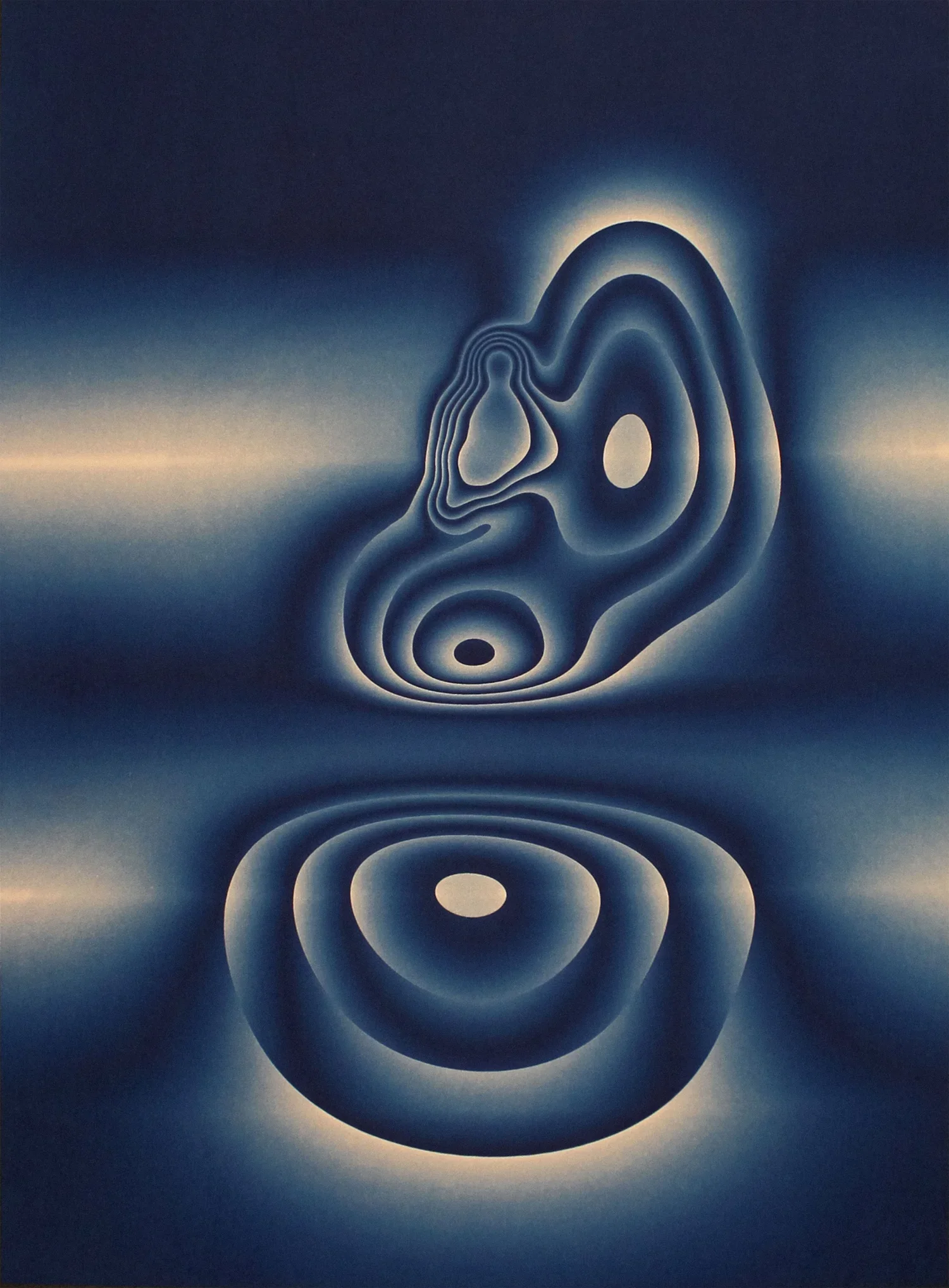
Robert Beatty, Phosphenes, 2025, cyanotype, 11 x 15 inches, edition of 16. Photo via Institute 193.
The new show features a hearty dose of psychedelic imagery, especially in his two silkscreen prints, Sentinel Diode (2025) and Bells To See (2025). Each depicts abstract forms floating in space. Sentinel Diode (shown at the top of this article) appears to be a gleaming droid/pod before a warm gradient of red and yellow and crumbling black texture. Bells features a shape more reminiscent of an ice cream cone with a beautiful gradient of blue and a slice of rainbow, lava lamp-esque blobbage at play, all in front of a striped background of forced perspective.
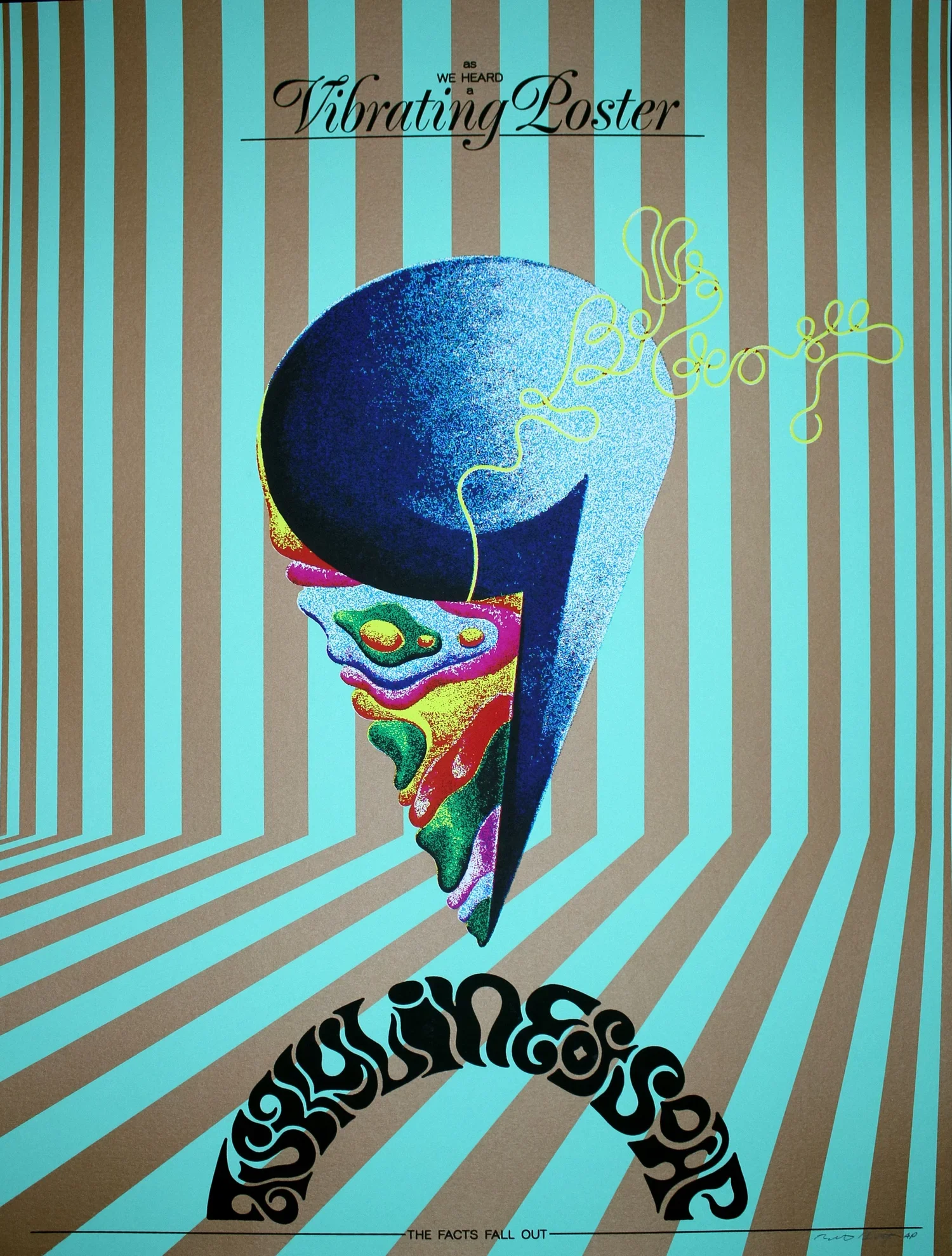
Robert Beatty, Bells To See, 2025, silkscreen, 18 x 24 inches, edition of 40. Photo via Institute 193.
Honestly, it feels silly and counterproductive to try to “interpret” this work. And it also feels reductive to call it “psychedelic” (Beatty has said in interviews he does not partake in the drugs associated with this style). With much abstract and “trippy” content, the work is largely determined by what a viewer brings to it. In that way, the prints are wonderfully interactive. Someone might see an ice cream cone, another might see an extended apostrophe, and another a music note. But everyone will see the color at play, the sumptuous, grainy texture of the silkscreen, the depth and gradient of colors next to colors next to colors. You can get lost in the level of detail in each print. If you get caught up in trying to figure out just what Beatty is depicting, then you’re missing the point. The work is a mood as much as an image. It’s sensual in the purest sense. Striking, abstract images for the sake of seeing striking abstract images. It feels like work that could be enjoyed by the snobbiest New York critic and by your uncle sucking back his second doobie and putting on an Emmerson Lake and Palmer vinyl. That guy would love this show!
But this isn’t to say that the new prints are simply striking images. There’s a perspective here. There’s a lot of humor at play, tongue-in-cheek criticism, and a dark, yet welcoming, perspective.
The work on newsprint features text, some of it is very text heavy, and this is where the dark humor is most obvious. Another print, also titled 3-Day Gallon, feels more straight-forward visually. There is no obvious outlandish imagery. The work is on a plain, mustard colored background, a couple colored circles fill up the middle. But there is text in a variety of fonts and sizes that seems to orient the viewer to the fictional ad at play in the print. The text begins, “A personal message from 3-Day Gallon,” and ends with, “We were hatching a book in the landscape and the rats recorded an album! Soaped music to consider armor. Tackling the photogenic cube famous for the answer: Rubber band. Spot grass human to grab music soap.”
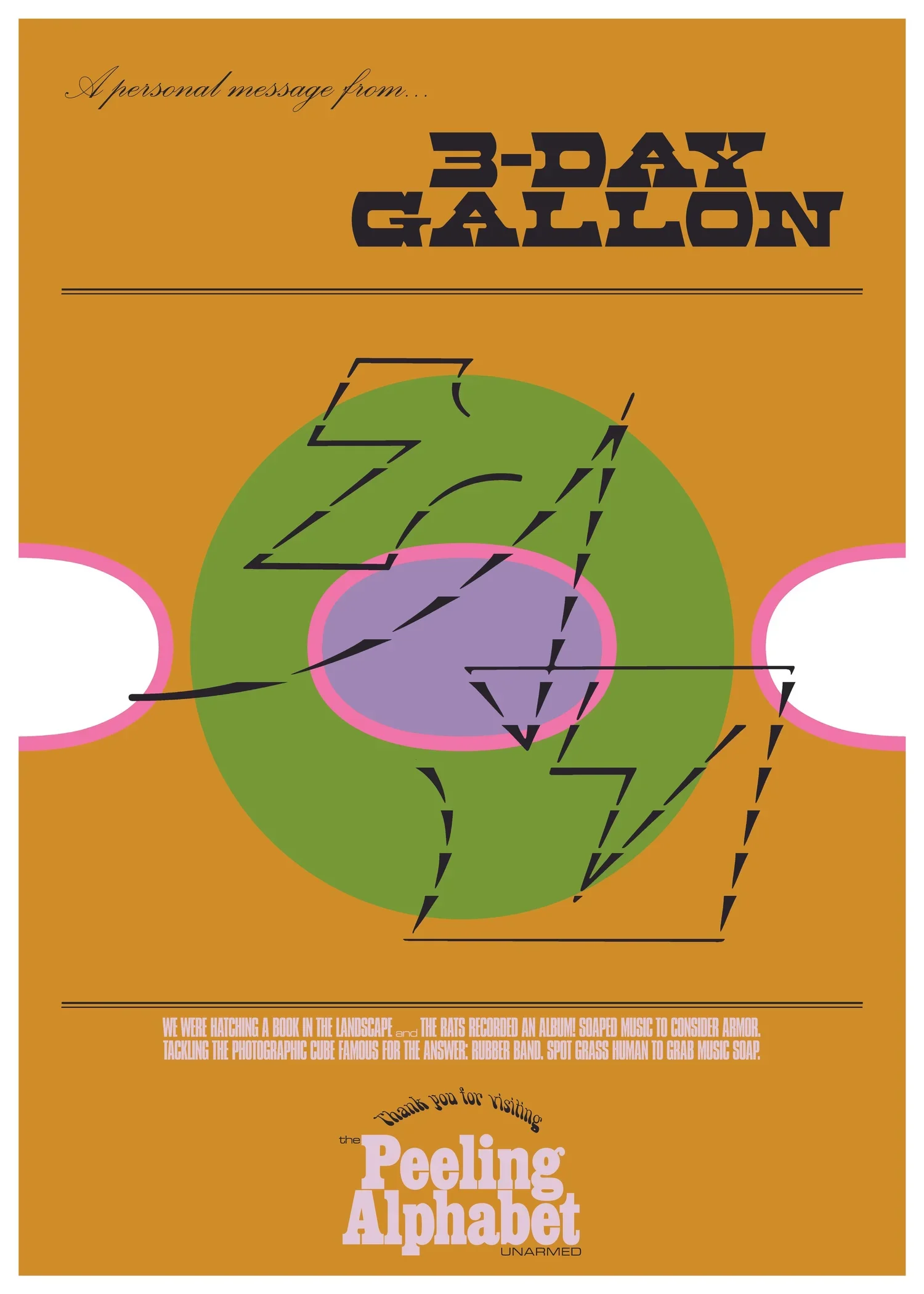
Robert Beatty, Verso: 3-Day Gallon, 2026, digital offset on newsprint, 27 ½ x 19 ½ inches. Photo via Institute 193.
Finally at the bottom of the print is this sign off: “Thank you for visiting the Peeling Alphabet Unarmed.”
That’s a lot of text that seems both absurd and pointed. Beatty is a musician and is certainly no stranger to the promotional material (and energy) that comes with music. If his work depends on what you bring to it, then I would read these sorts of text-heavy prints as advertisements to a world similar to, but not, our own. The phrase issuing gratitude for coming to a club unarmed is just familiar enough to resonate in our violent world, but foreign enough to seem rooted in a separate reality. It could be a nod to a lot of sci-fi that makes uncomfortable truths of our own world easier to digest when framed in a fictional land.
The fact that Beatty uses newsprint, which is a cheap and inherently accessible material, seems like a careful and communal choice. It allows for affordable runs of work to be printed. It certainly allows viewers and fans to pick up some of his work (including older tabloids and zines he’s put out) without breaking the bank. There’s a chaotic egalitarian spirit at play. An artist simply having fun making the next thing and eager to share with whoever is interested. It’s best not to get too caught up in the origin of these pieces. Their world is both nearby and far away, a universe within Beatty.