
THE DISTANCE BETWEEN: GREG REYNOLDS’ “DOUBLE LIFE”
Double Life on view at Institute 193 in Lexington, KY.
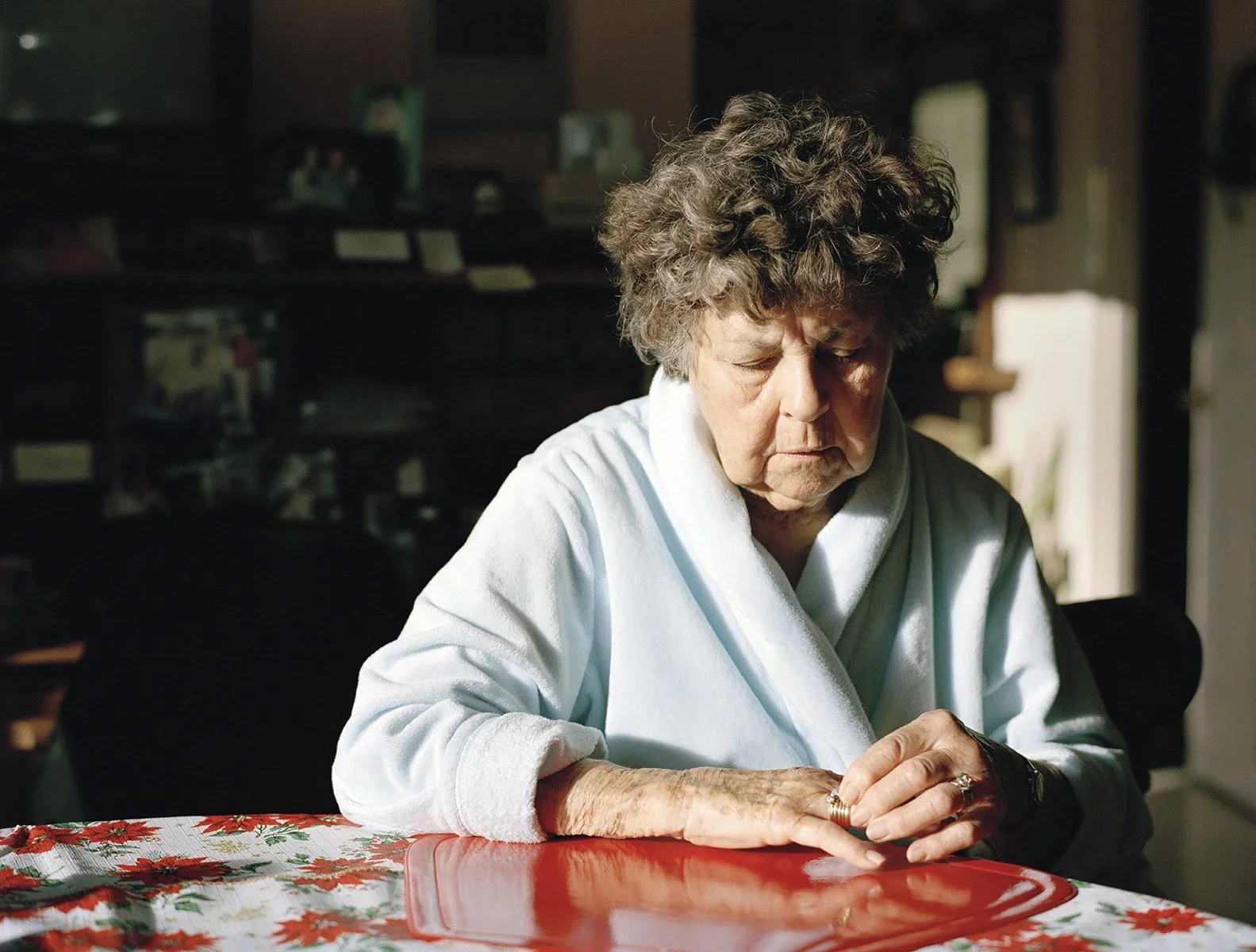
Greg Reynolds, Mom in Blue House Robe [Christmas, Kentucky], 2026, archival Inkjet print, 22 x 28½ inches. Photo via Institute 193.
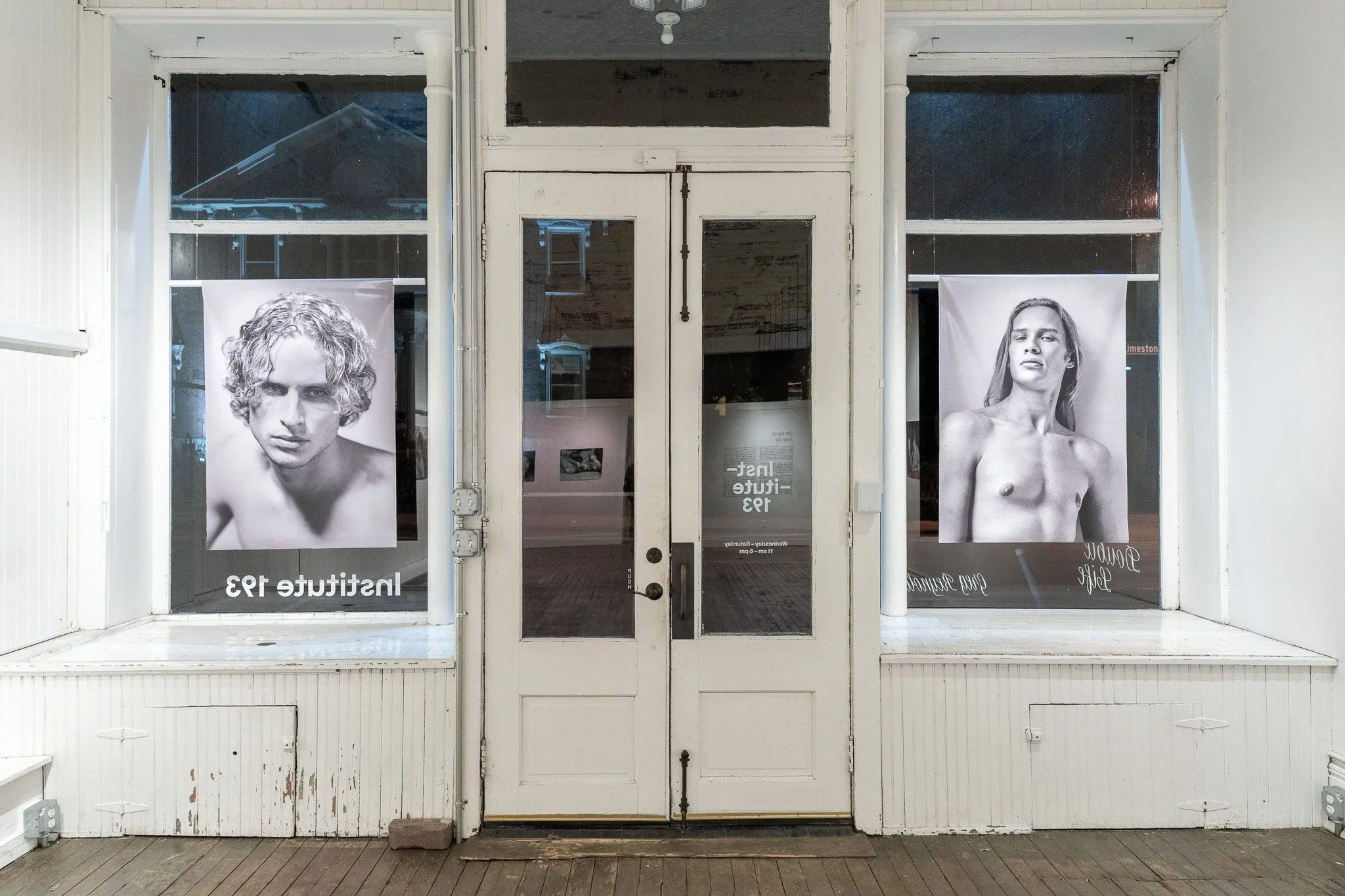
Photo via Institute 193.
If you’re walking around downtown Lexington, it would be easy to mistake Institute 193 for an Abercrombie and Fitch pop-up. Hanging in the storefront window display of this former retail space are two large format black and white photographs, printed on a vinyl banner. Roughly three by four and a half feet, the images – portraits of two beautiful men – frame the entrance. Erdal, the figure on the left (photo below is reversed, gazes forward; the anonymous figure on the right turns away, hiding his face. Stepping inside, the seductive emphasis on male beauty gives way to something more intimate and personal; photographs of family and the Kentucky countryside. Only in the very back of the gallery, hung on a bubblegum pink wall, do the male portraits reappear – this time smaller and more charged. Yet somehow, the distinction between these two bodies of work isn’t as absolute as one might imagine.
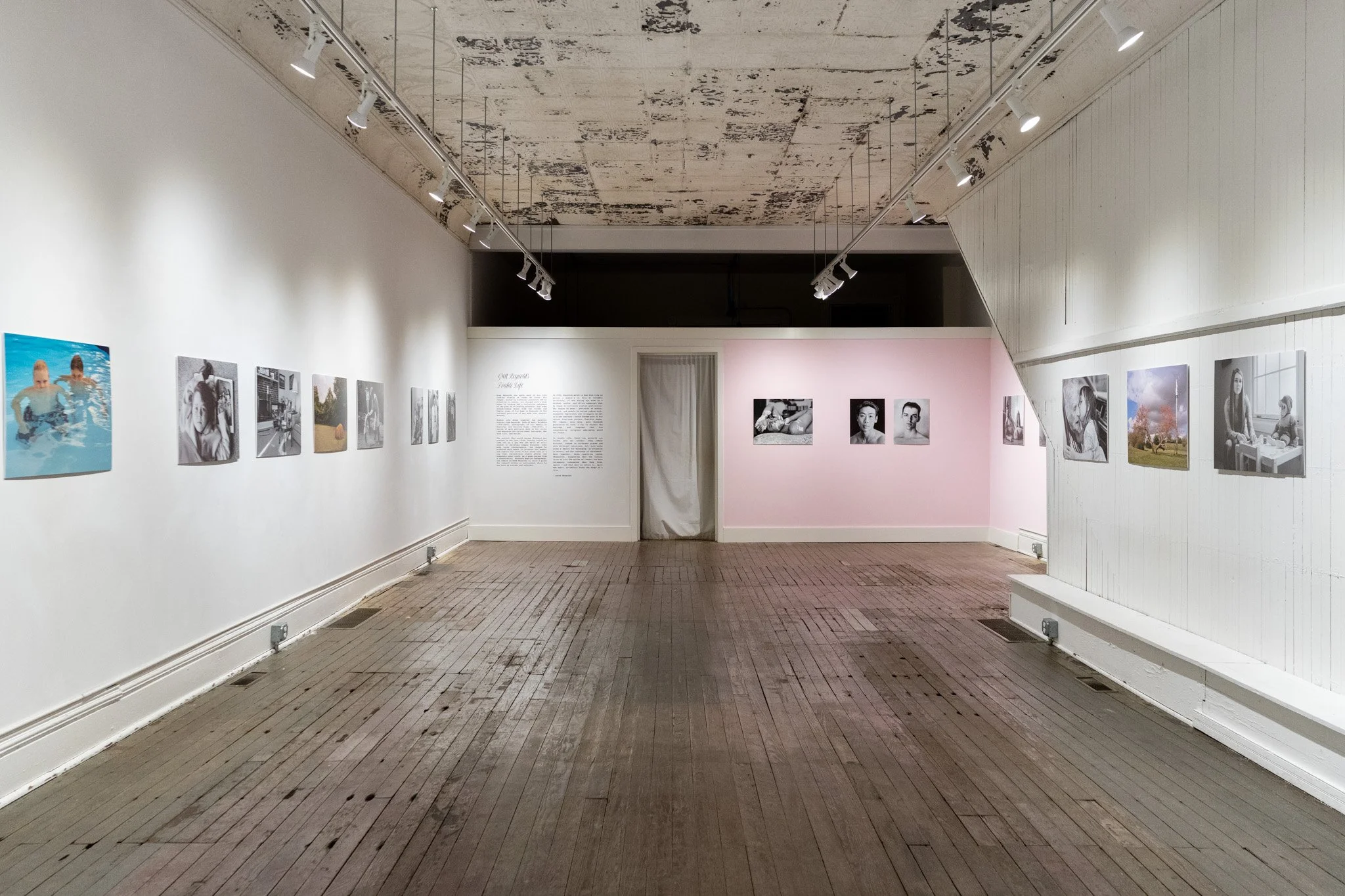
Photo via Institute 193.
Greg Reynolds’ solo exhibition Double Life offers a glimpse into a photographic practice that spans almost forty years. The exhibition brings together two long-term projects: Evidence (1978-2022), photographs of the artist’s family in Kentucky, and Possibly Maybe (1989-2022), a series of male portraits made in the various cities that Reynolds has called home. In Double Life, these two projects are folded into one another, complicating the notion that one can neatly separate the distinct spheres of a life without recognizing the ways in which they continually bleed into one another. The exhibition, on view at Institute 193 in Lexington, Kentucky, reflects on family, memory, queerness, and close looking as an act of love and intimacy.
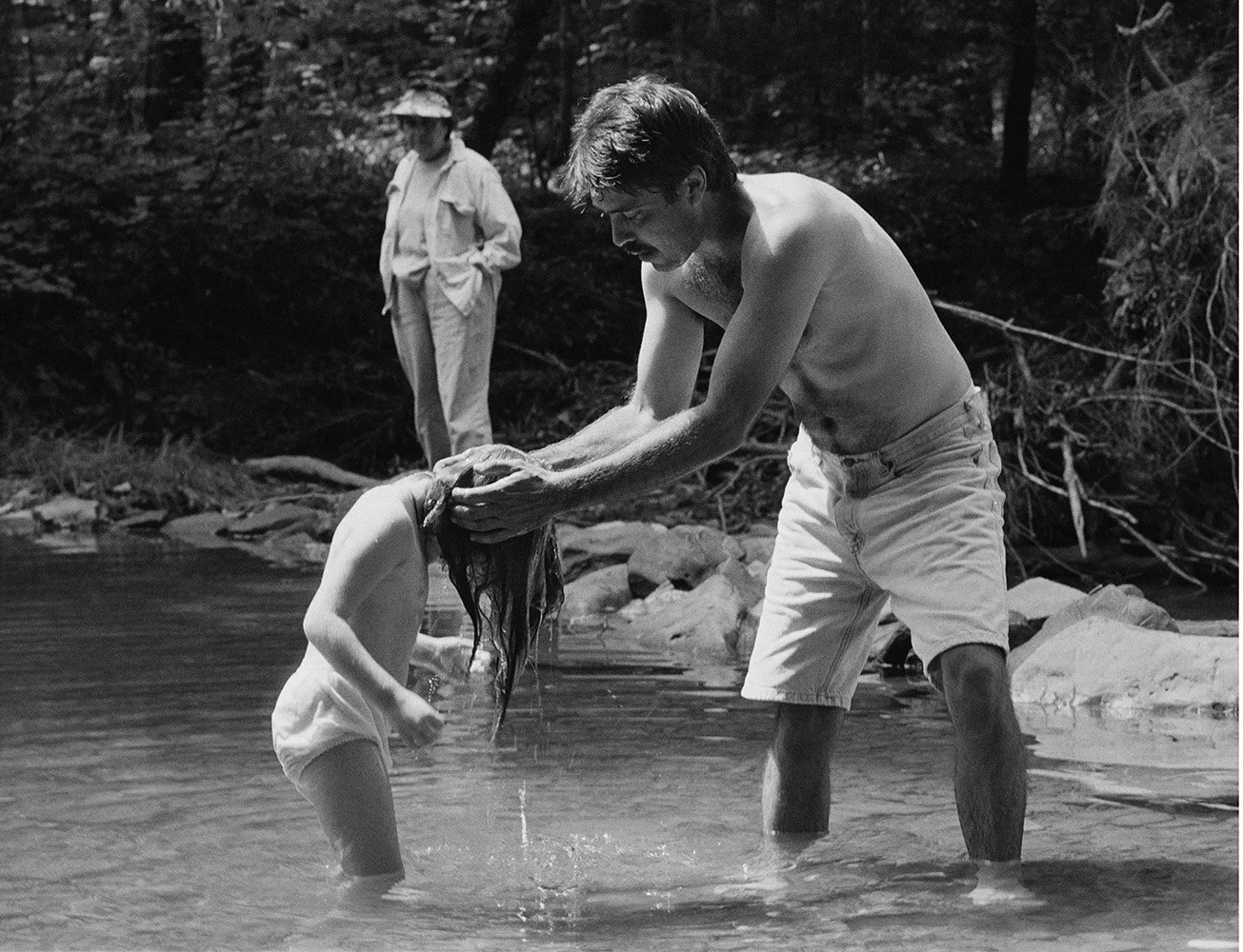
Greg Reynolds, Creek Bath [Kentucky], 2026, archival Inkjet print, 22 x 28½ inches. Photo via Institute 193.
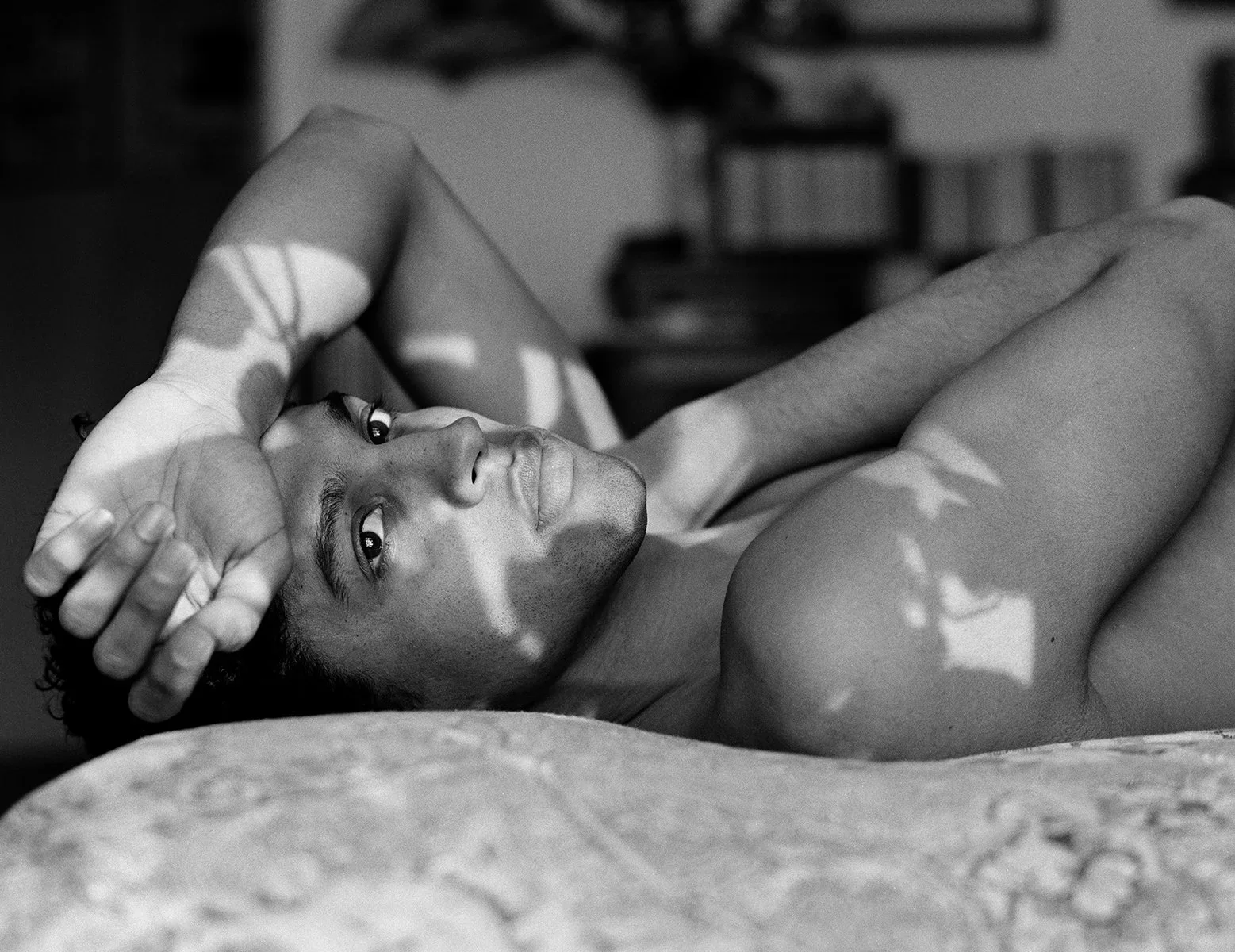
Greg Reynolds, Wade [New York City], 2026, archival Inkjet print, 22 x 28½ inches. Photo via Institute 193.
Reynolds’s life has unfolded across multiple geographies and narratives. One of five boys, he was born and raised in a conservative, Southern Baptist family in Lexington, Kentucky. Curious, sociable, and energetic, Reynolds became a campus youth minister in 1978 after graduating from EKU, where his undergraduate studies were interrupted by a period he spent in Germany as a guest laborer. It was during his time in campus ministry that he began taking photographs, shortly after a fellow missionary gifted him a 35mm camera. The photos he produced during this period – Kodachrome images of happy days at Christian camp, missionary trips in Central America, and young men in cut-off shorts –would eventually become his 2015 photobook Jesus Days. (Toronto: Bywater Bros. Editions, 2015.) In 1983, Reynolds came out of the closet, quickly ending his time in ministry. He moved to New York City to pursue a master’s in film at Columbia University and would spend the next thirty-one years living in New York, with brief periods spent living in Berlin.
This biographical arc is central to Double Life, where memory and history appear as an ongoing presence that shapes the work. Across family photos, landscapes, and male portraits, the photographer presents time, not as an abstraction, but something materialized in bodies, gestures, and places. This is most evident in works from the family series, in images such as Leslie Anne and her Great-Grandmother (2026), Family Studio Portrait and Sheep, Kentucky (2016), and Orange Lilly and Burn Pile, Kentucky (2026). History emerges in the body in Leslie Anne and her Great-Grandmother. A young girl, no older than three, kisses her great-grandmother’s cheek. The black and white image, photographed with Reynolds’s Contax 645 medium-format film camera, is tightly framed. The infancy of the girl is emphasized by the age of her great-grandmother, whose white hair and wrinkled face mark the passage of time. The photo is intimate and fleeting – a tender moment in the passenger seat of a car. We sense this is a goodbye: a conclusion, permanent or otherwise, to a brief encounter between two generations.
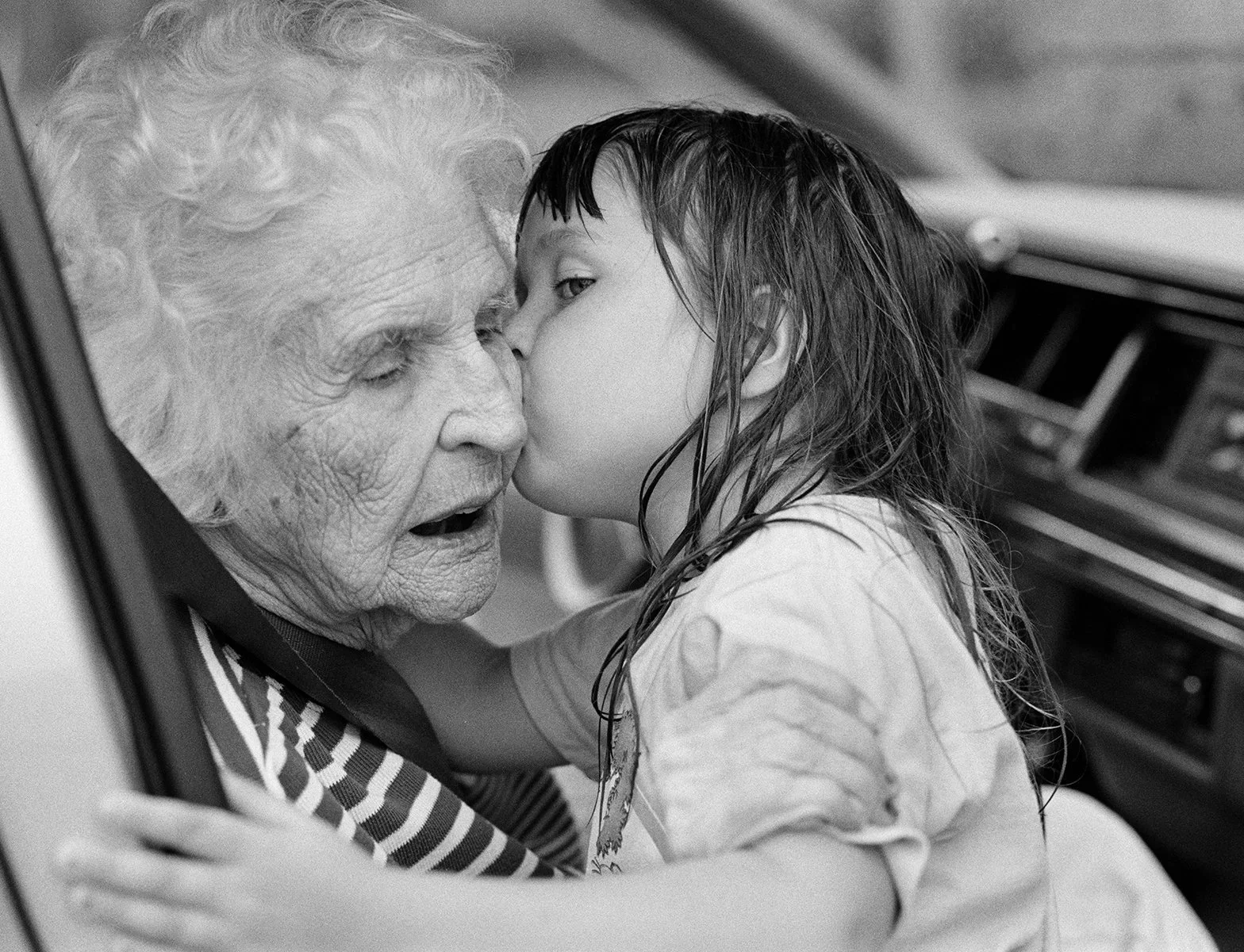
Greg Reynolds, Leslie Anne and her Great Grandmother [Kentucky], 2026, archival Inkjet print, 22 x 28½ inches. Photo via Institute 193.
This same attentiveness to history and family bonds extends into a reflection on portraiture itself. Family Studio Portrait and Sheep, Kentucky (2026) is an image within an image – a strategy Reynolds returns to often. A framed studio portrait of the artist’s family, including his mother, father, and four brothers, is placed in front of a larger framed painting. Surrounding the family, a pastoral scene of sheep gathered in the care of a shepherd, invokes the devotional imagery one might expect in a Southern Baptist home. The portrait itself is conventional for the early 60s; black and white, formally posed, family dressed in their Sunday best – the kind of photo one would have made in a department store studio. In Reynolds’s work, the family photo becomes an artifact. It is, at once, contemporary and anachronistic. The nested image intensifies what Roland Barthes describes as photography’s “that-has-been”: the certainty that what was captured once existed. That a moment in time cannot be existentially repeated, but it can survive as image.
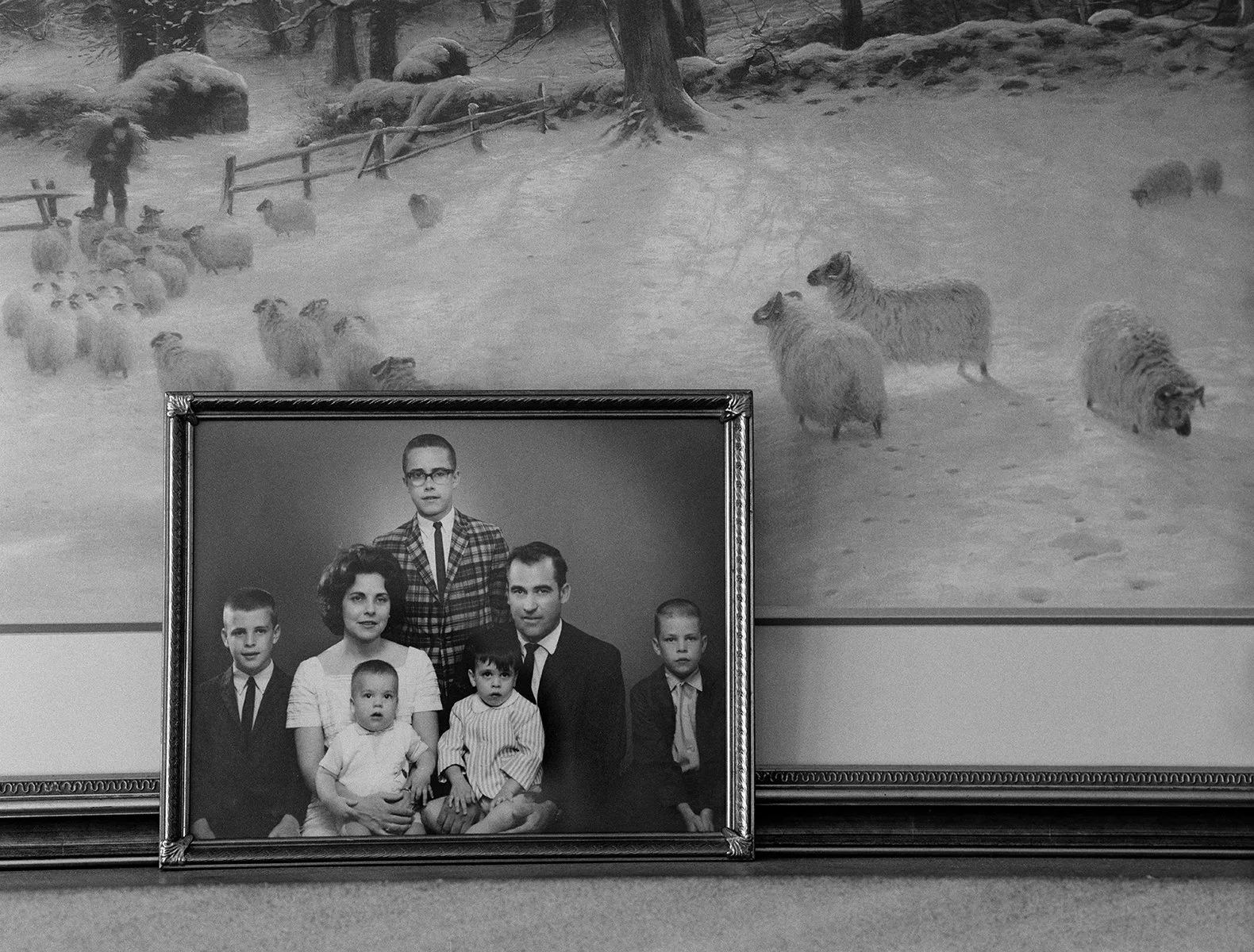
Greg Reynolds, Family Studio Portrait and Sheep [Kentucky], 2026, archival Inkjet print, 22 x 28½ inches. Photo via Institute 193.
Orange Lily and Burn Pile, Kentucky, one of only three landscapes in Double Life, further emphasizes the past as something that can be captured but cannot return. In the foreground stand four orange lilies. Behind them, just out of focus, the orange flames and smoke of a burn pile punctuate an otherwise idyllic Kentucky pasture. The subdued, almost muted palette and soft grain of color film resist the hyper-clarity we expect of digital rendering, giving the photo a timeworn patina. The scene – new life cultivated against the controlled destruction of the land – stages existence, less as an obvious cycle than as a process that changes even as it repeats.
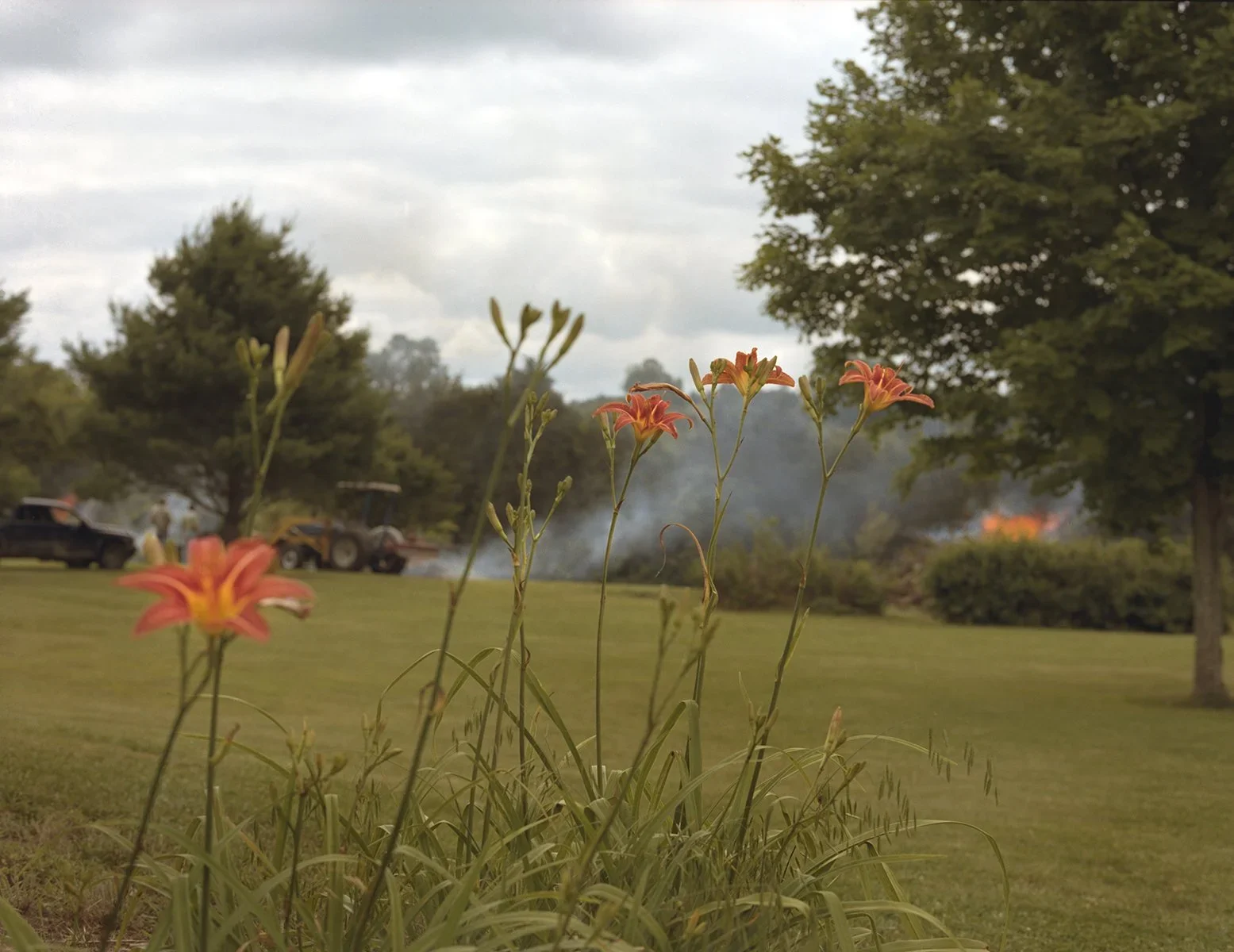
Greg Reynolds, Orange Lily and Burn Pile [Kentucky], 2026, archival Inkjet print, 22 x 28½ inches. Photo via Institute 193.
This theme – the persistence of the past within the present – continues in Reynolds’s male portraiture. Structurally, the photos from his parallel series Possibly Maybe function as the hinge of this exhibition. Though fewer in number, they are both the largest and smallest pieces on view – the public-face of the show as well as its intimate, almost private core. These photos have a cinematic, romantic quality – a quiet yearning that recalls the soft-focus allure of classic Hollywood publicity stills or the seductive gaze of an Abercrombie model. Tucked into the back of the gallery, displayed on a painted pink wall that visually separates it from the family series, the male portraits feel private and veiled. The men – some nude, others shirtless, one in a vintage military beret – gaze back at us, inviting us to look closer.
In Timur, Brooklyn, New York (2026), the sensuous male nude becomes another form through which the past is made palpable. The setting is ambiguous but dated – a parquet floor, cast iron radiator, and a plaster wall, chipped and decaying, just out of focus. Timur, his physique powerful and sculpted, reclines on the floor; one elbow bent in support, the other draped across his lap, one leg bent inwards. His face, youthful and handsome, turns toward the ground, his gaze fixed just beyond the frame. The photograph invokes the long history of the classical reclining nude, while also alluding to the work of queer artists such as Paul Cadmus and George Platt Lynes. Yet, unlike these artists, Reynolds returns to that central theme of his work: the past as forever present. Timur wears a vintage military beret, a sign of masculinity that feels at once stylized, queer-coded, and out of time. Unlike Lynes, whose work lingers on the masculine ideal, or Cadmus, who exaggerates masculinity into a satirical register, Reynolds’s approach to queer subject matter feels both physically and, at times, temporally distant; as if desire itself is one more form through which the past re-emerges.
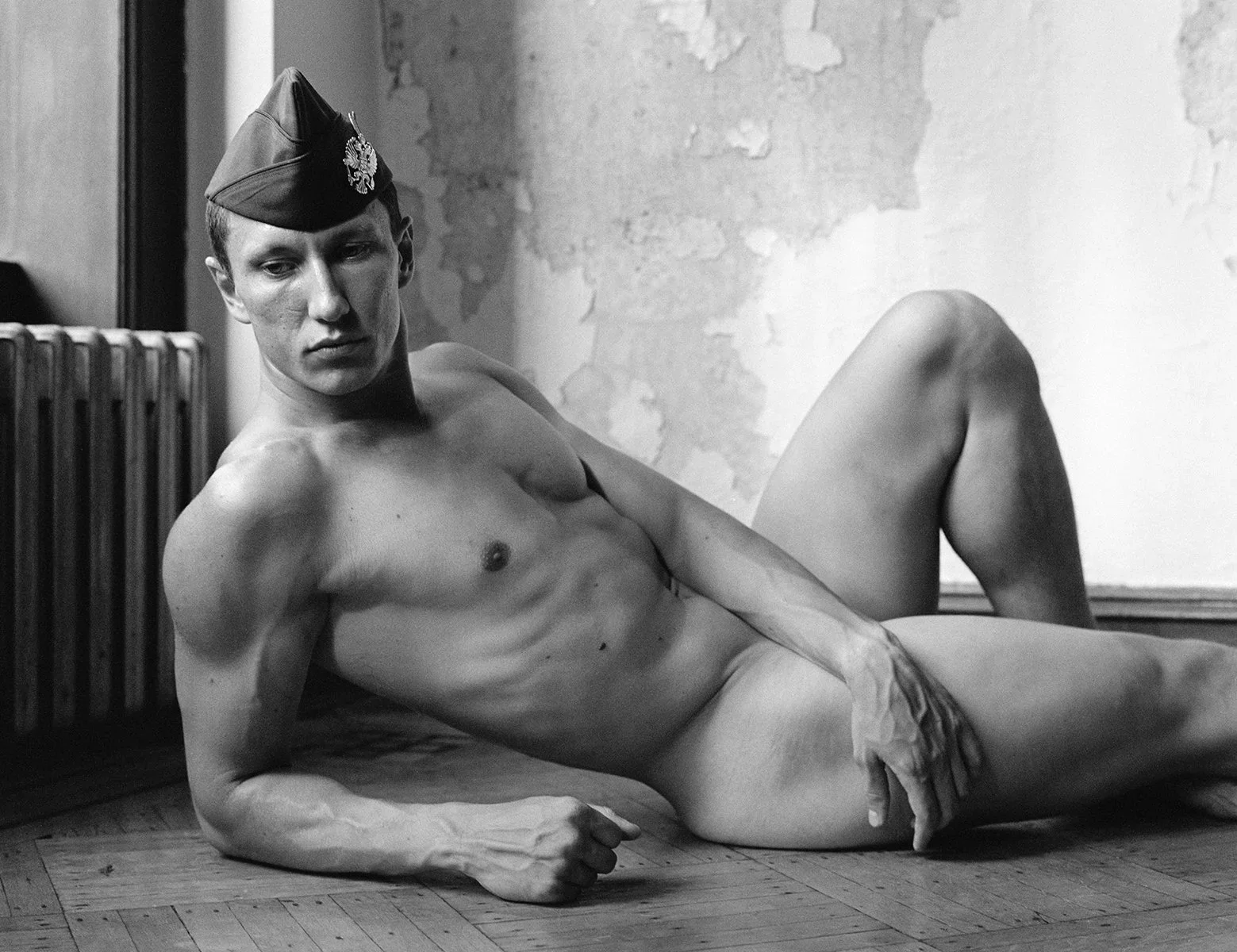
Greg Reynolds, Timur [Brooklyn, New York], 2026, archival Inkjet print, 22 x 28½ inches. Photo via Institute 193.
In Frank Bidart’s 1985 poem “Guilty of Dust” the author states “LOVE IS THE DISTANCE BETWEEN YOU AND WHAT YOU LOVE. WHAT YOU LOVE IS YOUR FATE.” Love is imagined as distance; the tension between the desire of the subject and the limitations of time, geography, family, and social belonging. One’s fate is the ceaseless, recurring attempt to close a gap that can never be fully closed. For Greg Reynolds, close looking is a way of disclosing intimacy without fully dissolving distance. Describing his work, Reynolds says that the camera gave him permission to look and allowed him to channel the feelings and longings that his conservative, Baptist upbringing would not permit. Photography became a way to traverse the distance between past and present and between desire and belonging. What Double Life reveals is that the various worlds we inhabit and the lives we live are not as distant as we might imagine, and that what we return to, again and again, ultimately forms the shape of a life.
Greg Reynolds’ Double Life is on view at Institute 193 in Lexington, Kentucky from March 13 – April 25, 2026.