
Revival: Digging Into Yesterday, Planting Tomorrow
Revival: Digging Into Yesterday, Planting Tomorrow at 21c Museum Hotel Louisville
The period of time referred to as “the past” has always been more conceptual than objective. A kaleidoscope of complex truth that turns, constantly revealing information obscured, forgotten, buried. No individual alone can recount the obtuse, amassed piles of yesterdays. It has become a role of the contemporary artist to look upon history with fresh eyes and emotion–to create with a serious sensitivity another way the past should be visualized.
Revival: Digging Into Yesterday, Planting Tomorrow, a traveling exhibition curated by Alice Gray Stites for the collection of 21c Museum Hotels features the work of over fifty artists. Revival offers an expansive look at 21st-century art that focuses on narratives of colonialism, as well as the abuses and cultural erasure that accompanied the expansion of European political control and Enlightenment thought. This exhibition transforms the gallery walls into a garden of color, humor, mourning, celebration, and the sparkling transcendence of a historical re-telling.
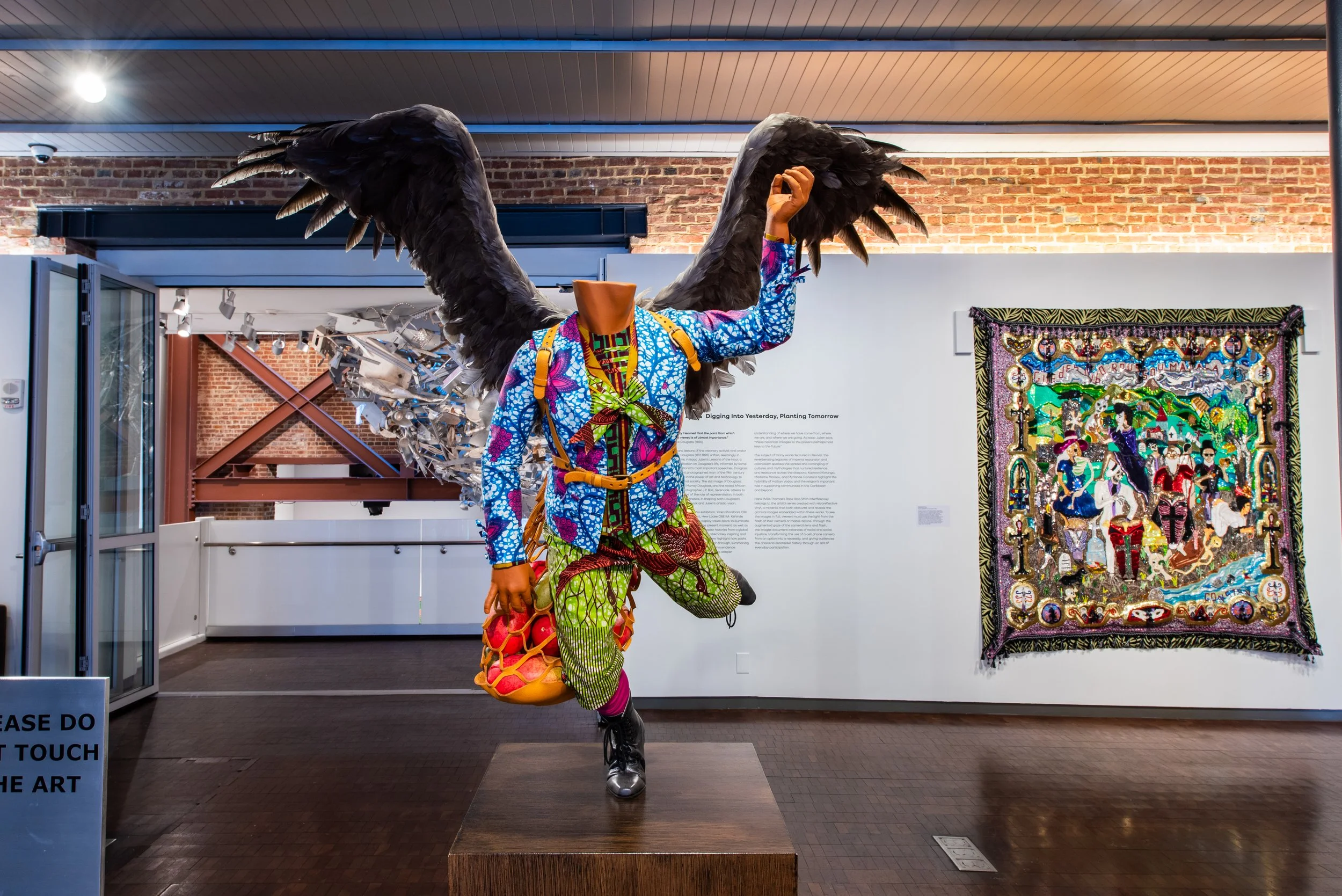
All photos from 21c Museum Hotel
I had the privilege of receiving a guided tour of the exhibition from Ashley Rowland, an artist, curator, educator, and Museum Manager for 21c Louisville. Part of Rowland’s role is to become familiar with each work and the artist who created it. Walking with Rowland was its own enlightenment as the nuanced intentions of each artist and their methods of production were revealed, highlighting the thoughtful curatorial practice of weaving one great narrative from a diverse collection of international stories.
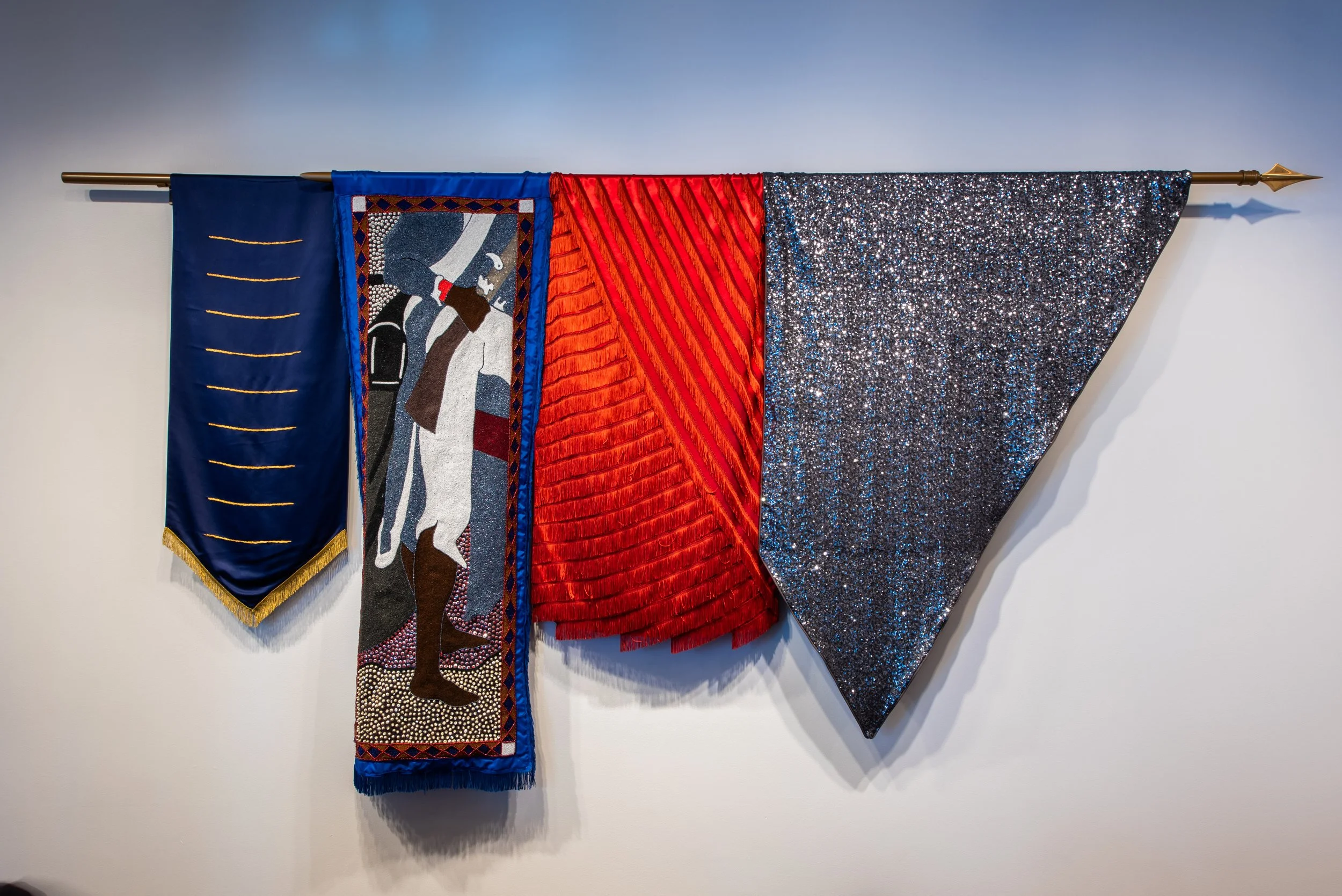
Revival had the usual stylings of a 21c show: an uncanny sculpture at the center of the lobby, micro-curations within each room, representation of artists that are not often highlighted in the traditional art canon, and a signature visual maximalism. Pivoting around the first-floor lobby-gallery, works by Hank Willis Thomas, Suchitra Mattai, Myrlande Constant, Hew Locke, La Vaughn Belle, Titus Kaphar, Yinka Shonibare, Jonathan Owen, and Elizabeth Alexander welcome visitors into the hotel’s gallery while laying the foundation for the larger themes within the exhibition.
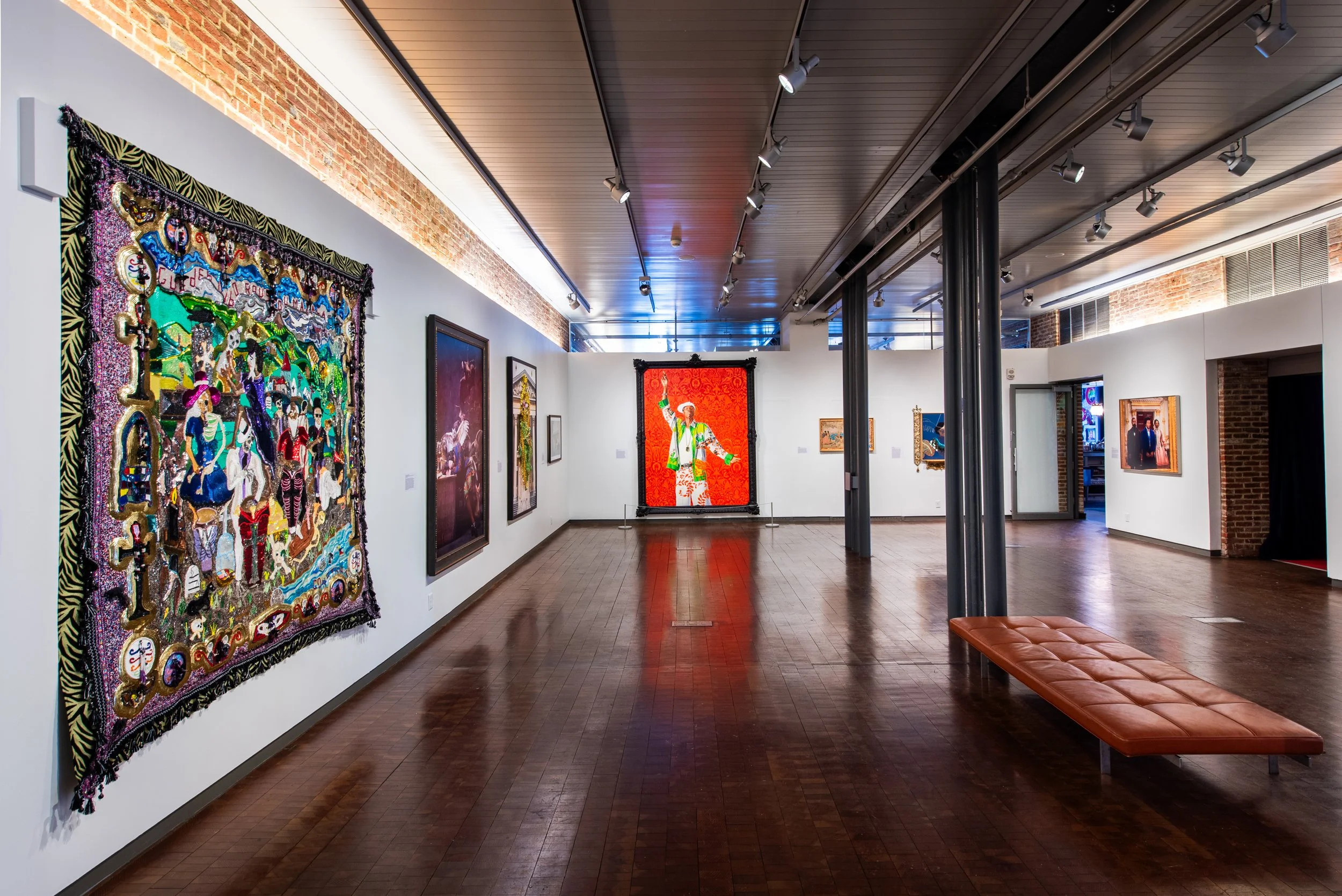
Through contemporary practices of abstraction, much of the work extracts new meaning from traditional forms of image-making such as embroidery, portrait painting, textiles, and studio photography. By either directly altering images, such as the decorative plates of Alexander where the images of Confederate generals have been scraped away, or by using materials to obscure traditional protagonists and remove the subconscious comparative relationship they create, such as Kaphar’s painting, Covered by Fear, Draped in Loss, an apathetic reaction to the art object is rendered less possible. Referring to another example of this artistic practice visible in the work Swarm, Stites writes that Belle’s adaptation of an archival photo burning out non-Indigenous architecture, plants, and people creates “a more mysterious and nuanced visual in its wake.” Reviving through removal.
During my tour with Rowland regarding the abstracted archival photograph by Hank Willis Thomas, she emphasized that by obscuring the image under the reflective surface and having visitors photograph the work with a flash, Thomas challenges the viewer into a level of engagement. “As the viewer, you have to opt in to participating in the work as the artist wants you to,” and this participation is akin to education where one is asked to “sit with it a little,” no longer simply a bystander to the attack on protestors by police in Birmingham, Alabama, 1963. Reviving through participation.
Part of the show’s extended title, Digging Into Yesterday, finds ground in the vast singular storytelling, both personal and national, that this large body of work displays. Nearly every piece, even those by artists who have multiple pieces in the show, represents a unique acute story of culture, race, nation, and gender affected by colonial histories. There is a gallery focused on economic change and social shifts in Cuba in which the evidence that our human desire to evolve and control is the very blockade in our evolution. In an adjacent gallery, difficult works such as a selection of Ken Gonzales Day’s “Erased Lynching Series” offer a sobering reflection of mob mentality, which, when paired with Omar Victor Diop’s self-portrait, Selma, invites a conversation around who is granted visibility and how artists can have the control to grant viewers only what they wish for them to see.
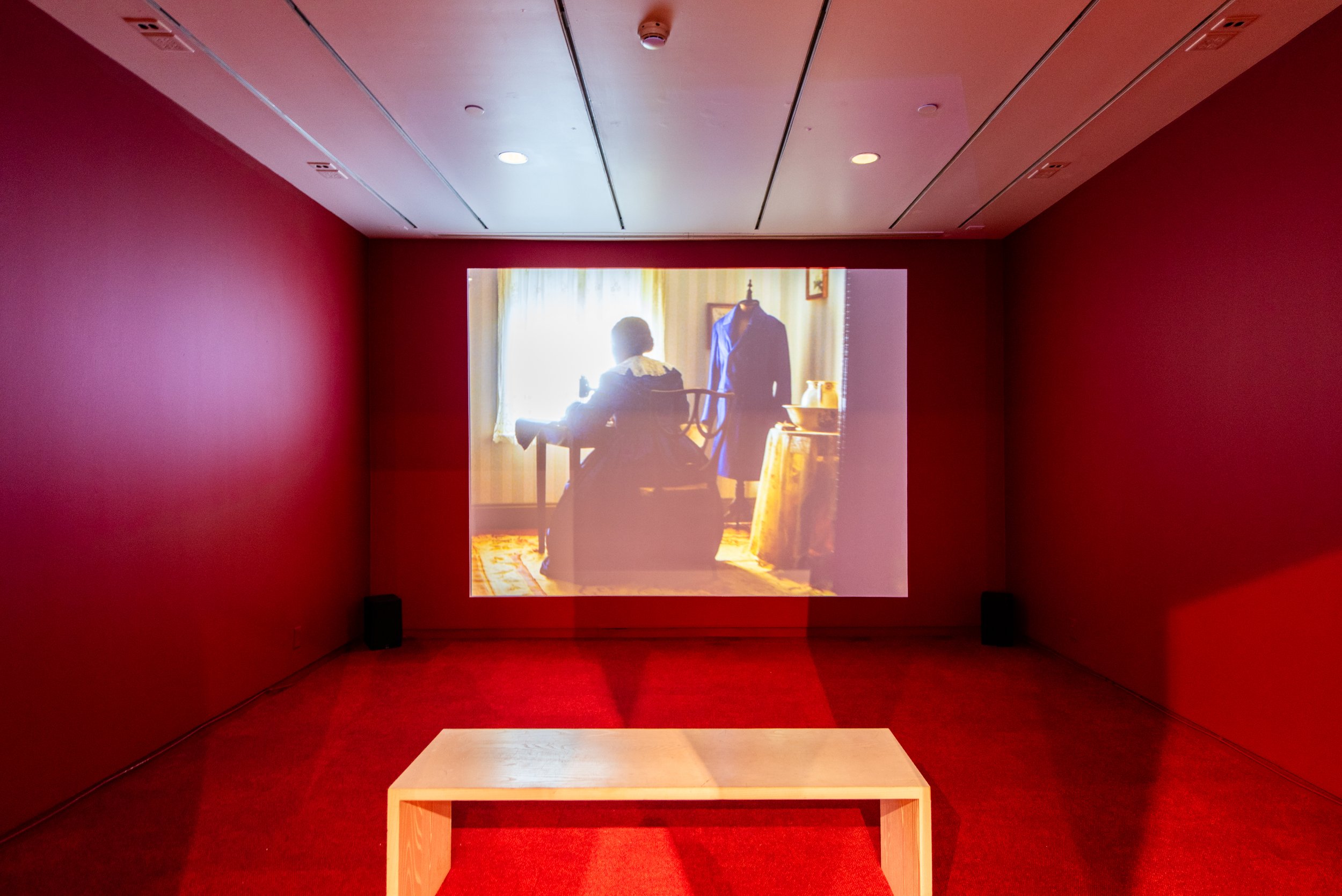
The act of digging into the past is laborious and requires witnessing and obtaining knowledge. This weight is felt in the gallery spaces, especially the quiet, dimly lit lower galleries where final reflections on the show as a whole tend to be had. I brought this up to Rowland, and her response illuminated what it means to be Planting Tomorrow.
“Knowledge is a burden, but none of these artists are focused on the pain of the burden; a lot tend to focus on rewriting, reimagining, or a hopeful future. The power of contemporary art is that it speaks to the now. Steve [Wilson] and Laura Lee [Brown], as active collectors, offer direct reflections of our current culture. Alice has curated something that speaks to the current driving forces, with the opportunity to put a show like this together. Revival, as a seed planting, is only the beginning. We hope this show is a galvanizing force for something positive.”
There are moments when the grand theme falls short, where works included fail to carry the political or emotional punch of their counterparts. I personally failed to ask Rowland about the choice of these headscratchers. Even in such cases, the pieces are visually appealing and work to carry visitors from one space to the next. And that work to carry does just as much for the show as the artists who are more obviously attempting to be galvanizing forces for a positive tomorrow.
The tour began and concluded with the cornerstone work of this exhibition, Lessons of the Hour, a film installation by Isaac Julien that borrows language and imagery from three famous speeches given by Frederick Douglass in his efforts toward emancipation. Julien’s film highlights the power of representation to influence our perception of one another. While photography was in its infancy when Douglass was alive, he saw the social capacity of this invention. He became the most photographed individual of the 19th century, forever influencing the medium. Emphasizing the power of visualization and representation, Revival continues Douglass’ conviction that “the point from which a thing is viewed is of utmost importance” (Frederick Douglass, 1855).
Perhaps it is always the contemporary moment that seems on the precipice of great social change–motivated by good intentions to terminate injustice, violence, and silenced social narratives. It is natural to concentrate on corrected future courses rather than the less desirable past, especially as a study of history compounds dark and complex stories that are difficult to parse out alone. Revival does something inspiring by featuring artists who individually explore the history most poignant and important to themselves. Visitors may amass knowledge and be reminded that at all times, we are individually and for the good of all, negotiating our history into what we want for our future.