
ON METAMORPHOSING
An interview with Drew Scanlon and Max Trumpower.
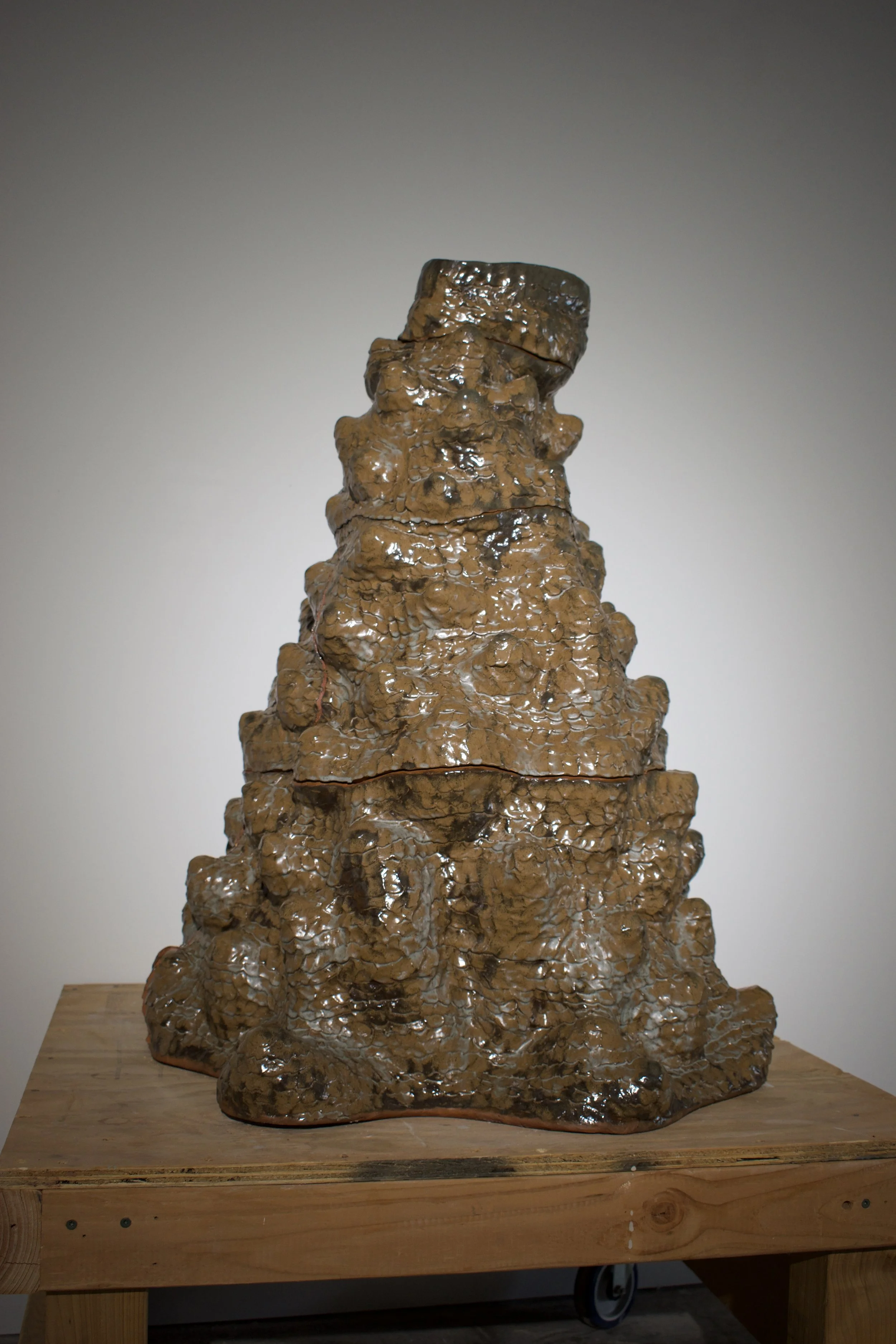
Photos via Chenoa Buster.
Drew Scanlon and Max Trumpower, two ceramic artists and collaborators with creative roots in Kentuckiana, explore trans identity and the (de)construction of binaries in their work through the depiction of animals.
Within their practices, Scanlon and Trumpower embrace their individual approach to exploring animal theory and symbolism through craft. Scanlon is interested in elevating kitsch and tchotchkes, creating ceramic fawns with wide, innocent eyes that stare at the viewer. Trumpower creates vessels and utilizes figurative elements in order to explore the ubiquitous and the mundane. Both artists are interested in taking a seemingly playful subject and using its image to challenge inherited structures in society.
Close friends, former roommates, and classmates, Scanlon and Trumpower have artistic practices that often go hand in hand with their friendship—sharing resources and inspiration, discussing thematic concepts, and providing technical guidance. Scanlon influences Trumpower and Trumpower impacts Scanlon in an ouroboros of creative output and fond memories. This spring, their artistic overlap was on display in an exhibition the duo curated of their work. Tranimals at Kore Gallery was on view from May 9, 2026–May 31, 2026. Scanlon and Trumpower also showed their work in Another Forest, a collaborative, large-scale immersive exhibition led by Alana Fitzgerald from May 16th-May 29th.
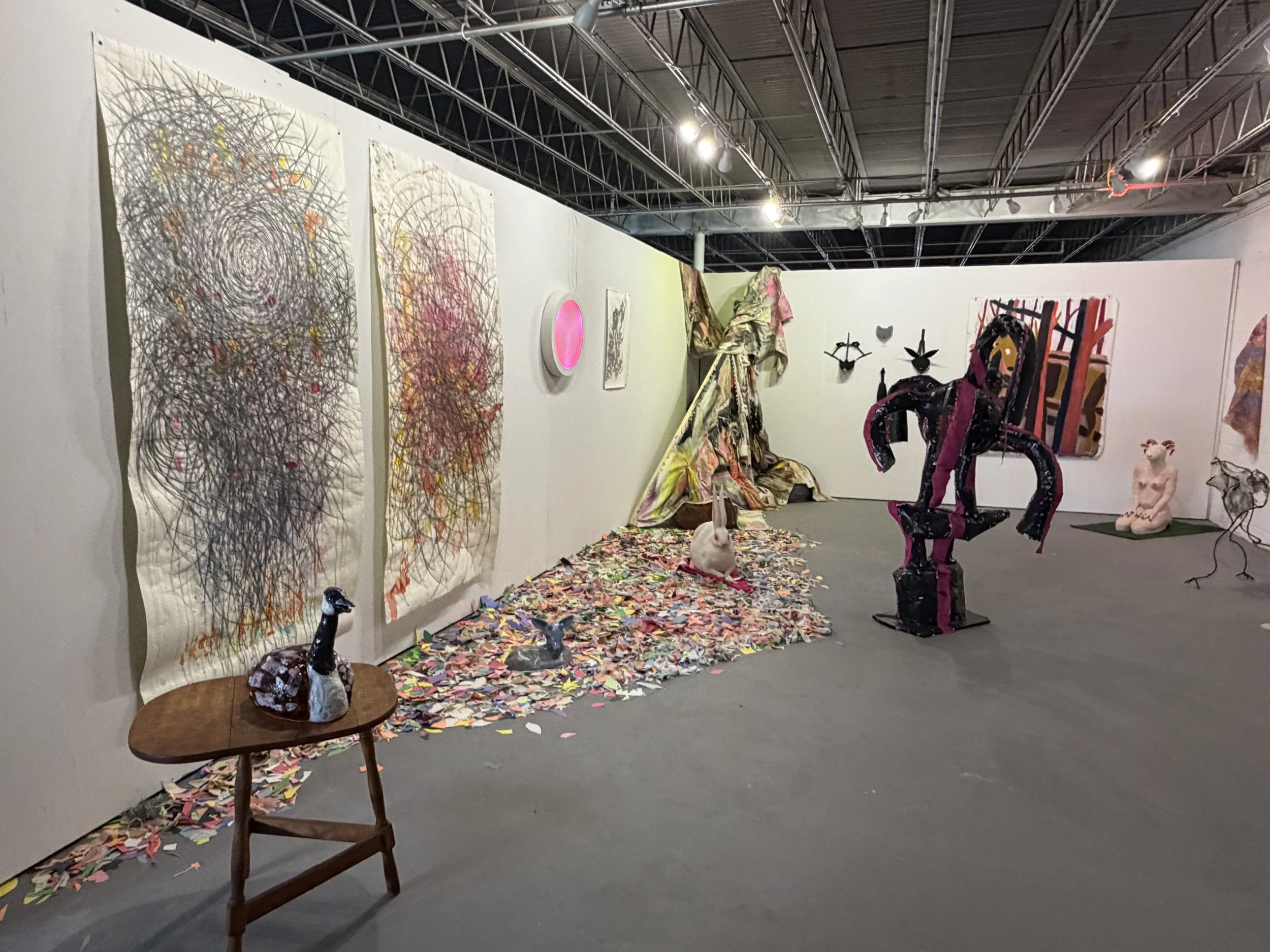
Installation view of Another Forest at the LVA Project Space.
In 2024, the duo showed work together for the first time in an exhibition titled Canceled: The Max and Drew show at the University of Louisville’s MFA Galleries. Scanlon explained that Canceled was about exploring their capacity as friends and artists to affect each other’s work: “For that show, we really wanted to see what kind of exhibition two people who live together, make work together, and are constantly talking about similar themes might create.” There, Trumpower and Scanlon’s work seemed to formally flow directly into one another, overlapping again and again. Both artists embraced organic shape, Scanlon’s sculpted tangles complementing Trumpower’s figurative containers, so much so that it was hard to tell their bodies of work apart at times.
Two years later, Scanlon and Trumpower’s work has stylistically deviated into two visually distinct practices where play keeps the work tied together. In Tranimals, Trumpower explained that they felt their work “had matured a lot since Cancelled, and we would now be able to put together a show with more intention behind it.” The resulting exhibition marries their practices through the lens of trans identity and the breakdown of binaries.
Below, Scanlon and Trumpower explain the driving forces behind their work in Tranimals, as well as explore how the context of their work shifts depending on where it’s displayed.
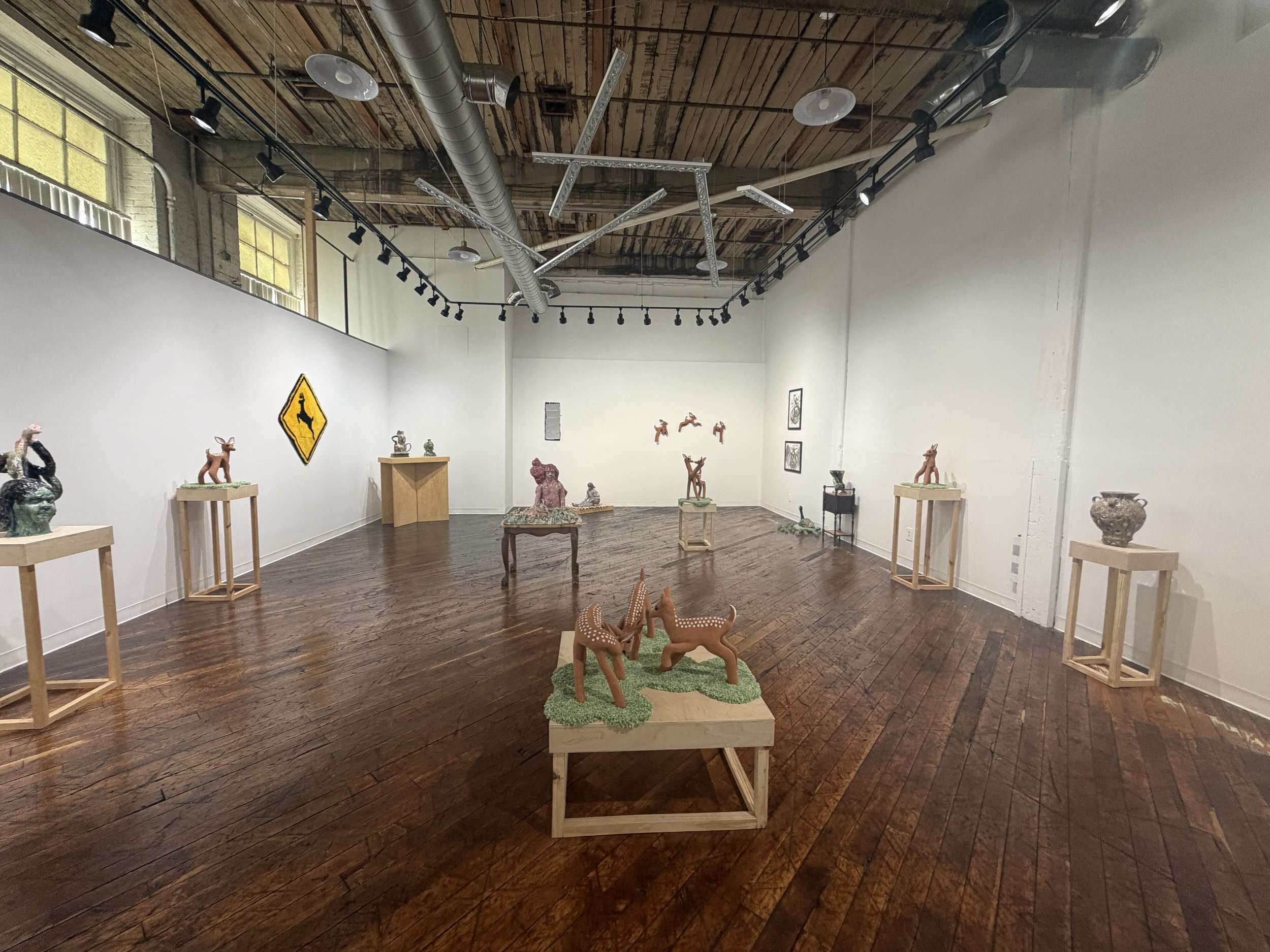
Installation view of Tranimals at Kore Gallery.
Chenoa Buster & Gray Koesters (CB & GK): In previous conversations, you’ve both discussed using animal theory as a guiding principle in your practices. How does animal theory anchor the work in Tranimals?
Drew Scanlon (DS): Animal theory is relevant to me as it comes from my personal interests in investigating binaries. I think about Donna Haraway's Cyborg Manifesto, which is the idea that human and machines can work together to make us think about other binaries, such as man and woman. What happens when either of those two things combine? Along that same line, we often divide human and animal into two separate things when in reality, humans are animals. When we start questioning that particular binary, we begin thinking about all of the other binaries that exist, the ways we’ve constructed them, and how we can start deconstructing them.
Max Trumpower (MT): The animals that we have chosen to depict, deer and geese, relate to our own experience of transness. They represent a kind of metamorphosis and an avenue for exploring human emotions through a nonhuman entity. We're both also really interested in the ways we’ve been socialized to interact with animals, and by association with gender, especially during childhood. For me, I use a lot of childlike figures in my work as a way of explaining narrative and addressing adult emotions.
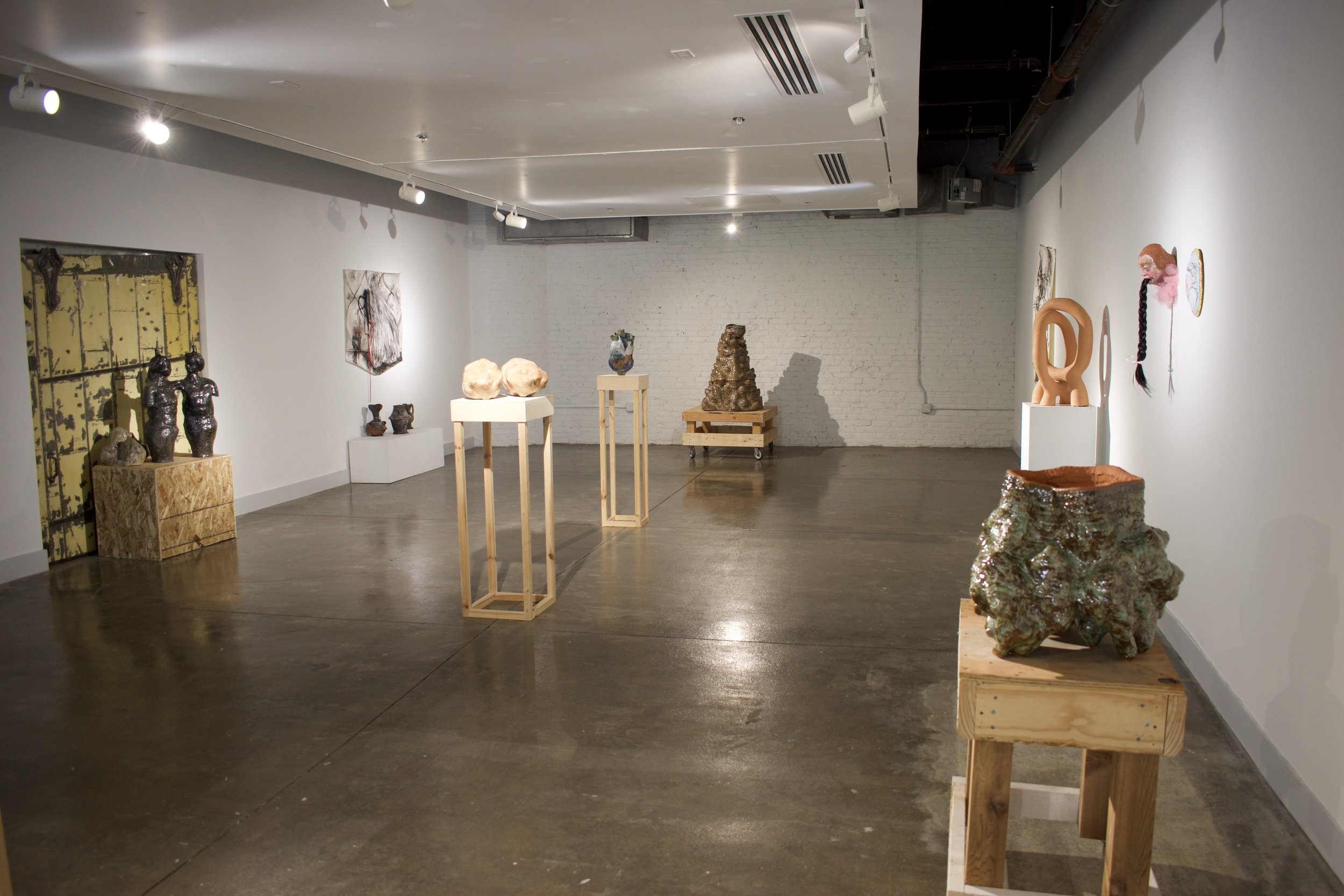
Installation view of Canceled: The Max and Drew show at the University of Louisville’s MFA Galleries.
CB & GK: You both have an affinity for certain creatures and objects from nature. What draws you each towards your specific recurring imagery?
DS: My interest in fawns started after I moved to Louisville and started going to Cherokee Park and seeing a lot of deer. I began contemplating the binary nature of adult deer in terms of being either a buck or a doe. I originally grew up in an area where you would see antlers on people's bumper stickers. It's a super gendered symbol. I became really interested in fawns because they have a temporal nature to them where they get to be this in-between state of gender when they’re younger. I’m also thinking about the indoctrination of gender roles that occurs during childhood and how we're socially given all these rules that we're supposed to follow. How do you begin to deconstruct those and find your own path?
MT: My interest in geese comes from their resilience. For example, the way they protect their young and their flight patterns. When the one in front gets tired, they switch out to take care of each other. Often we see them as almost verminlike, too. While we think of these animals as the rodents of the bird world in some ways, they really care for each other. Paralleling transness, we have our own little community that fiercely protects each other.
I'm also really interested in ubiquitous imagery, and for me, corn is everywhere. I'm half Mexican, and I grew up in the South. I think a lot about the corn’s Indigenous history, and how it has become such a symbol for Americana. I'm fascinated with corn's proclivity to take over every part of our lives. It's such a political image. It's used in so many ways, for good things and also for propelling American capitalism in a way that I don't align with. That's a kind of binary I'm interested in.
CB & GK: You both recently showed work in Another Forest, an experimental, collaborative exhibition spearheaded by Alana Fitizgerald at the LVA Project Space. That show is very immersive, and there’s a collective sense of belonging between the pieces. Physically, the Project Space is also quite different from a white-wall gallery like Kore. How does the context of your work change as it moves between various environments?
DS: I think a major difference is the conventionalness in a white-walled gallery where objects are for sale, versus in Another Forest, you step into this fantastical, immersive experience. I think [Another Forest] is much more about experimenting, throwing everything at the wall, and seeing what sticks.
MT: There is a sense of belonging in Another Forest because there’s this eclectic assemblage of objects. When the context shifts from Tranimals into Another Forest, it's less directly about transness but still about otherness and how these entities come together in that shared experience.
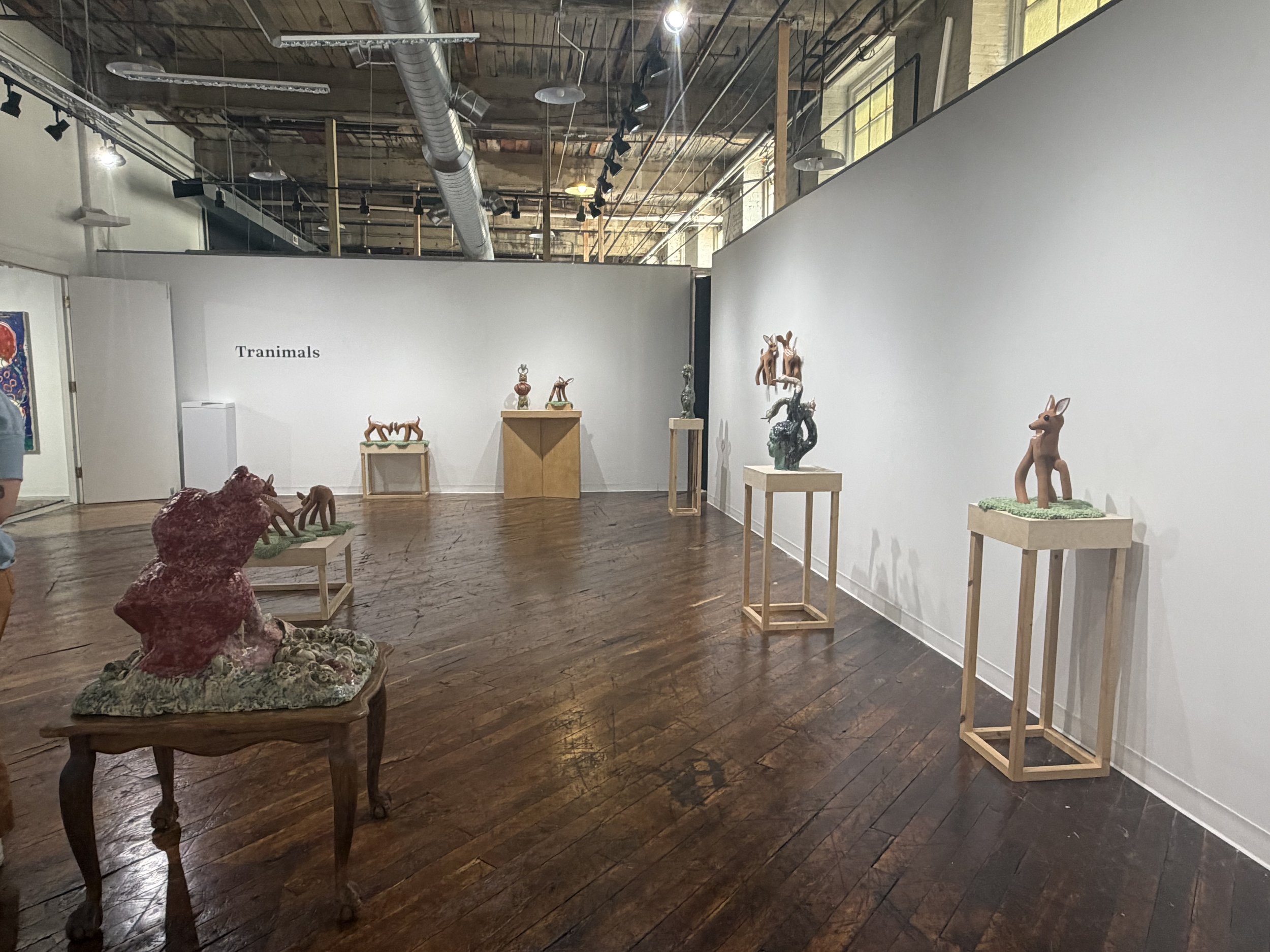
Installation view of Tranimals at Kore Gallery.
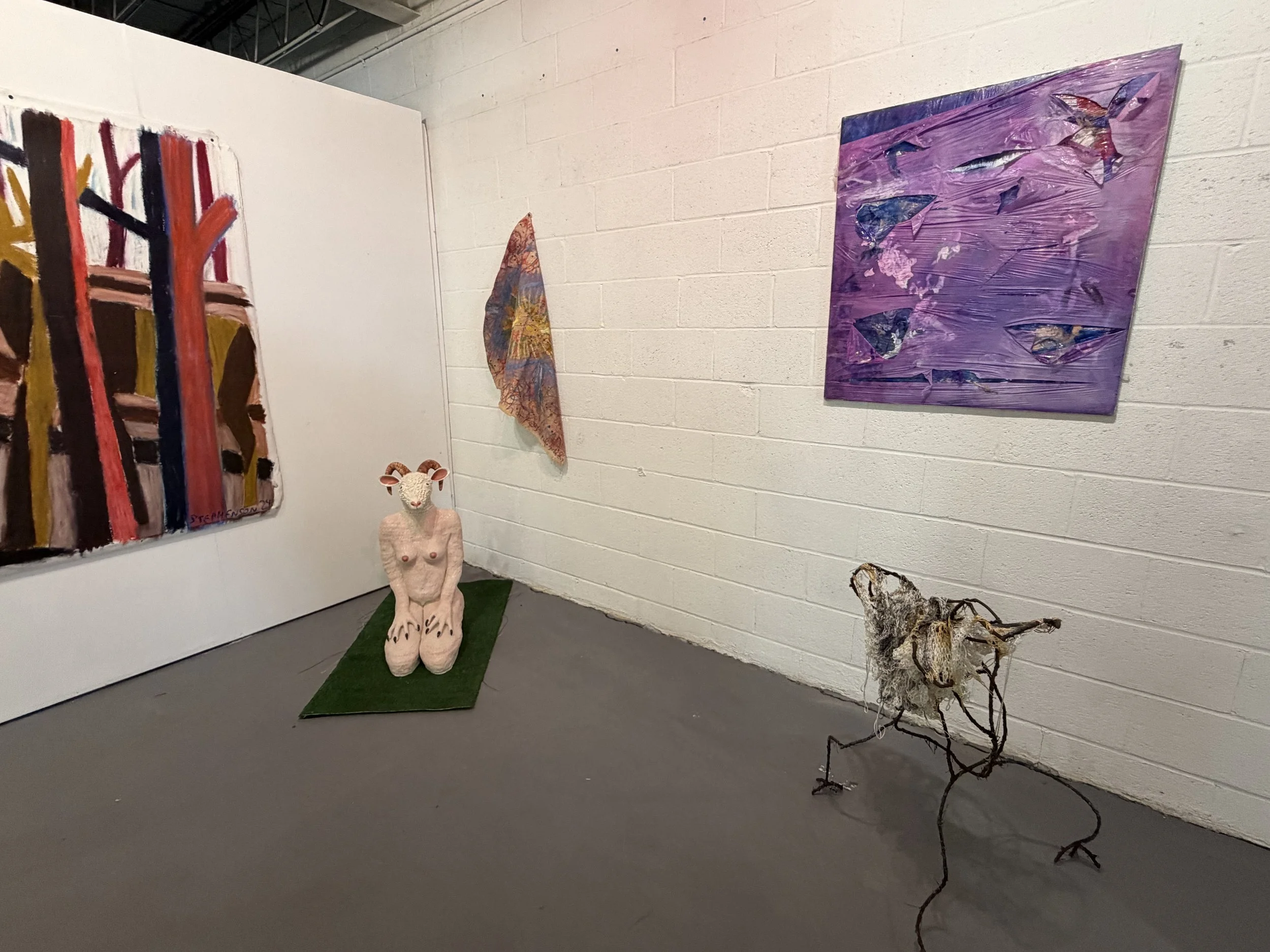
Installation view of Another Forest at the LVA Project Space.
CB & GK: Now that you’ve shown together in a variety of spaces, which viewing experience do you think best suits your work?
MT: I will continue showing within these collaborative spaces and white wall spaces for the rest of my life, which I'm grateful for. But in an ideal world, my work sits solitary in a field. It reminds me of when I was in undergrad, talking to my professor and I said “Oh, I would love to photograph this work outside!” And they said “No, you're not supposed to do that.” There are certain conventions that exist in this world we’re expected to follow.
CB & GK: That's such a lovely idea to think of it outside. It belongs outside. You know, why wouldn’t it?
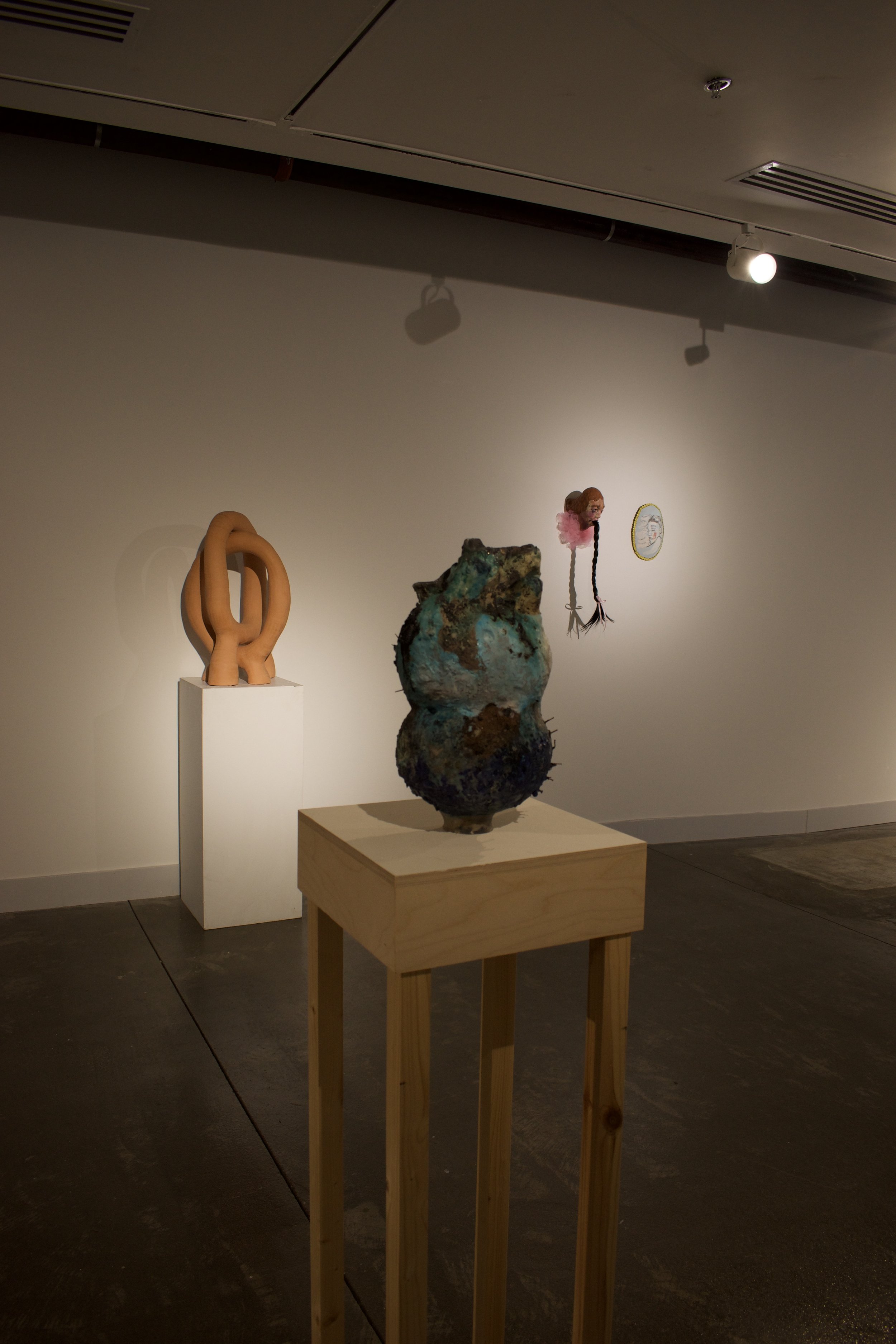
Installation view of Canceled: The Max and Drew show at the University of Louisville’s MFA Galleries.