
FIRE TO FORM
Contending with culture and history in contemporary atmospheric ceramics through Sinclaire Marie’s solo exhibition, ASH, at the Gateway Regional Arts Center.
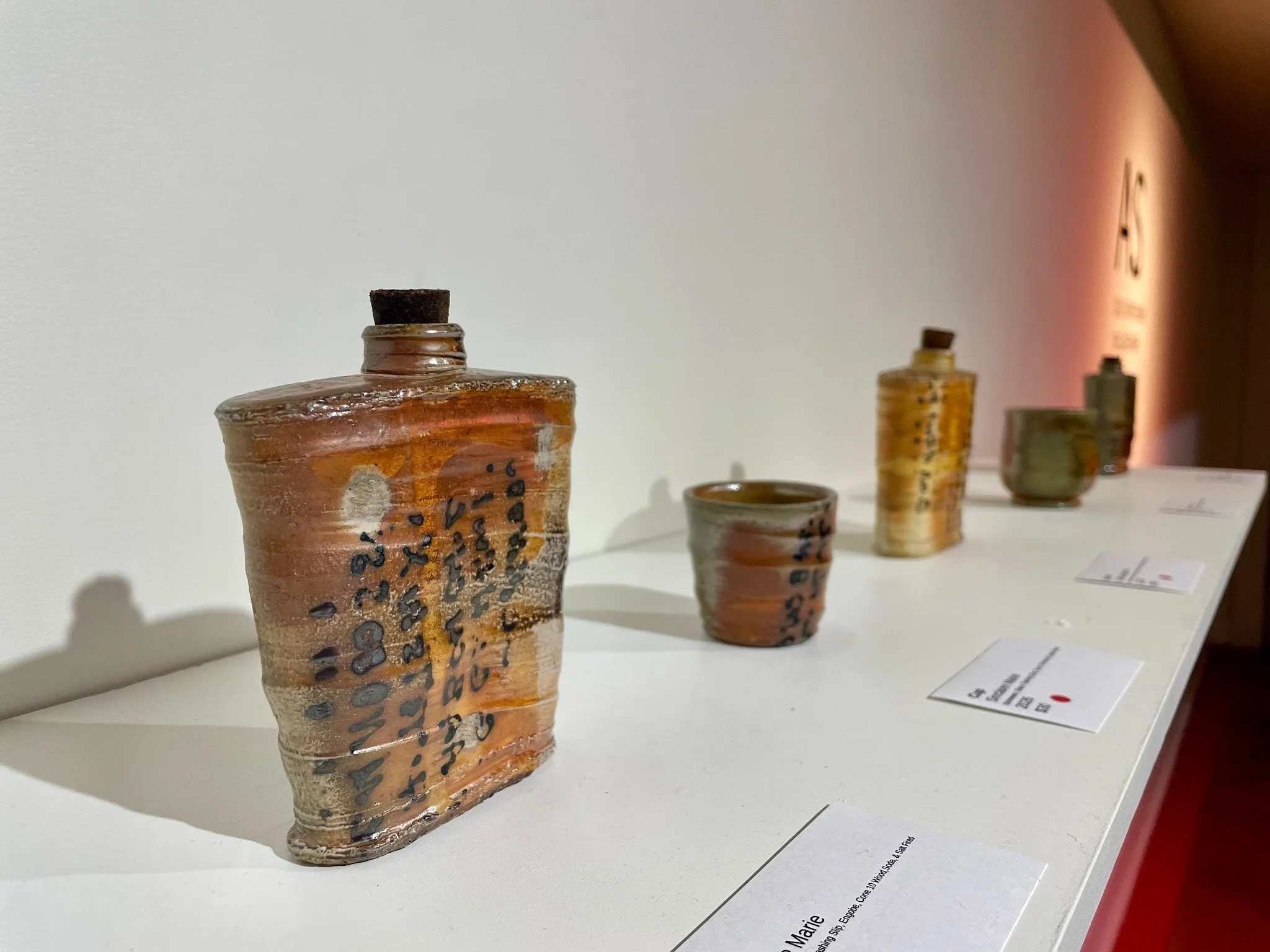
Fig. I: Atmospheric fired flasks and cups adorned with Diné lettering along the gallery wall. Work by Sinclaire Marie.
Interspersed throughout the “household objects” section of the thrift store, varying decades of ceramics can always be found. In between everything from Fiesta Ware ceramics and IKEA plates, a museum begins to appear on the beige racks lining the walls.
Throughout recorded history, pottery has served as documentation. Serving as a perennial archive of humanity—vessels, tiles, and ceramic landmarks serve as physical timekeepers. Our ability to assess this information is due to ceramics’ ability to suspend time through tangible permanence.
Throughout the firing process, clay becomes a ceramic object via a chemical process known as quartz inversion—resulting in the ceramic becoming a permanent object that cannot simply return to its original clay state. Ceramic, even if in mere shards, is unable to return to the earth in its natural clay state. While my eyes are poring over ceramics at the thrift, I can’t help but wonder: how much of this will get thrown away? How much longer will these objects outlive me?
Rarely does the average individual consider the labor poured into our everyday objects, nor their implied permanence. Between industrialized ceramic and impenetrable plastics, few recognize the legacy that these objects will leave behind.
Sinclaire Marie demonstrates this understanding deeply via contemplative ceramics in her solo exhibition, ASH, at the Gateway Regional Arts Center in Mt. Sterling, Kentucky. Marie pays attention to the fine details within everyday objects meant for daily use, presenting the opportunity for moments of deep observation. She references home and its inherent multiplicity in the choice of objects made. Bourbon flasks aligned in a row are reminiscent of her time living in Kentucky. Along vertical sections of each piece, Marie has painted pieces of Diné language to echo her birthplace and cultural preservation of Indigenous histories. Sinclaire’s dynamic surfaces within her pottery are created through skill and precision; the atmospheric firing process lends itself to aesthetic combinations of texture and hue. In the buildup of textured ash, tactful glaze application, and correct placement within the kiln, Marie produces work that exists at the successful convergence point of these facets.
Marie is currently finishing out her residency at Queen City Clay, a residency and ceramics studio program in Cincinnati, Ohio. Sinclaire’s program in particular is unique due to her position as Atmospheric Artist in Residence, which to the uninitiated, could be an unfamiliar position. While atmospheric firing can relate to many types of processes, Sinclaire’s work is primarily fired using a wood kiln: a deeply traditional and methodical type of firing that is integral to ceramics' histories across the globe. Wood kilns in particular produce surface qualities that differ drastically from other types of firings. What makes this type of firing so uniquely different is the ash created from the burning, or “stoking”, of the kiln. This wood ash is then deposited throughout the kiln, which can create stunning and unique qualities on the surface of each pot. Atmospheric firing processes are not only incredibly labor-intensive due to preparation for the firing, but also demand an expertise of kiln technology through manual firings, unlike programmable electric kilns. These firings often span multiple days, requiring careful watch over the kiln for the duration of the firing process. Without proper attention to detail, an entire kiln of work can easily slip into unsatisfactory surface design, or even worse—severe cracking or defunct objects. With this understanding, the skill present within these pieces becomes apparent immediately, and can be appreciated to an extent that exceeds preconceived notions of everyday ceramic objects.
The viewer is greeted upon entering the exhibition space with a row of flasks and cups, alternating in color and composition (fig. I). Present on these pieces are fragments from the Diné language. Each piece offers unique insight into how surface varies within atmospheric firings, and is arranged by the breadth of color present. Bright orange flashing flows seamlessly into a muted sandy hue, all of which are present on a singular flask.
As the works progress in this line of ceramics, these muted colors transition from butter yellows to a deep green ash along the surfaces of the subsequent pieces. Each work captures a specific moment within the kiln, and now lives among the earth in permanence. Through the declaration of the Diné alphabet painted delicately onto each piece, Sinclaire immortalizes this aspect of Navajo culture—meant to be lived with in the home for daily contemplation or meditation. Juxtaposed with the Diné lettering is the flask form, serving as an homage to Kentucky bourbon culture. Each work is marked with throwing rings, evidencing the hands of the maker. The patterns created by throwing rings demonstrate not only skill and precision, but act as a reminder of the artisan’s individuality.
I am struck by the solitary moments that are placed around the room. On pedestals throughout the space, vases and pitcher forms each have their own platform for quiet observation and reverence. From the lip of the forms to the foot of the vessel, Diné lettering creates a distinct vertical patterning in direct contrast to the horizontal throwing lines. Sinclaire demonstrates a unique understanding of handles through consistency and attention to ergonomics in her pitcher and mug forms. Elements of atmospheric firing are also present within this piece (fig. II)— marked by blossoms of orange that depict a direct relationship between the clay body, kiln, and flame path. Each aspect of the vessel has been acutely considered, deserving of its own pedestal within the space.
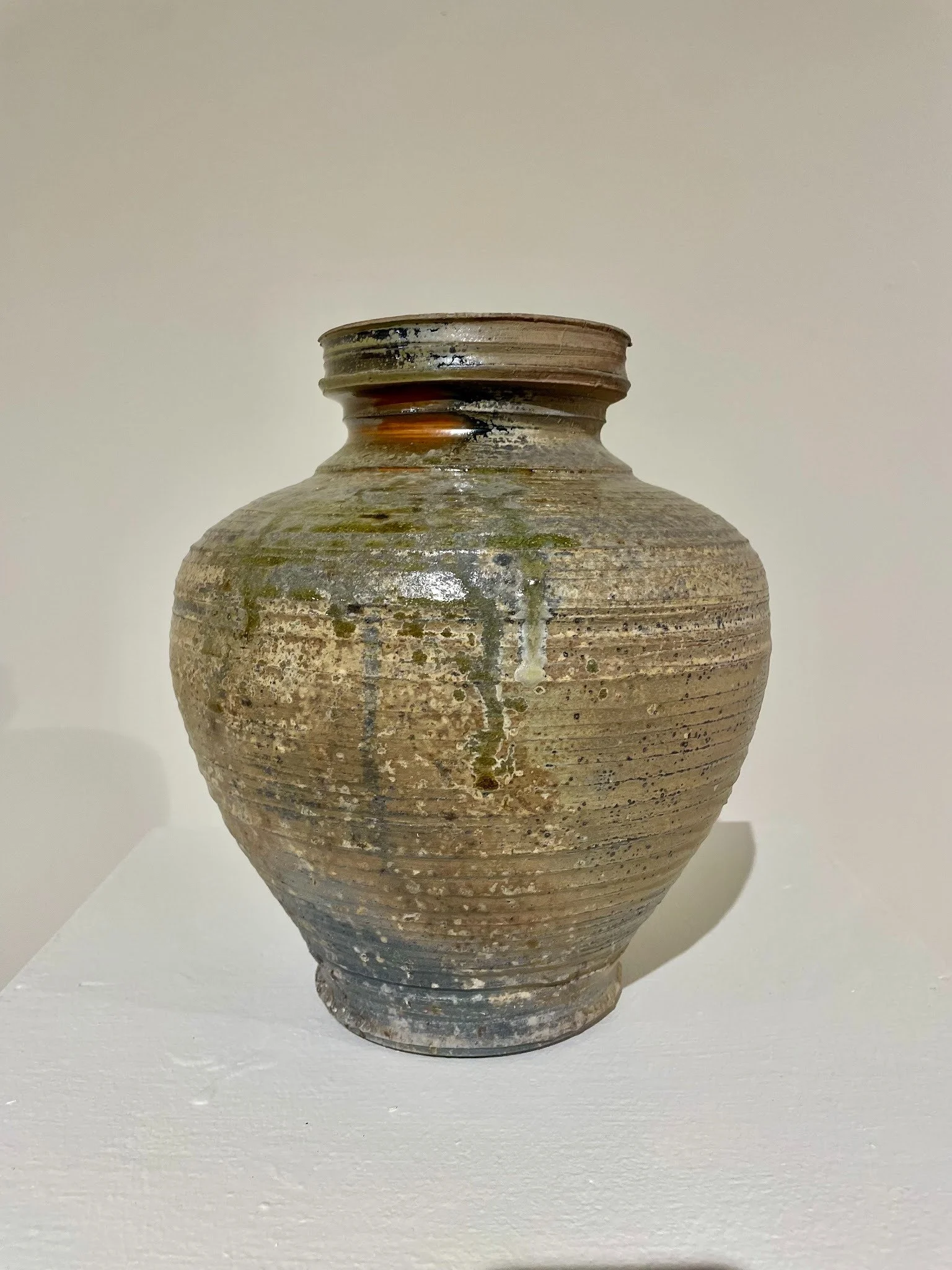
Fig. II: Atmospheric fired vase. Work by Sinclaire Marie.
Instruments from inside the kiln are also placed carefully alongside pieces throughout the exhibition. Adjacent to the vessels are “cone packs,” or guiding markers to indicate heatwork, the combined effects of temperature and time, during the firing process. Cone packs are fundamental to atmospheric firings, but also serve as artifacts of a moment in time during the process of the kiln warming. As the kiln warms, each “cone” begins to drop and acts as an indication of when the firing is complete. These serve as teaching tools and also act as relics for the artist. Cone packs are often seen as discarded material and only sometimes kept after a significant firing. Placed alongside atmospheric kilns alike, fired cone packs can be found strewn atop kiln doors leading into the entryway of the kiln. During the loading of the kiln, these packs function as good luck omens for the next firing and also function as storytellers of a kiln’s history.
Flashing burnt oranges creep along the walls of the pouring vessel (fig. III) and transition sharply to the cool greys from deposited wood ash. The vessel atop the kiln brick has reached the exact temperature that has been demonstrated via the recorded history of the cone pack. The presentation of both the object and the kiln pack are unconventional, yet incredibly refreshing and provide a declarative resonance of the craft of firing.
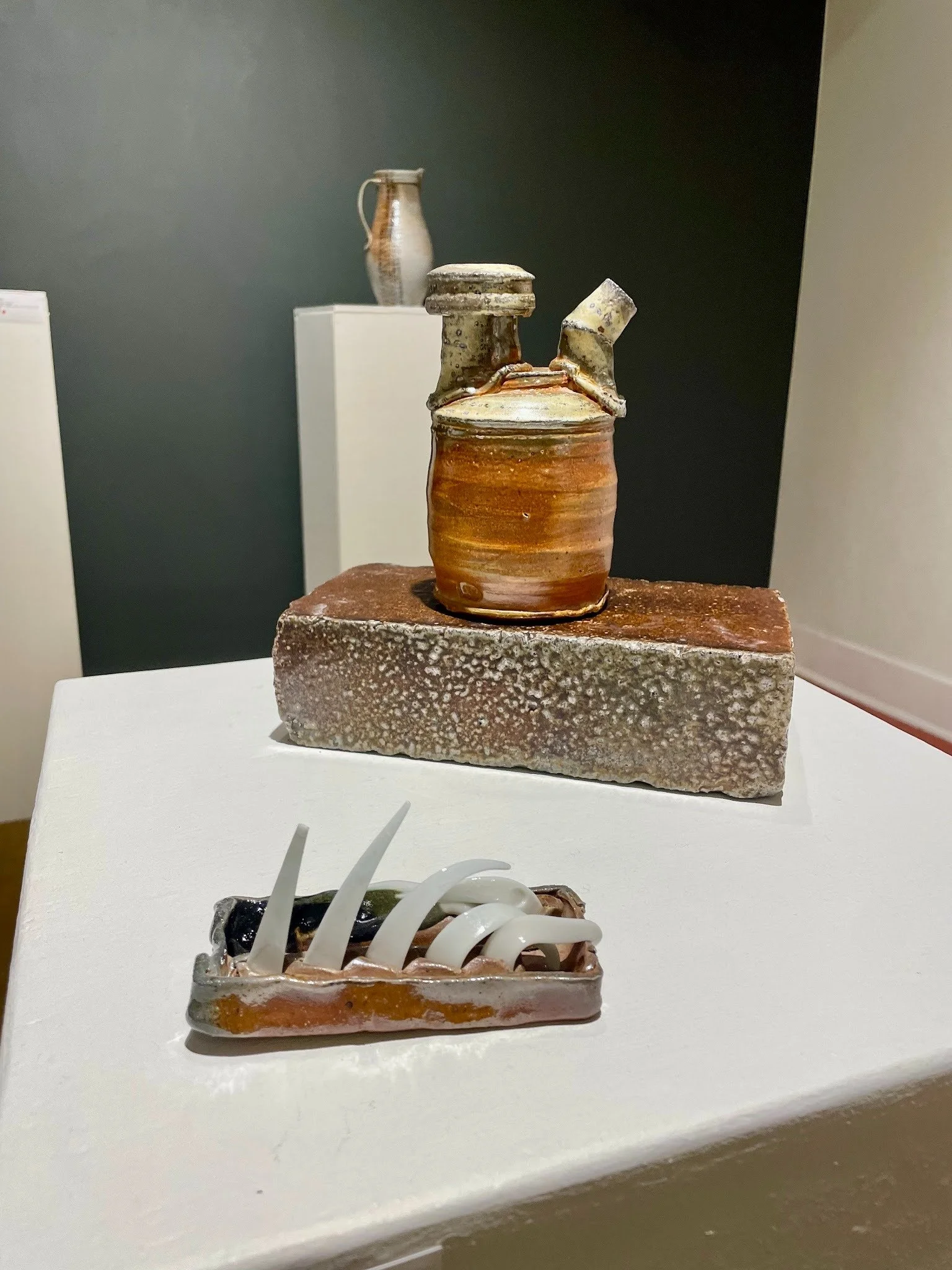
Fig. III: Atmospheric vessel on top of kiln brick, placed with the cone pack from firing. Work by Sinclaire Marie.
On a pedestal towards the exit are two small vase forms, each accompanied by its own ceramic spoon (fig IV). One of these vessels is placed upon a brick that comes directly from the kiln, providing further context to the process in which the work was fired. Blushes of pink and purple fade into celadon glaze, combining with textural surface qualities that invite the viewer to be curious about how this might feel against their palms. Along with the varied surface coloration is the transition from smooth throwing lines to a pitted, crater-like surface towards the shoulder of the pot. Several changes in plane direction occur on the pot's surface: from foot, to body, to shoulder, to neck, and finally to lip of the pot. In the acute transition between the body and the shoulder, pools of glaze materials combine with flame—creating vibrant turquoise and intense shifts in coloration. As I walked through the exhibition, I found myself continuing to return to this specific pot for further examination. With each pass, I found additional exciting details layered within the glaze combinations. Achieving and maintaining this intensity of contrast within a wood firing is an incredible feat that defies expectations of traditional wood-fired pottery.
A successful pot is one that creates intrigue and invites the viewer to question: how does a functional pot need to look or feel in order to create a memorable experience? Sinclaire Marie has engaged with this dialogue by contending with wood firing histories and contemporary culture in the culmination of this exhibition. In doing so, Marie is actively forging new paths that revolutionize conversations surrounding functional pottery, labor, and the necessity of craft traditions.
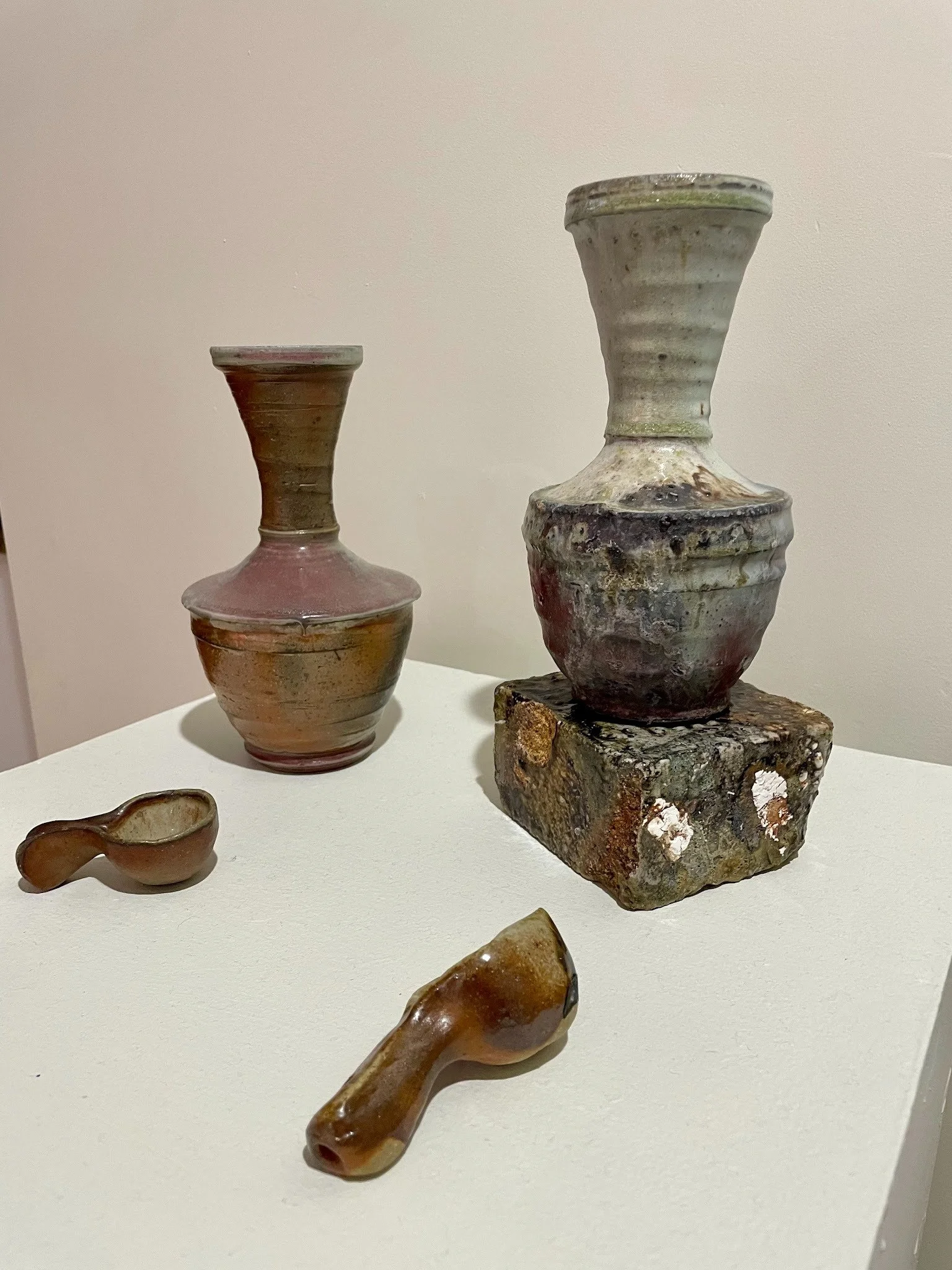
Fig. IV: Atmospheric fired smaller vase forms placed with ceramic spoons. Work by Sinclaire Marie.