
RE-COVERING THE MISSING
The story of David Wojnarowicz’s lost mural and a vision for its future.
Installation image of “Missing: When East Village Artists Came to Main St” on view at the Cressman Center for Visual Arts, Hite Institute of Art + Design. All photos via Kathryn Brooks.
In December 1985, an exhibition of murals by five New York street artists painted directly onto the ground-floor walls of the then vacant Billy Goat Strut Building in Downtown Louisville opened for merely a few days before its grand, rave-style closing reception. Titled, The Missing Children Show, the exhibition, which included sculptural work and performance, was organized to honor Ann Gotlib and fundraise for Kentucky’s Child Victims’ Trust Fund–a foundation that worked to prevent child abuse and a popular type of organization for artists across the nation to team up with at the time.
Installation image of “Missing: When East Village Artists Came to Main St” on view at the Cressman Center for Visual Arts, Hite Institute of Art + Design.
Hailing from the East Village, where a mix of scrappy galleries and abandoned industrial spaces were the backdrop for a socially advocating avant-garde scene, the artists Rich Colicchio, Futura 2000, Judy Glantzman, Kiely Jenkins, and David Wojnarowicz made the journey to Louisville for this in situ show. All those involved assumed that the public art created would only be temporary, as it so often proved to be at sites of New York’s own urban renovation.
Almost exactly forty years later, in August of 2025, the show once again made national headlines when Valentina Di Liscia, writing for Hyperallergic, reported that a mural, considered long gone, had been rediscovered. Encapsulated with care behind protective drywall for an unidentified number of decades was the only known surviving mural by the expressionist painter, David Wojnarowicz, and his largest known painting of any kind.
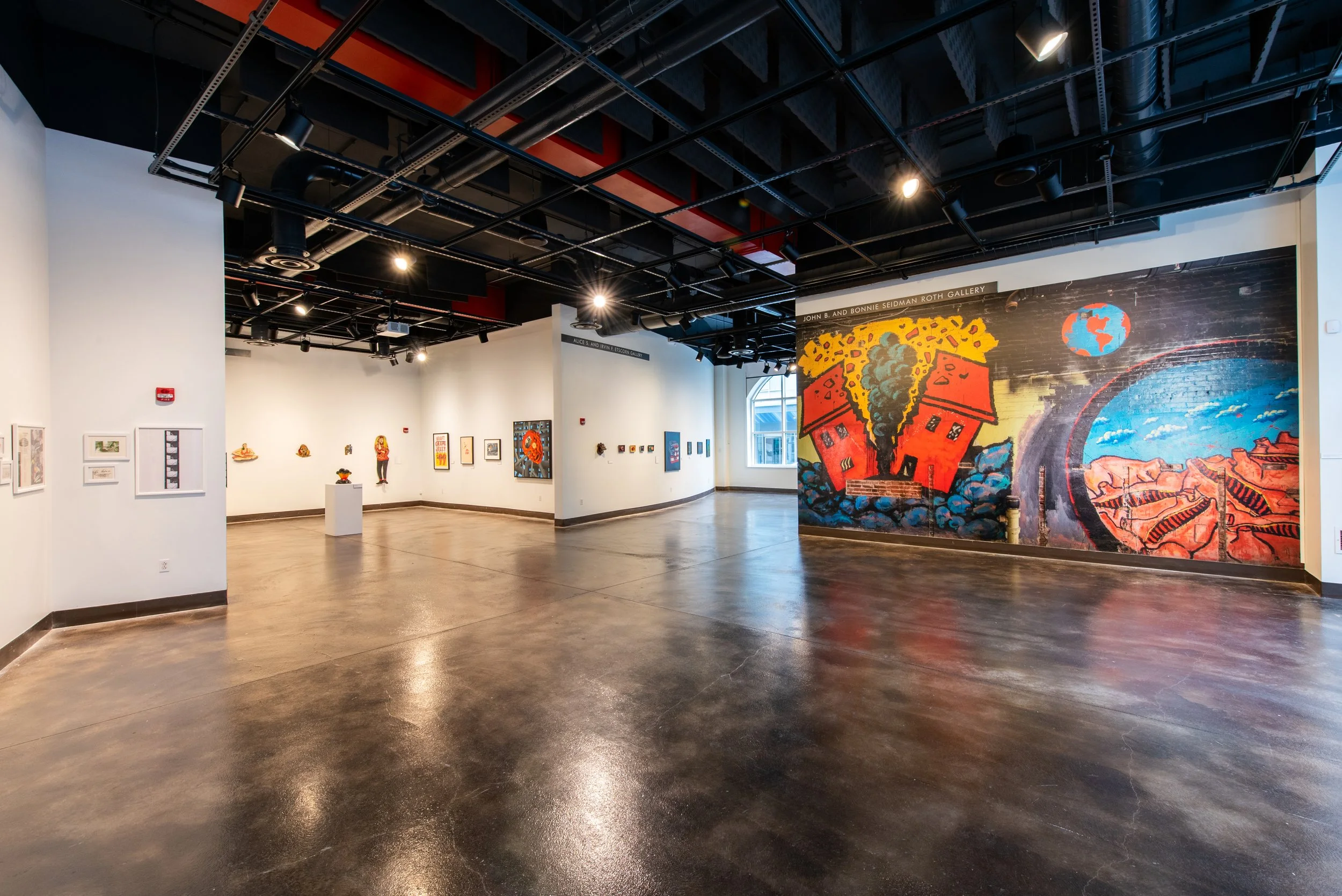
Installation image of “Missing: When East Village Artists Came to Main St” on view at the Cressman Center for Visual Arts, Hite Institute of Art + Design.
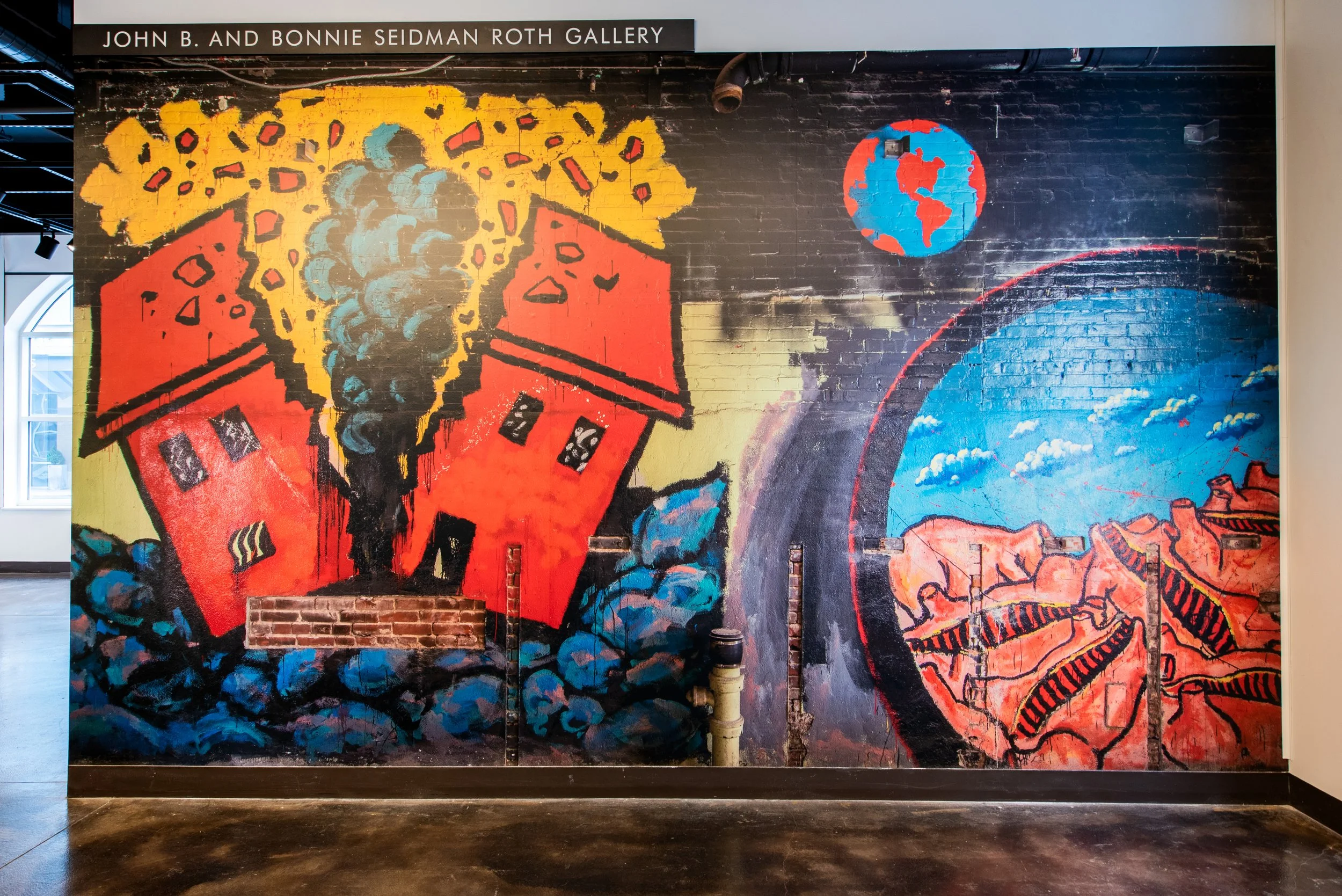
The floor-to-ceiling mural appears like a folded-open book where the left side shows a crimson-colored house halved by an oxidized copper-plumed explosion. On the right, a beach-ball-sized red and blue globe floats above a second sphere inside which the bright sky of a sunny day illuminates the split-open carcasses of a dozen skinned cattle. Splashes of primary paint underlay the separated image on an adjoining wall where a steer seems to choke on its own tongue.
With The Missing Children Show existing only in memory through collaborative Louisville-New York lore, it is logical to assume a contemporary developer would quickly repaint this astonishing wall and move on with other renovations, knowing little to nothing of its history. However illogical and serendipitous it may seem, a small miracle occurred in 2022 when the drywall was cracked open, and the well-preserved pigment of Wojnarowicz’s painting shone through. Moseley Putney, an architect on the Billy Goat project, recognized the work from his attendance at the exhibition’s opening in winter 1985.
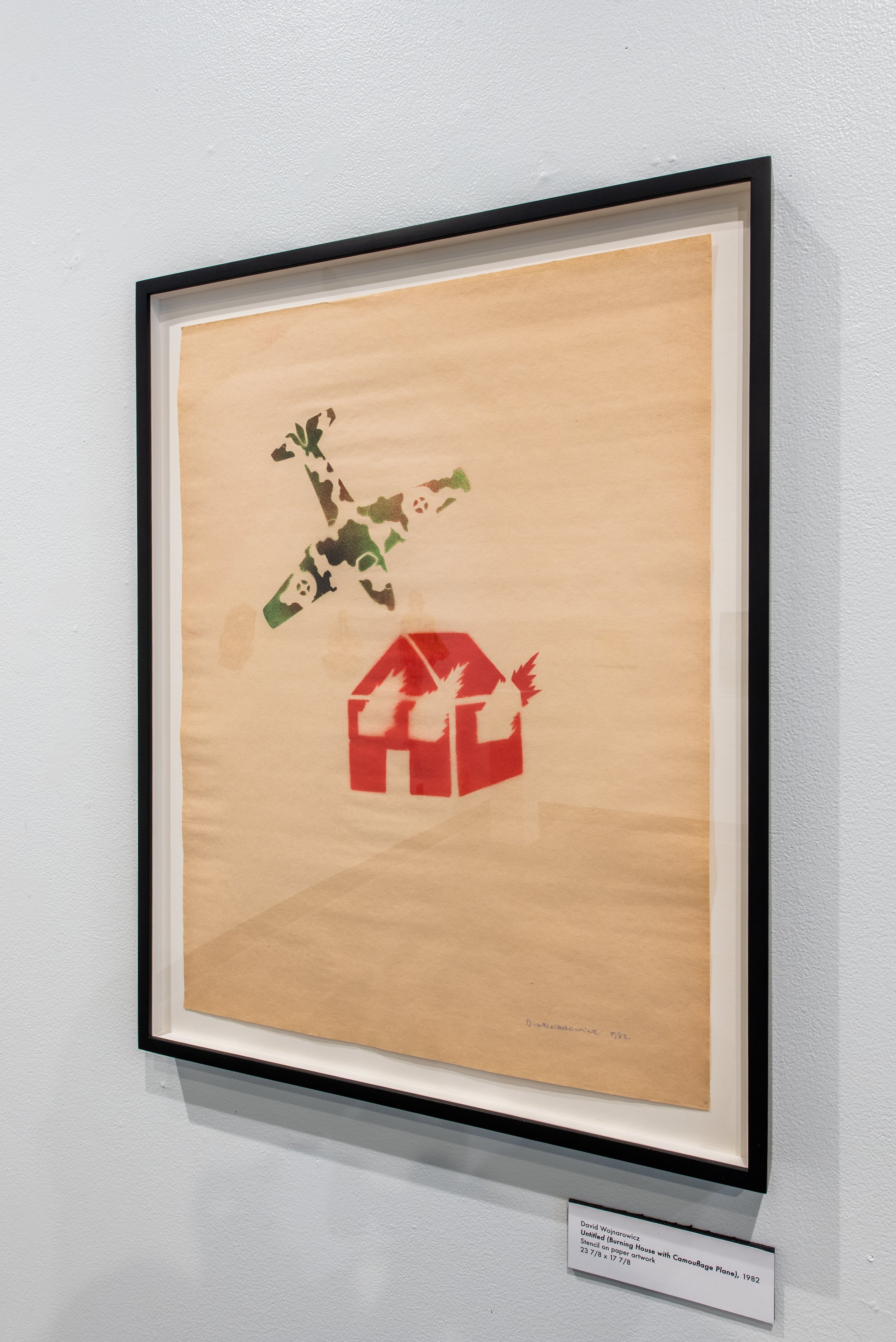
David Wojnarowicz, Untitled (Burning House with Camouflage Plane) (1982).
Thanks to Putney’s recognition and knowledge of the mural’s cultural significance, the individuals involved with the historic exhibition were contacted, along with the estates representing Jenkins and Wojnarowicz. Following a few years of active intervention and hopeful discussions, the mural was still deemed off-brand for the building’s renovation, and it became once again entombed in sheetrock out of sight from those who use the “Fitness Facilities.” A proposed public unveiling of the newly discovered mural was postponed–a frustrating fate for an artist so often censored during his lifetime. Deferred but determined, The David Wojnarowicz Foundation, Rich Colicchio, and Judy Glantzman, along with Dr. Chris Reitz and Dr. Jennifer Sichel of the University of Louisville’s Hite Institute of Art + Design, teamed up to host a contemporary exhibition that revisits 1985 as a reminder of this historic moment on Louisville’s Main Street.
Missing: When East Village Artists Came to Main Street opened on March 20, 2026, at the Cressman Center for Visual Arts, located at 100 E. Main St., just five blocks up from the site of the original exhibition. Co-curated by Sichel and Reitz, the exhibition was intentionally retrospective, featuring work from each of the East Village artists made around the time that the original show took place.
Through the gallery doors, visitors were greeted by a large-scale photographic reproduction of Wojnarowicz’s mural stretched upon the opposite wall. With its realistic coloration and size, the mural’s recreation immerses visitors and grounds the exhibition in a central point–this mural still exists, and someday, this show could happen alongside the original.
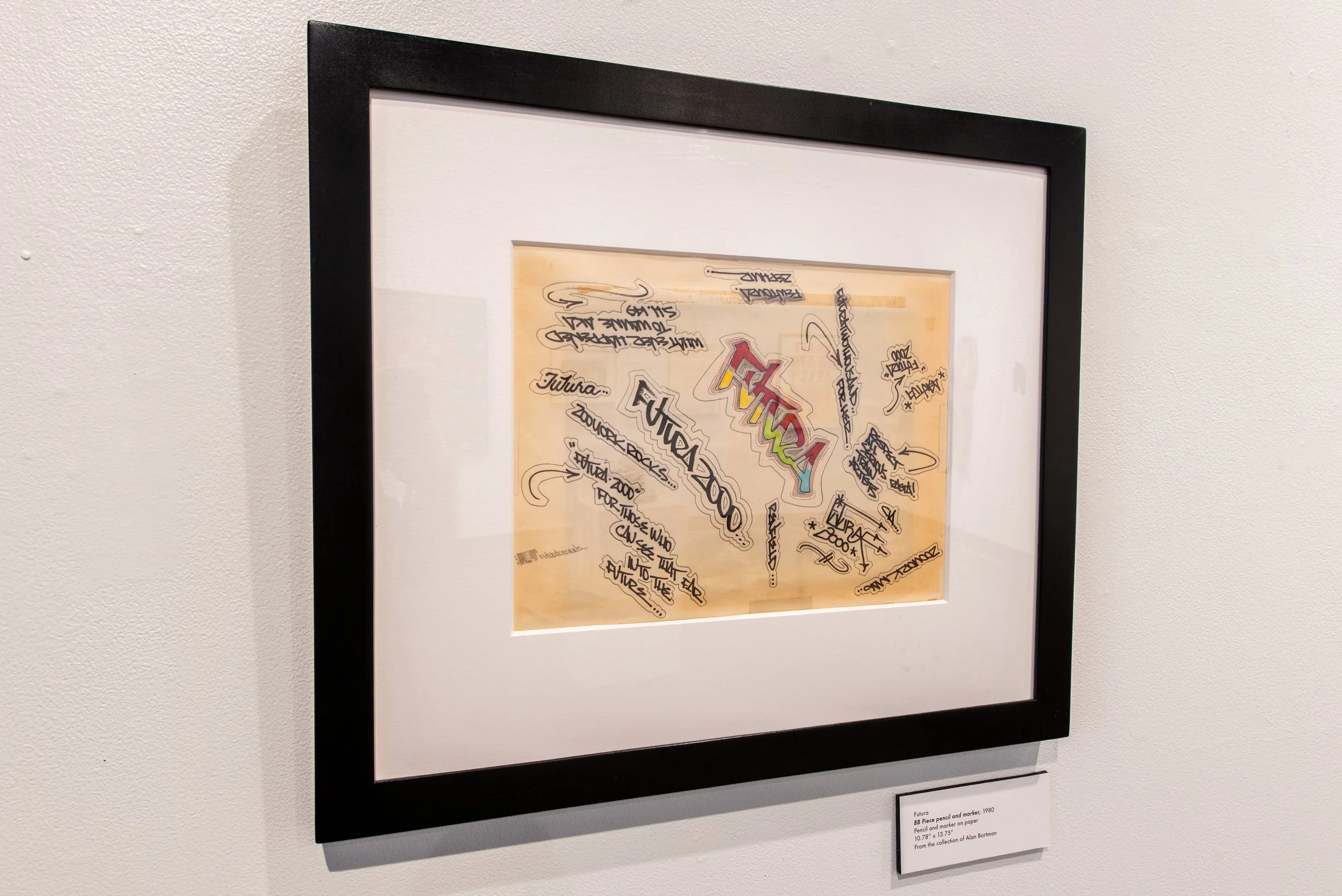
Futura, BB Piece pencil and marker (1980).
The other works by Wojnarowicz selected for this 2026 show vary in medium from a screen-printed movie poster to an oil painting, as well as the show’s singular sculptural work, a miniature explosion mirroring the one occurring within the mural. Combined, the pieces highlight Wojnarowicz’s gravitation toward contrasting colors and uncanny, albeit cartooned, imagery. Through the inclusion of this disparate work, a notion of the artist is presented–a man who did not shy away from the harder-to-look-at parts of life.
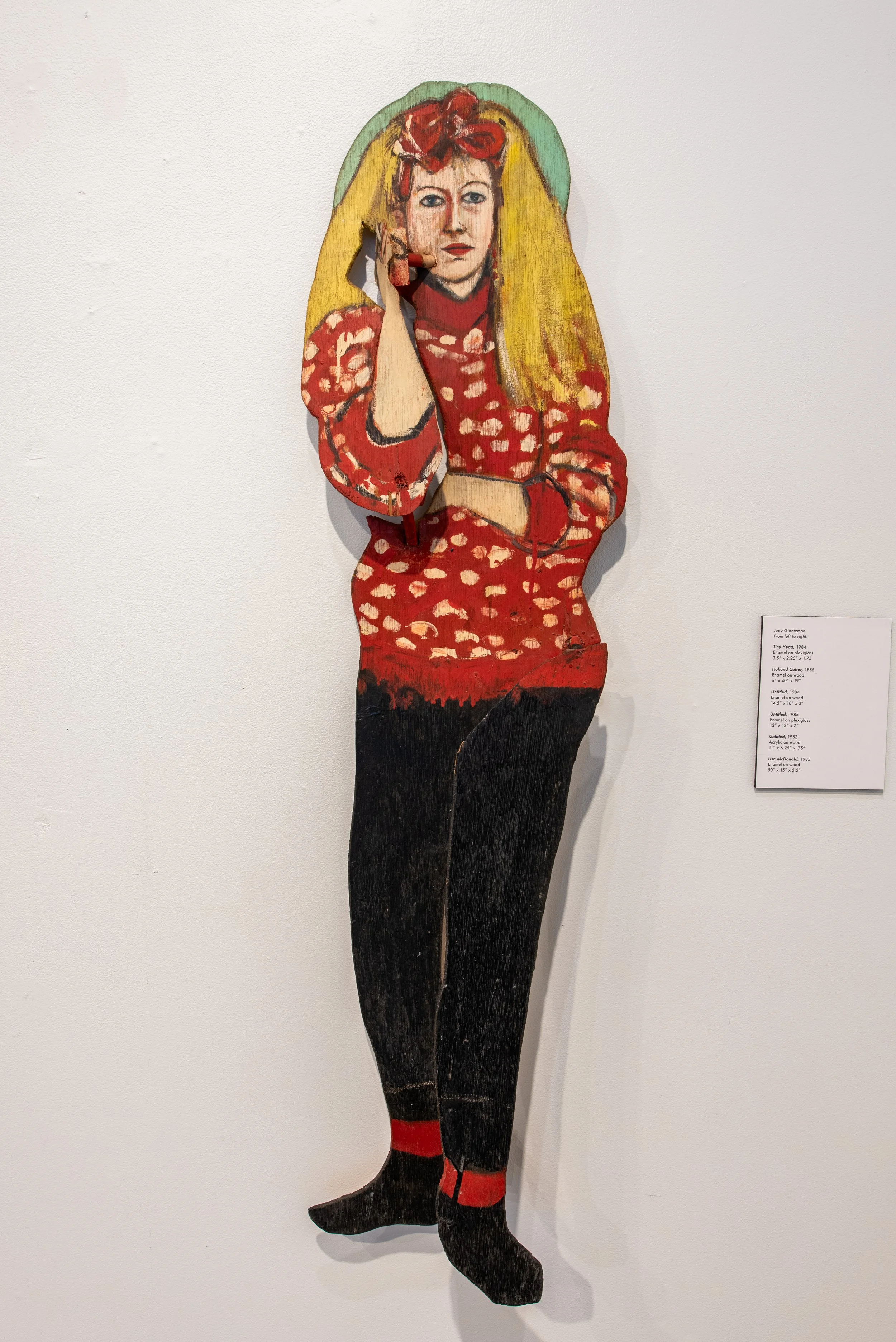
Judy Glantzman, Lisa McDonald (1985).
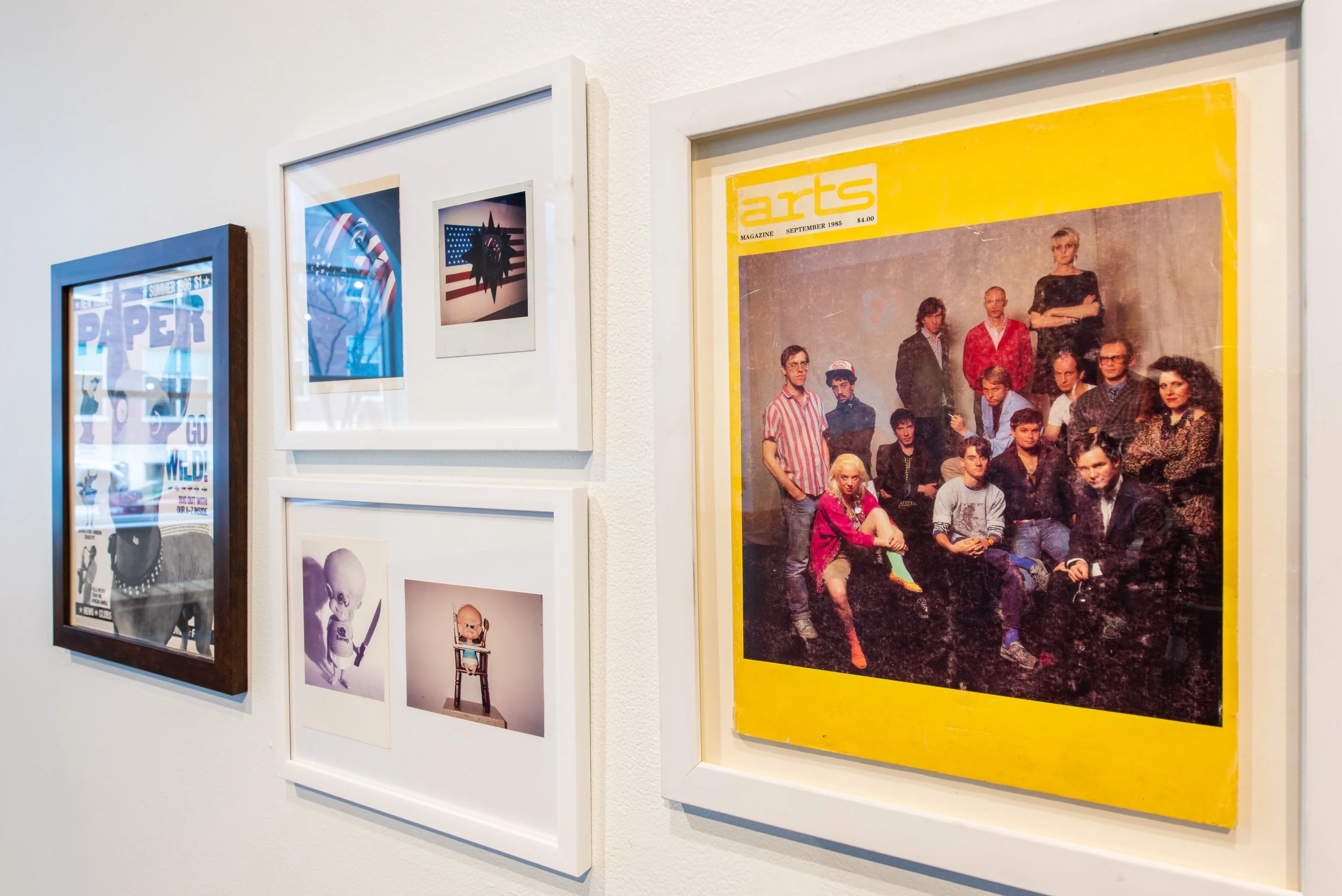
Turning into the gallery, a display of ephemera from the original show continues this immersion into the past. Newspaper clippings, magazine articles, and the original catalogue are displayed, offering an impression of the excitement felt in Louisville when those at the helm of the East Village scene planned their visit. Small-scale, mural-style paintings by Futura 2000 follow, emphasizing his place in New York’s growing graffiti collective. In an interview conducted with both of the show’s curators, Reitz pointed out that it was not long before the 1985 show that Futura toured with the Clash, painting live graffiti backdrops during their performances. His participation in the 1985 show would not have gone unnoticed by those paying attention to the broader national art scene.
Following Futura’s work, a group of Judy Glantzman’s assemblage paintings brings to life the characters of the past, including a gaunt figure recognizable as Wojnarowicz. Described as “tender portraits” in the show’s brochure, these playful cutouts emphasize one of the trails for the East Village artists of the 80s. Often, they found it difficult to receive respect from the larger art world, especially the galleries of SoHo just a few blocks north, which viewed their work as unserious. “But it was deeply serious,” Sichel emphasized–a “pointedly political return to figuration” during this transitional decade.
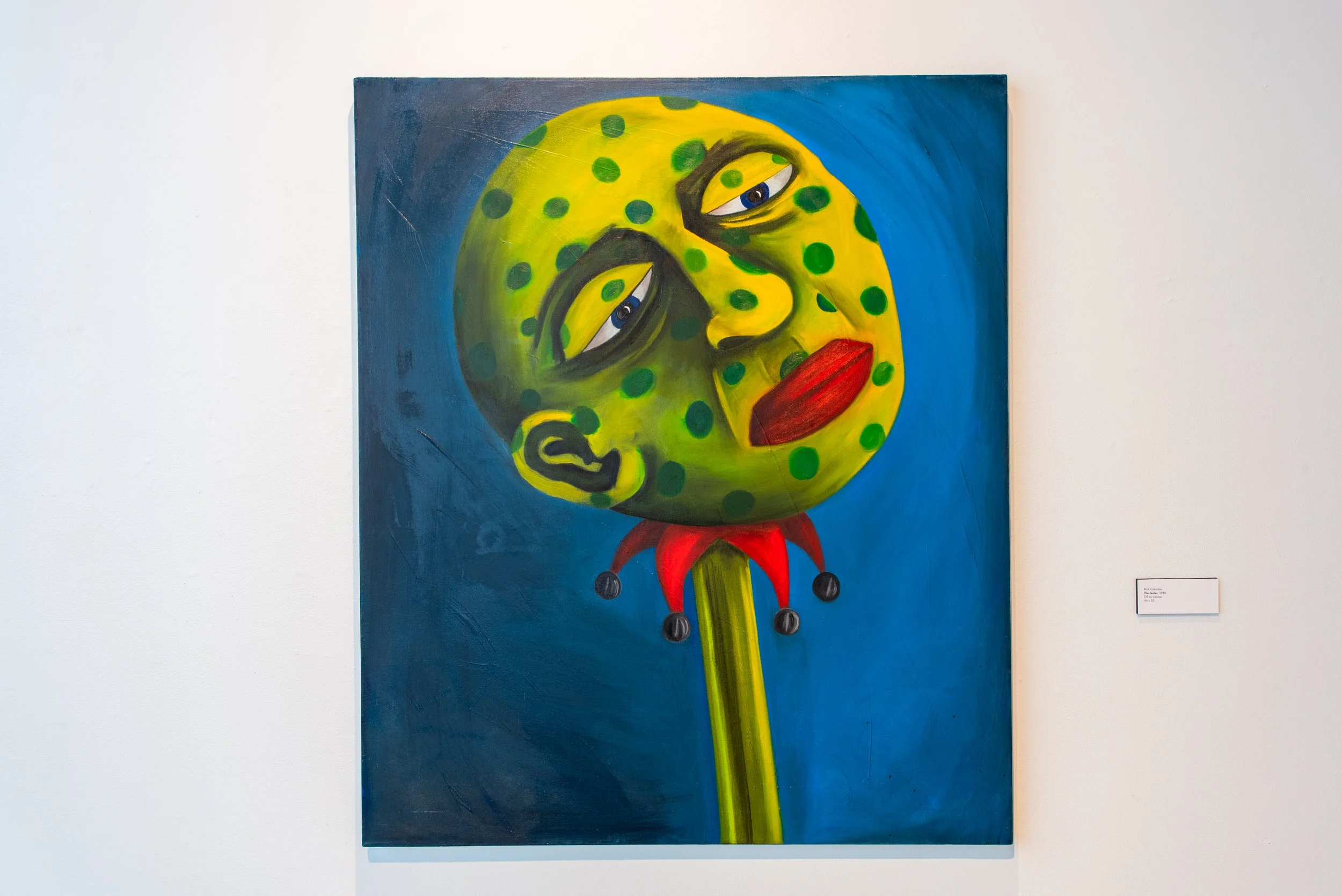
Rich Colicchio, The Jester (1985).
Equally playful sculptures by Kiely Jenkins hang on the gallery’s final wall. The enamel head of a taxidermy cat, eyes open and seeming to vividly pulsate as if the cat did not know what hit it, hangs alongside shadow boxes inside which Jenkins situates asymmetrical-shaped carvings. The set creates a pattern that plays with texture and spacing, evoking a mid-century modern object that has had an encounter with the streets of the Lower East Side. Rich Colicchio’s caricatures, featuring ballooned heads wrapped in unnaturally toned skin, stare to the corner of their frame in a state of passivity. The seriousness of all this work is evident in its satirical qualities–none of it is intended to be an accurate representation of the object or figure it depicts. Instead, they are highly representative of lives that feel excluded from the grander narrative, left to participate or disappear into gentrification.
These artists were East Village misfits and visionaries, finding each other as unlikely friends and ultimately caretakers for one another. Founder of gallery 51X, Colicchio held a central role in the downtown gallery scene of the 80s. He often displayed the work of these artists, and it was his collection that made up the majority of the art in Missing. Glantzman, who is on the board of The David Wojnarowicz Foundation, supplied work from her collection as well, and both Glantzman and Colicchio worked to secure time-period pieces by the other artists.
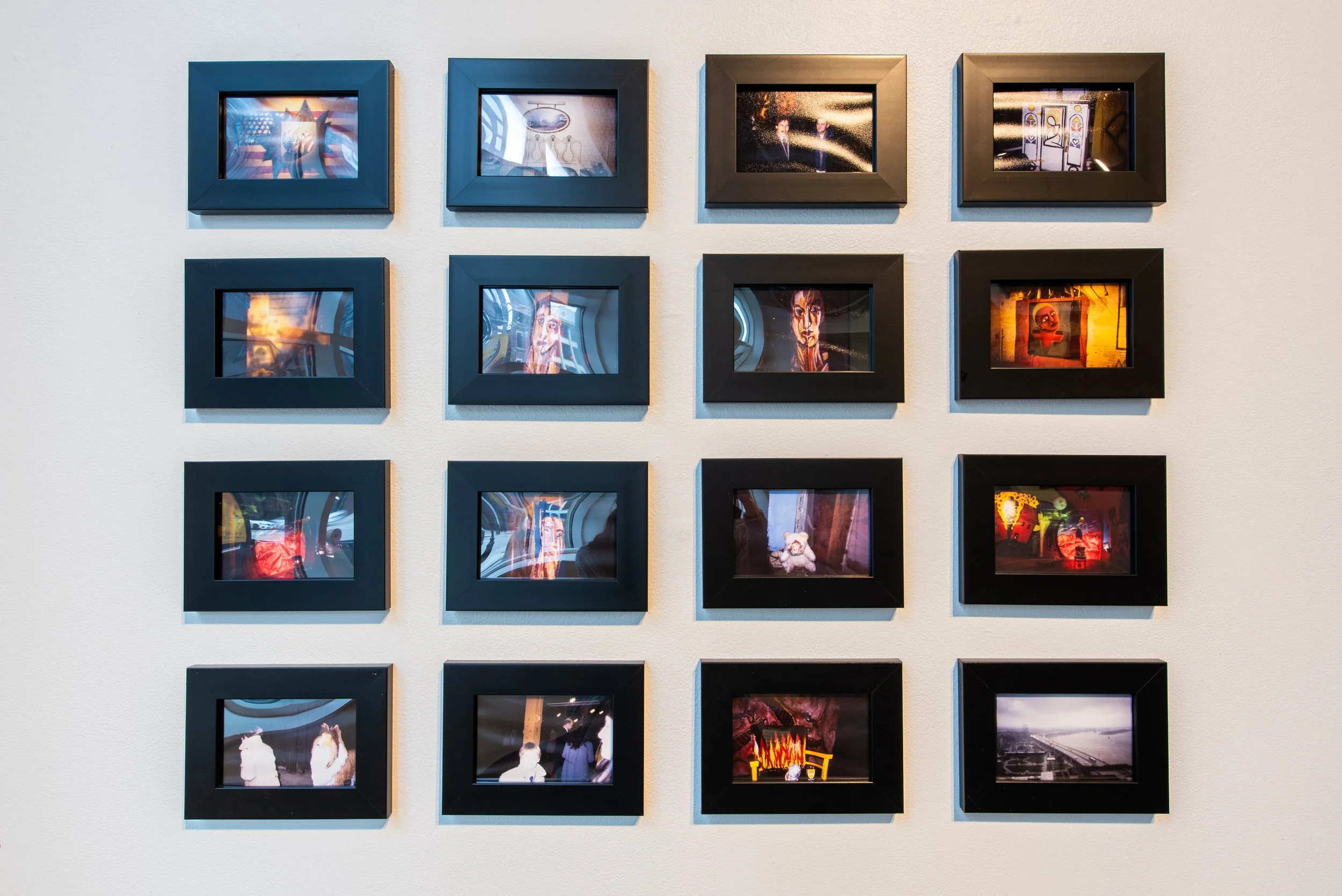
Installation image of “Missing: When East Village Artists Came to Main St” on view at the Cressman Center for Visual Arts, Hite Institute of Art + Design.
Both The Missing Children Show and Missing: When East Village Artists Came to Main Street are temporal. Existing within the moment they were designed for and gesturing encouragingly toward a future. A future where Louisville is a contender in the global art scene–collaboratively and as a repository. A future where artists elsewhere dismissed as unserious can create emboldened work.
For anyone who has been following along for the past half-century, this narrative is likely one in which a knowing nod is given, a sigh is had, and business continues as usual after Louisvillians support the arts honestly, if for only an evening. The opportunity that this emerging discovery offers is a chance to reevaluate the city’s posture toward the arts and its position within national art history. In my interview with Missing co-curators, Sichel emphasized that “this discovery tethers us to the potential of what has always been.” If the public is granted consistent viewership of Wojnarowicz’s mural, a refreshing international chapter opens in Kentucky. This act ensures that what remains of Louisville’s history can be properly preserved for generations to come. An act vital for a city whose history is so often sacrificed for another renovation or worse, another parking lot.