
THE READYMADE AT THE END OF THE WORLD
Curator Kathryn Brooks’ Critical & Curatorial Studies thesis show After Precarity at 21c Museum.
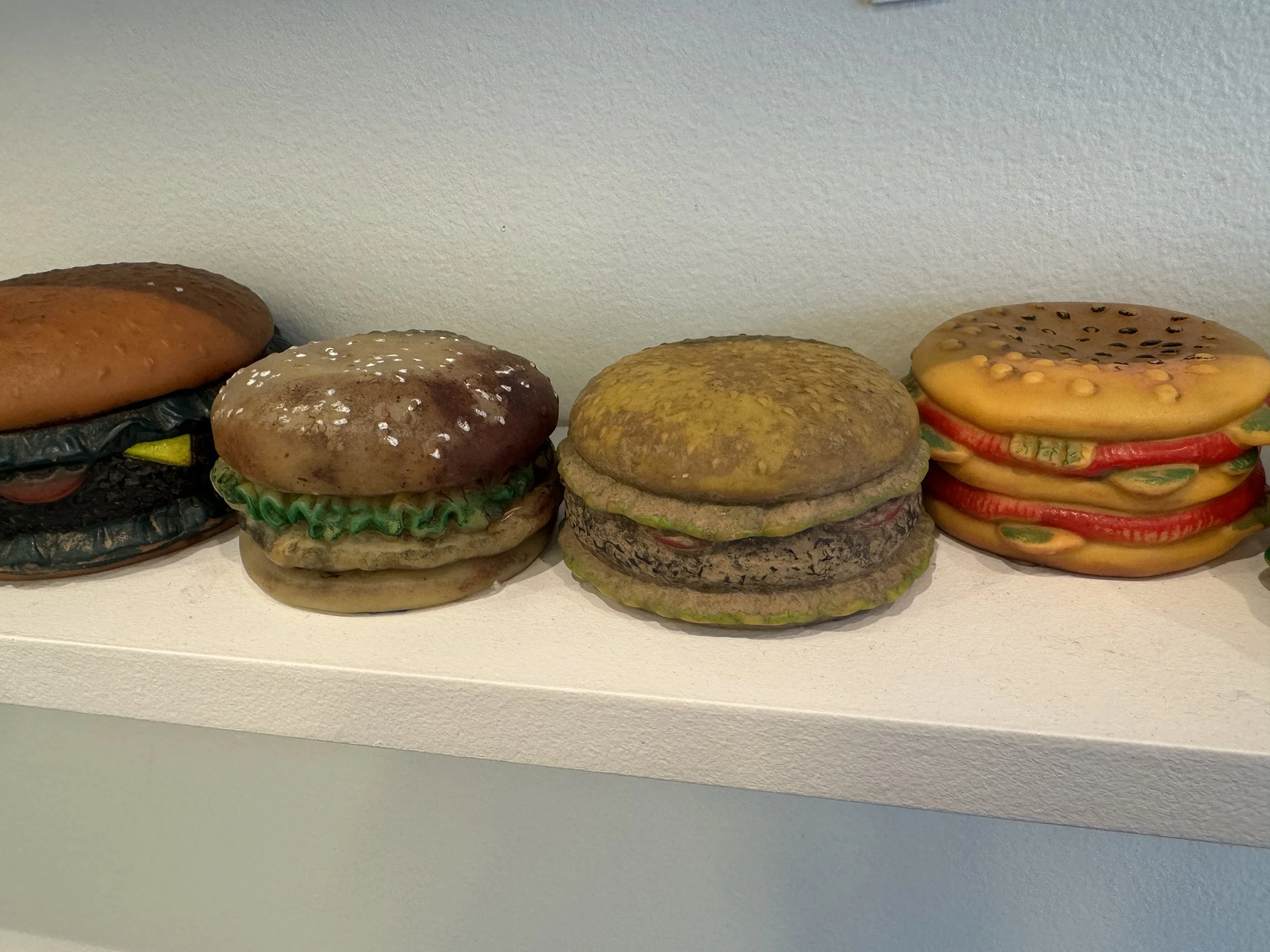
Albertus Gorman, Fake or Faux Food, detail. Photo via Sarah Melloy.
After Precarity, on view at 21c Museum Louisville takes us to a hauntingly not-too-distant future where strict boundaries between the useless and the precious have – at least in part – begun to fade away. Featuring the work of Louisville-based artists Lori Larusso, Albertus Gorman, Mitch Eckert, and Tom Pfannerstill, the exhibition confronts viewers with images of their own refuse.
According to curator Kathryn Brooks, the exhibition seeks to address what happens when we stop and look at the world around us. It seeks to address, in this pause, what questions we might ask and conclusions we might draw in our current overwhelming age of overconsumption. Sculptures made of trashed objects pulled out of the Ohio River and large-scale, floating paintings that depict used and discarded packaging, point our gaze to a shift in human relationship with our material reality. These referents to abundant, indestructible plastics, overflowing landfills, polluted water, and by association: the climate crisis, turn our attention more specifically to our relationship with the earth. This shift is often framed in terms of a new epoch: the anthropocene, or: the time since humans have had a substantial impact on the Earth’s environment.
After Precarity offers an artistic intervention into this relationship. Its works refer back to forms established during key moments in art history, emphasizing the centrality of consumer goods in the recent trajectory of the story of art. Brooks asserts that Gorman’s readymade of choice, river trash, wouldn’t be possible as art without Duchamp first exhibiting the infamous Fountain in 1917. Pop art’s obsession with consumable, manufactured goods lives on in the larger than life paintings of Larusso and Pfannerstill. After Precarity extends and pushes the conversation on art made from or inspired by commercially manufactured goods, or art in the age of the anthropocene, from the present moment into the future, while drawing on the past.
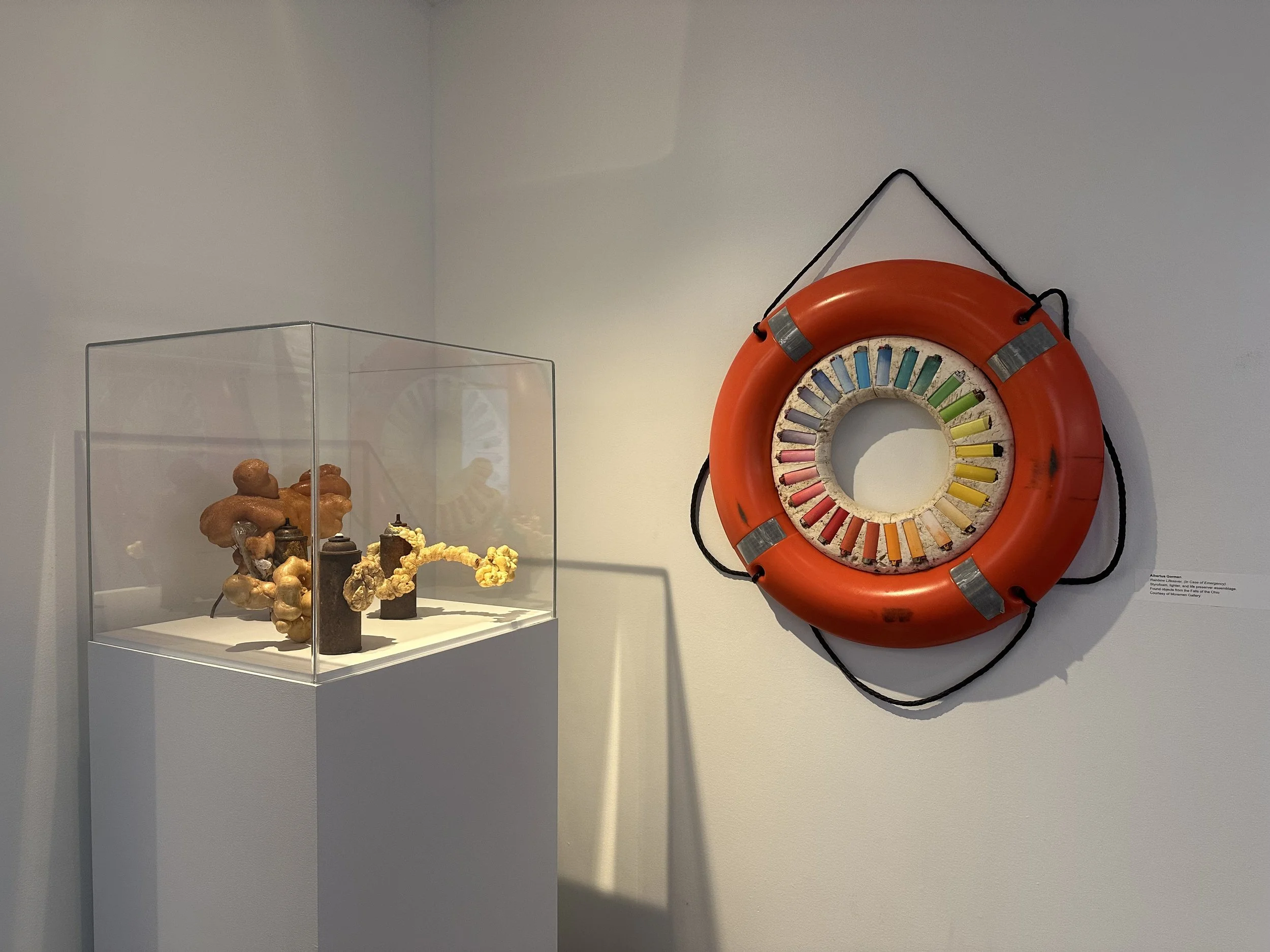
Albertus Gorman, Sculpture in a Can (ongoing), and Rainbow Lifesaver (In Case of Emergency) (2023). Photo via Sarah Melloy.
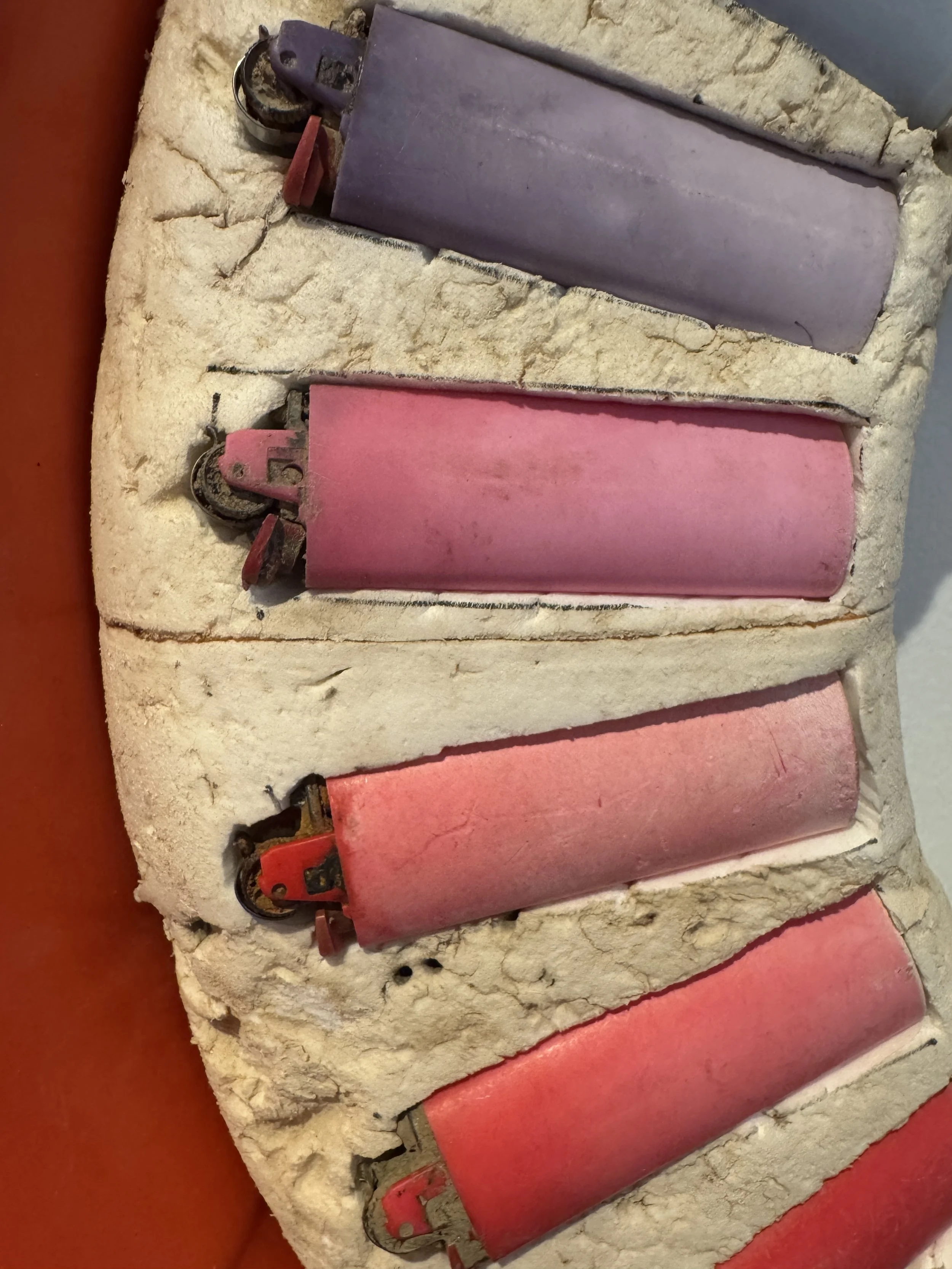
Albertus Gorman, Rainbow Lifesaver (In Case of Emergency) (2023), detail. Photo via Sarah Melloy.
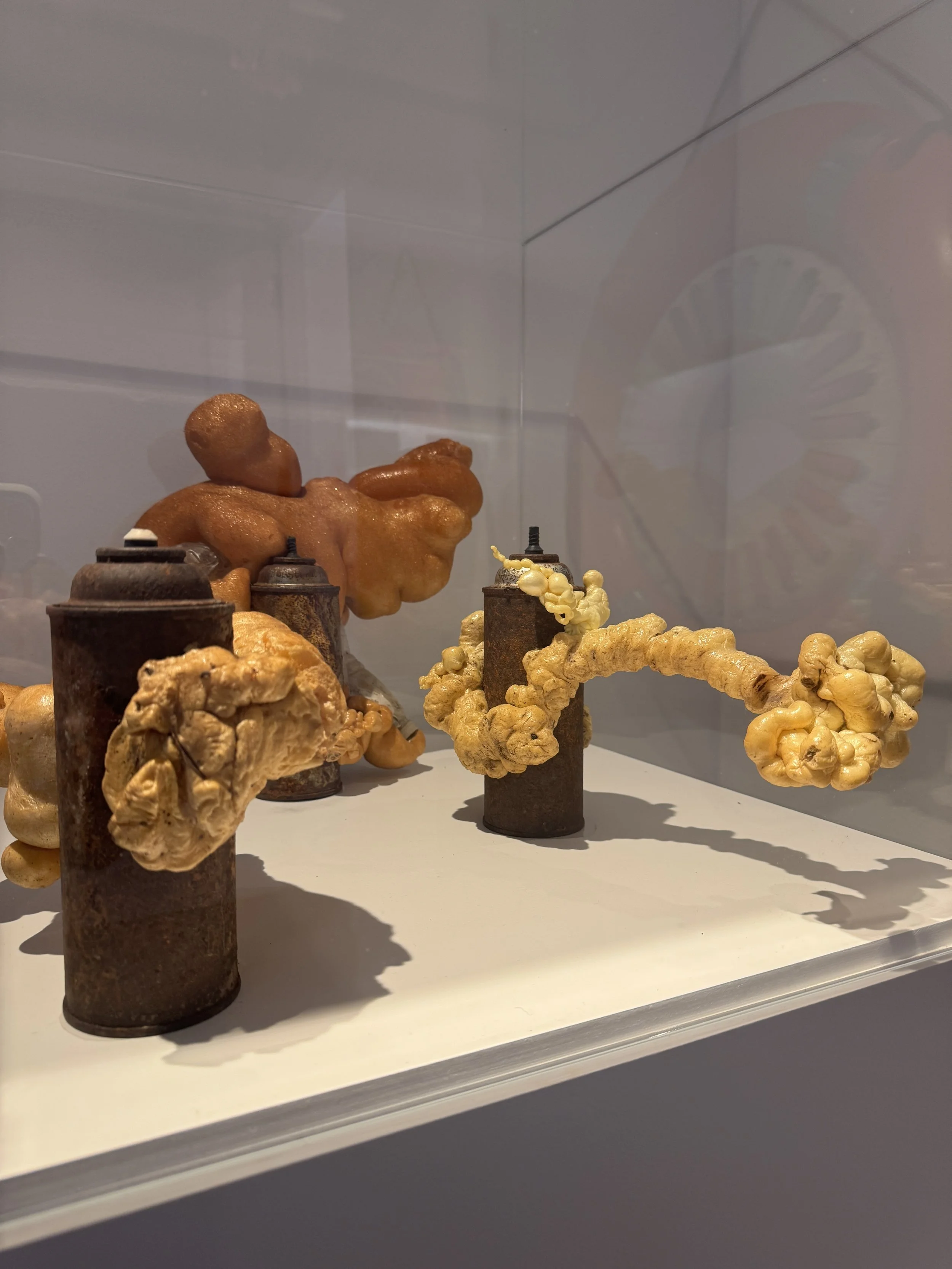
Albertus Gorman, Sculpture in a Can (ongoing), detail. Photo via Sarah Melloy.
Two of Albertus Gorman’s assisted readymades greet the viewer as they enter the gallery spaces. Brooks notes there are no humans depicted in the exhibition – yet Sculpture in a Can (ongoing), and Rainbow Lifesaver (In Case of Emergency) (2023), have a sense of embodiment. Despite lack of representation, a human presence is felt through all the objects in the exhibition. However, it’s not the knowledge that these objects were man-made that imbues them with life. Instead, it is the evidence of the objects’ past lives. The feeling comes from the organic materials (layers of river grime) coating the cans or the almost bursting, twisted, bulbous nature of the warped styrofoam of Sculpture in a Can. In Rainbow Lifesaver (In Case of Emergency), one can see dirt embedded into crevices around lighters and in the wrinkled skin of the styrofoam ring that occupies the bright cherry red lifesaver.
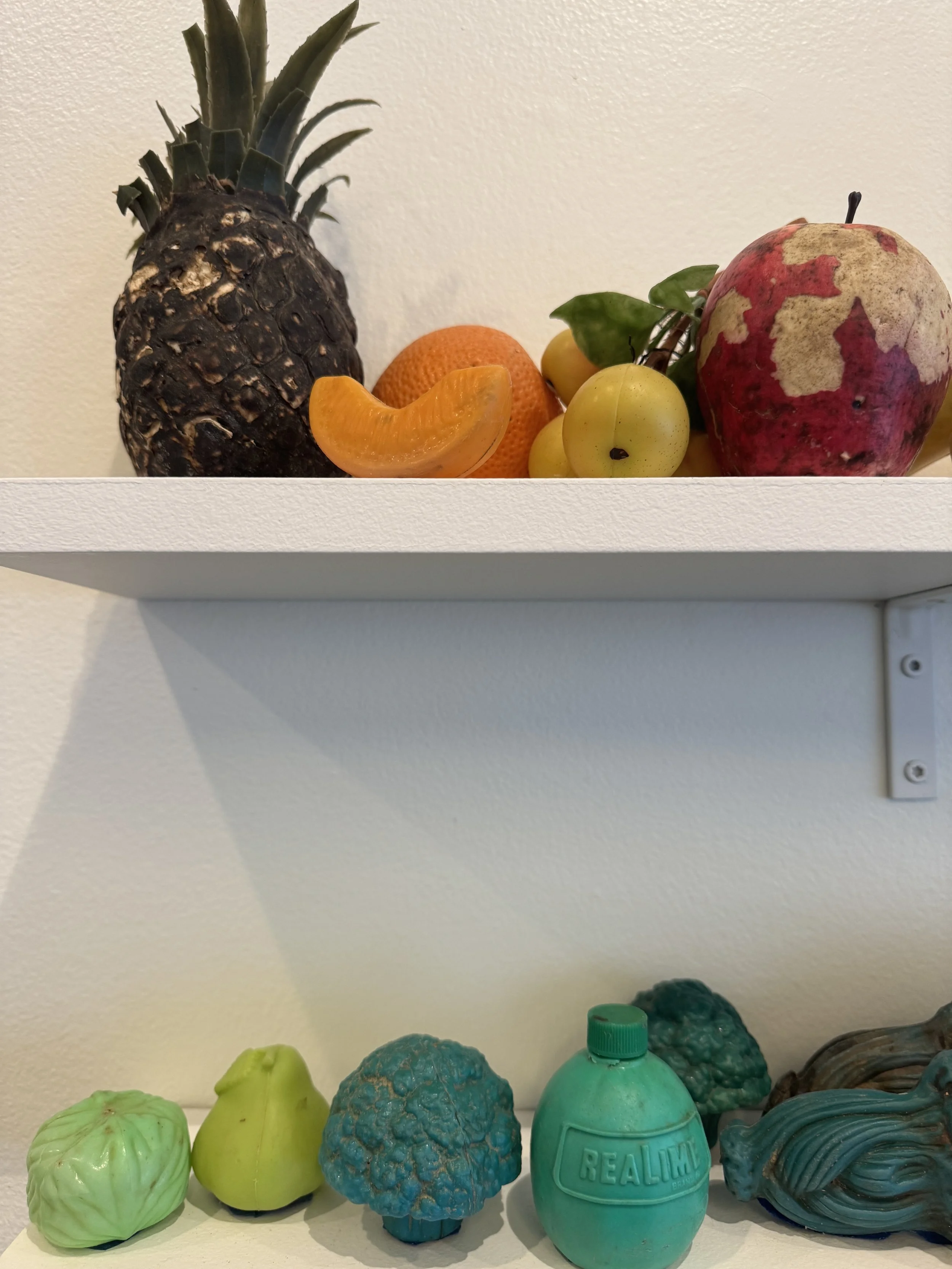
Albertus Gorman, Fake or Faux Food, detail. Photo via Sarah Melloy.
Brooks states that Gorman - part artist, part archaeologist - finds all of his materials at the Falls of the Ohio State Park. As the only place along the Ohio River unpassable by boat without locking through, the falls became a natural catching point for trash that made its way into the river from north of that point. Plastic food, the kind that comes in children’s play sets, seems an unlikely thing to find along a riverbank. Yet dozens of these objects fill three display shelves in Fake or Faux Food. Once the viewer is able to move past the shock of the quantity, they look closer and notice varying levels of grime and decay on each individual piece. The top shelf consists of plastic fruits, including a pineapple that is now brown not from organic decay, but because its plastic rind is covered in dirt, and an apple that has parts of its red cover-layer pulled away to reveal the foam inside, somehow making it more real. The impact of organic processes from the river aids the inorganic material in its mimicry.
The middle shelf: all plastic vegetables. But as a subtle nod to consumerism that is almost missable when compared to its glaring obviousness in the painting nearby, the bottom row consists almost entirely of plastic burgers that look like they are from McDonald’s or any American fast food corporation. Still, the burgers with the most dirt coating on them appear much more “real” than the ones that were virtually clean. Before the viewer appears to be an abundant feast, but in reality it’s just products pretending to be sustenance, aided by the life of the river it once touched. The feast would be deadly.
Perhaps the sense of embodiment in this art of post-consumer objects comes from what the works make clear. In the anthropocene, the objects we make touch the earth, but the earth touches those objects back. After Precarity reminds us that discarded objects are never really discarded, and that the life we’ve imbued them with goes on even after we stop thinking about them.
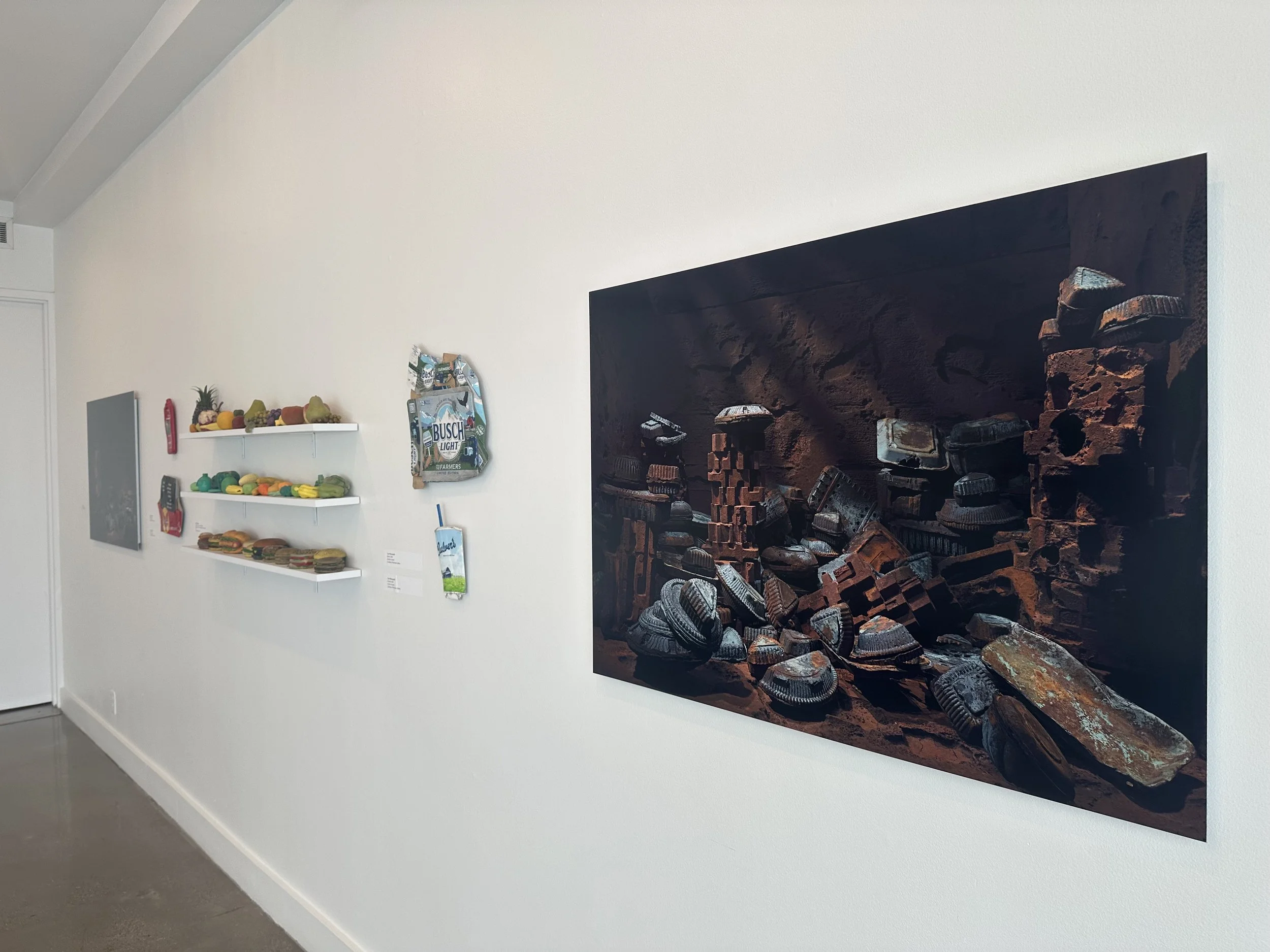
After Precarity, installation view. Photo via Sarah Melloy.
Design, or rather fragmentations of designs, concern most of the works in the exhibition. On the role of product design in the selected pieces, curator Kathryn Brooks states, “I often discussed the beauty of commercially designed objects with the artists in the show. We marvel that each design might be one person’s life work and even something as simple as a water bottle, a lighter, or a piece of styrofoam all take a different journey from creation to being rediscovered and it leaves them looking entirely different from one that came off the assembly line exactly the same. It has a good metaphor for life.”
For Brooks and the artists here, beautiful product design serves as an entry point into the true art of the object, which is what happens to it over time as it moves through the world.
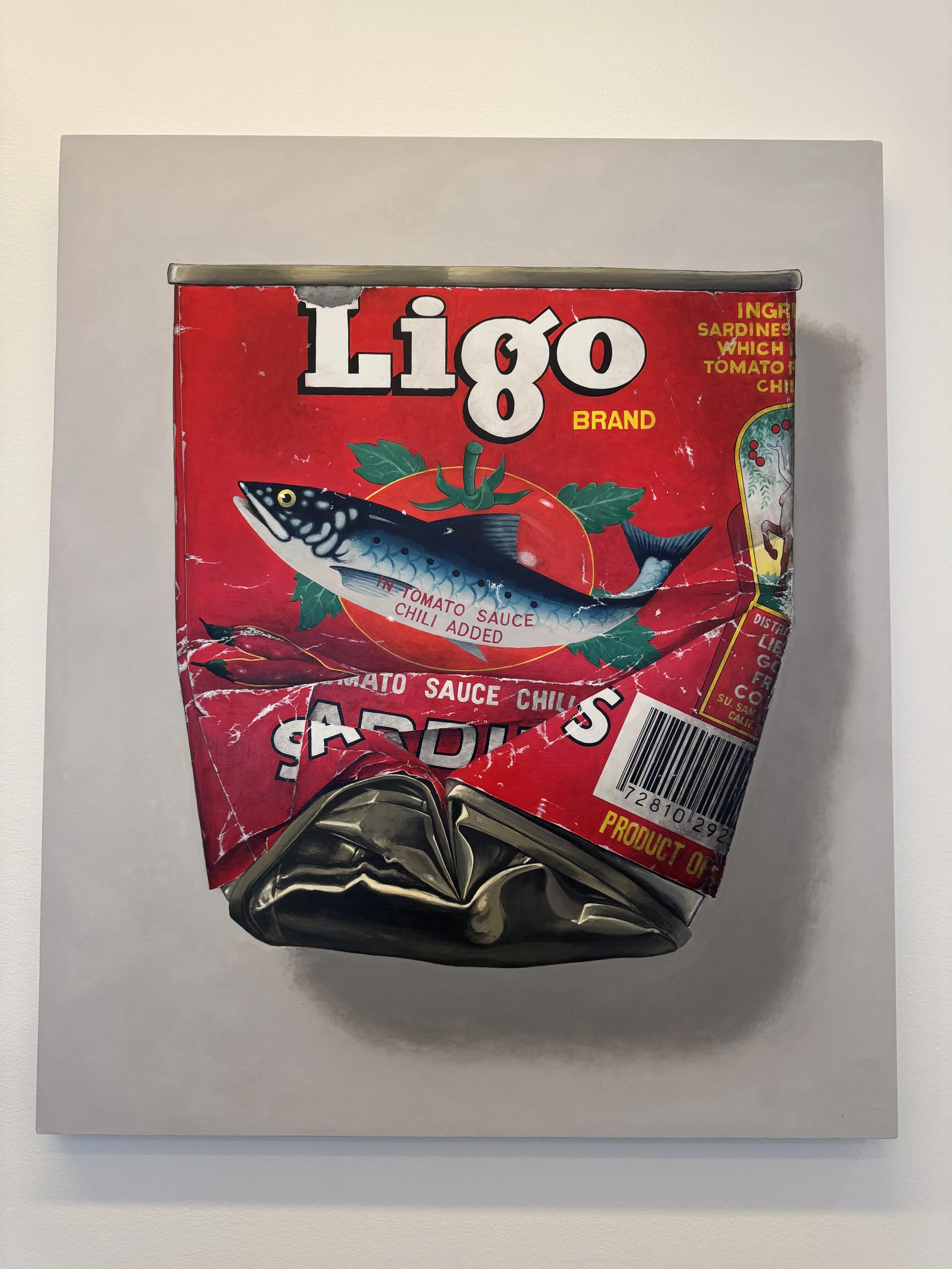
Tom Pfannerstill, Sardines (2023). Photo via Sarah Melloy.
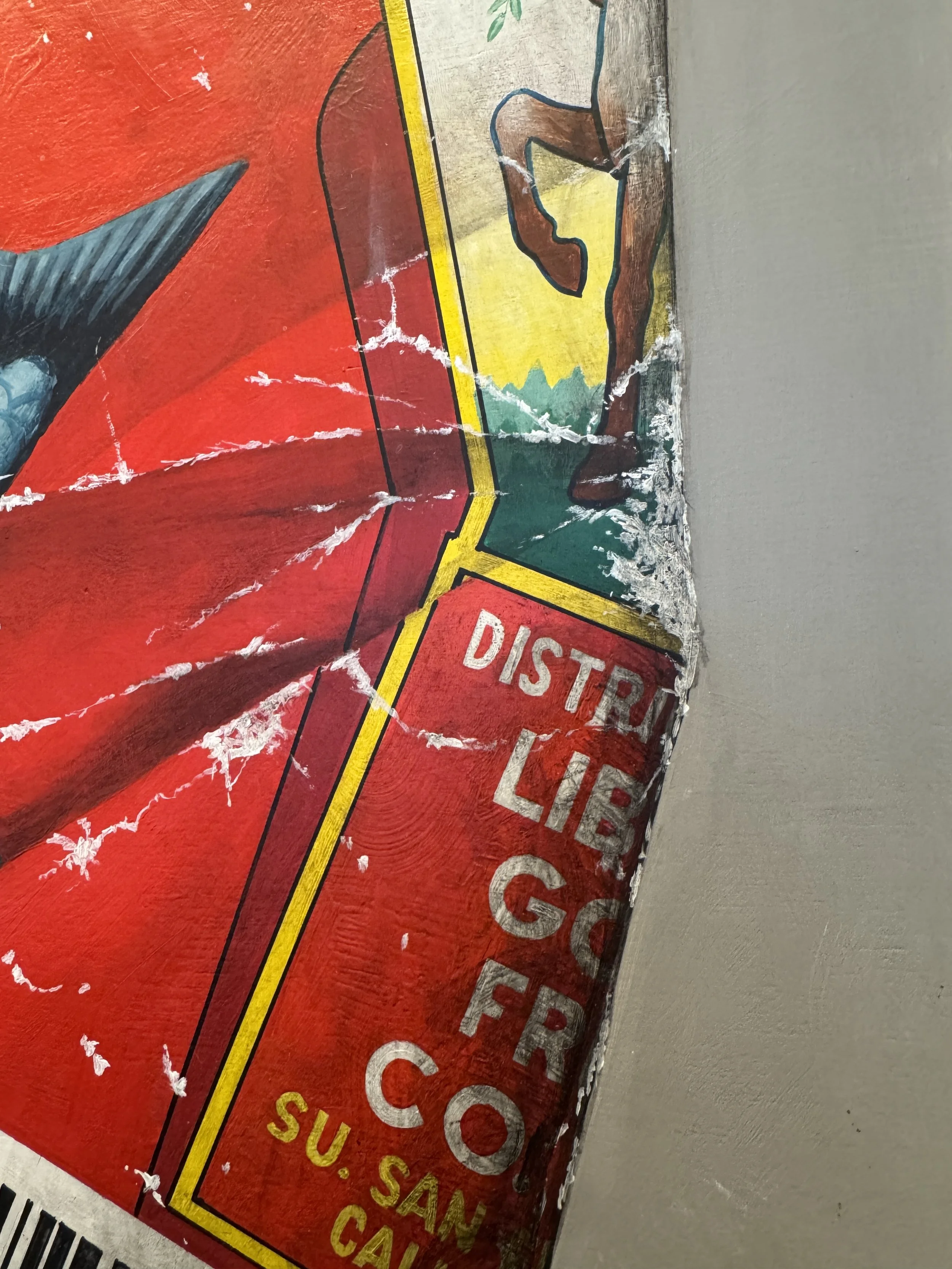
Tom Pfannerstill, Sardines (2023), detail. Photo via Sarah Melloy.
The painted fish in Tom Pfannerstill’s larger than life Sardines (2023) stares back at the viewer from its focal point on the vibrant, yet crushed and damaged can depicted. Moving beyond Warhol’s use of repetition in paintings of mass-produced products, Sardines recalls the journey of this individual can. The branded paper sleeve torn and scuffed, the partially crushed can folds in on itself at the bottom, reducing the object’s legibility as a product. The painting still emphasizes the product's place as a common item in our visual landscape, even though it no longer functions as a receptacle for anything except symbols. Rather than being the main identifying characteristic of the item, its design becomes purely aesthetic once the object no longer has use-value. Once the item has become trash, the design loses any sort of meaning unless happened upon by an artist that finds inspiration in these specific, but now-arbitrary aesthetic qualities. But Sardines along with Pfannerstill’s other works use that to their advantage. They show us that discarded objects, all this trash that we’re running out of space for, can be reused if we’re brave enough to be creative about it.
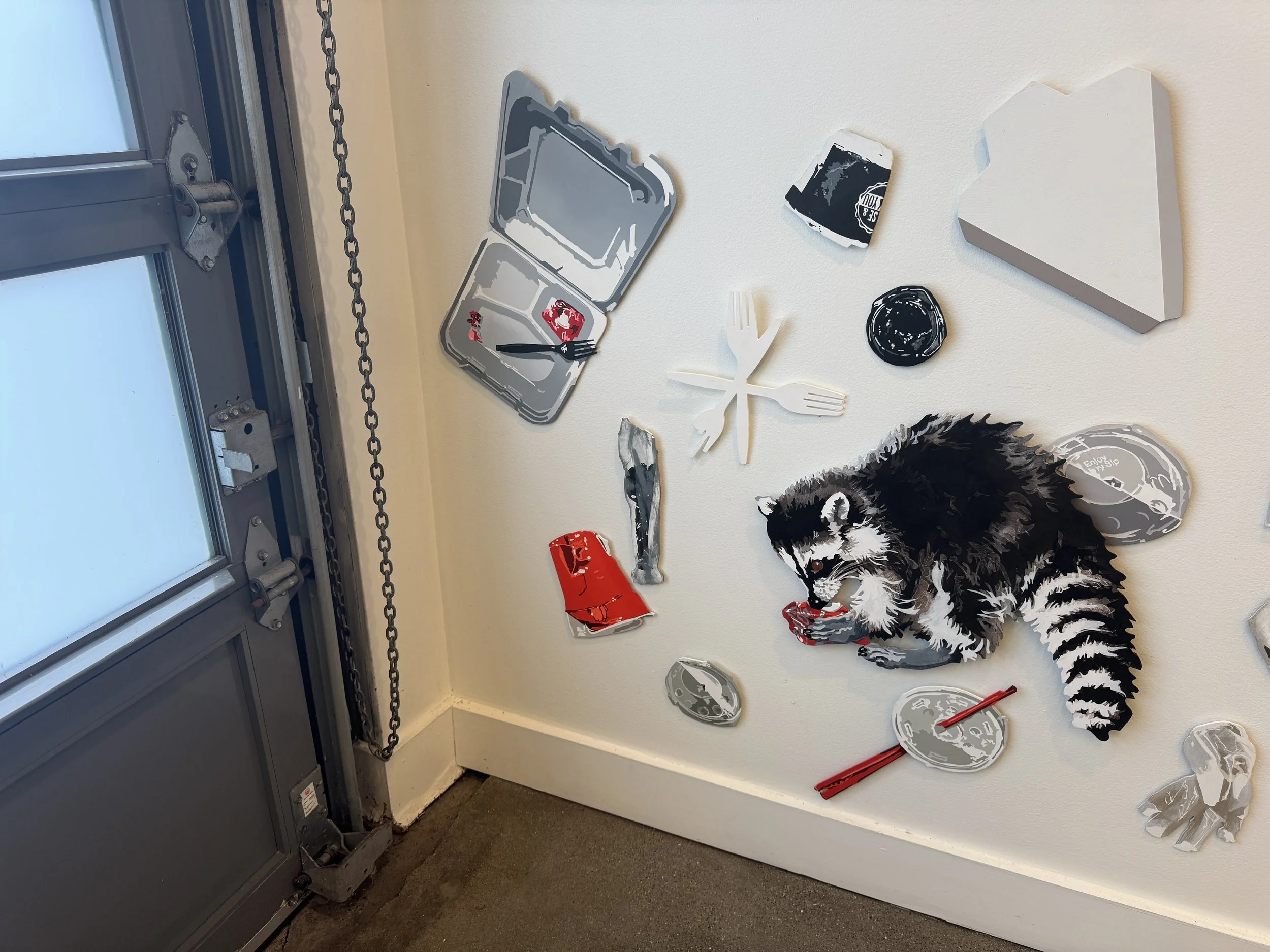
Work by Lori Larusso. Photo via Sarah Melloy.
Two artists featured in After Precarity make use of the detritus and debris we leave behind as we go through our world to imagine a new one. Pushing beyond mourning what we’ve already lost, Mitch Eckert and Lori Larusso create new landscapes imagining the anthropocene’s future, with or without humans. Lori Larusso’s panel spreads consist of imagined groupings of discarded objects. Sidewalk Still Life: Toppled Buddha Head (2025) contains post-consumer motifs we are all more than used to seeing at this point. The bright red “thank you thank you thank you” repeated on the side of a plastic bag is meant to frame the ceramic Buddha head, yet its familiarity grabs the viewer’s attention immediately. What pops out of the painting is the melted pink ice cream, with little more nutritional value than the wealth of sculpted fruit atop the Buddha’s head – reminiscent of Gorman’s inedible plastic feast. Larusso combines objects that weren’t necessarily together in real life to create new ways of incorporating the aesthetic qualities around us into art.
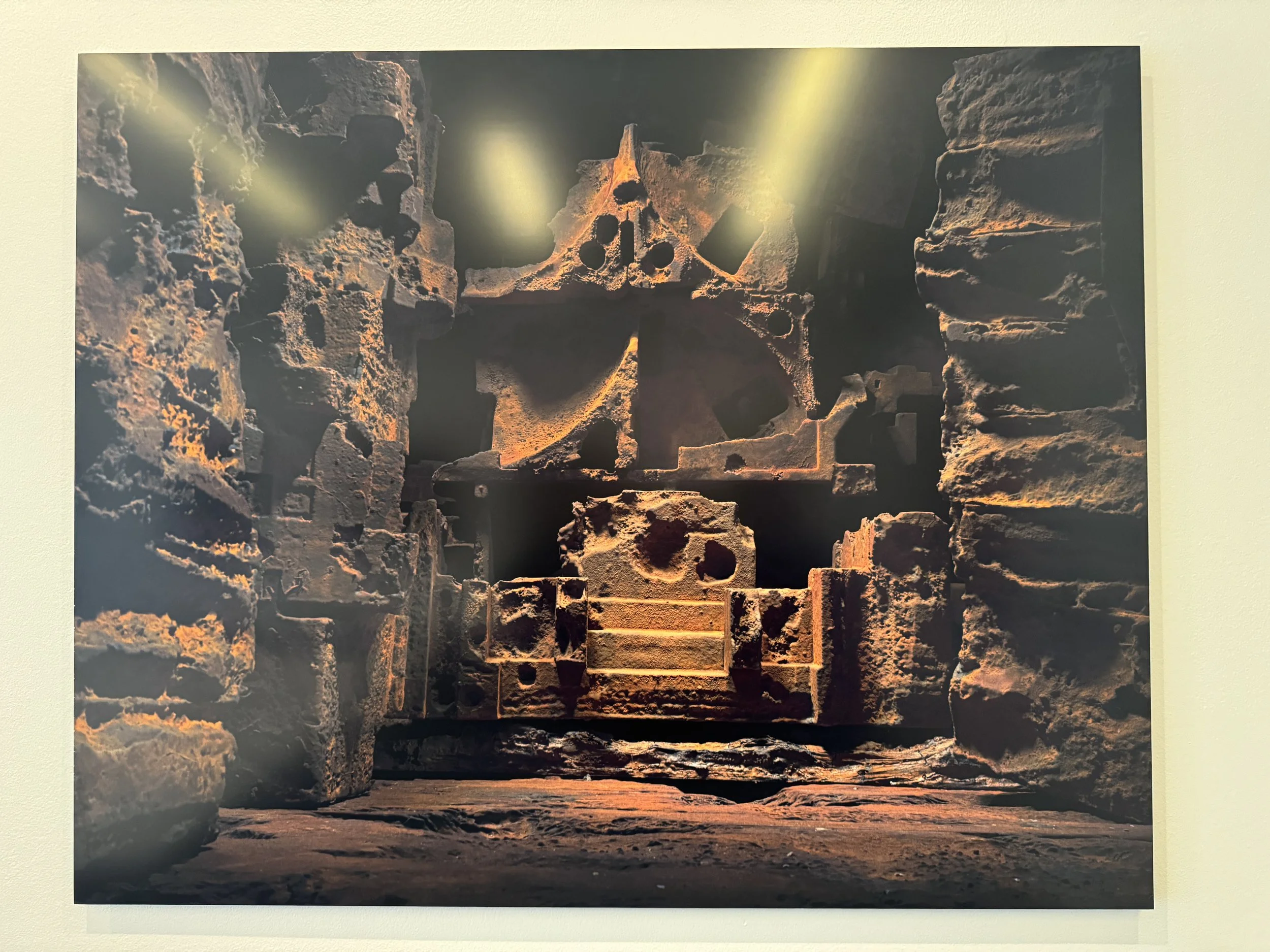
Mitch Eckert, Altar (2025). Photo via Sarah Melloy.
Mitch Eckert’s large-scale dye sublimation prints on aluminum sheets, a material that is found or represented in the trash of many of the other works in the gallery, might verge on profane to some. Altar (2025) uses framing and dramatic lighting to play with scale, blowing up the size and in turn, importance, of the dirty and discarded debris that makes up the scene. With or without knowing the origin of the materials, one can use their imagination to see themselves walking into this entirely post-consumer world.
These futuristic landscapes curated from fragmented, discarded, and empty remnants of consumer goods take those gaps and fill them again with artistic meaning. They open a window onto a cautiously hopeful future in which humans not only notice but care about the post-consumer refuse around them, and are inspired to work with it to create something new. In the curator’s own words: “While there is much unknown in this new stage of universal precarity, the works in After Precarity remind us that there remains opportunity and hope for an individual or object’s fate to be reimagined, even when it seems they have reached the end of their story.”