
LOOKING BACK AT “…DO YOU REMEMBER WHEN YOU WERE THE SKY?”
vanessa german’s exhibition as part of the Sam Gilliam Visiting Artist Program at the Speed Art Museum
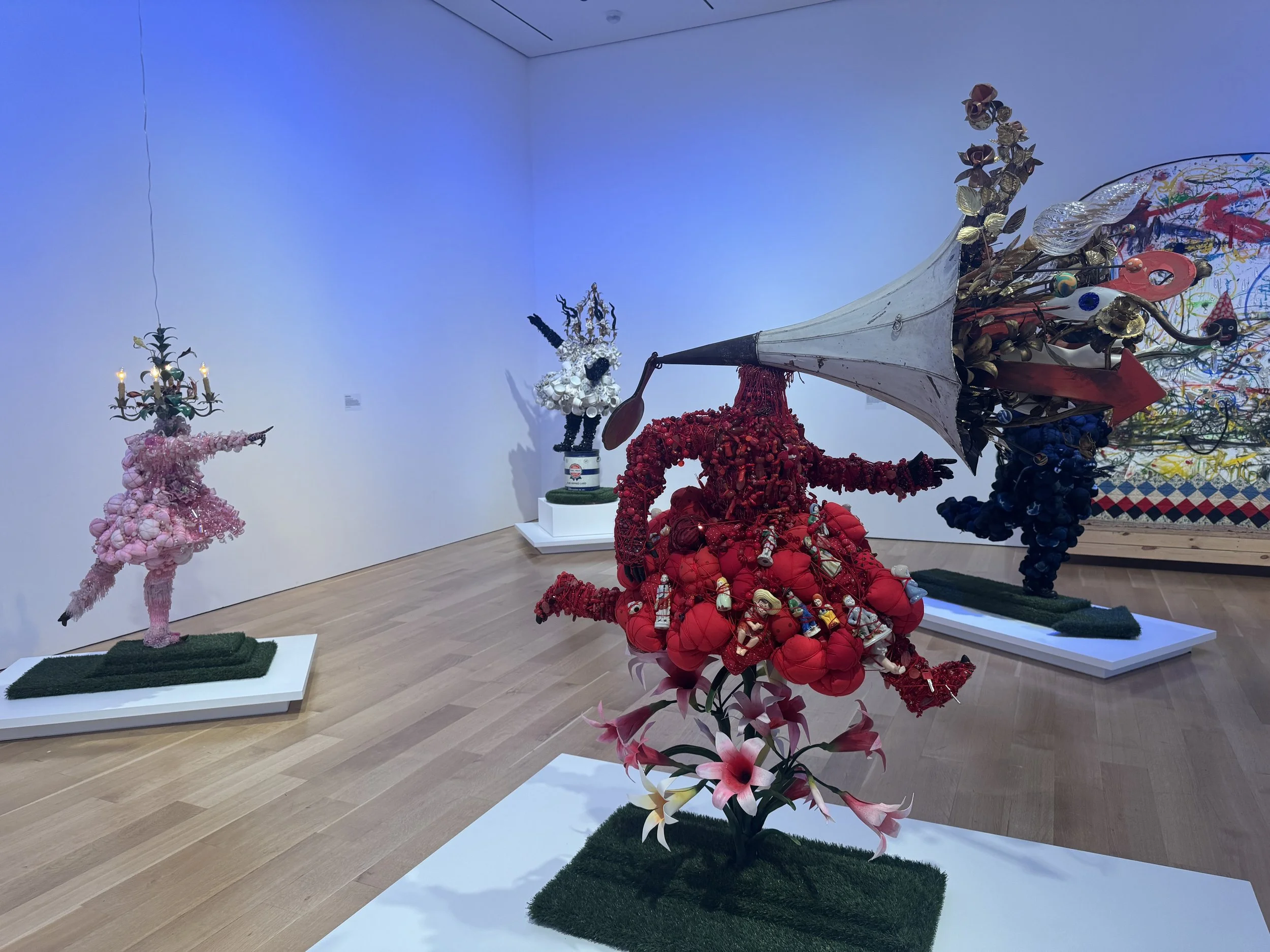
Installation view of …do you remember when you were the sky?, Photos by Sarah Melloy
It happened July 19, 1913. A knot came loose and Loretta Banks, so close to freedom, fell three stories. The fall broke her leg and resulted in a head injury. Loretta was one of the eleven girls who tried to escape the third floor of the Colored Girls Dorm within the Industrial School of Reform, the building now known as Gottschalk Hall on the University of Louisville’s campus.
By the time Loretta fell, six of the girls had already escaped by tying their bedsheets together into a rope that they used to descend from the window. On October 24, 2025, the first installment of the performance series Future Histories of Emancipation by vanessa german took place in the very same spot.
The series was held in conjunction with the first exhibition of the Sam Gilliam Visiting Artist Program at the Speed Art Museum, vanessa german: …do you remember when you were the sky? The exhibition ran from April 10 through August 9, 2026 and was in support of the program’s mission to generate dialogue with and between local artists and community members. The exhibition responds to research led by historian Dr. Felicia Jamison on the story of the girls that tried to escape incarceration at the Industrial School of Reform. Citing the work of Saidiya Hartman, it also responds to the absence of documented information left about them, including many of their names.
Still, the work featured does more than respond to archival erasure. It generates and expands beyond the confines of the institutions it embodies. Through german’s assemblage sculptures and performances, the viewer has the opportunity to look back to the girls—to hear them—and, as the title of the performance series Future Histories of Emancipation conveys, forward into a future that holds space for more than just their suffering. Something that the barely existent archive of their experience cannot do, but that art, poetry, spirituality can. Through her performances, community art-making, and assemblage sculptures, vanessa german puts us, as a community, in communication with the girls. Her work ensures they are not forgotten.
Entering the gallery is entering a space where the girls reside, a space of spirit. Soft, muted lighting—not warm or cool in tone, but a dreamy in-between—illuminates the figures. Elevated and almost floating on blocks of astroturf are five assemblage sculptures, power figures, approximately the size and shape of children, but they are transformed by the materials of their dresses. Found objects acquired by the artist from across the country abound and exceed the limits of what could be conveyed by one sculpture, one dress, one object on its own, akin to the way something experienced by a collective exceeds what is experienced by one.
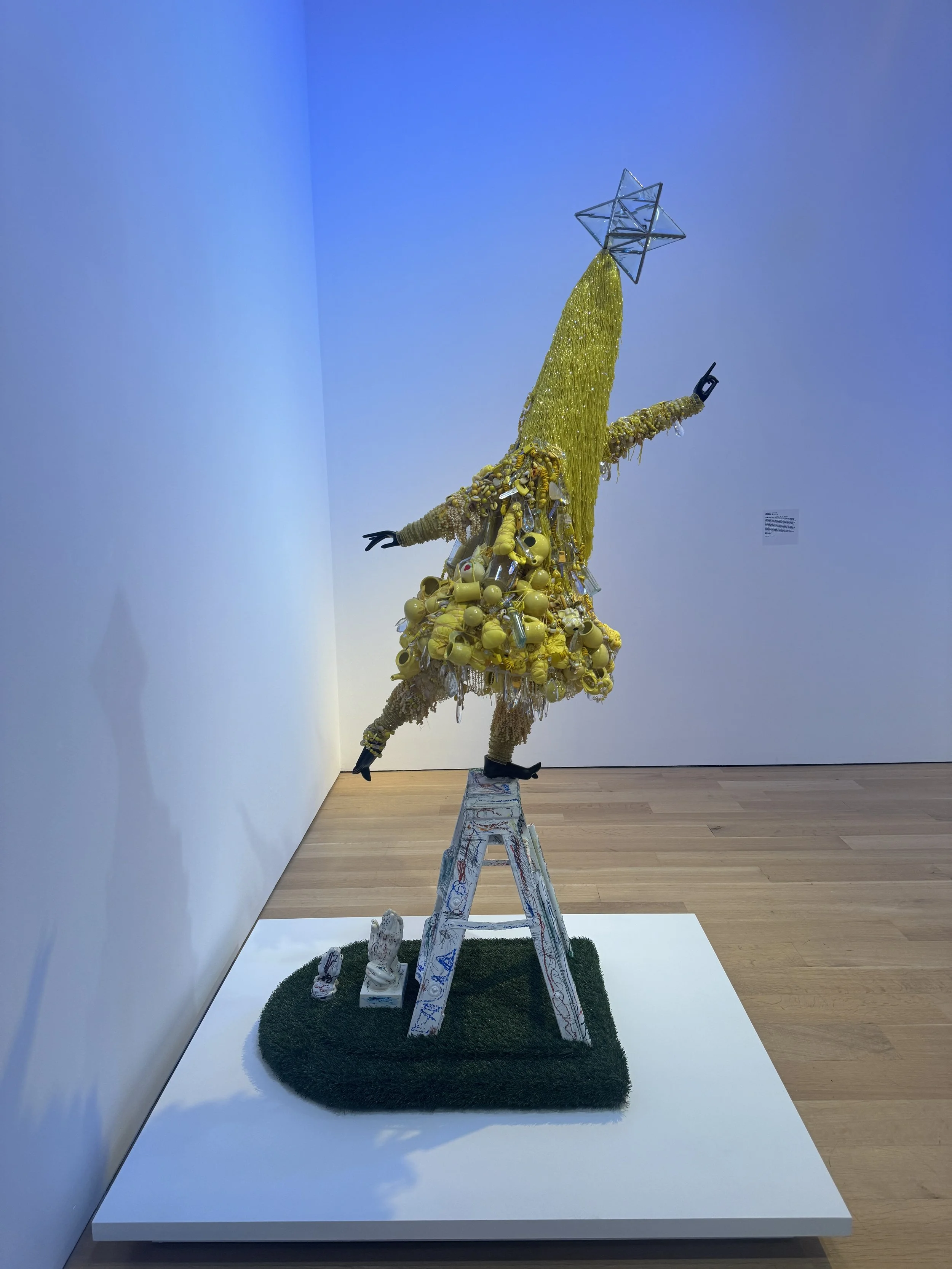
The Girl Who Had the Idea (2026)
To the left of the entrance stands The Girl Who Had the Idea (2026), balanced high on her stool. Her outstretched, pointing hands and feet are black, the rest of her assemblage is bright yellow, her head a glass prism atop abundant layers of sparkling yellow beads. The spirit of the girl extends into her wall label, which reads:
“Wood, spirit-girl, wire-mesh, cups running over with love, a dream in a dreamer-girl, imagination-girl, (they say her face lit up brand-new when she smiled light fell out of her teeth and bloomed a warm radiance in everyone around her – she could see her way through. She was an in-between girl.) She was the youngest girl, antique step ladder, Astro turf, 100 crystals of light, knowing in your heart of hearts, lemon quartz, keys, porcelain forms, yellow beads, love, glass beads, a joyful spirit, old soda bottles, beaded glass trim, the sound of “yes” in your Soul, beaded glass trim, metal mesh, glass merkeba carved wood feet ashtrays, gourds, glass bottles, cups, player beads.”
The Girl Who Lit the Path (2026), The Girl Who Fell (2026), and The Midnight Sisters (2026) are figures that equally contain their own worlds. They are figures that move between the world of spirits and the world of institutions fluently. This is true of the structured, stretched quilt that accompanies the figures in the gallery, and as the viewer moves among them, this is the piece they move toward. Codified by Light: Darkness and Rebellion– All the things that we can see and cannot see (2026) is one of the threads that ties the exhibition in the gallery to the three-day performance series Future Histories of Emancipation (2025).
Like all of the works in the exhibition, german’s art extends to the wall label here too. Even if the viewer didn’t know about the performance series beforehand, they find out in the space where the artwork bleeds into the wall label in the form of poetry. In the description of the medium, the viewer reads “Primed canvas in the history classroom third floor and daring, Absent presence: pine coffin, the dancer’s bodies and the marks made in the rituals of: what must die to be You and Free, whose imagination says so, oil stick, turquoise, onyx….”
As the viewer reads, they might hear german’s voice, recorded in the very same 3rd floor history classroom echoing through the space, at that moment reading some of the same lines of poetry as the viewer. Her voice is coming from a recording of the performances playing on a TV just outside the gallery. The line “the dancer’s bodies and the marks made in the rituals of” refers to the first performance in the space that was formerly the dorm where german, who the audience understands as the leader of this ritual, activates the room by first reciting aloud the story of what happened to the girls. This is followed by dance set to poetry that embodies the story. The poetry and dance combined bring forth the emotions of the girls, of black girls’ experiences across time and space. In the dormitory, that experience looked like still seeking freedom in the immediate aftereffects of slavery. At the moment of the bedsheet knot breaking in the performance, german proclaims: “it looked like Black girl was falling, but she was everywhere, she was everywhere, she was everywhere all at once.”
When I spoke to the exhibition’s curator, Diallo Simon-Ponte, he noted that all artists participating in the Sam Gilliam Visiting Artist Program visit and do research in the city as part of their projects. In addition to generating questions through meeting with community members, Simon-Ponte asks artists to think specifically about the geography and land on which the Speed Museum sits. This practice blends well with the spiritual nature of german’s research process. The curator told me that for german, this required listening. Her process included spending time with the river and land around Louisville, and with the spirits of the girls and the spaces they inhabited. This type of place-based project allowed german to converge and move between her two spheres of practice, performance and assemblage. Simon-Ponte pointed out how these “spheres of practice were activated at different times” between the two intertwined projects. It gave her an opportunity to “converge them a bit more, collapse the space between the two.”
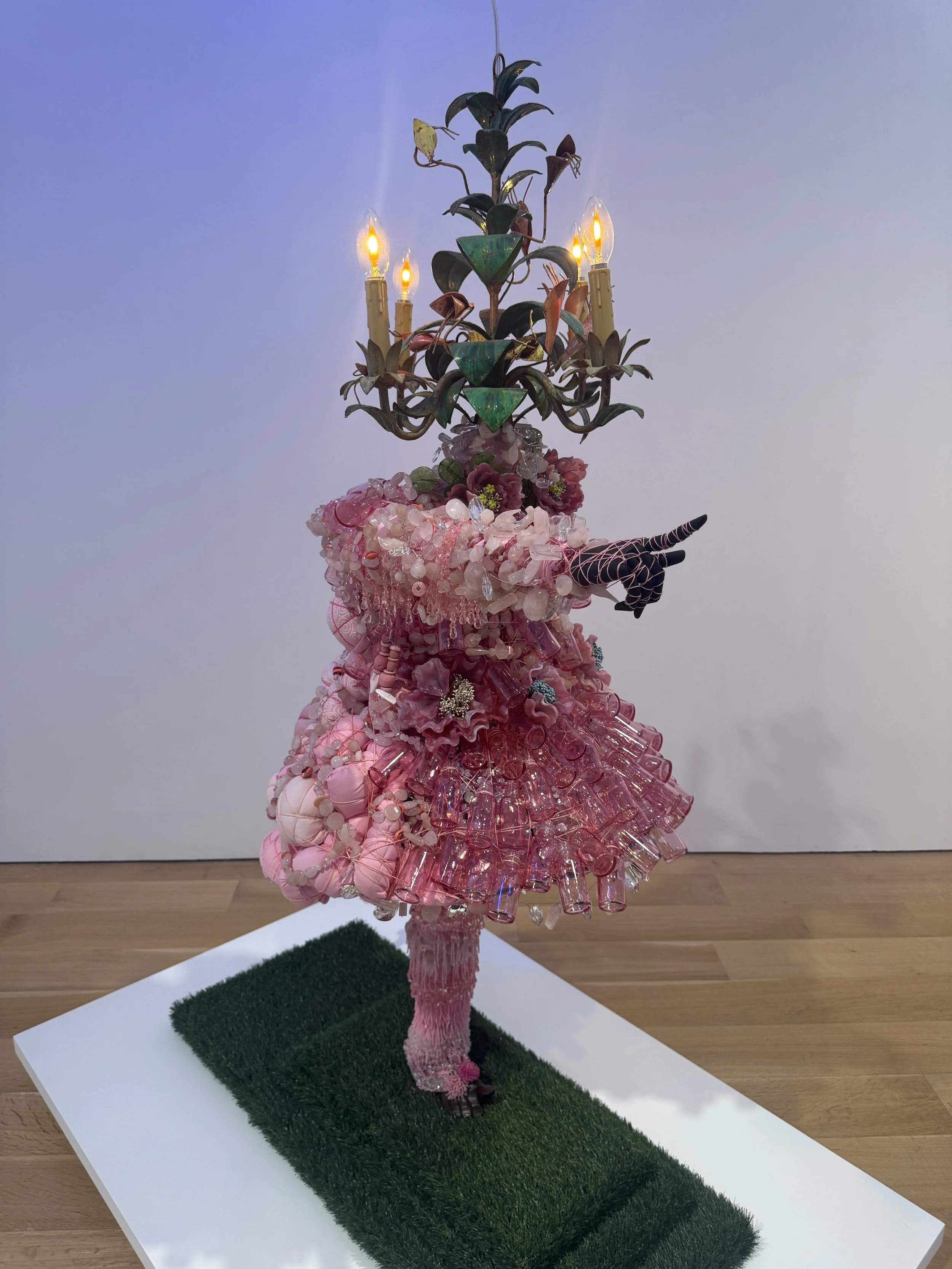
The Girl Who Lit the Path (2026)
The converging of german’s two spheres of practice appears in Codified by Light: Darkness and Rebellion– All the things that we can see and cannot see (2026). The material of this piece takes on a spiritual nature by being prepped in the space where the first performance/ritual, Darkness and Rebellion (2025), took place. This convergence between the two spheres of practice intensifies as the viewer moves into the second gallery. Here, large fabric stars affixed to the gallery wall set the scene for Colored Girls Dormitory Bed #1: A Frightfully Compelling Thing a Nightmare Is (2026). The stars consist of stretched canvas marked during the second performance which took place in the Playhouse just across the street from the museum (another building once used by the Industrial School of Reform). On one of the stars, a sock worn by one of the dancers melds into the paint.
The second gallery contains two more figures, Amenita and the Blue Rose (2026), who is the imagined manifestation of the girl who watched from the window after the rope broke, and “I would have loved to have gone with you”...considering friendship as romance (2026), another girl who never made it out of the window. She is golden and bright and hopeful, partly due to the fact that she stands on a canvas-covered block which holds paintings from the night of Threshold. This painting is the result of audience participation in the performance. People left marks, but Simon-Ponte says they also left “emotions, tears, offerings.” Through integrating performance, ritual, and spirit into interactions with the public, then imbuing that into artwork, the objects in the gallery end up with a palpable affective charge fueled by a collective consciousness.
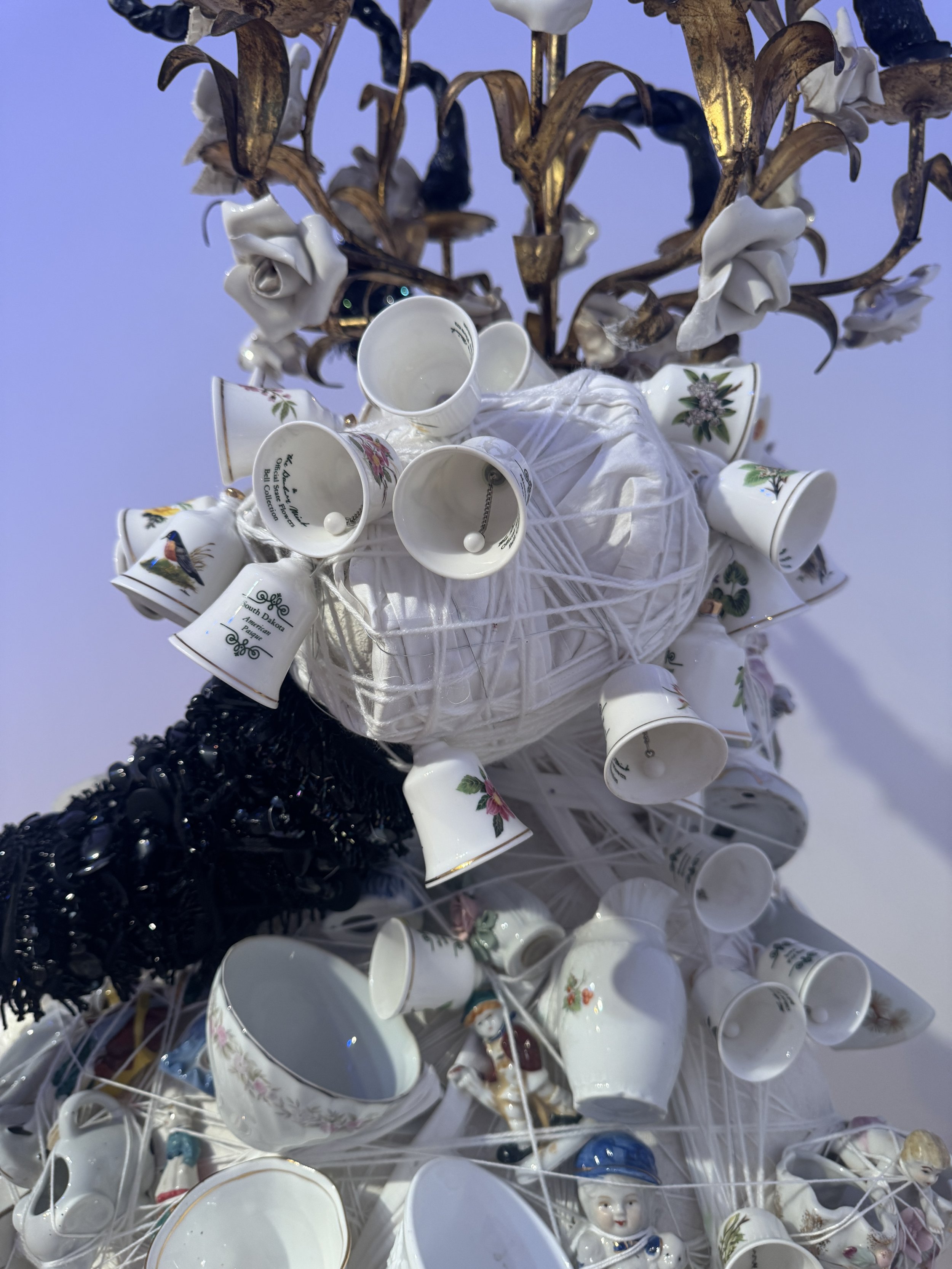
Detail of The Girl Who Fell (2026)
Through this exhibition, vanessa german and Diallo Simon-Ponte leave the viewer with two important things to remember. One is that, as exemplified by the experience of Black girls throughout history, Western institutions including museums are, in Simon-Ponte’s words, “not the safest place for ideas around spirit and Black girls” The second important idea they leave us with is that although the real work to combat archival erasure. It happens outside of the museum, bringing it into the gallery provides viewers with productive “new conditions that activate them in different ways.” The full story of what these girls experienced cannot be found in an archive; the gaps left by the reform school were intentional. In vanessa german: … do you remember when you were the sky? german fills them in through what she feels in her studio, through collective art-making, and through spiritual justice.