
DRIFTING ON A MEMORY
A curatorial reflection on Shauntrice Black’s recent exhibition at The Kentucky Center for African American Heritage.
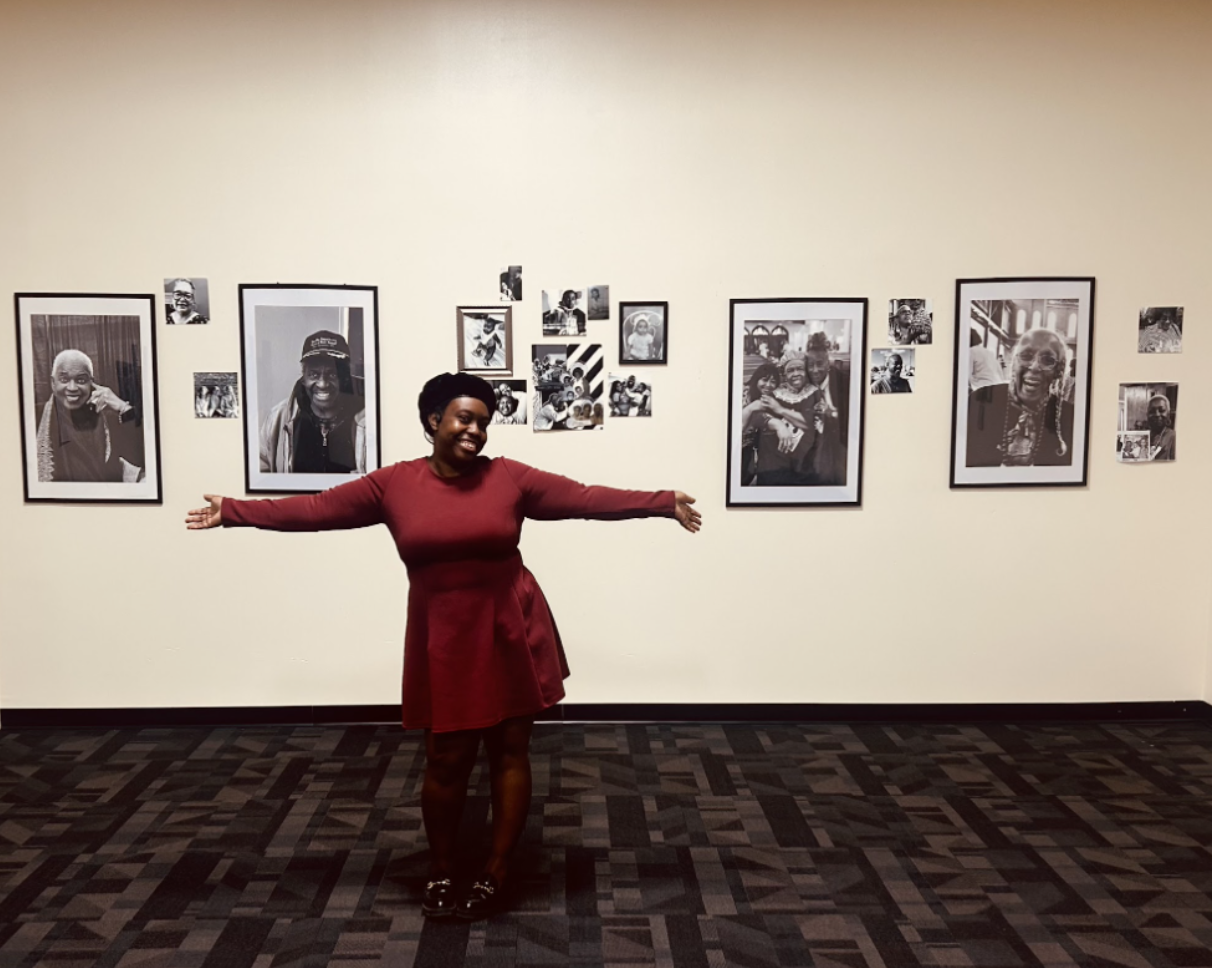
Exhibition view. Shauntrice Black, A Family Reunion, Elmer Lucille Allen Gallery, 2026. Photo via Shauntrice Black.
There is a very short (and very justified) list of people I refuse to work with. Mind you–I get plenty of unsolicited advice about how I should act as a curator and artist, but none of those people pay my bills and they can’t whoop me, so they can kick rocks. And that is the beauty of being a curator.
This curatorial reflection is from my most recent exhibition, “Drifting on a Memory”.
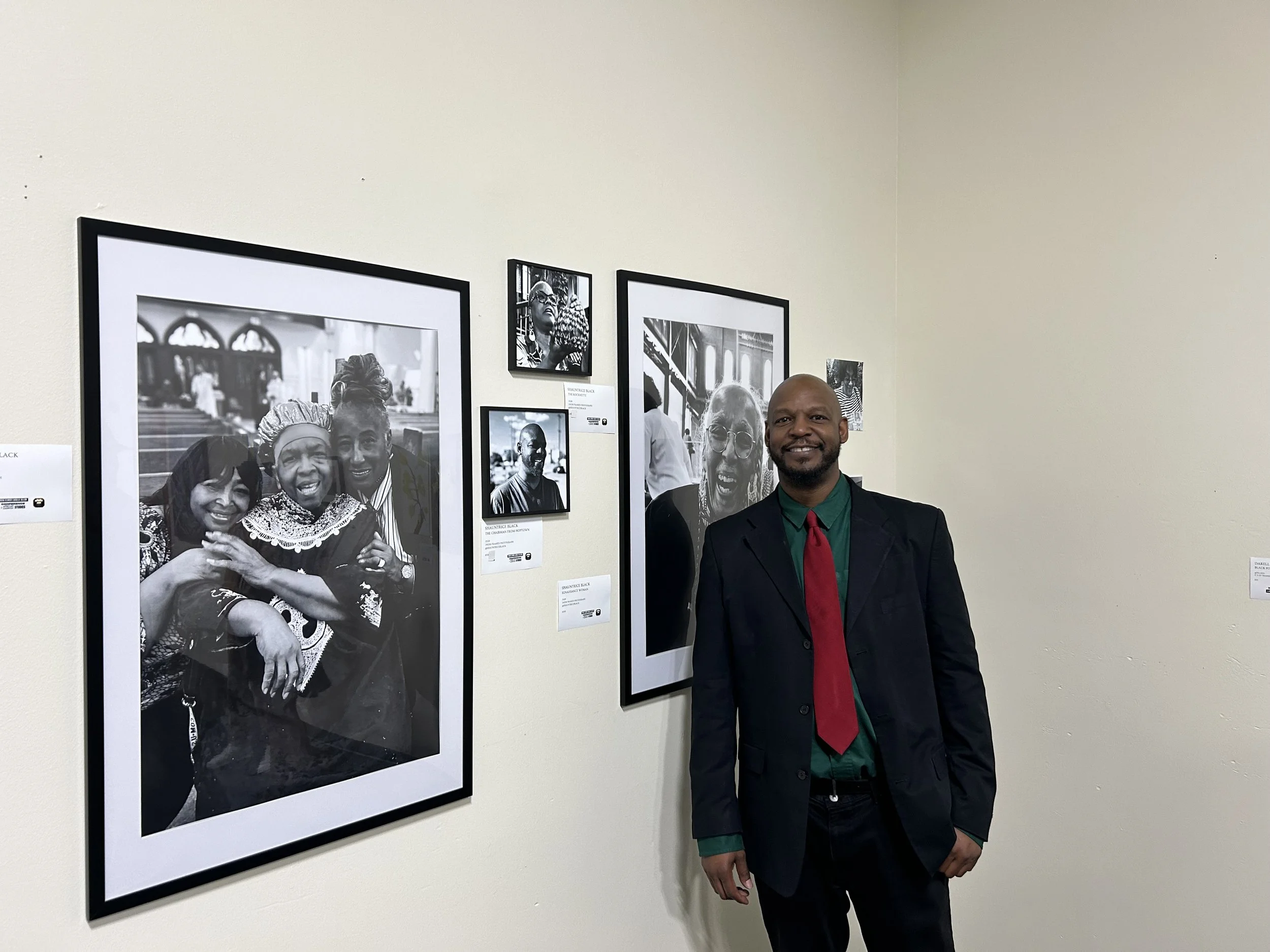
Exhibition view. Dr. Deonte Hollowell (Exhibition Founder), Elmer Lucille Allen Gallery, 2026. Photo via Shauntrice Black.
I was honored to be asked back as a curator for the eighth annual Elmer Lucille Allen conference. And much love to the artist who trusted me with their work. Thank you, Dr. Deonte Hollowell and Dr. Elmer Lucille Allen for building the conference, despite the recent move of many universities to distance themselves from blackness, the conference has stayed true to its mission: uplifting African-American studies in the tradition of archival integrity.
I am genuinely convinced that Kyle Richard Dixon understood the assignment in a way that I didn’t even know when I dreamt it up. A few years ago during my artist residency at the Speed Art Museum I put together an installation called “Old Walnut Street” (2021) at the St. James Art Fair. I can’t say it was welcomed or appreciated by a certain colorblind constituency, but what happened in that church parking lot was magical. A brief conversation with a stranger turned into having him as part of my booth the next day. I can’t even remember what his portfolio looked like, but I remember getting this feeling of inspiration when he spoke. There was a feeling I couldn’t shake–this combination of tenderness and talent that emanated from him. And we didn’t keep in touch all that well as time went on, but a few years later we happened upon each other again–when I invited him to be part of the second annual Artists & Afros showcase. One thing I love about his work is that he can build these infinitely intricate worlds in tiny spaces. It forces the viewer to venture out (in-person) to see the painstaking details in person. None of the photos or videos did the work justice. Each time I spoke about his work to a visitor, I beamed as if it was my own family whose open Bible sat on that green paintwashed couch. The only thing missing was the little TV on top of the big TV. There is a delicacy required when working with watercolor and ink that I have never mastered. Perhaps that fuels my fascination for his work.
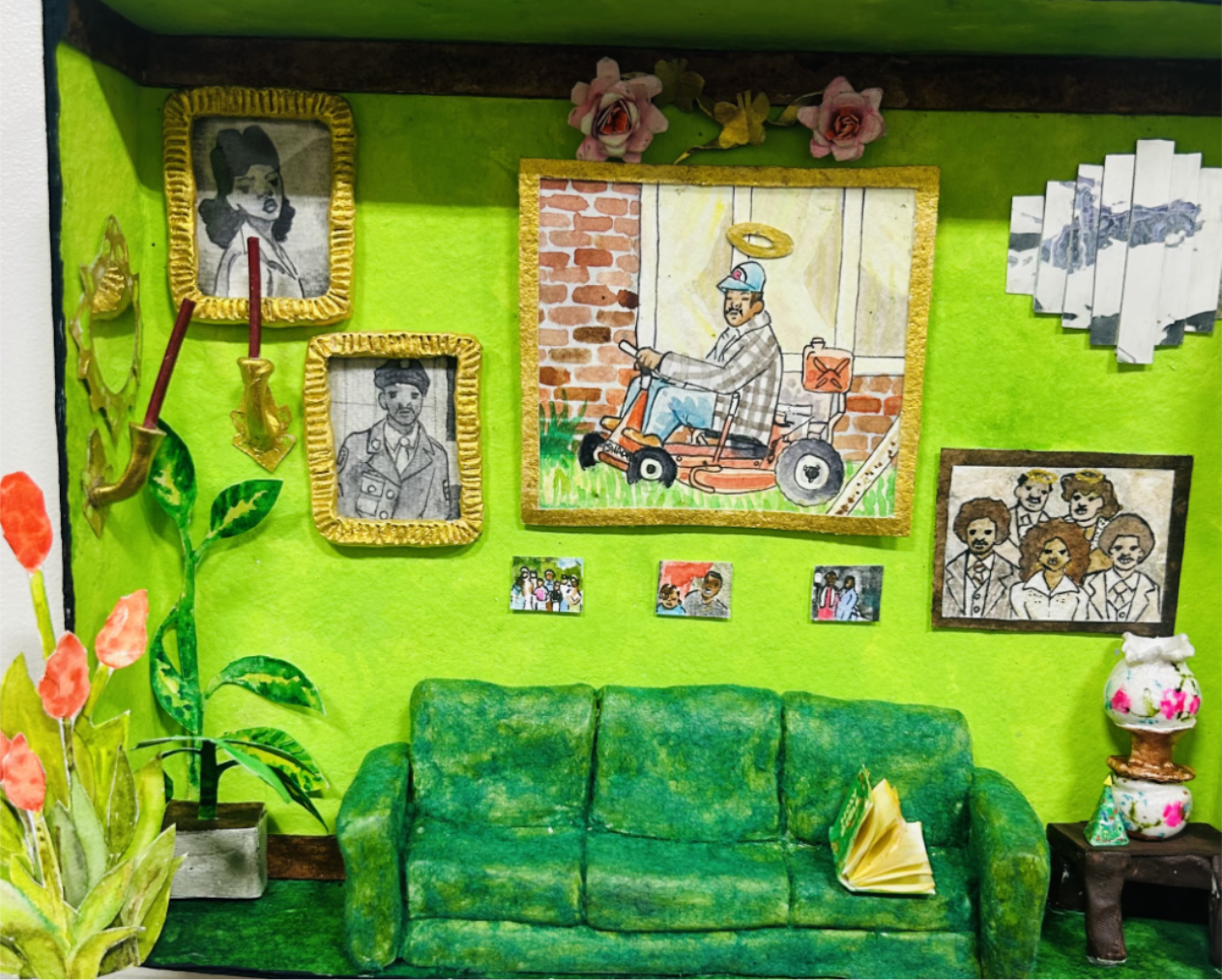
Exhibition view. Kyle Richard Dixon, Brick by Brick, Star by Star NFS, Elmer Lucille Allen Gallery, 2026. Photo via Shauntrice Black.
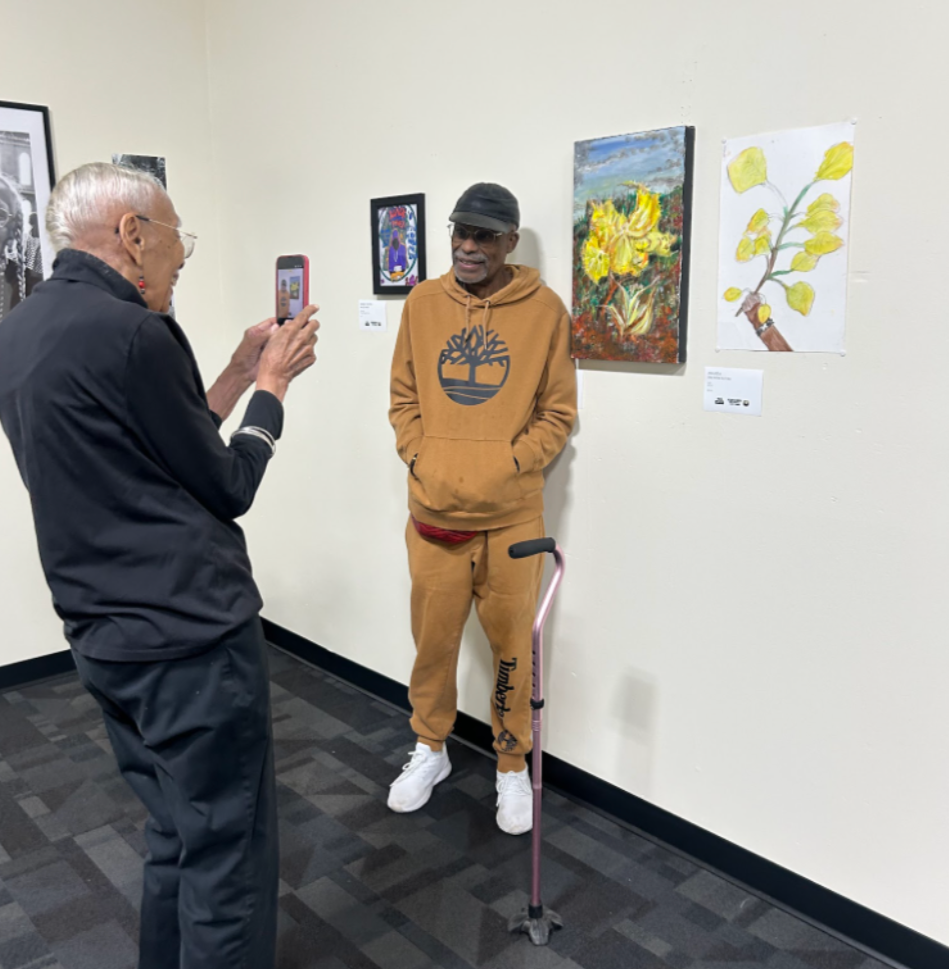
Exhibition view. Dr. Elmer Lucille Allen and James G. Bennett, Elmer Lucille Allen Gallery, 2026. Photo via Shauntrice Black.
This is what gets me hyped about curating; the level of detail, thoughtfulness, and personal connection to the theme that Kyle demonstrated are incredible.
Now let’s talk about the inclusion of youth artists.
One with Nature (2026) by Ananda and Yellow Composition Flowering (2026) by her maternal grandfather James G. Bennett lent a beautifully literal interpretation of the exhibition’s goal: amplify the significance of conversations between generations. Ananda has imaginative whimsy in her flowers while Mr. Bennett’s still life falls more on the side of naturalism. Based on her piece in this show, Ananda could be mistaken for a young Shakia Harris.
And I wish there was a way to capture the joy in Kennedy’s face when I showed her Bobby Wheeler’s work and let her know that she was invited to create a companion piece. Kennedy is a teenage artist who is learning how to interpret concepts. Wheeler’s Cry No More (2014) depicts the last tear shed for the past… the breaking of the chains that held us back. Kennedy’s companion piece Natural Beauty: A Look Within expresses a duality akin to W.E.B. DuBois’s theory of double consciousness. The eyes in both paintings hold a heaviness that I adore.
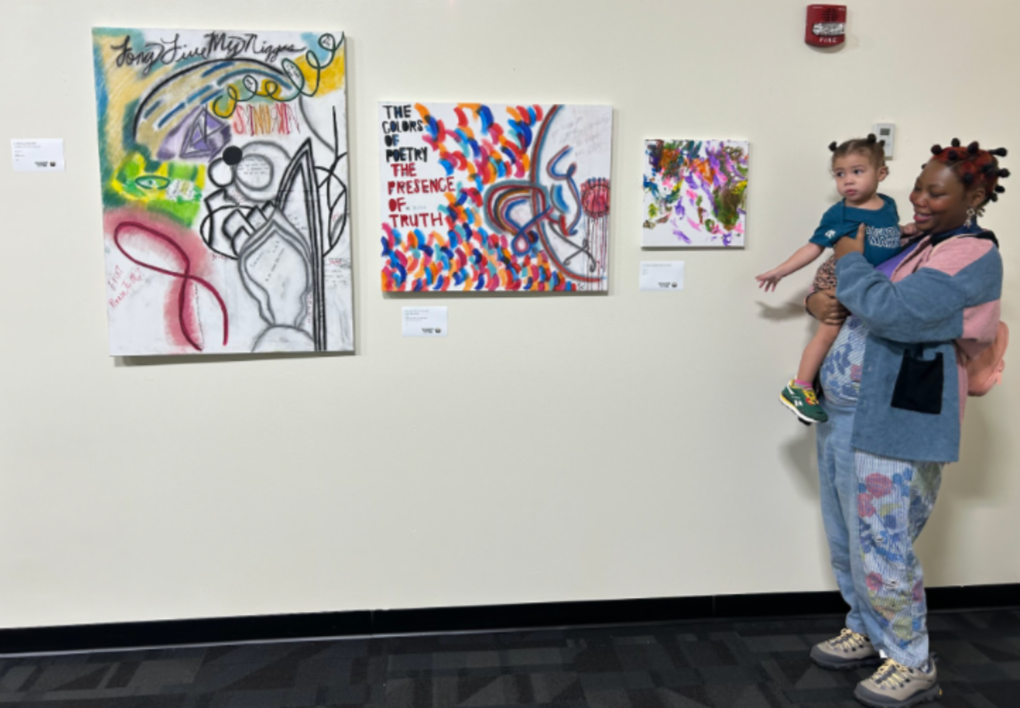
Exhibition view. Lynn Lashawn & Étoile, Elmer Lucille Allen Gallery, 2026. Photo via Shauntrice Black.
Lynn Lashawn & Étoile created incredibly bright and bold art that reminds me of New York subway graffiti from the 80s. Étoile’s energy in person was perfectly balanced by her mother’s tranquil demeanor at the opening. To quote her submission, “This collection of paintings is an ode to love in the memory of the family and friends I have lost to murder.” Their work reminds me of just how important it is to appreciate the people you love most.
If you’ve never seen Louisville’s favorite art family, you’re missing out. The Greens – Mother/wife Kayla, Father/husband Ci’Vaughn, and son CJ collaborated on a collection of work that celebrates Blackness. I have been so delighted by Kayla Morgan-Green’s trajectory. Her growth as both an artist and curator are full of Black joy.
Ashya Watkins was the first artist to sell work from the show. As usual, she delivers a chic glimpse into young Black womanhood with her acrylic work.
LJ Bryant graciously offered two series for the show. The first, [BLACK PANTHER] displays members of the Black Power Movement Freedom Fighters re-imagined as Wakandan royalty.
Skylar and Darell are two youth artists whose works are similarly autobiographical in nature. The colors raining down for both remind me of Jacob Lawrence or Faith Ringold. These are gen alpha creatives and I look forward to seeing how their work develops.
Walking by Dominican (2025) is a large work by Ada Ansejo that contrasts between delicate and resilient. I am fascinated by artists who use different methods than me. Ada’s manipulation of natural mediums is so well articulated. When I first saw this piece, I felt like I was back in Cruz Verde (Dominican Republic) dreaming in Spanish y caminando con amigos nuevas. Her floral collages typically play with negative space in a thoughtful way that gives viewers room to breathe.
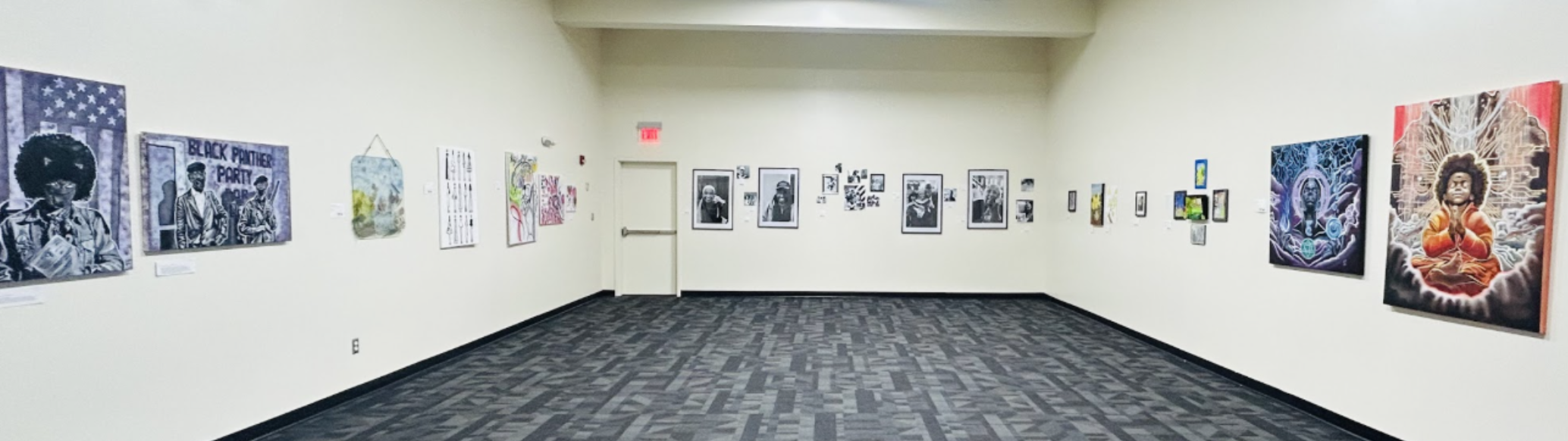
Exhibition view. Elmer Lucille Allen Gallery, 2026. Photo via Shauntrice Black.
I know this may come off as a fan girl writing a love letter and I’m OK with that. If the artists I work with feel loved and appreciated and protected, then I feel like I’ve done at least half of my job.
Now let’s get into the other half – selling work.
Black women artists in America represent less than 1% of major auction art sales.
Less than 1% of art sold at major auctions is by Black women. It’s something that weighs heavily on my mind when I curate shows. That’s part of the reason I curated four shows in 4 months this year. It feels like there is a heavier burden on Black curators to have commercially successful shows because many of the more affluent art spaces are incredibly anti-Black.
Even though stolen African art is the main reason any of these museums make money (…and cultural appropriators get to retreat in being “Blacker” while Black children are criminalized for the same attempts…and AI prompt writers are stealing Black voices, Black art, and Black style to create racist digital caricatures…) less than 3% of global art market sales are attributed to Black actors.
The Black aesthetic is bought, sold, traded, and disregarded like a commodity. It feels like everyone else is profiting from our culture except us. “Drifting on a Memory” is a celebration of our collective expression despite attempts to silence, isolate, destroy, and re-tell our stories. Reflecting on this exhibition reminds me of why I maintain that justified list of people/places I refuse to work with. More of us need to protect Black artists and I take that responsibility very seriously.