
ALTERING THE STATE
Kentucky’s newest inaugural art event kicked off with a reminder of how integral artists are to the art world

All photos via Natalie Weis.
A nice crowd came out to the Carnegie in Covington on a chilly but sunny afternoon, Saturday, March 28, 2026, despite taking place on the same day as the No Kings march, which was happening simultaneously just over the bridge in Ohio.
Though the national protest attracted thousands of people, many also sought to gather at the Carnegie, for the first installment in a four-part series from the Great Meadows Foundation, Altered States: (A) Critical Response, a new annual event dedicated to advancing critical discourse around contemporary art.
There, under the building’s iconic rotunda, visitors were greeted with a stunning and sprawling installation by sculptor Manami Ishimura for the exhibition, which opened the following weekend,“The Body Isn’t a Battery That Discharges Upon Death,” curated by Sean J. Patrick Carney.
The Carnegie’s theater held the day’s programming while the rotunda operated as a site of informal conversation and casual catch-ups between friends, colleagues, and acquaintances, as audiences kept their energies up during several breaks over the course of the six-hour event with light bites and beverages.
The inaugural symposium actually began a few days prior, with satellite programming across the river in Cincinnati, and likewise, those two events (a poetry reading by artist Krista Franklin and film screening of artists and filmmakers Theo Schear and Tunde Wey) also featured a broad range of thoughtful words and ideas.
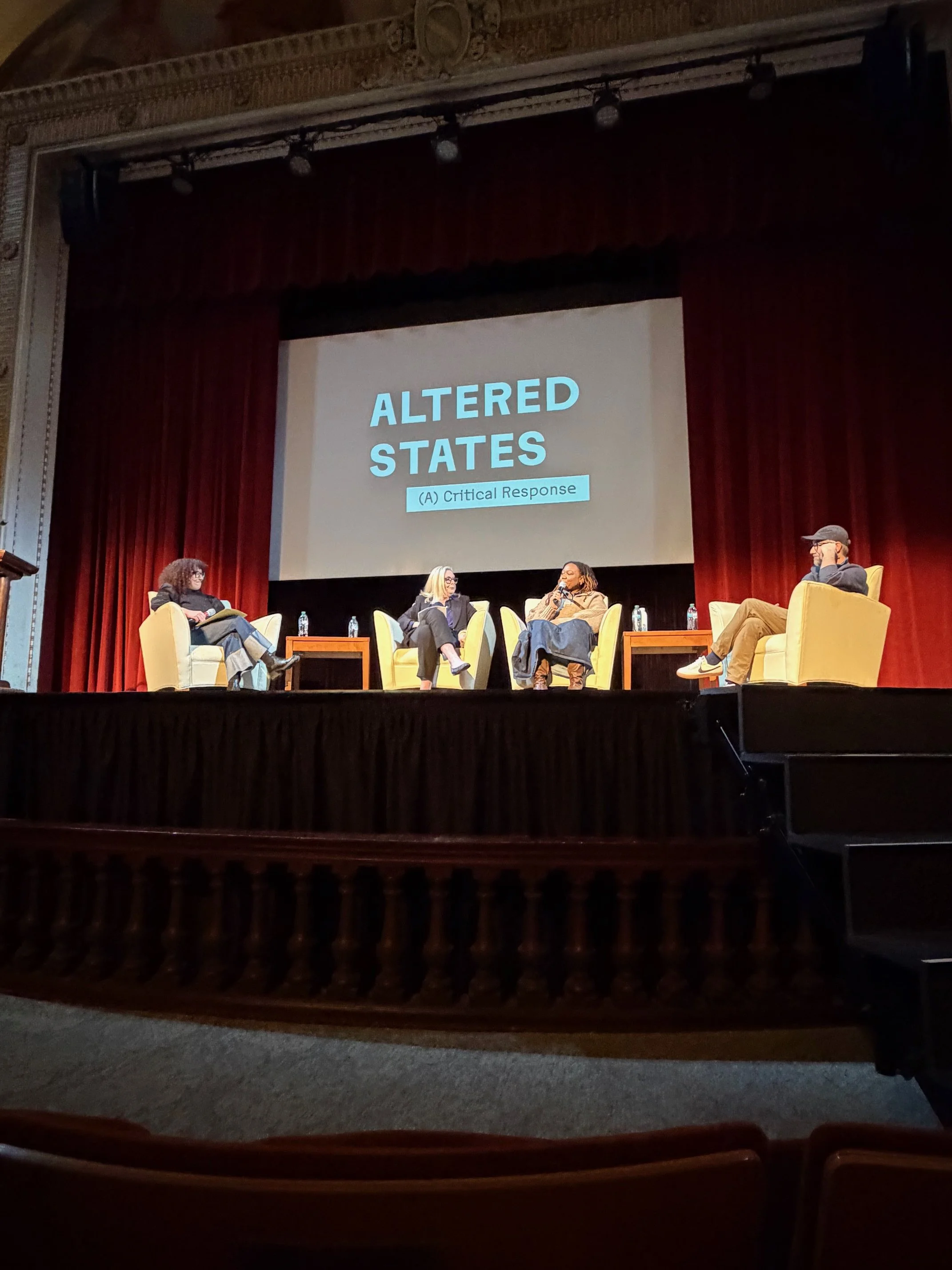
Over three days, thirteen artists and arts administrators thoughtfully addressed “the current state of the arts at local, regional, and national levels from the perspectives of artists, institutions, galleries, and funders.”
Oversaw by Carnegie Executive Director Matt Distel and with administrative assistance from artist Britni Bicknaver, the Symposium’s focus was led by a planning committee of five local arts/arts-adjacent leaders: FotoFocus Project Coordinator, Taylor Howard; Curator at The Carnegie, Sso-Rha Kang; Cincinnati-based art collector and ‘gadfly,’ George Kurz; Director and Faculty Chair of Taft Research Center at the University of Cincinnati, Stephanie Sadre-Orafai; and the Taft Museum of Art’s Duncanson Program Manager, Kareem Simpson.
Espoused goals for the day’s programming were to address several key points: the realities of working in cultural organizations at this time and in this region, what strategies are needed to be a “visible” artist, and the long-term viability of our current art systems. Despite the weightiness of the aforementioned topics, through an open exchange of a diverse range of opinions, material examples, and knowledgeable voices of experience shared over the course of the afternoon many presentations did not disappoint in tackling them head on.
Director of Great Meadows Foundation (GMF) Julien Robson provided opening remarks at the start of Saturday’s program, explaining how the new four-part Symposium series was intended to act as an adjunct to GMF’s Critic-in-Residence program, which has historically brought noted contemporary art curators to Kentucky for a two month period to engage with the contemporary art scene in the state, and has been on hiatus since 2023.
The three upcoming symposiums are set to take place in Lexington, (hosted by Director at UK’s School of Architecture, Jeffrey Johnson); Louisville, (led by KMAC Contemporary Art Museum Curatorial Director, Joey Yates); and Bowling Green, (directed by University Distinguished Professor at Western Kentucky University, Yvonne Petkus).
After Robson concluded his remarks, independent educator and curator Emily Mellow gave one of the more memorable presentations of the day, reflecting with unblinking clarity the ever shifting landscape of resources, pitfalls, and challenges that artists in America are currently facing—as well as some potential creative workarounds.
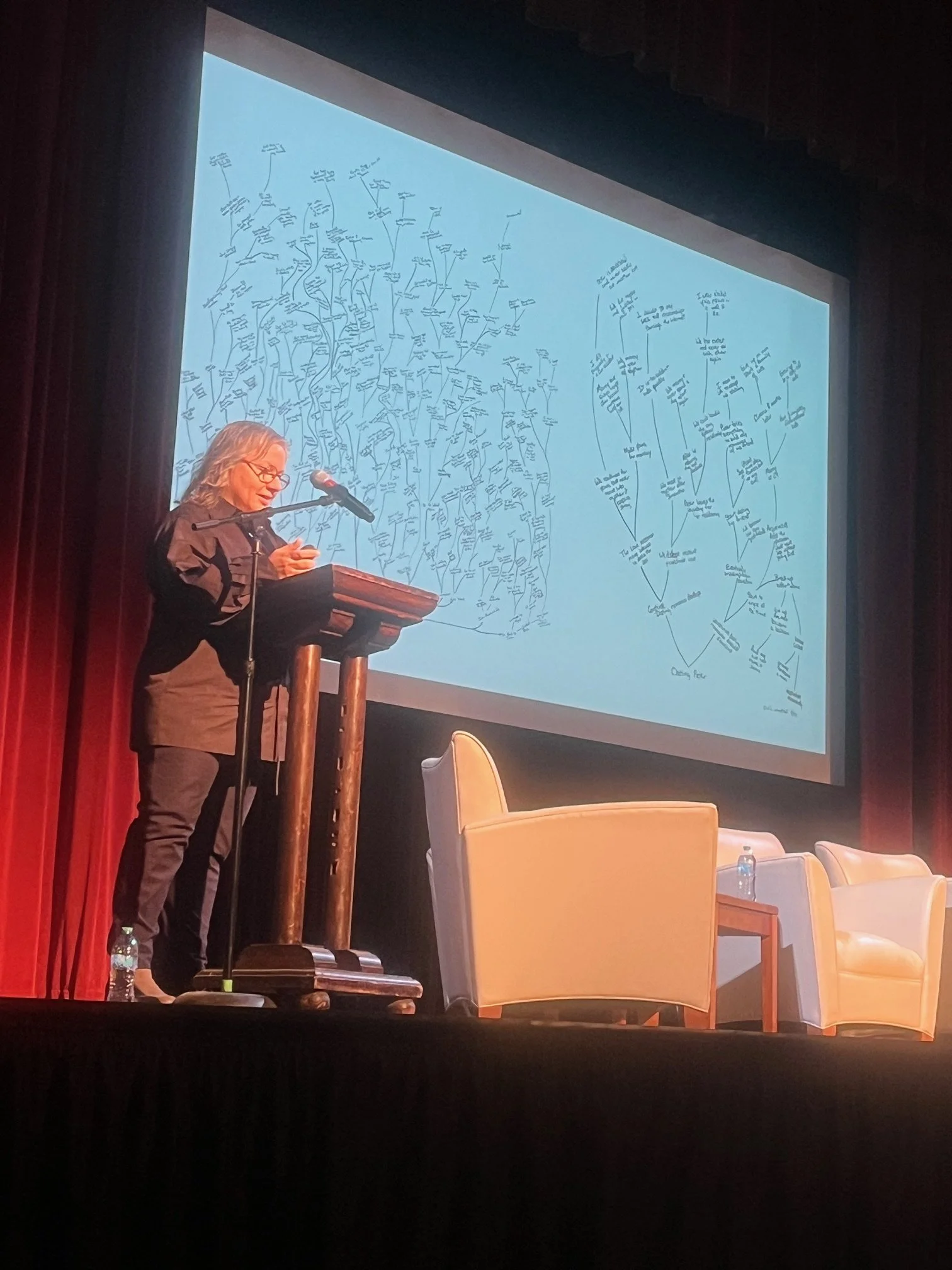
“It is very bleak but there are some bright spots,” Mellow said, specifically referencing the screening of Tunde Wey and Theo Schear’s “Hard to Swallow” docuseries at Esquire Theater the previous evening as a good example of one such hopeful indicator.
In outlining the current context of being an artist in the United States, the former Cincinnati-based arts educator and speaker listed the politicizing of DEI, presence of ICE, accelerating racism “across the board”, military aggression on several continents, climate catastrophe, and the increasing use of AI to demonstrate the aforementioned ‘bleakness’ of the matter.
“We often pride ourselves in using the term ‘artist centered’ but artists will argue to what degree that we have succeeded or failed in that area,” Mellow stated matter-of-factly.
“It’s not always about production and the final product but the fact that many art workers are artists as well; so ‘artist centered’ also means human centered,” she reminded the audience.
AI was a subject that came up briefly several times throughout the day’s presentations, but here Mellow emphasized its threat to the material conditions that support artists’ lives, rather from the encroachment of artificial intelligence upon their work—further emphasizing the danger it presents to the lives of all humans on our planet.
Mellow wrapped up her introduction by asserting that if the current trend of museums and institutions growing too fast too quickly (California College of Art’s closure, just two years after their recent $123 million campus expansion and renovation; or the Speed in Louisville cutting their entire Education Department were cited as two recent examples,) was a call to consider a more human-sized scale of art spaces, and how art making might be embedded within the communities it serves.

A panel discussion moderated by Christina Vassallo, (who recently left her post as ED of Cincinnati’s Contemporary Art Center to Direct the Pew Center for Arts & Heritage in Philadelphia,) followed, which featured Warhol Foundation Program Officer, Khadija Nia Adell; Curator Emeritas at UC Berkley and CAC Board Trustee, Lucinda Barnes; and University of Cincinnati DAAP Professor of Art, Jordan Tate—who several times over the course of the panel talk (no doubt due to increasing pressures from Ohio’s new SB1 bill) provided the caveat that his opinions were his own and not those of his employer.
Vassallo joined the three panelists on stage to “imagine the way forward with real constraints,” and some of the more memorable takeaways from this four-way conversation came from Adell and Tate. According to Tate, “the major thing we’re dealing with is greed capitalism and the government supporting that and not thinking about the lives of the citizens.” He later added bluntly, “the vast majority of art is still governed by what people want to pay for.”
Adell for her part said that we should “shift our focus from the product of art into the process, which prioritizes the individual,” and her thoughtful replies demonstrated her understanding being both an artist as well as someone who supports artists.
In response to a premise Vassallo proposed about artists needing institutions, Adell first asked for clarity on the Moderator’s question and then articulated, “I would trouble the idea that artists need institutions. I think it’s the other way around.”
“I think institutions need artists. They don’t have anything without us,” she said to a rousing cheer from the audience.
For the next talk, writer Krista Franklin performed two of her powerful lyric essays, “History is Written by the Victors”, and “On Time,” as well as provided a brief rundown of her own creative practice.
“Regardless of who is in control of the American administration,” Franklin said, “the art industry is a fickle, mysterious lover, with biases, ever changing tastes and rules, and a market eternally in flux or fluxes. In other words, it’s unstable.”
She also reminded the audience that the role of the artist is to create.
“Not just objects of art or marketable images, but worlds,” Franklin said, meaningfully. “Communities. Spaces where not just YOU thrive, but others as well.”
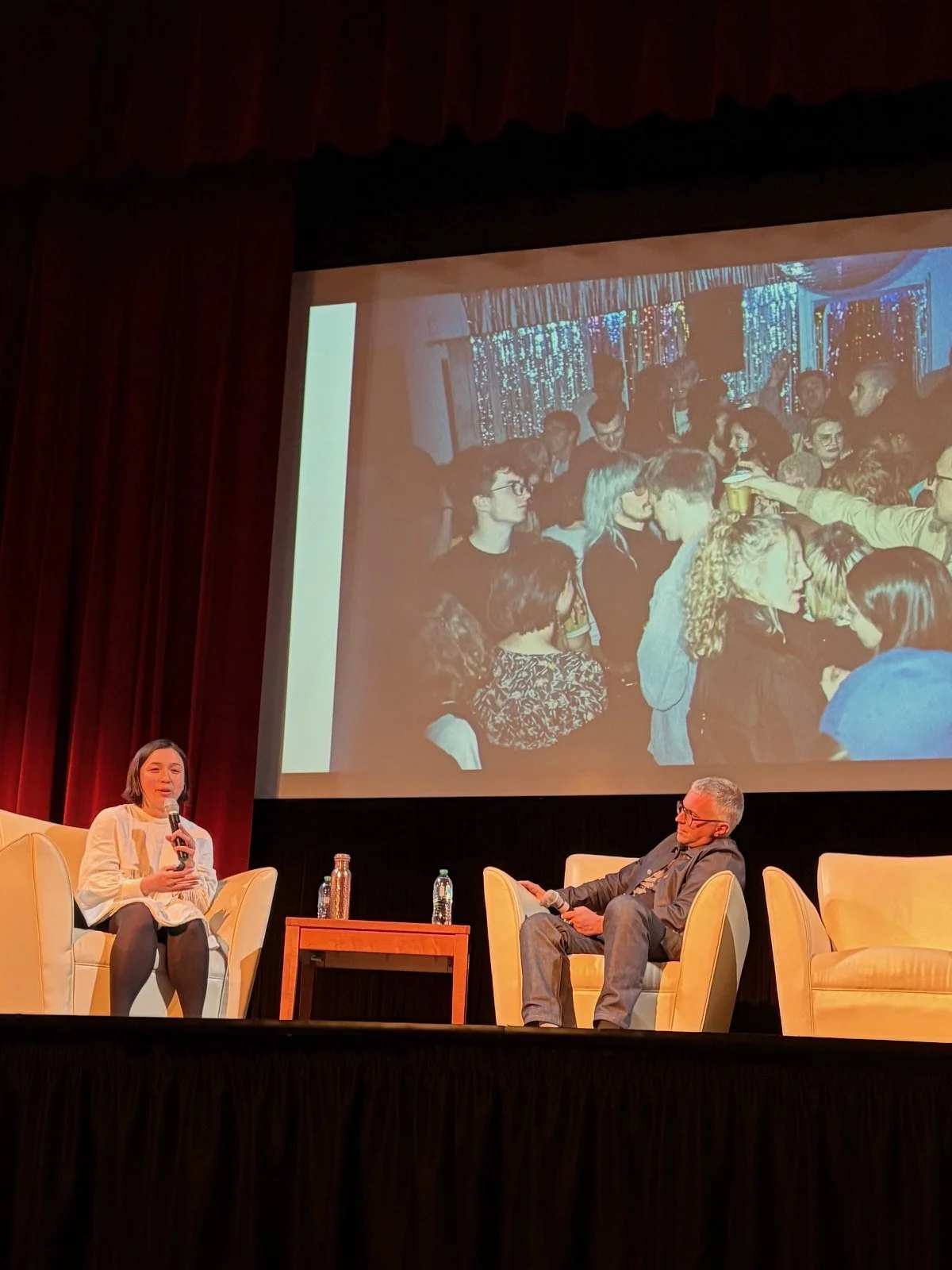
Up next was a conversation between Curator/Gallerist Phillip March Jones and Lexington-based painter Dianna Settles, who shared how she’s been able to support herself through painting for the last five years, while also being focused on community organizing.
Settles credited her time spent co-creating art communities in Atlanta, San Francisco, and Lexington to the kind of cross-pollination that can happen in small-scaled human centered communities of solidarity.
“I think what’s really essential about Diana and her work is that there were years of being involved in every way,” March said of the painter’s success since her solo show at his Lexington gallery Institute 193 in 2021, Olly Olly Oxen Free which was covered by national art press outlets like Hyperallergic. Since then, Settles has also been featured on the cover of the Oxford American and in the Village Voice.
Conceptual artist and sculptor Beth Campbell was next on the day’s agenda, and she gave an honest, deadpan, and hilarious presentation about her multi-decade long practice. Tracing a chronological history from her rural upbringing in Illinois, to grad school in Athens, Ohio, and subsequent move to New York, she shared the many triumphs and personal questioning that can come from a life of creative experimentation and leaps of faith.
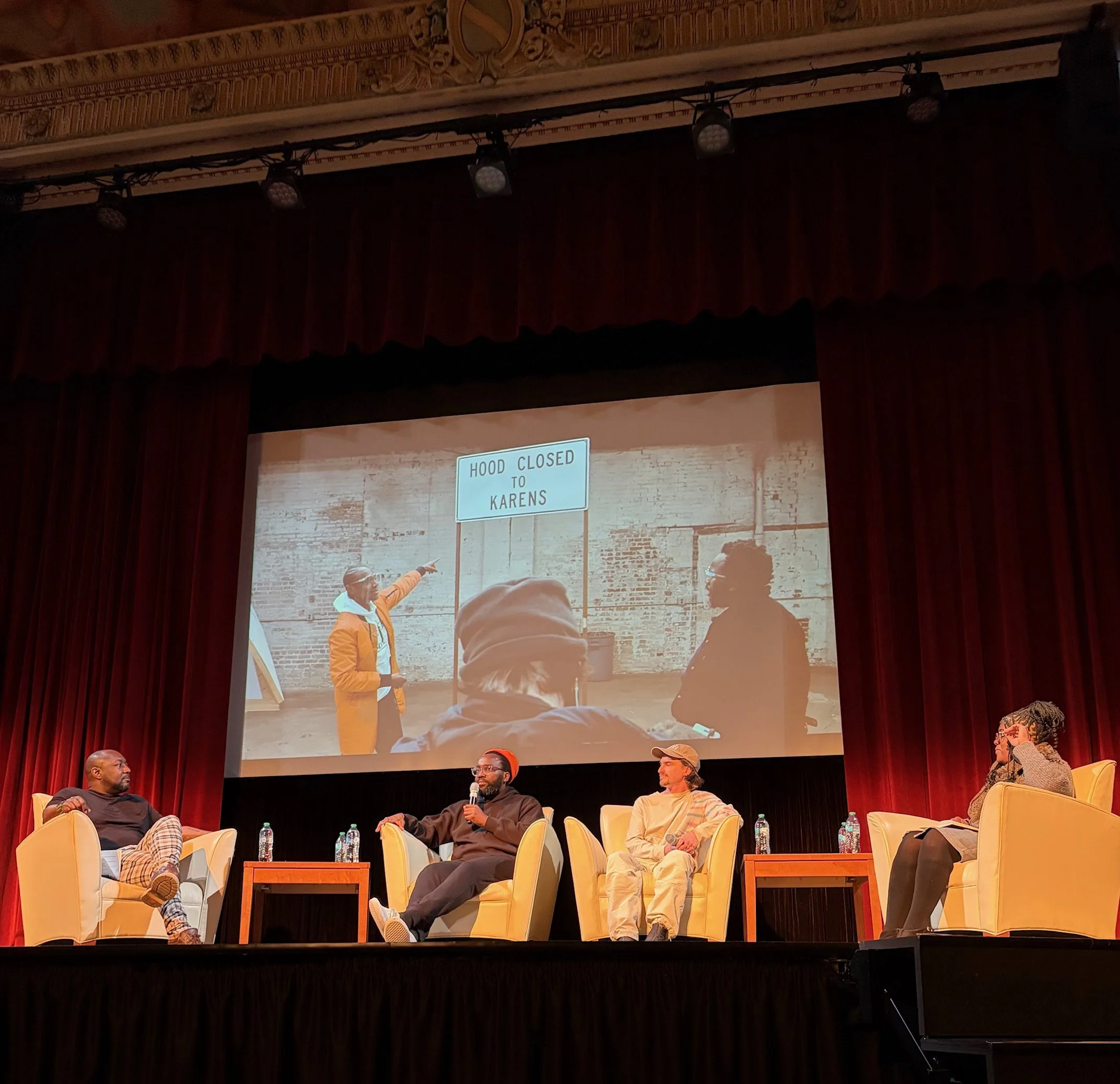
Image on screen shows Tunde Wey and Theo Schear interviewing artist Bryce Detroit in Detroit in November 2020.
Campbell was a breath of fresh air, with lots of practical encouragement and honesty around building a life that centered art-making, so it was a nice transition to the final Keynote Panel, featuring the aforementioned Planning Committee member Kareem Simpson, filmmakers Schear and Wey, and artist Anissa Lewis.
Simpson called the three artists in his panel “provocateurs” who are interested in changing the state of art and “have also disrupted that change in art.” This was not their first meeting, as Simpson’s Institution (The Taft Museum) hosted Wey for their 2024 Duncanson Artist-in-Residence program, to which Lewis also contributed, and the four panelists chatted like old friends.
Simpson saw similarities in the ways that Wey and Schear’s films sought to highlight racial capitalism within the food industry, and Lewis’ photographic series “Open Lots,” which drew attention to sites of displacement in communities where homes no longer stood or were uninhabitable.
And Lewis’ focus on the human implications of this displacement was the artist’s whole point. “Open Lots” she explained was not about the property or the home itself, but rather, “a house that is an open lot is an emblem of a family that is no longer there,” Lewis said.
The day ended with little fanfare, but so much left to consider. Six hours worth of programming barely scratched the surface of some of the topics—but participants left with some new ideas and inspiration—all of which focused on the lived experiences of the artists involved.
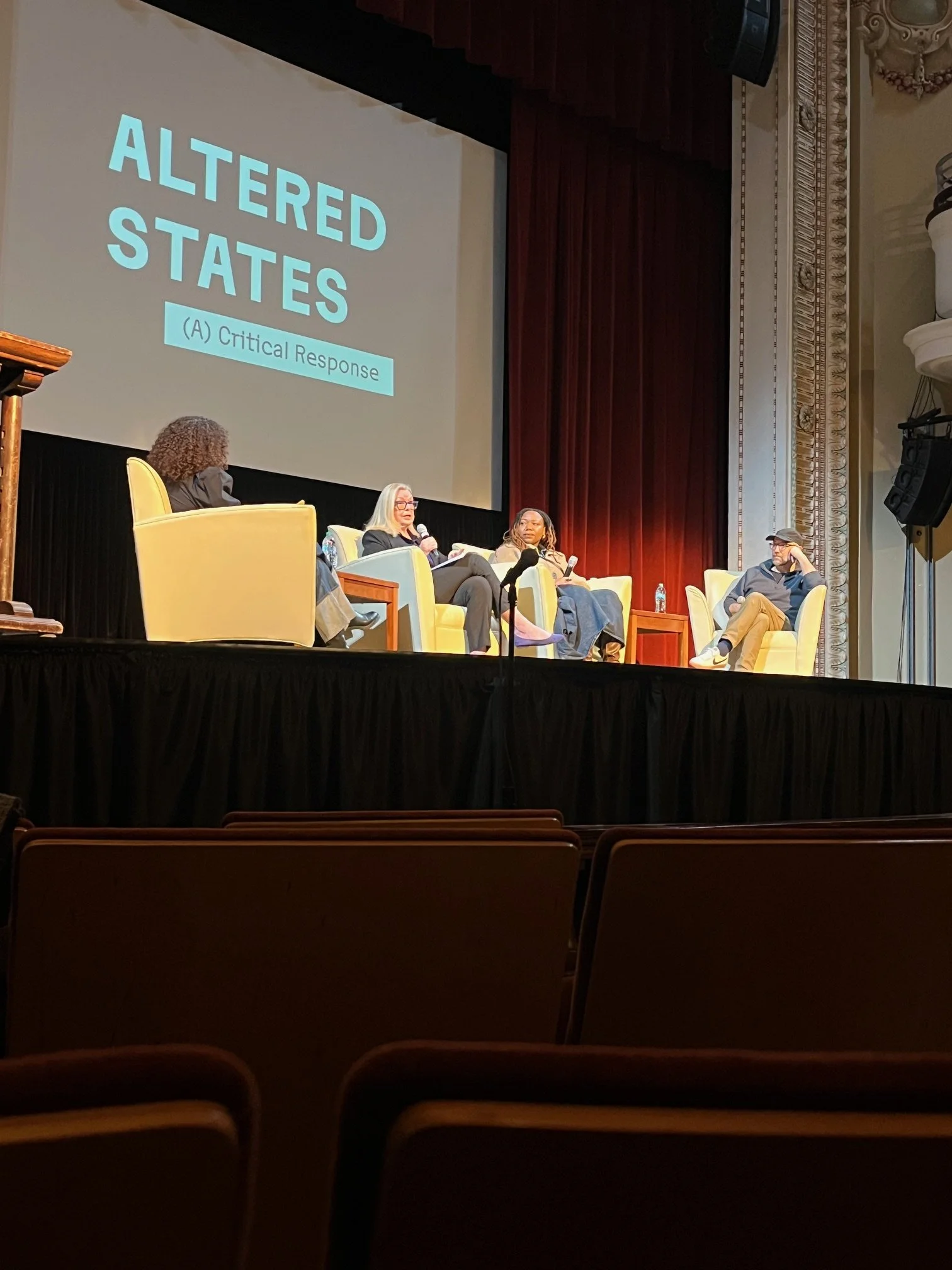
The single thread woven through all of the day’s presentations was the art world’s capacity (or lack thereof) to meet the real world needs of its artists. Just as so many of our current social systems seem to be failing, so too does the art world seem to be in meeting the material concerns of its artists. This writer looks forward to watching the seeds planted within this art community to blossom in future iterations of this four-part symposium.
