
CRACKS IN THE SURFACE
Sara Olshansky’s Ant Project Residency in Mexico City.
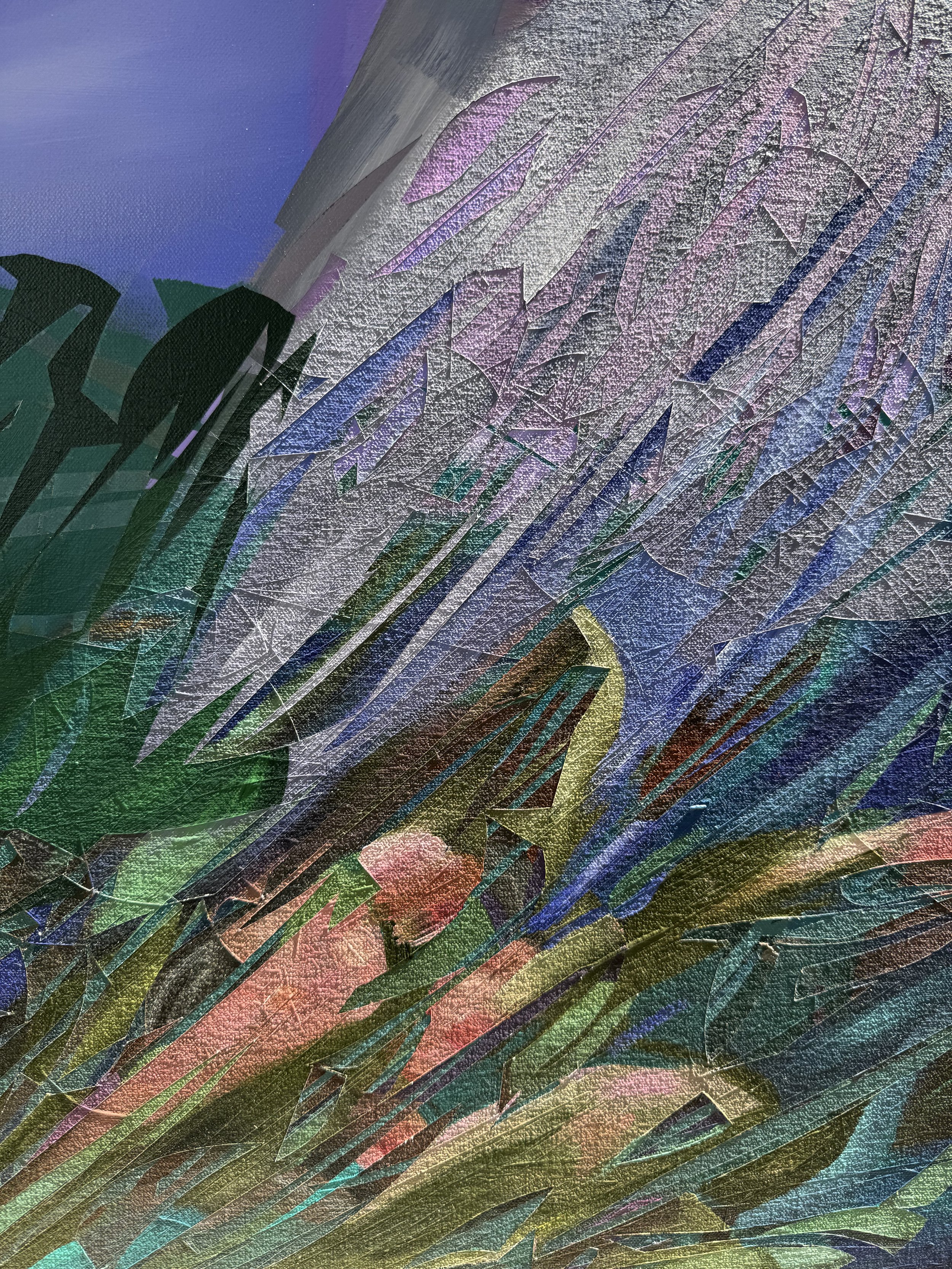
Sara Olshansky, close-up of Lluvia. Acrylic and spray paint on canvas, 24×18 in., 2025.
I’m a painter, born, raised, and currently working in Louisville. Like many who spend long portions of their lives in their birthplace, Kentucky has become my inherited frame of reference, against which I experience other places. Until autumn of last year, it had been the subject of all my landscape paintings. Experiencing the ecology here and witnessing the effect of the climate crisis helped me make sense of the world: its network of occurrences, our role as humans in shaping it, the infinite, nonlinear, and, at times, simultaneous chain of actions and reactions that unfold across and beyond our field of vision. Familiarity here helped me imagine possible futures branching out into spaces not yet known. These observations underpin my studio practice where I attempt to visualize both a collapse and expansion of what we’ve come to know as the natural world’s space/time with a language informed by the plants, animals, and weather found in it.
Both my artistic and personal identity are solidly rooted in Kentucky, which is why I felt surprised by how quickly and completely Mexico City started to feel like an extension of home. A residency program called the Ant Project brought me there. While participating, I would stay with founder and curator Guadalupe García at her house in Coyoácan. It’s possible to attribute this sense of home to the neighborhood, which is considered a slower, residential area within the city. Perhaps it was the “horizontal structure” through which Guadalupe connected me to a network of artists, curators, and friends. It could’ve been the excitement of landing in such a vibrant arts epicenter. What’s certain is how Guadalupe and the people I met helped to shrink the city’s vastness into a far more approachable field. In fact, Guadalupe and I drew many connections between Kentucky and Mexico. Yet, my experience offered distinct lessons, pushed my conceptual growth as an artist, and demonstrated possibilities for the future of arts in Kentucky, especially now as resources dwindle and creative pursuits become harder to sustain.
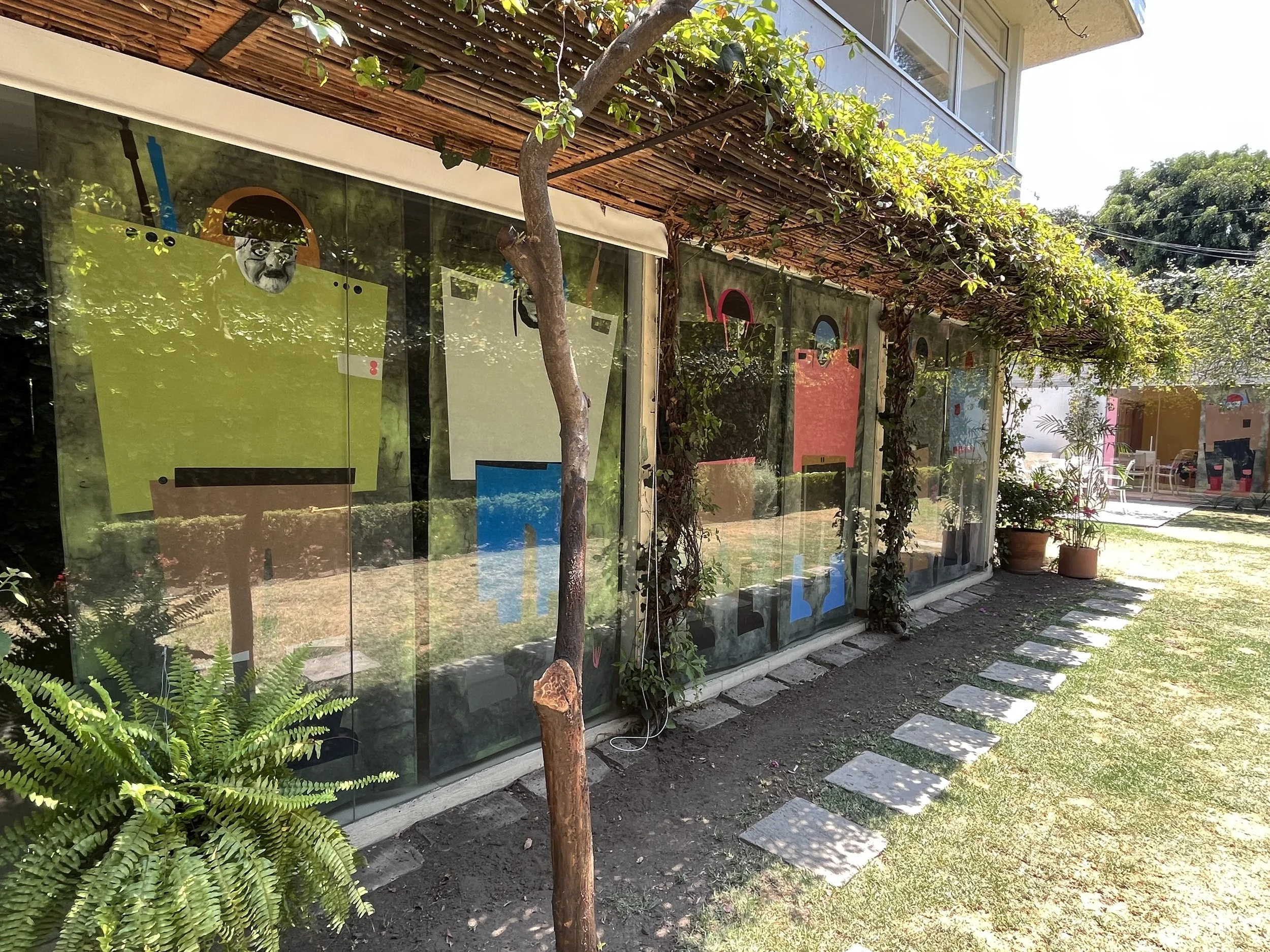
At the Ant Project in Coyoácan. Photo via the Ant Project.
I arrived on September fourth by plane. The aircraft approached a mountainous boundary before lowering over the farthest reaches of the city. I was instantly aware of a shift in scale. This is the largest city in North America and the largest I’d visited to date. At that moment, it clearly exhibited the ways in which acts of human construction fragment, or deconstruct, and supersede natural spaces. I felt intimidated by the task of painting landscapes when this is what would surround me. Guadalupe met me at the airport and drove us to Coyoácan through what felt like endless traffic. Congestion was a theme common among all movements here, movements which fork and weave as I imagine time might move through space in my work. I knew then that layers and their excess, which had already played a key role in my painting process, would mean something more here. It wasn’t until later that I observed cracks in those layers. Fractures revealed what once was: moss, soil, water, insects pushing through the pavement, renegotiating surfaces. With time, I came to accept that I had been assigning disproportionate control to the human end of what feels like our collective conflict with nature. We can excavate, build, and extract but even in a mega-city, we are not in control of nature.
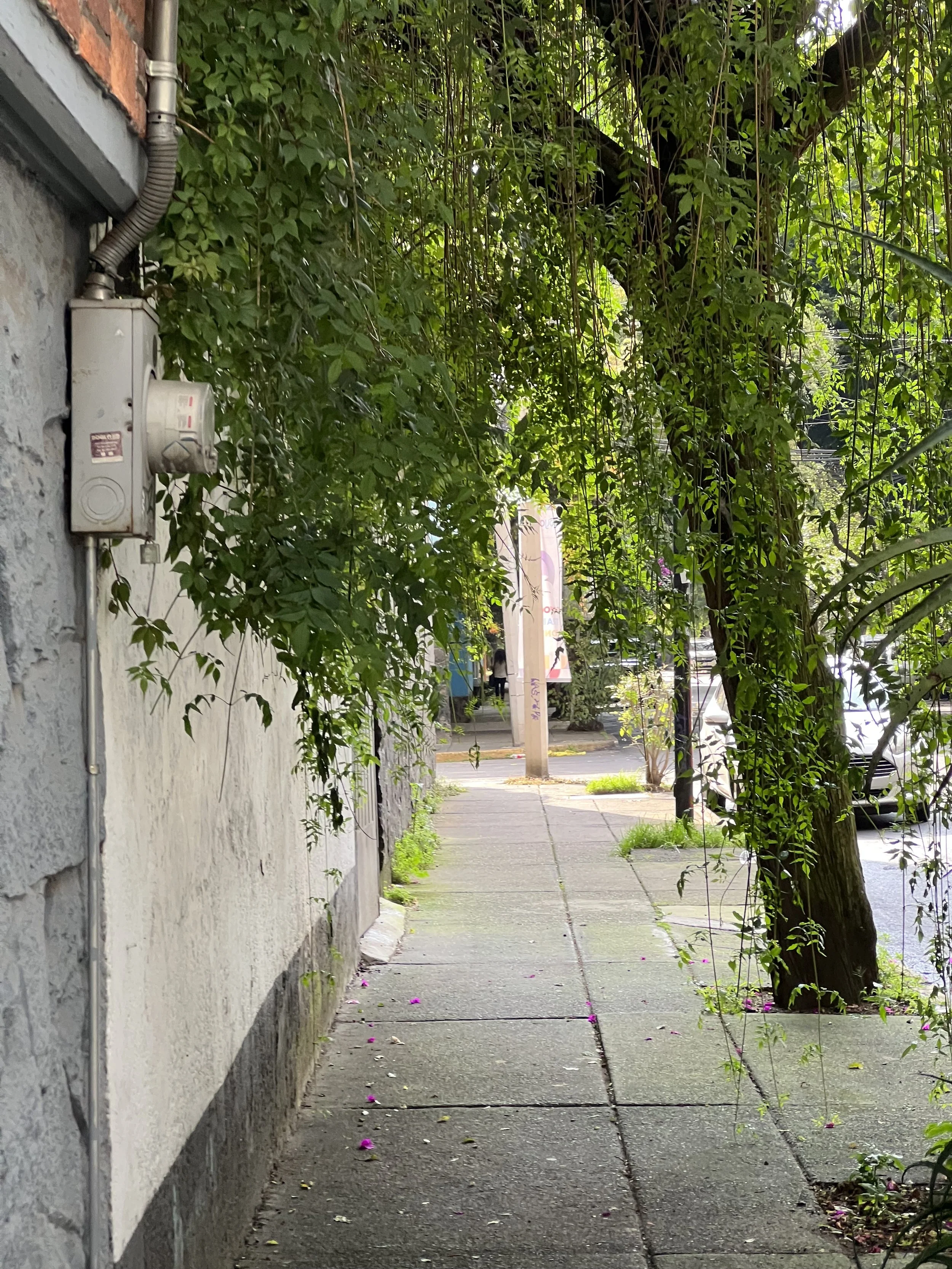
Sidewalk in Coyoácan.
Guadalupe and I visited painter Andrea Bores at her studio. Andrea paints using natural pigments and natural phenomena. In her artist statement she writes, “When I pour mixtures of coal or ground earth with water onto the paper, I know that their movements are determined by the same fluid dynamics as the construction of rivers.” She asked Guadalupe and I what the distinction is between "natural” and “unnatural,” or “synthetic.” Are synthetics not derived from what is found naturally on the earth? Are humans unnatural? She wonders what would happen if we stopped distinguishing humans and our constructions from the natural world and instead believe ourselves to be a part of it, one with it, made up from it. Her insights propelled a second shift as I began to see nature not as something in conflict with but coexisting amidst Mexico City’s layers.
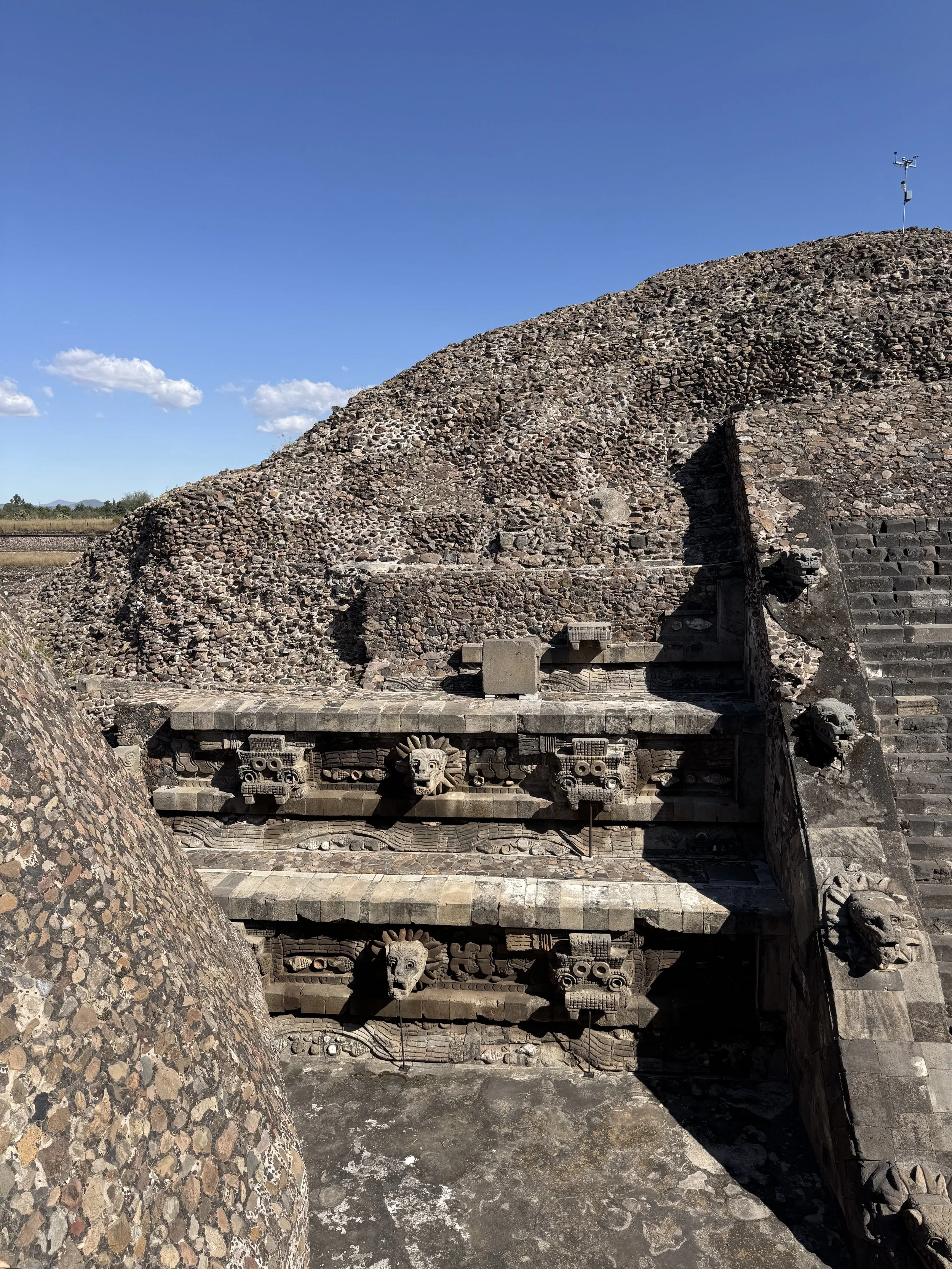
Templo de Quetzalcóatl in Teotihuacan, México. Photo via Sara Olshansky.
I was fortunate to experience revelations like this frequently during my residency often inspired by conversations with artists I met there. While the structure of my paintings travels vertically through depth of added coatings, I began to adopt Guadalupe’s horizontal approach to connecting with others. As opposed to arranging its members hierarchically as is common among the art world and its market, the community seemed to reach across itself as established artists and curators uplift those who are emerging or “outside.” It felt inclusive, broad, sustained, even generous. I had the sense that I was witnessing a golden age for contemporary art. I heard many compare it to New York in the late 1900’s or Paris in the 20’s. Independent, DIY, and co-op spaces proliferate the gallery scene, like the unexpected pop-up Biquina Wax with Galería Tianguis Neza, which occupies a booth in the city center’s massive Saturday flea market called La Lagunilla. Performances debut weekly. Experimentation is pushed and rewarded. Parties with dancing, food, and mezcalitos in honor of these achievements offer opportunities to meet new people organically and without intimidation.
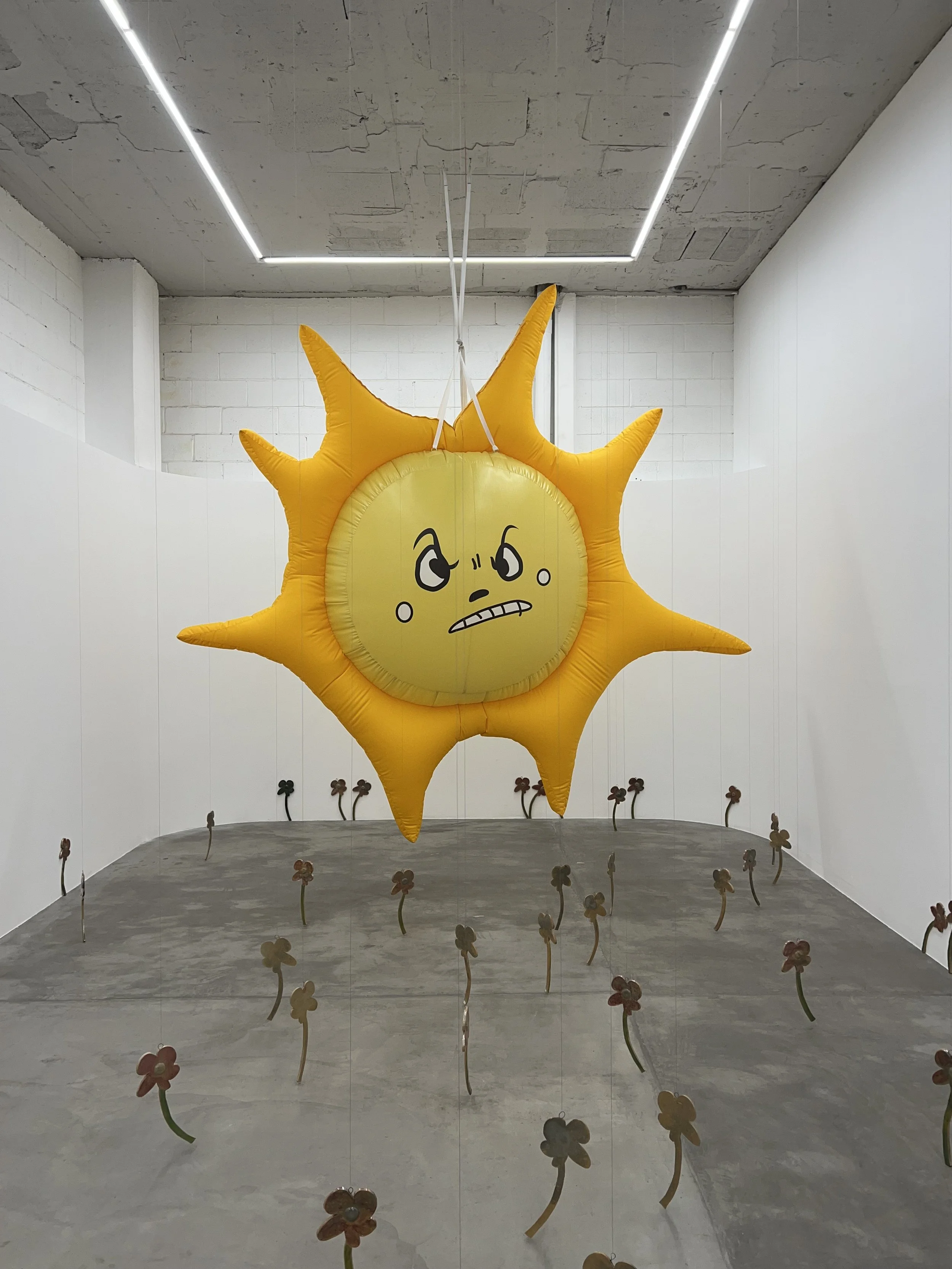
Guadalupe Salgado’s show at Mar Báltico 24 (Espacio Báltico), a collective art studio and exhibition space in Miguel Hidalgo.
When I left in November, the people I met remarked on how it felt like I was already a part of their circles. It was easy to join them. I have seen moments when Louisville’s community clicks and operates in a similar manner, but it seems to occur sporadically in pockets. I am optimistic those pockets will organize and grow. However, the current administration’s systematic devaluing of the arts, cuts to funding for our institutions, the market’s insistence that we compete, as well as the economic strain afflicting this region has stifled such growth. I believe CDMX and Guadalupe’s horizontal method of connection might function like a model as we navigate challenges facing Louisville’s art community today. Just as the natural world finds new modes of symbiosis within our cities, I imagine a local ecosystem emerging among creatives. Healthy systems have a tendency to root and spread, even beneath heavily set constructions.
The last painting I completed during my residency was titled Rio Magdalena after the underground river beneath Coyoácan. I first learned about it while discussing some of the challenges city planners face in CDMX with architect José María Bilbao. He told me Prehispanic Mexico City consisted of a series of rivers that flowed from the mountains. The entire area was like a basin submerged in water upon which the Mexica, commonly referred to as the Aztecs, built a floating city. Later, the Conquistadores would construct their colony on top of this empire, draining some lakes and tributaries to prevent flooding. The landscape changed dramatically again in the 20th century when the city diverted and funneled rivers into extensive, invisible systems further underground. Of these rivers, all have dried up except Rio Magdalena, which supplies the majority of the city’s potable water. Once a wetland kingdom, today Mexico City finds itself contending with water conservation during the dry season. José María described a desire to return to the Mexica’s agricultural and architectural methodology by unearthing those wetlands. The first iteration of my painting depicted the river as it might’ve looked when it flowed in the open air. Subsequent iterations fragmented that depiction until it resembled a map of pipes that contain it beneath the city today. If what I have set up in my work is indeed a non-linear space/time, then I hope this painting represents the possibility to return, to travel between past versions of Rio Magdalena, and restore it as José María envisioned.
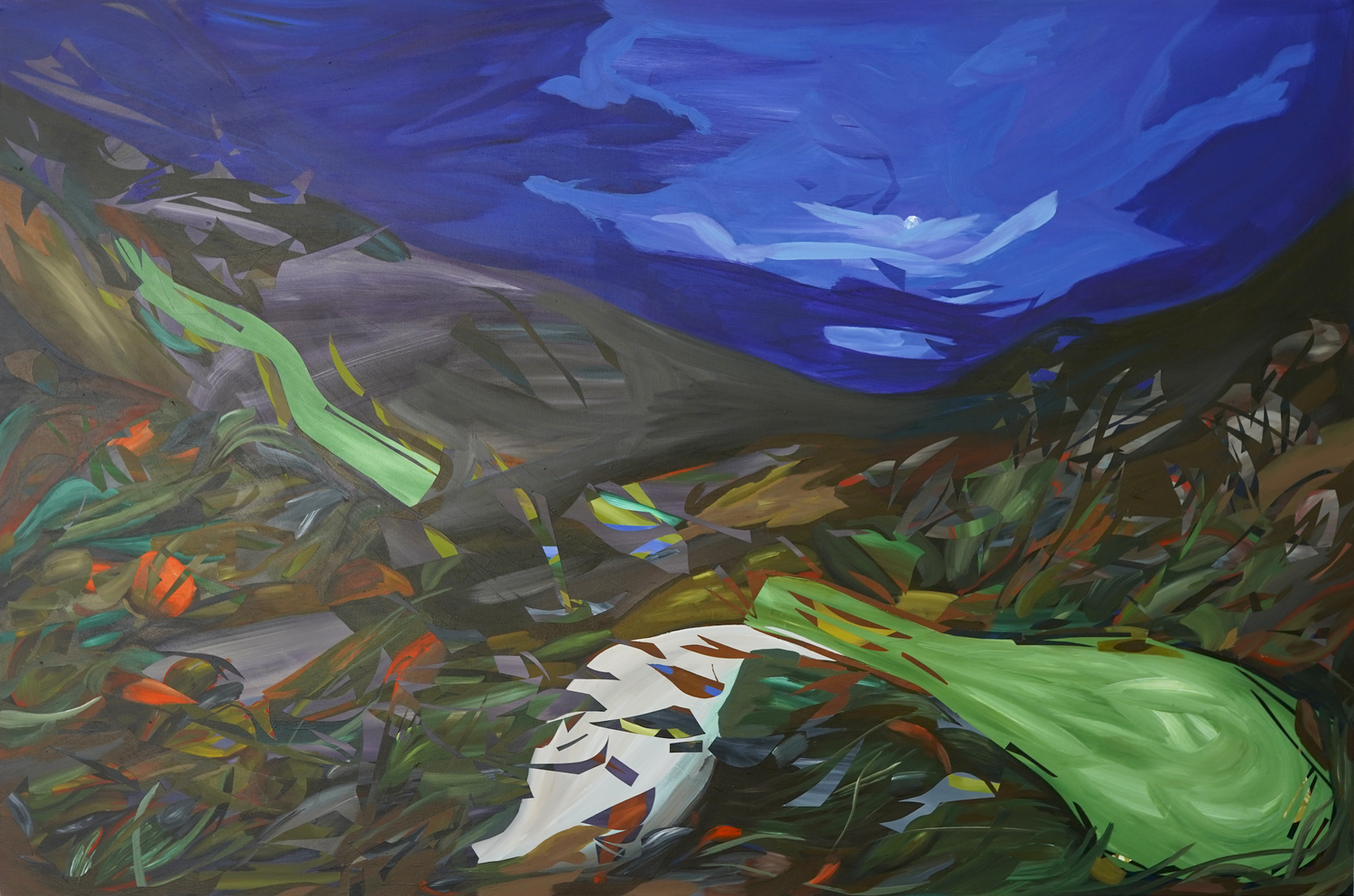
Sara Olshansky, Río Magdalena. Acrylic on canvas, 100×150 cm., 2025.
Unearthing, uncovering, or revealing are actions I associate with the investigation of layers. Restoring could be an act of rearrangement. I believe Mexico is a place with physical and temporal complexities stacked one atop the other, like an accordion that expands and contracts. To synthesize new information about its history and culture, I turned to my painting process and saw a surface built from accumulation, overlaps, loss, and revelations. Before my residency, I knew only how to discuss the natural world with terms like these. Among many things, Mexico taught me to expand the scope of my process, to think critically about the shape of connection, and to credit even the tiniest cracks in the layers.