

BIG TIME HUGE WATER
Lalana Fedorschak’s Great Meadows APDG Research Travel to the Venice Biennale.
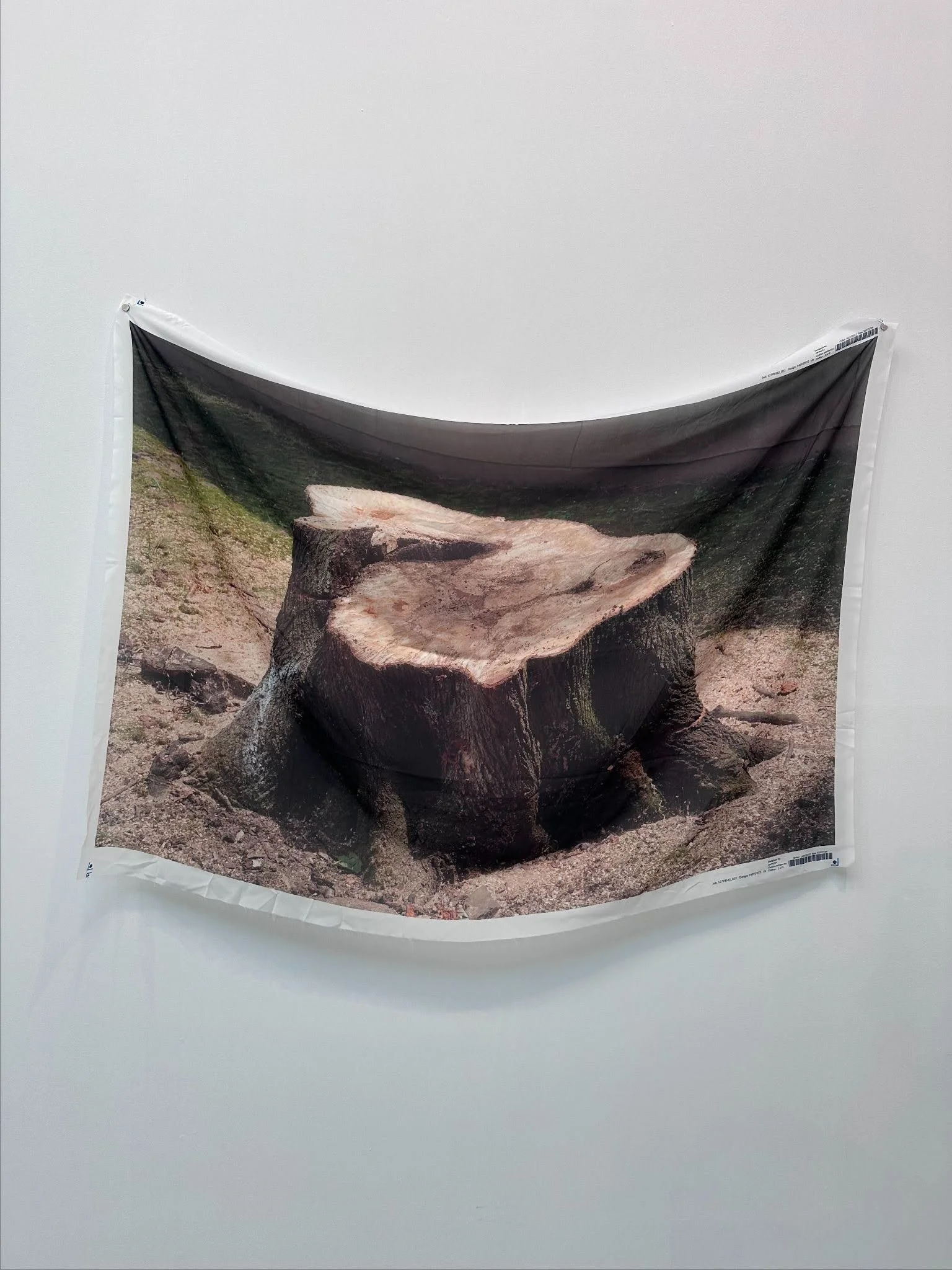
Carrie Yamaoka, Stump (2023). Digital inkjet print on synthetic chiffon. Photo via Lalana Fedorschak.
The 61st Venice Biennale splashed out on May 9 in a volatile climate. Public protests, pavilion closures, and artist strikes surrounded the exhibition. Alongside rising geopolitical tensions, chief curator Koyo Kouoh died suddenly following a battle with ovarian cancer, leaving her curatorial team to realize her vision without her.
I thought about the act of dying in the midst of crafting the framework for this massive global event. What would it be like to die with so much creative energy unspent?
When I touched down in Venice, I wasn’t prepared for the physical experience of being on the water. Venice is a city built on top of a cluster of small islands. There are no cars in the lagoon, all travel occurs by boat. The city is supported by millions of wooden columns driven deep into the dense clay below. Over centuries without air, the wood hardens into a stone-like material, becoming more durable. Even in the built environment, I swear I could feel the ground shifting underneath me, just a little bit.
Nothing is stable. It’s always moving.
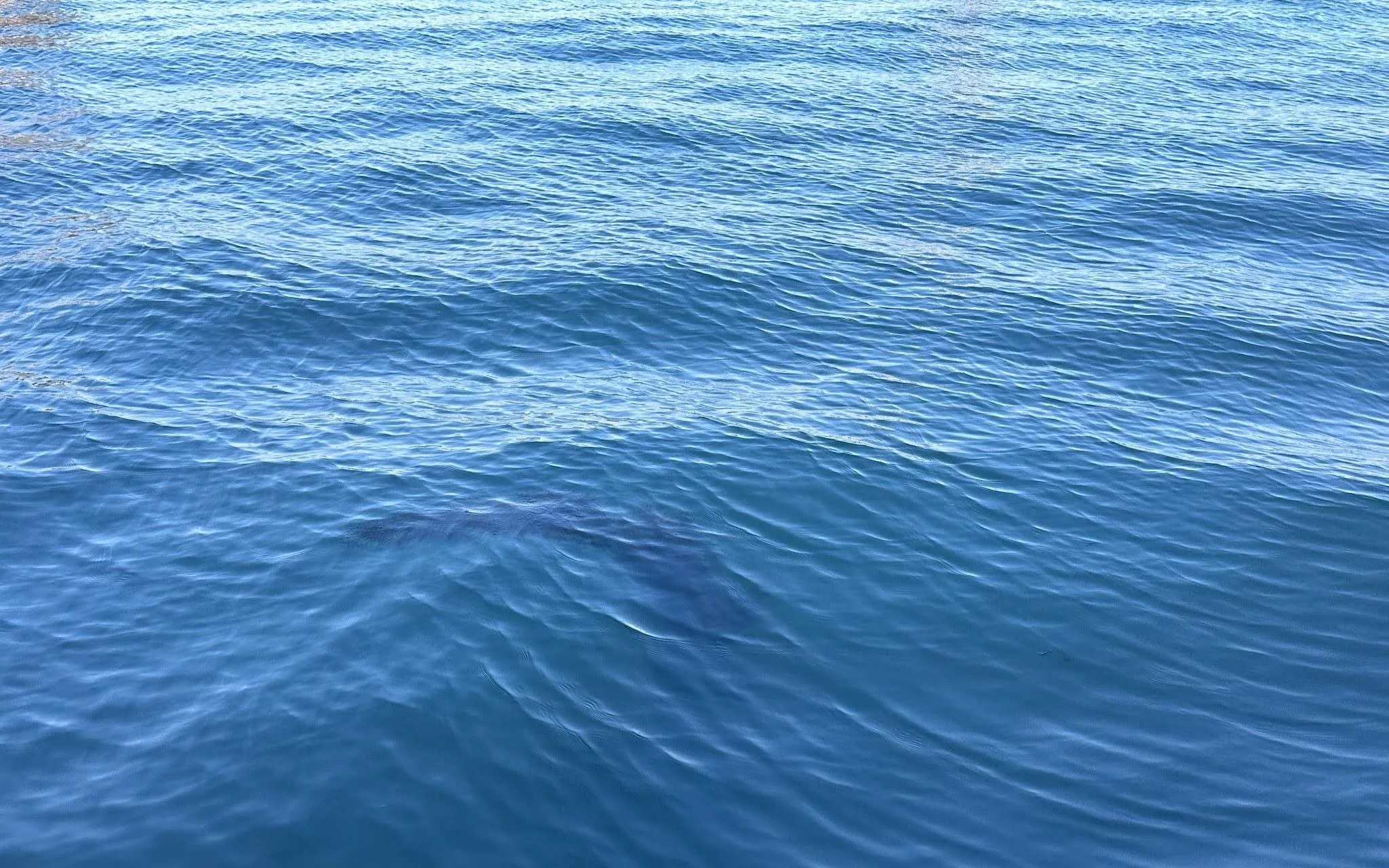
Photo via Lalana Fedorschak.
Everything is always moving.
My mom, Karuna, suffered from the same disease as Kouoh. She died in 2020 after a 10-year battle with ovarian cancer. When I entered Venice, the 6th anniversary of her death was about a week away. Sometimes it feels like it's been a long time, and other times it feels like it happened yesterday. In addition, my friend and former partner Chris passed away unexpectedly a week before I left for Venice. He was 36 years old.
Chris had a particular connection to bison after meeting one during our trip to the Badlands in 2025. He was an exceptional photographer, and got out of the car to make a polaroid portrait of the bison, standing much closer than park regulations recommend. Chris always had a calming presence, and had a way of making people feel comfortable in front of the camera. I’m not sure what the bison was thinking, but it didn’t seem to mind him being so close, and they looked at each other for a few minutes. It’s one of my most vivid memories of Chris.
In my first few hours in Venice, I was walking the neighborhood around my Airbnb in a jetlag delirium. I stepped through a curtained doorway and into an immersive video installation. On the screen was a big bison, looking right at me. We held each other’s gaze for what seemed like a long time. I felt like I was in a dream.
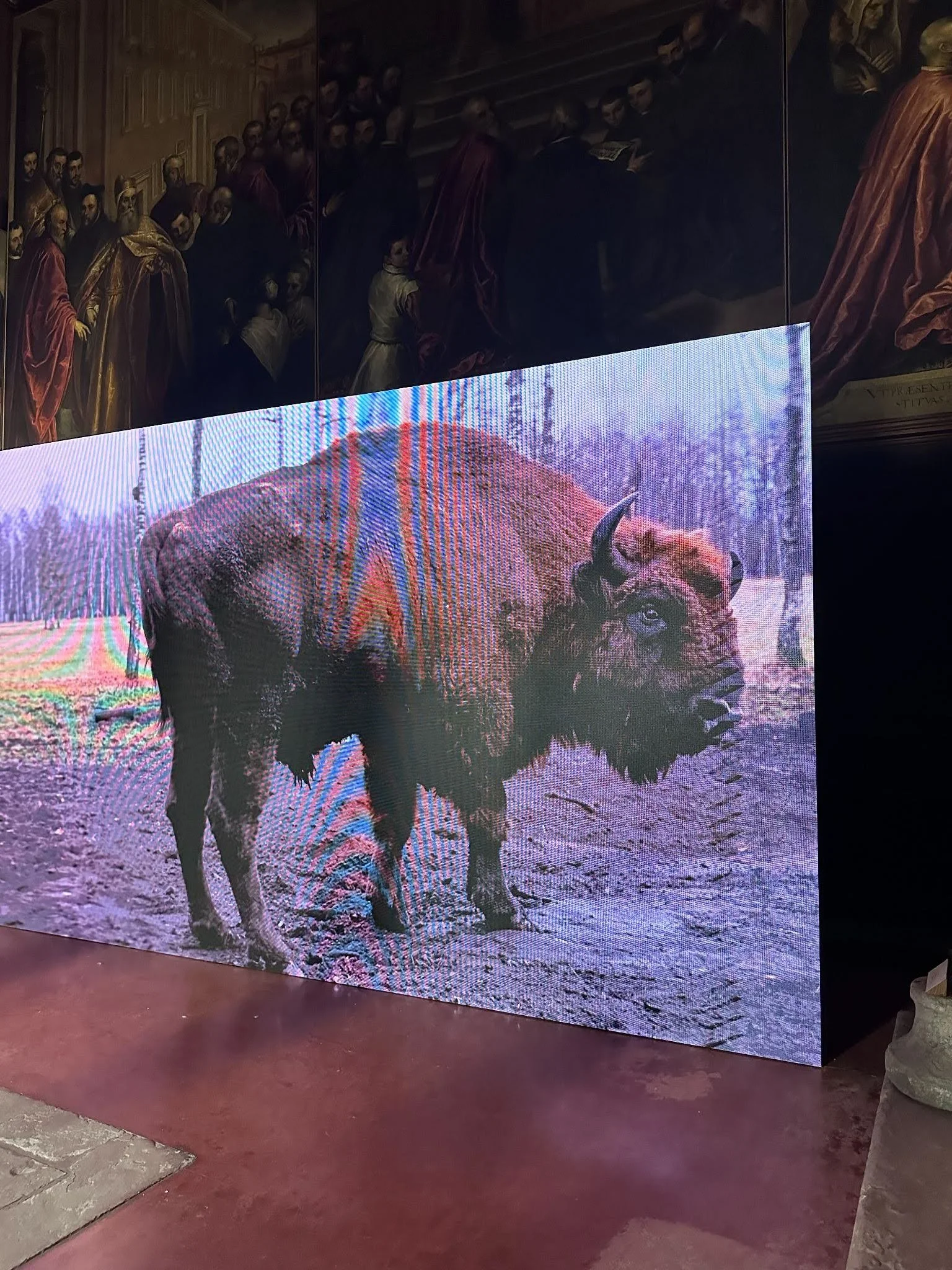
Lithuanian artist Ieva Lygnugarytė’s CARMEN: Utopias of Belonging. Photo via Lalana Fedorschak.
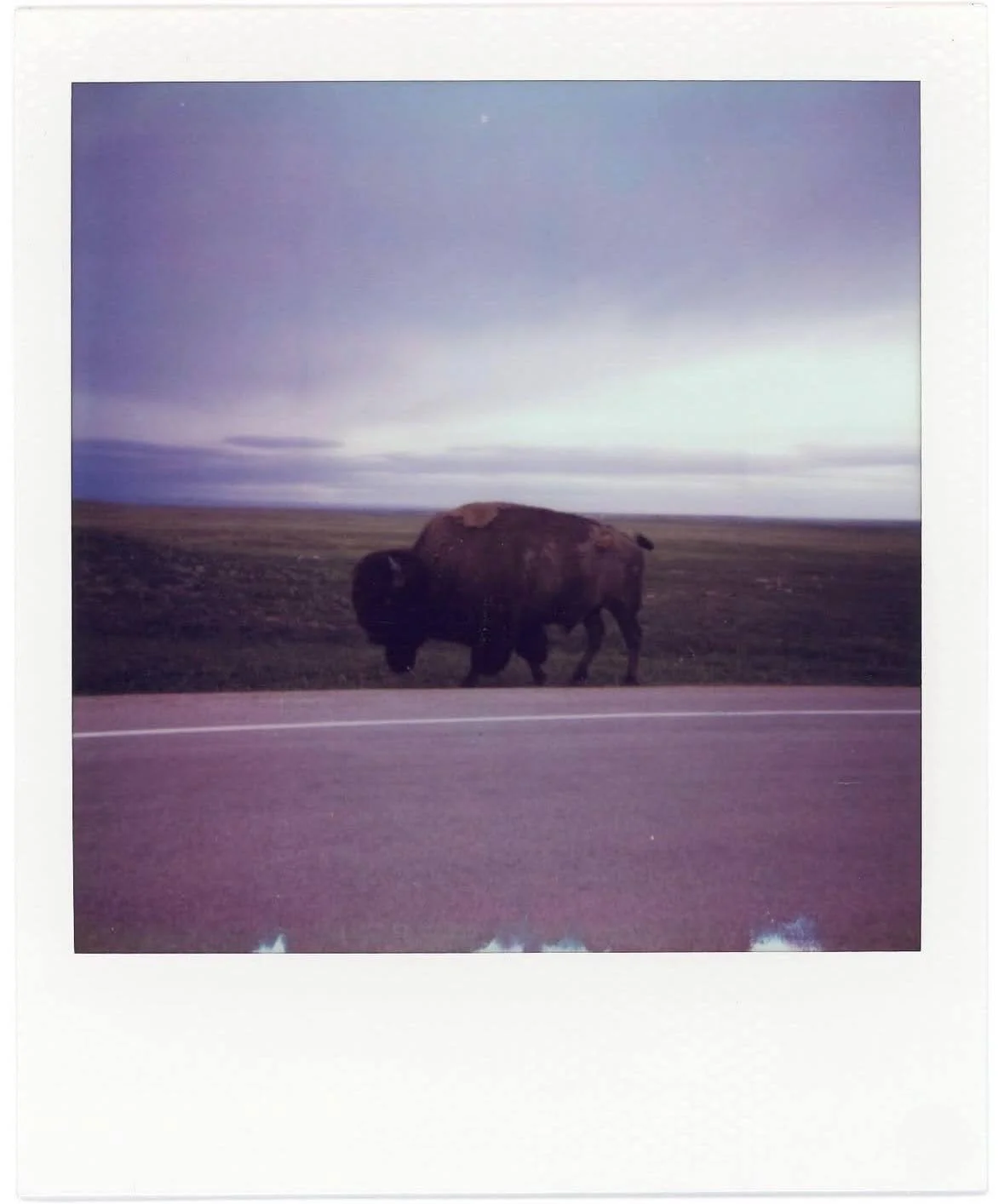
Chris Vaughn’s portrait of a bison in Badlands, SD. Polaroid Impulse AF x Polaroid Color 600 Film.
The project was created in response to a 16th century poem that was written to accompany a Lithuanian political gesture. The poem calls for European unity against foreign invasions, and the video imagines the poet’s transformation into a bison as a meditation on closure, desire, and belonging. The transformation of the poet into the animal felt like a soul inversion.
It’s interesting how the meaning of symbols shifts between the political and the personal, and has so much to do with personal experiences. Bison are part of the iconography of my grief.
In the Arsenale, I was drawn into Dan Lie’s Temple of Passages, an installation of floral bouquets suspended by thick rope. I saw the work about a month after it was installed, and the flowers, which had been installed fresh, were dried in shades of white and grey. The whole room was thick with a sweet, floral smell, with notes of dry rot. I have learned that perfumers often include a trace of something rotten in the blend, which enhances the flavors, like salt in food.
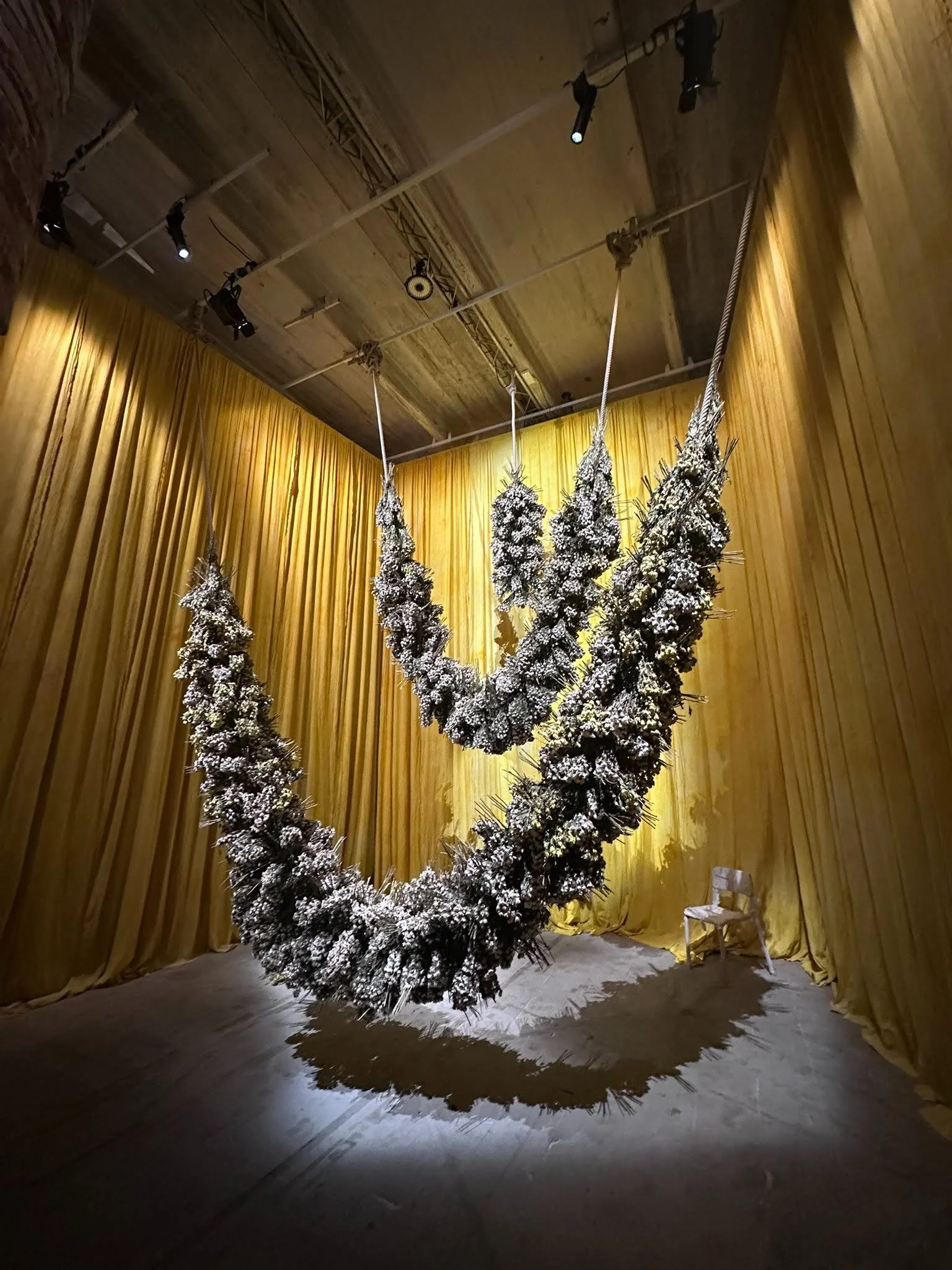
Dan Lie, Temple of Passages (2026). Flowers, rope, textile. Photos via Lalana Fedorschak.
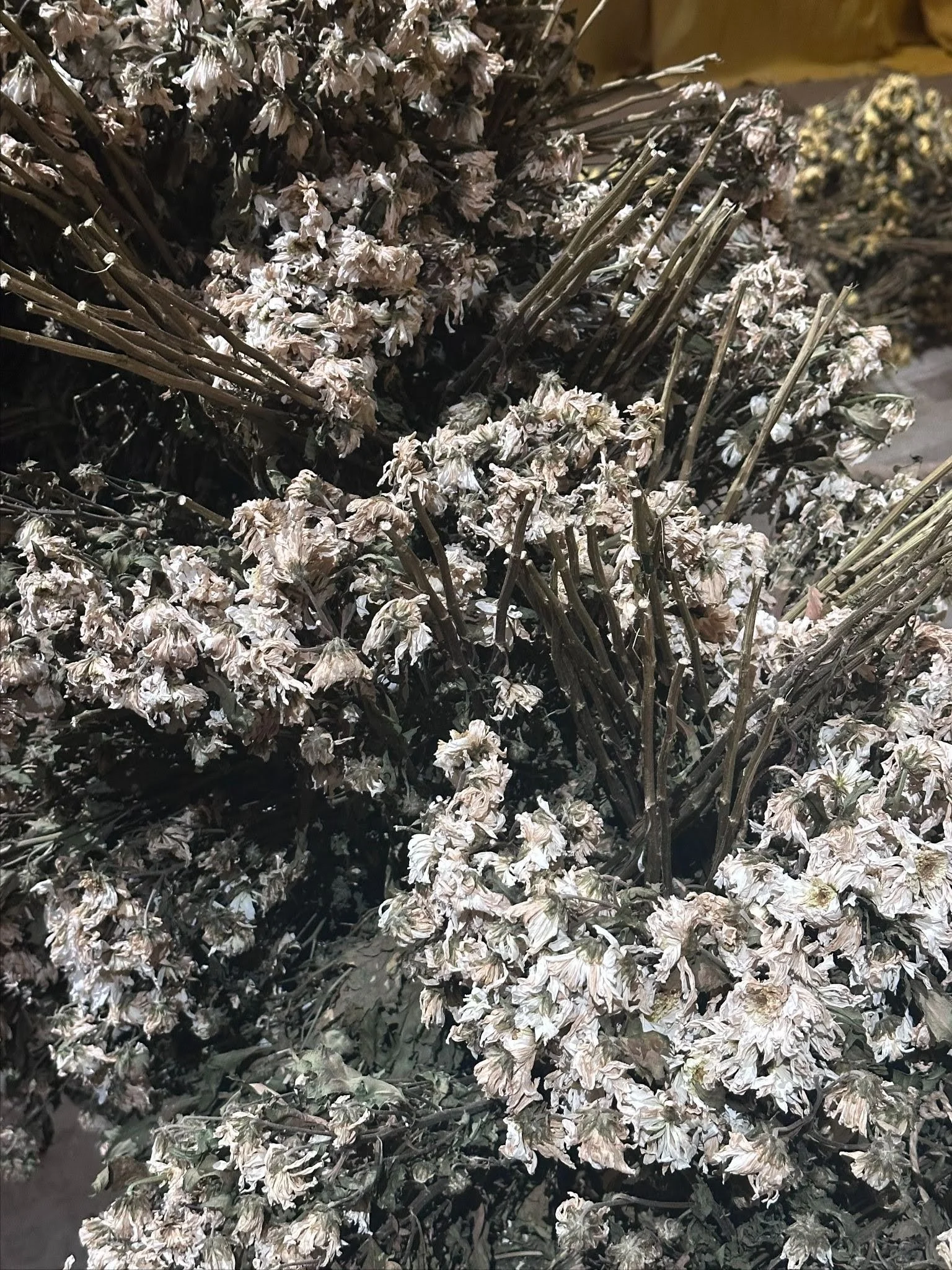
Throughout Kouoh’s Biennale, I noticed the repeated theme of shrines and holy places, communicated through organic, tactile materials that are visibly connected to the earth. Materials are allowed to be honest, they are allowed to change, and the work makes the transformation visible. My curiosity to understand more about this material philosophy led me outside of the Biennale and into the studio of Venetian ceramic artist Lara Desio.
Desio creates her work using a naked raku firing technique, where glowing hot ceramics are lifted from the kiln and placed into a bed of reduction material. She describes it as “painting with smoke.” Her work is material-forward, subtle, and intimate. Much like her work, Desio has an understated but powerful presence.
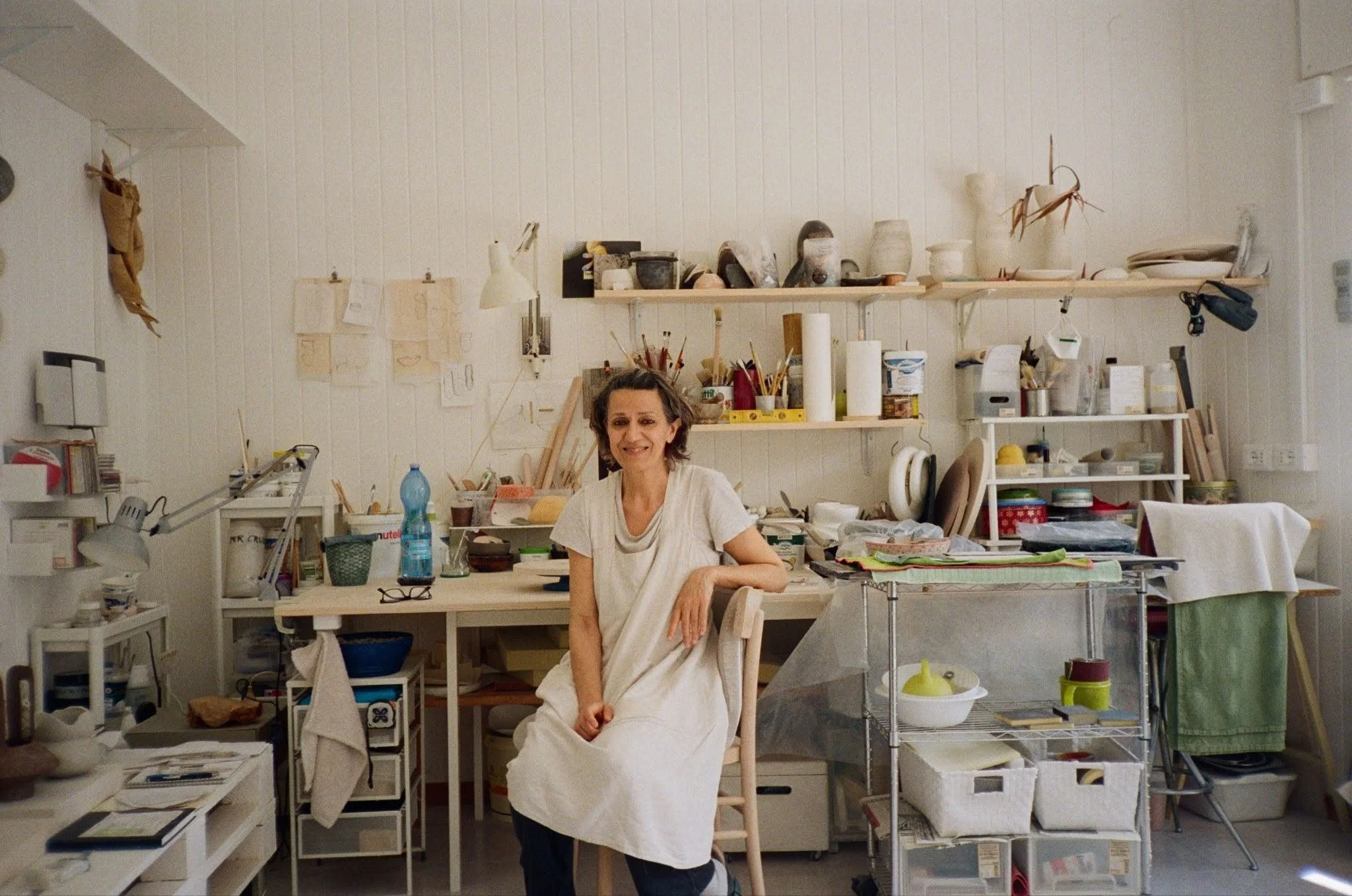
Lara Desio in her Venice studio. Canon Snappy II x Kodak Portra 800 Film. Photo via Lalana Fedorschak.
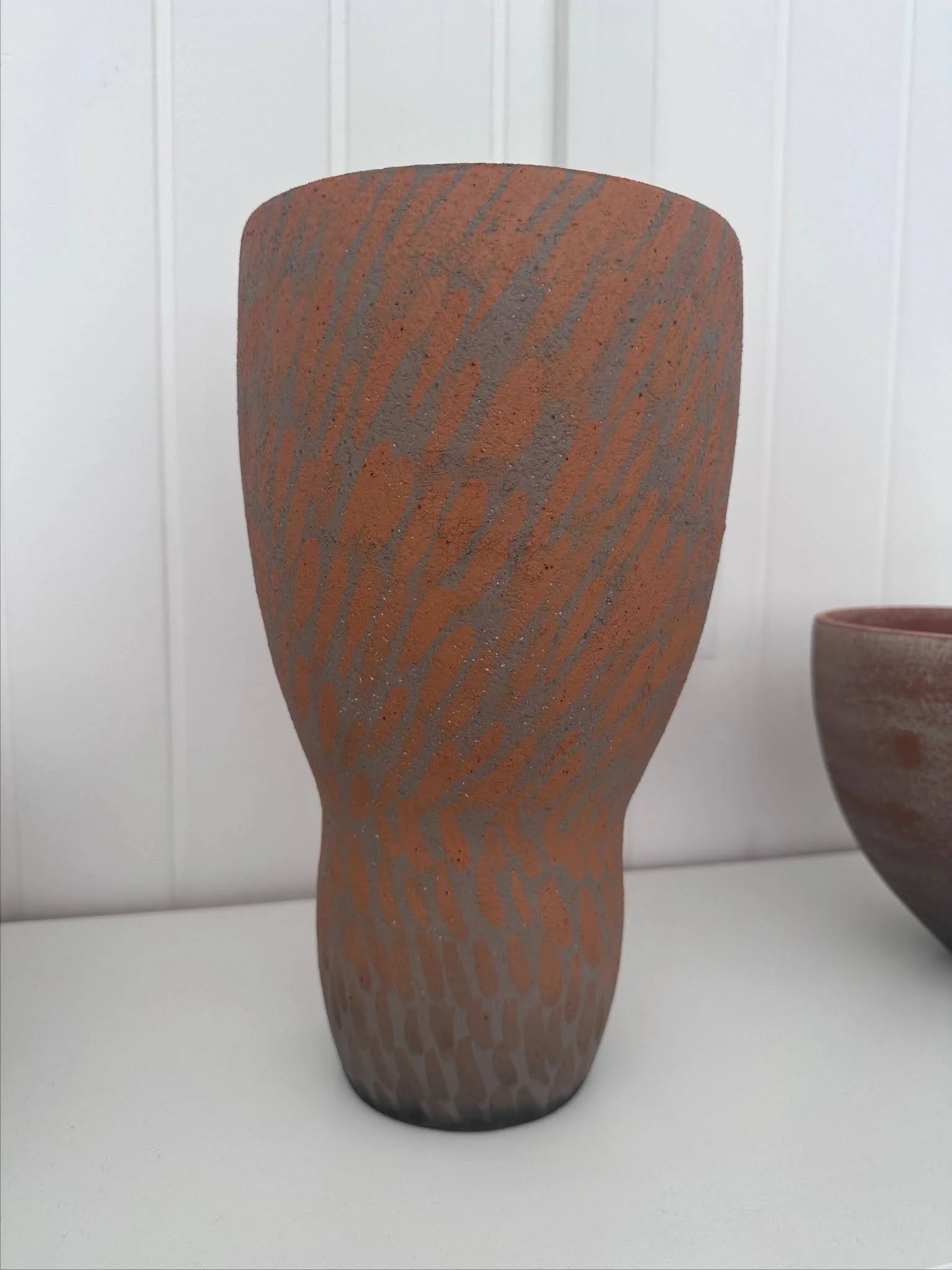
Desio’s work. Photos via Lalana Fedorschak.
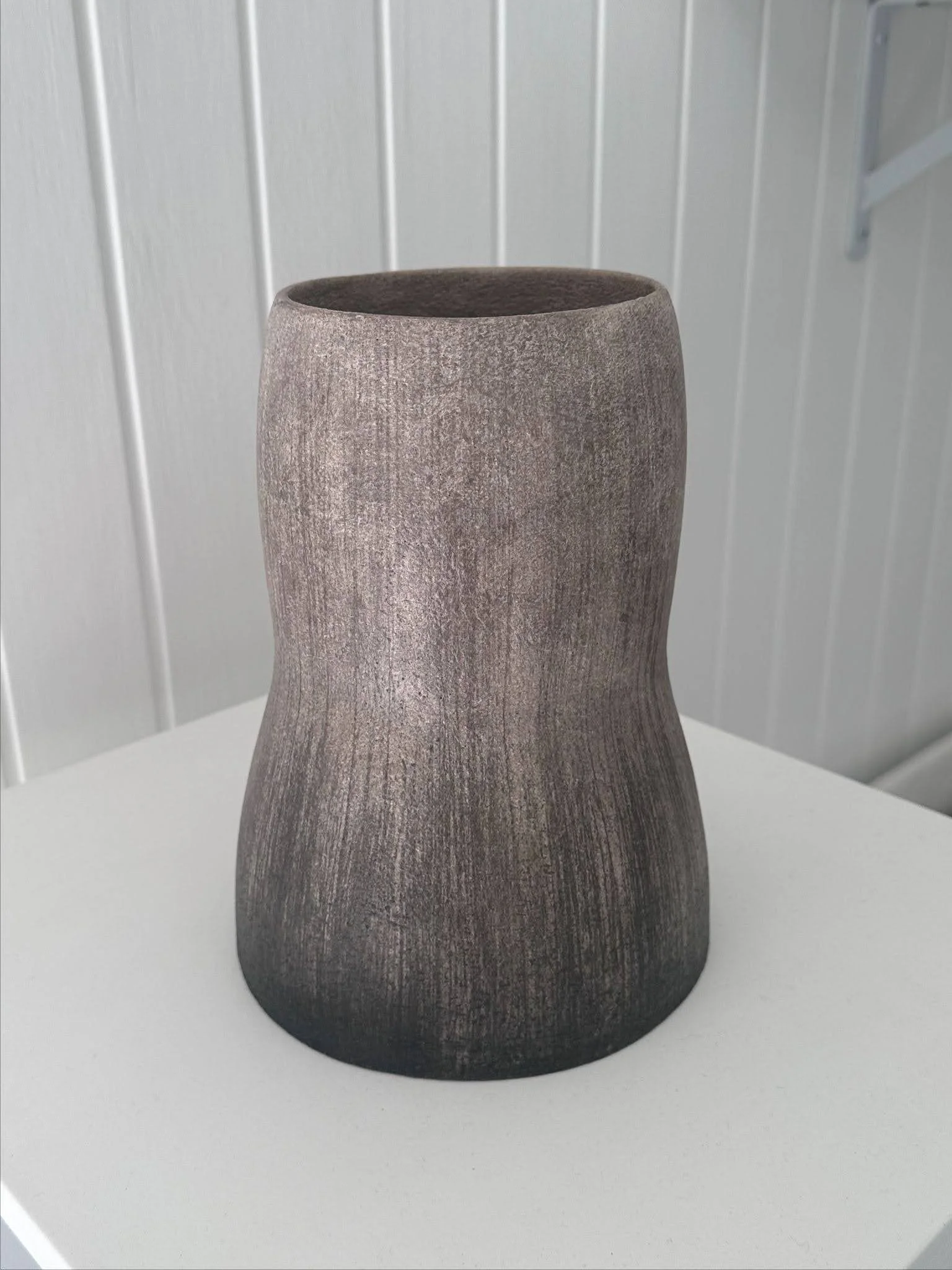
By manipulating factors such as the temperature of the forms and which areas make direct contact with the smoke, Desio can play with the depth and direction of the smoke path, but never fully determine the outcome. Each object is alchemically transformed, recording its encounter with the atmosphere.
At the very tip of the Punta della Dogana, where Venice narrows into the water, Lorna Simpson’s Woman on Snowball sits alone. She is perched above the viewer with arms wrapped around her knees, looking off into the distance.
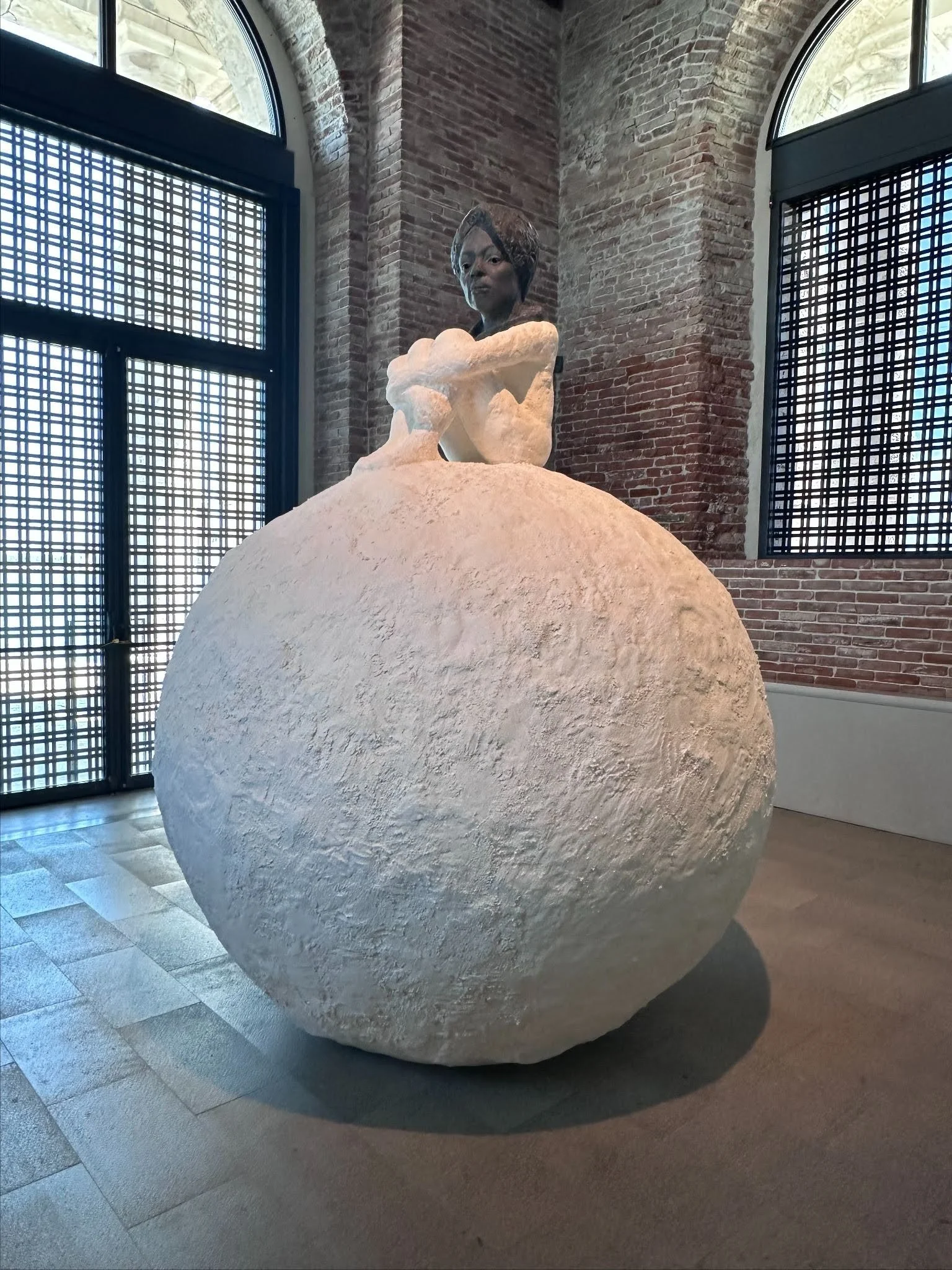
Lorna Simpson, Woman on Snowball (2018). Styrofoam, plywood, plaster, steel, epoxy coating. Photos via Lalana Fedorschak.
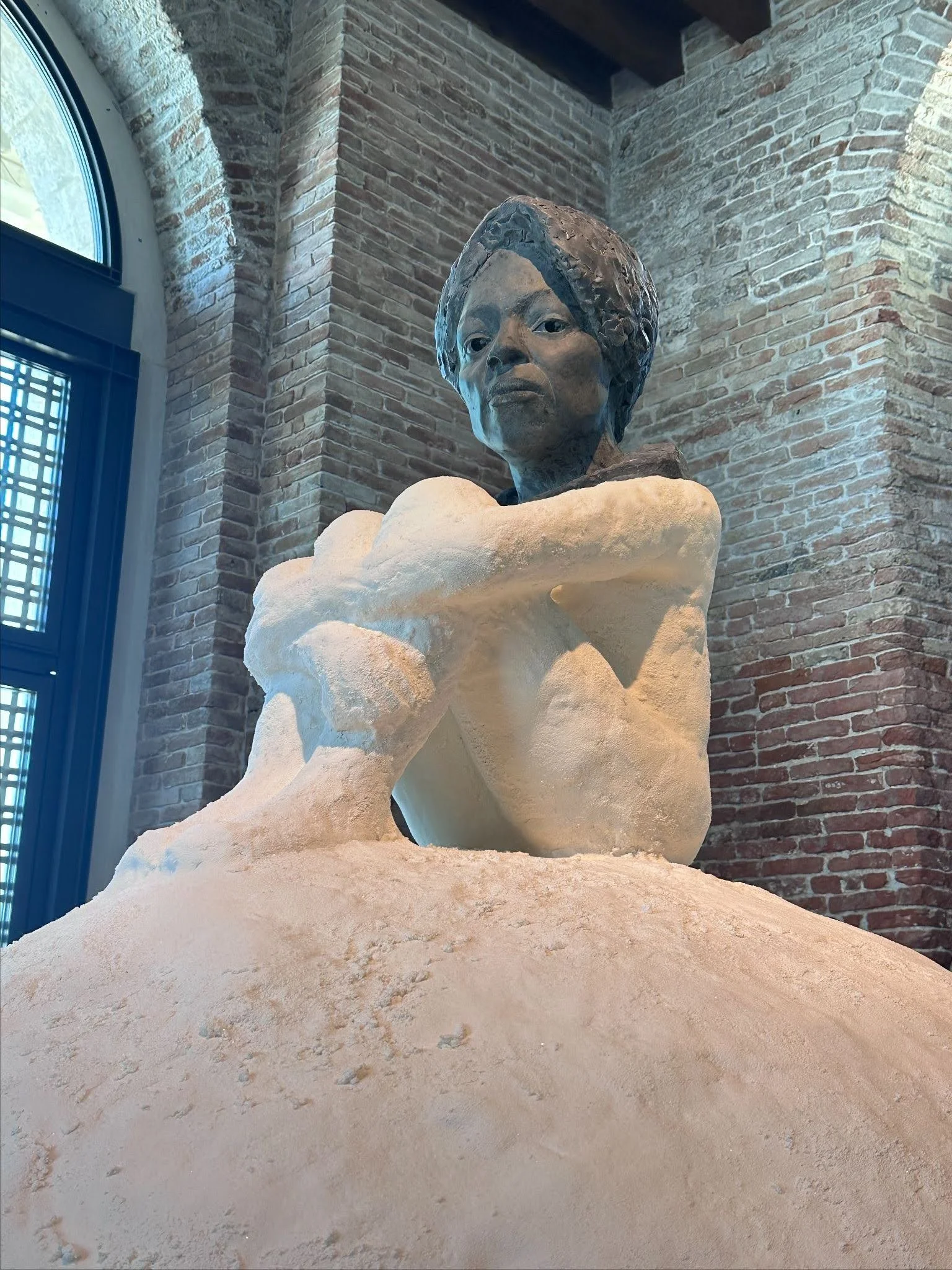
The figure seems to be sitting in an invisible body of water, with only her head exposed. Her head and neck are treated with dark tones, everything below the waterline is void of color. It feels like her body could be emerging from, or submerging into, the glacial form beneath her.
When I first arrived, I felt the ground moving beneath me. I wasn’t just thinking about transformation, I had been opened by it, and it was painful. A woman melting into her snowball, a poet becoming a bison. The pillars of Venice absorb minerals from the water, slowly hardening into stone. Flowers rot and fill the room with perfume. Smoke licks and stains the clay, and the clay remembers that.
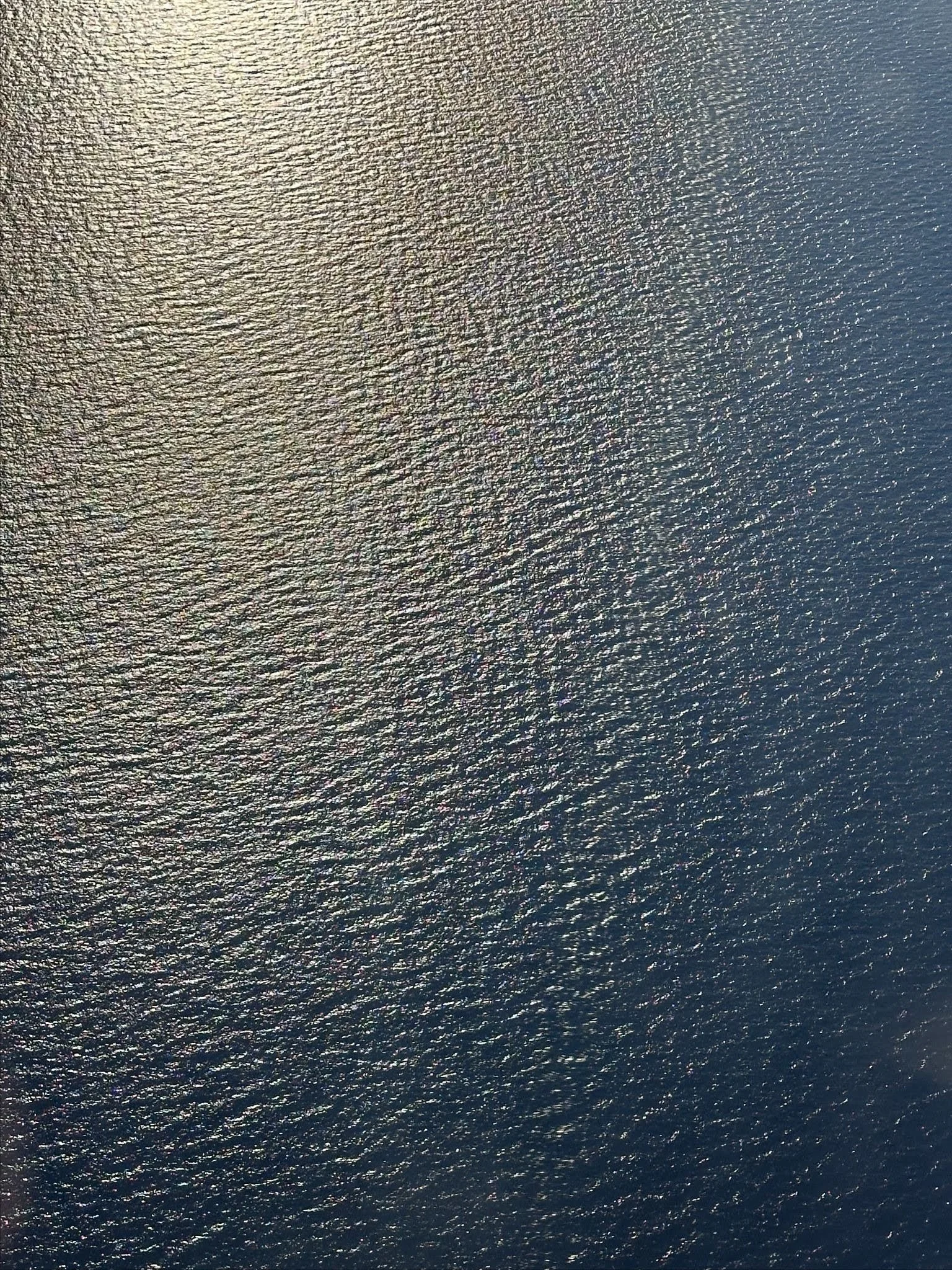
Photo via Lalana Fedorschak.