Sanctuaria
Curatorial reflection by Sirene Martin on Alivia’s Blade’s installation at Snide Hotel Gallery
The making of a home and the safety that envelops and defines a place as one of refuge—it is this often invisible domestic labor that forms the backbone of what makes whole, healthy communities possible. These precepts enrich the lives of those lucky enough to call a place home. They beckon us in, to enter worlds where comfort waits patiently at the threshold.
The art of homemaking is a crucial facet of Black American culture. As descendants of enslaved people, I could not, and our ancestors could not, have survived without reliance on the homemakers of their communities. Women who ushered in hush harbors, women who safeguarded houses of praise, women who could transform a dirt floored cabin into a mansion of warmth and relaxation. Our shared ability to seek out and create sites of beauty, safety, and liberation has been an invaluable skill and a lifeline for our people.
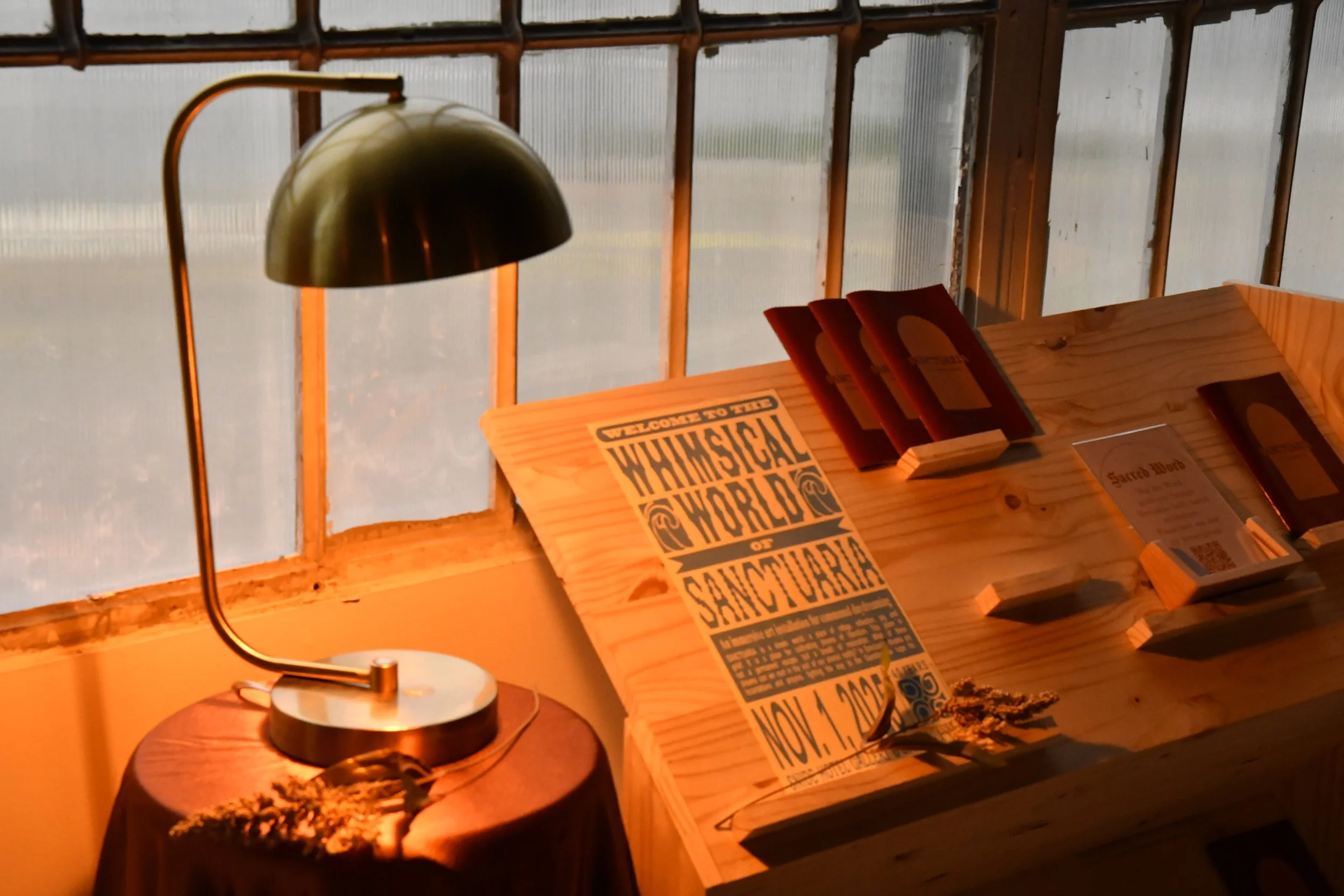
Artist and creator Alivia Blade reflects on these ancestral images and long-held traditions of Black American culture. Her installation, Sanctuaria, on view at Snide Hotel Gallery, conjures a dedicated world for dreaming and rest, imagination and rejuvenation. Spiced amber and sultry sandalwood incense coax you into the room; inviting you to relax your shoulders and bathe in butterscotch light. Warmth summons you into the nestled corners of the space, gently offering you a seat. You rest a spell while the dulcet tones of neo-soul royalty, D’Angelo, foster fuzzy feelings. A past lover’s smile crosses your mind one mo’ gin, and you are filled with the need to find solace in ones you love, in ones you once loved, in ones you may yet come to love. You are called home.
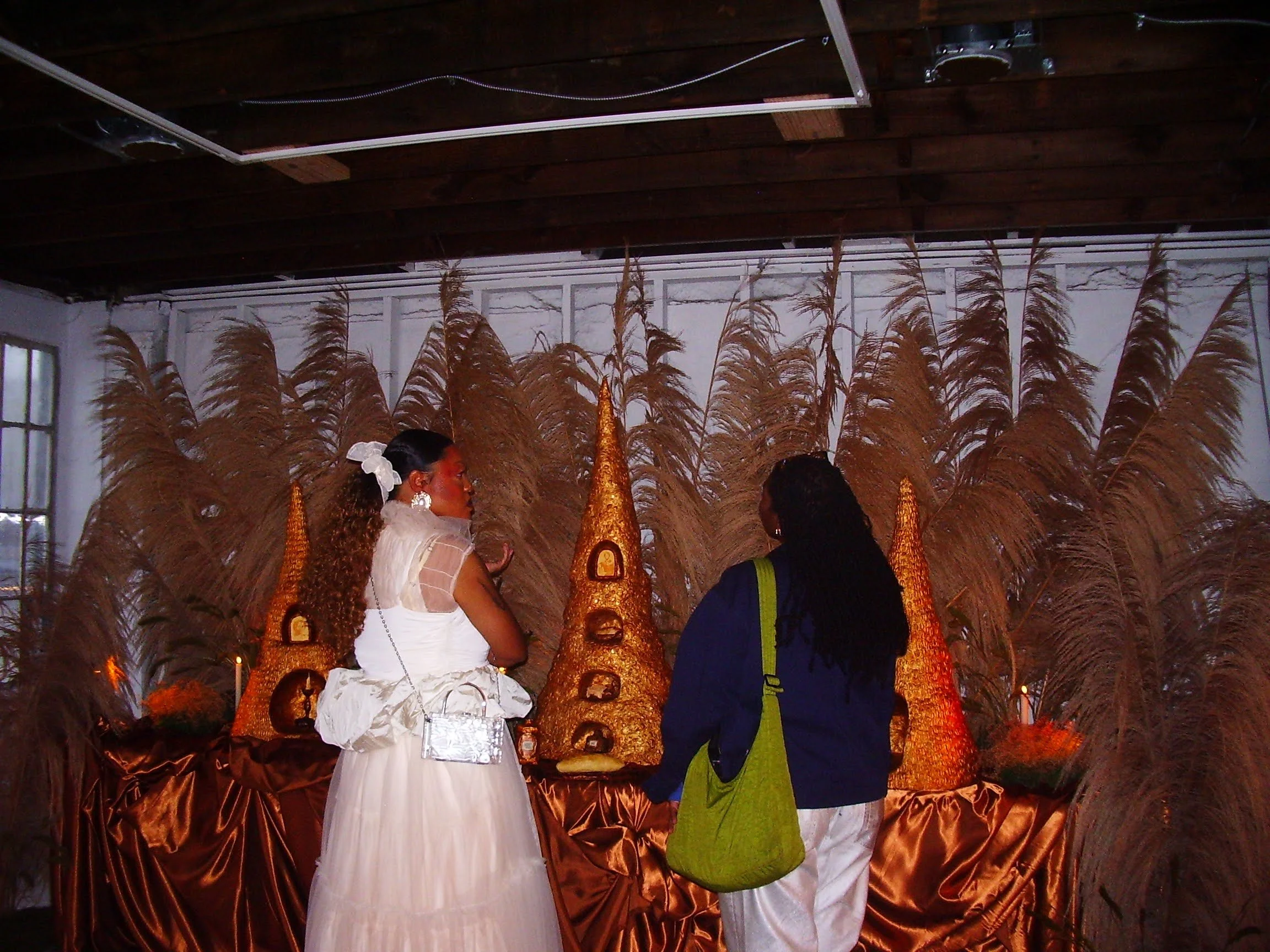
Making your way through the intimate single-room gallery, to the left, you are drawn in by a glowing topography of altars, holding three, golden, paper-mâché shrines laden with cowrie shells. Reminiscent of cave dwelling stalagmites or as cellular towers an avatar of communication lines between the artists, her spiritual court and the viewer. Photos of these figures rest within the carved grottos of each shrine. Nestled between her paternal and maternal grandmothers, the artist’s enduring north star and guide, Harriet Tubman, peers out.
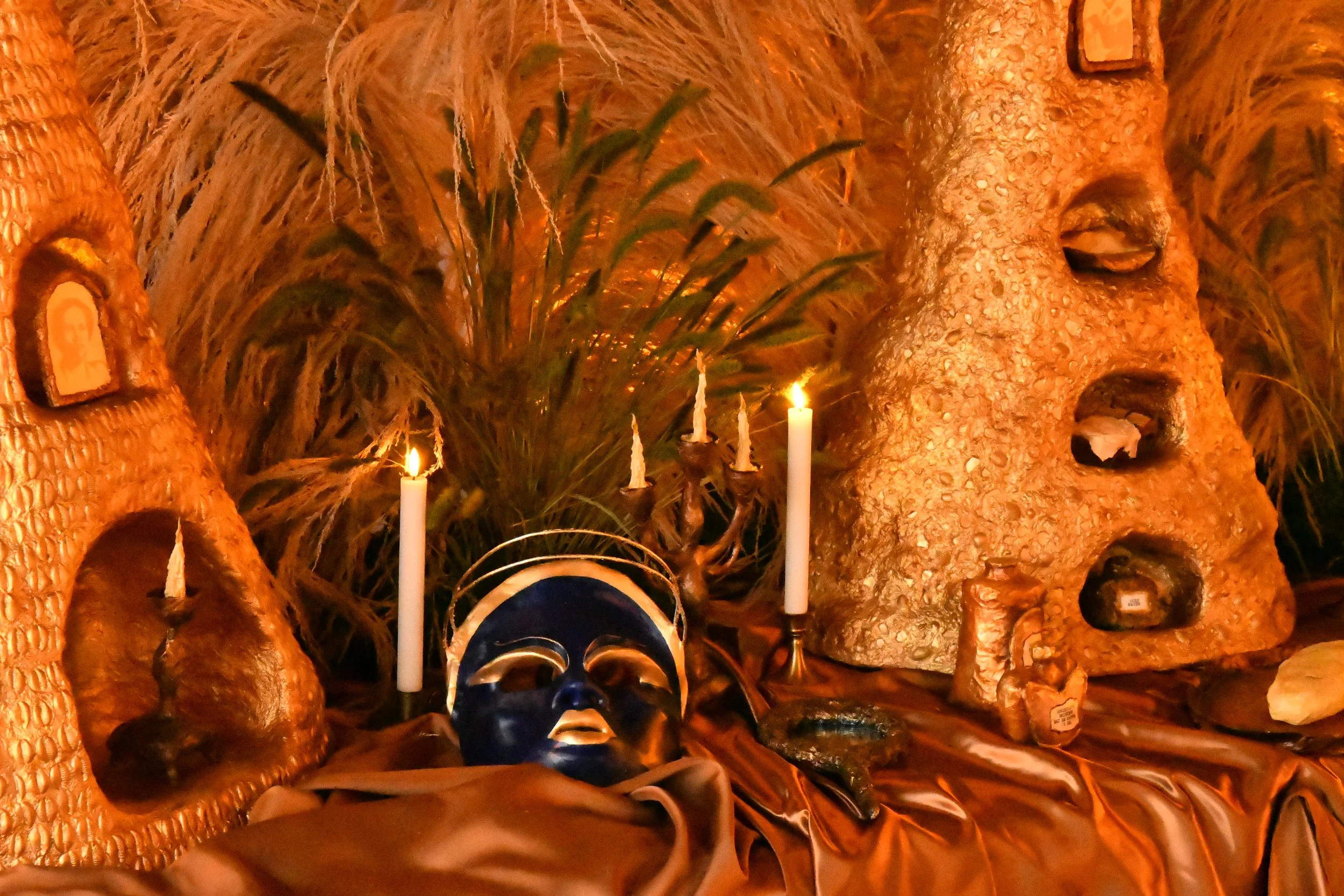
Surrounding these sacred structures, on the altar, is a backdrop of a lush green organic matter and an array of sculpted objects-encasing the work in a bush-like alcove. Resting at the foot of the three sculptures is a hand mirror, an object historically linked to African traditional spiritualities as a divination tool and protective talisman. Accompanying the mirror is Harriet's healing elixir, along with a chalice in which one can imagine offered libations. Each ceremonial object shares the aged bronze patina of an artifact, an extension of the cohesive umber and gold palette that radiates through the installation. Sculpture, light, and furnishings, all in concert.
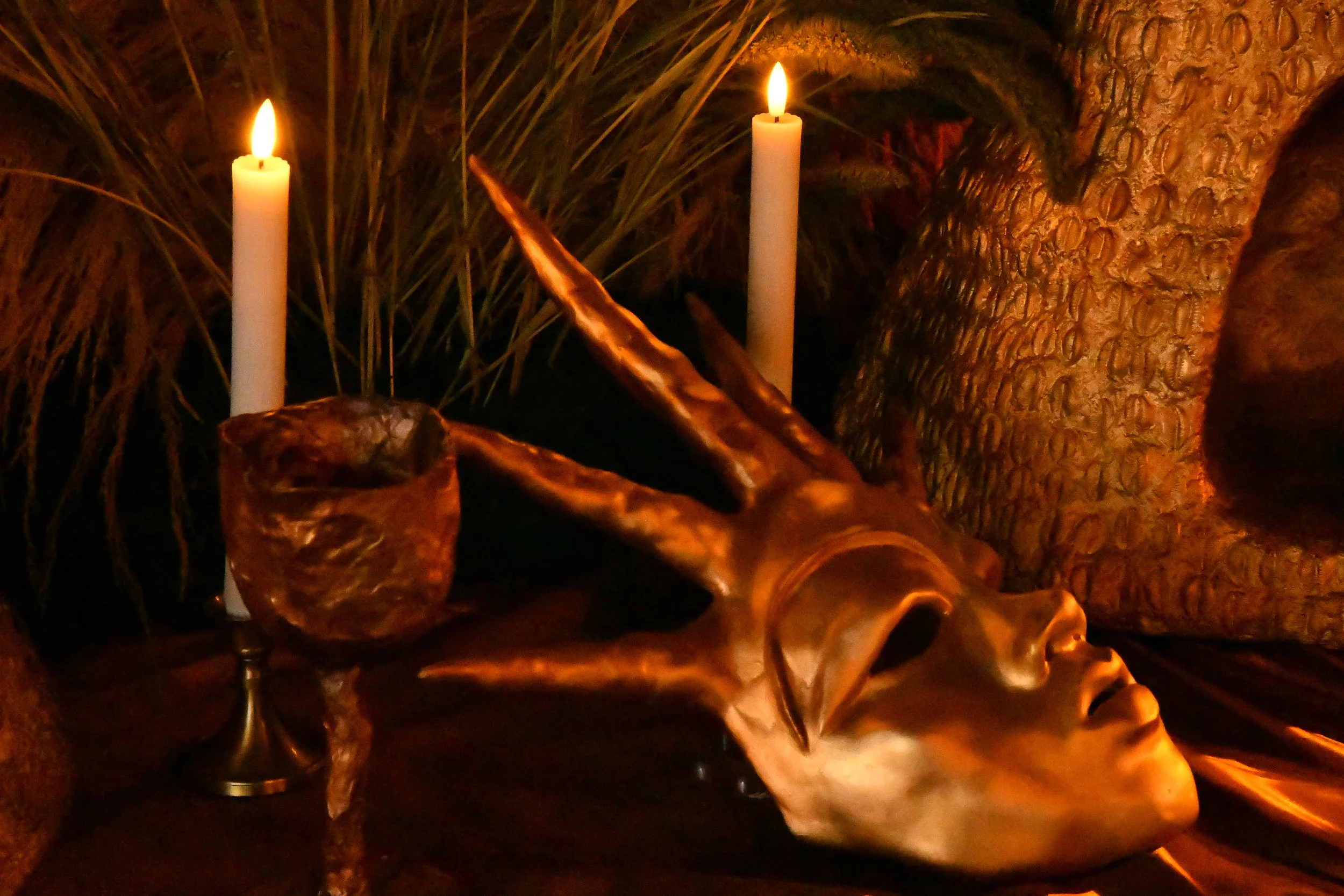
Opening night is like a Black family holiday. There are children running around, some have found a corner to snack in, laughter is abundant. Alivia’s nephew fiddles with the altar objects. I imagine his grandmothers, those honored and sanctified in the shrines, smile and call him to play. There is love. There is community.
Sanctuaria uses the sculpted form to build another world. Through spatial design, Alivia creates comfort. She creates a longing. A wistfulness and desire for the serenity of a grandmother’s house. Unlike traditional stark white galleries, the atmosphere cultivated settles one in. It is difficult to depart. The couch is too comfortable and the company is keeping you all too well.
The alchemy of the exhibition physically transports you to the liminal space of Sanctuaria. A place that is the birthright of every living being such that we can travel, meet, and find comfort in our most beloved energies and selves. Alivia intimately understands that as a people who’ve experienced forced labor and the cruel diminishment therein, our work towards building technologies of rest is pertinent to our continued survival and paramount to our power to thrive. I believe Alivia is a child of High John da Conquer, a beloved deity of the Hoodoo tradition, who prophesied in the dreams of our enslaved ancestors the promise of emancipation almost a hundred years before it would come. Through her installation, Alivia highlights the importance of our connection to the spiritual world, creating a safe space for us to connect with what’s beyond, with the history of our ancestors, to abate the suffering we all endure here, in this world.