

Maybe Kudzu Covering My Body: Camouflage in the South
The second iteration of the show, curated by Megan Bickel, makes its Kentucky debut at the Hite Institute’s Cressman Center for Visual Arts.
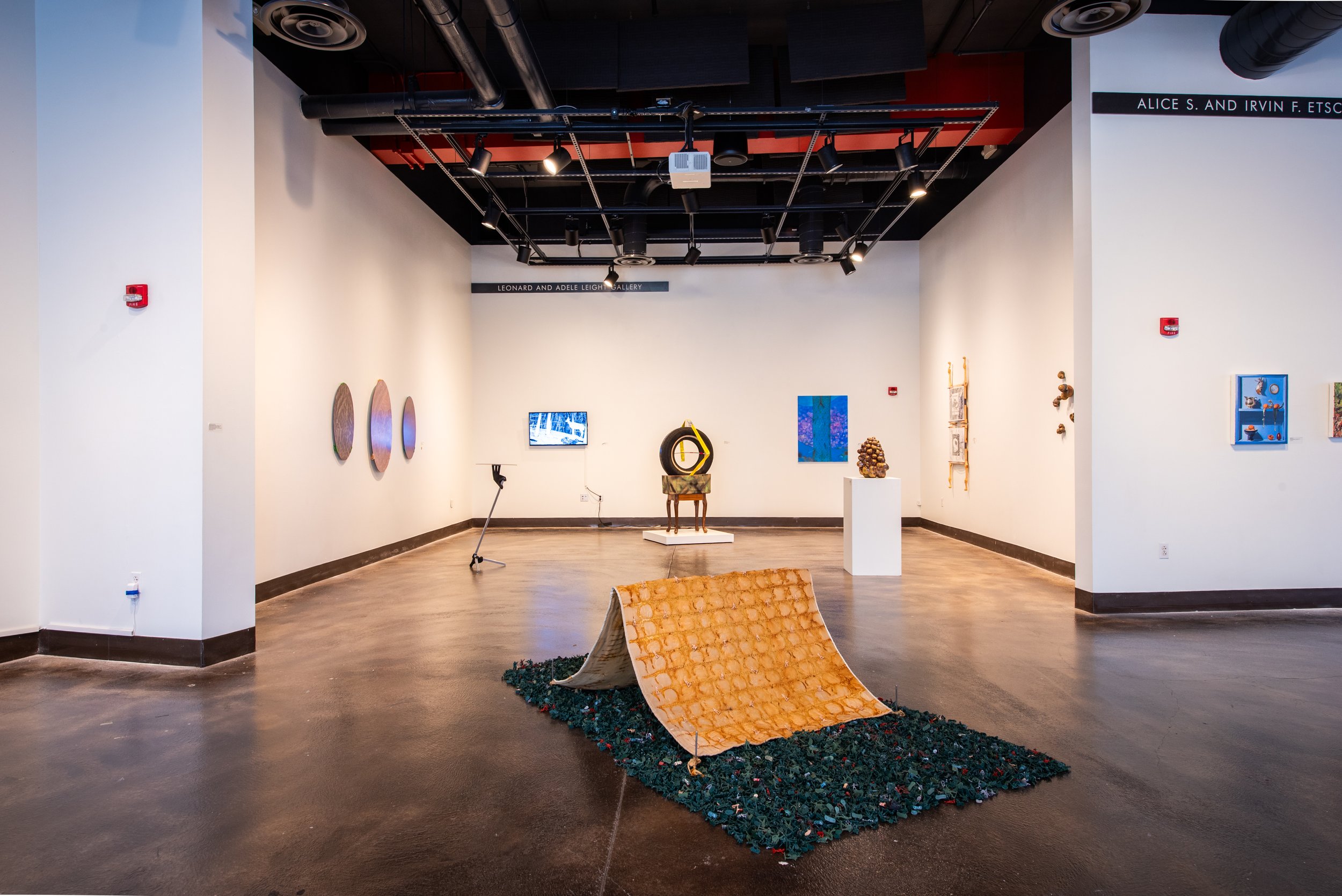
Photo via Anna Blake.
To camouflage oneself is to conceal identity, whereabouts, and intention. It is as much a tool for ambush as it is for defense. At its most basic, it is a method of survival. How can this natural adaptation provide a model for resistance in our current environment? Maybe Kudzu Covering My Body: Camouflage in the South, curated by Megan Bickel and on view at the Cressman Center for Visual Arts, examines ways in which artists interact with and respond to the American South as a site of political struggle via the body and its concealment.
In response to our surveillance-saturated lives, we have found ways to camouflage ourselves. We employ VPNs and Incognito mode when online, cover our webcams when not in use, and mask our faces to avoid tracking via facial recognition software. I, personally, have ditched period-tracking apps in favor of good old-fashioned pencil and paper to track my cycle.
All the while, our communities are threatened by masked immigration enforcers whose practice of concealment halts accountability and emboldens their actions. We are assured that increased surveillance, like the rapidly expanding use of Flock cameras to scan license plates, will make us safer; that data scraped from our purchasing history will make our lives easier by optimizing our shopping experience.
Dana Potter’s Patterns of Distraction (2025). Photo via Anna Blake.
Dana Potter’s Patterns of Distraction (2025). Photo via Anna Blake.
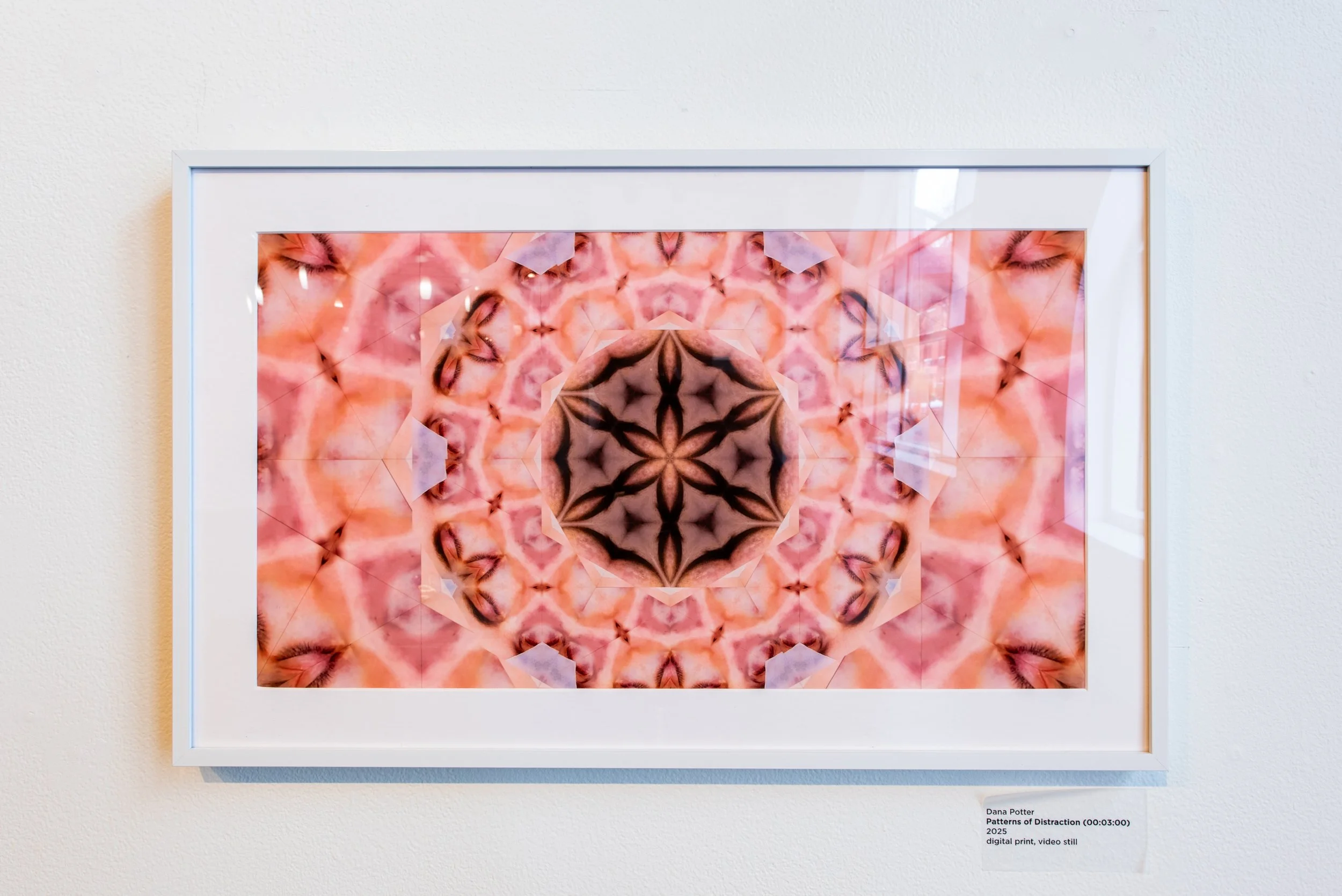
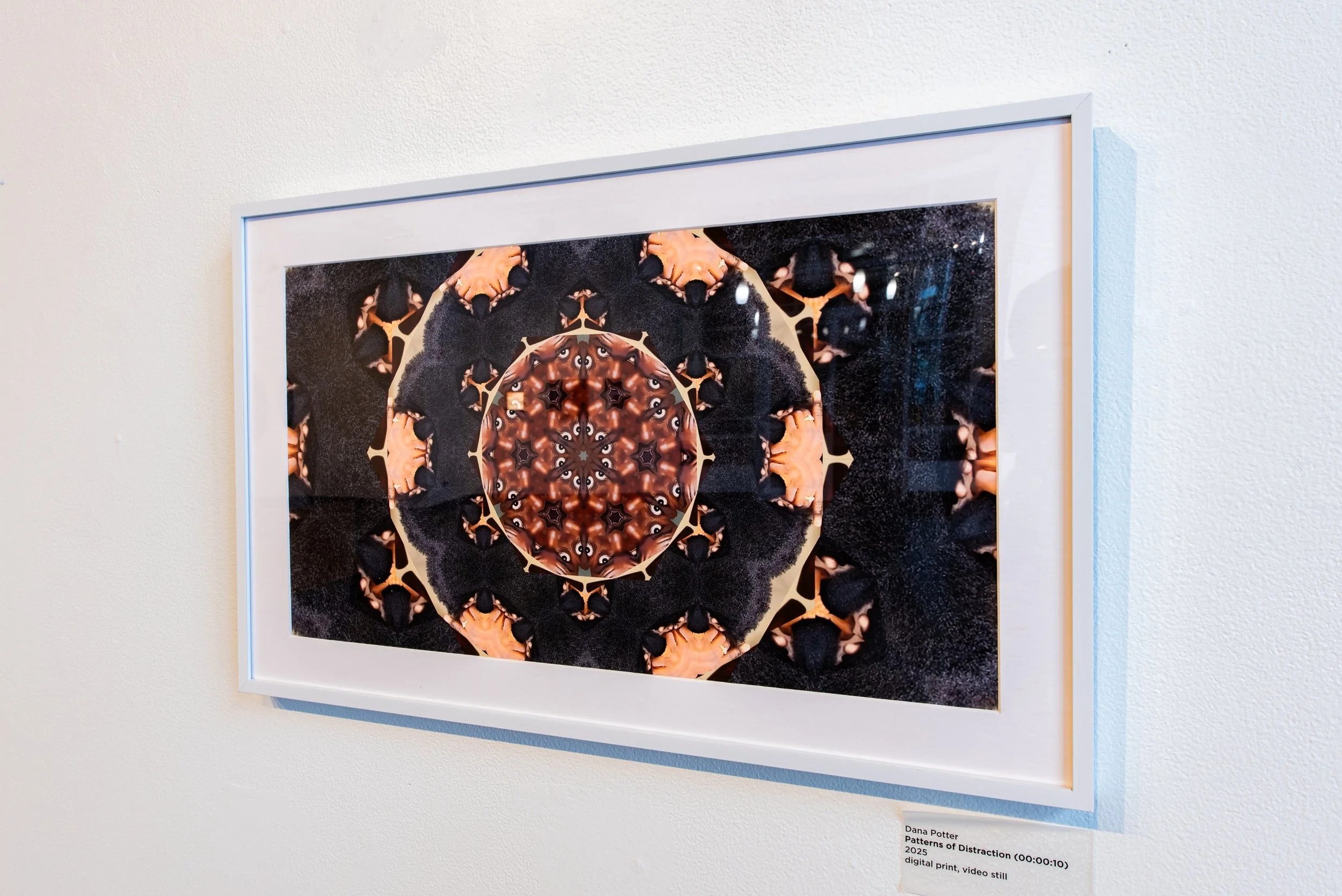
In an assortment of stills from Dana Potter’s Patterns of Distraction (2025), a kaleidoscopic effect on human faces makes the subject unrecognizable, at times hiding their identity and even their presence. Fleshy tones and geometric shapes reveal themselves surreptitiously, eyes peering back at the viewer unexpectedly. These pieces provide an almost humorous jumping-off point for the exhibition, as the stills offer a literal camouflaging of their subjects, while eyes appear to look back at the viewer and “watch,” recalling the dystopian symbology of the surveillance state.
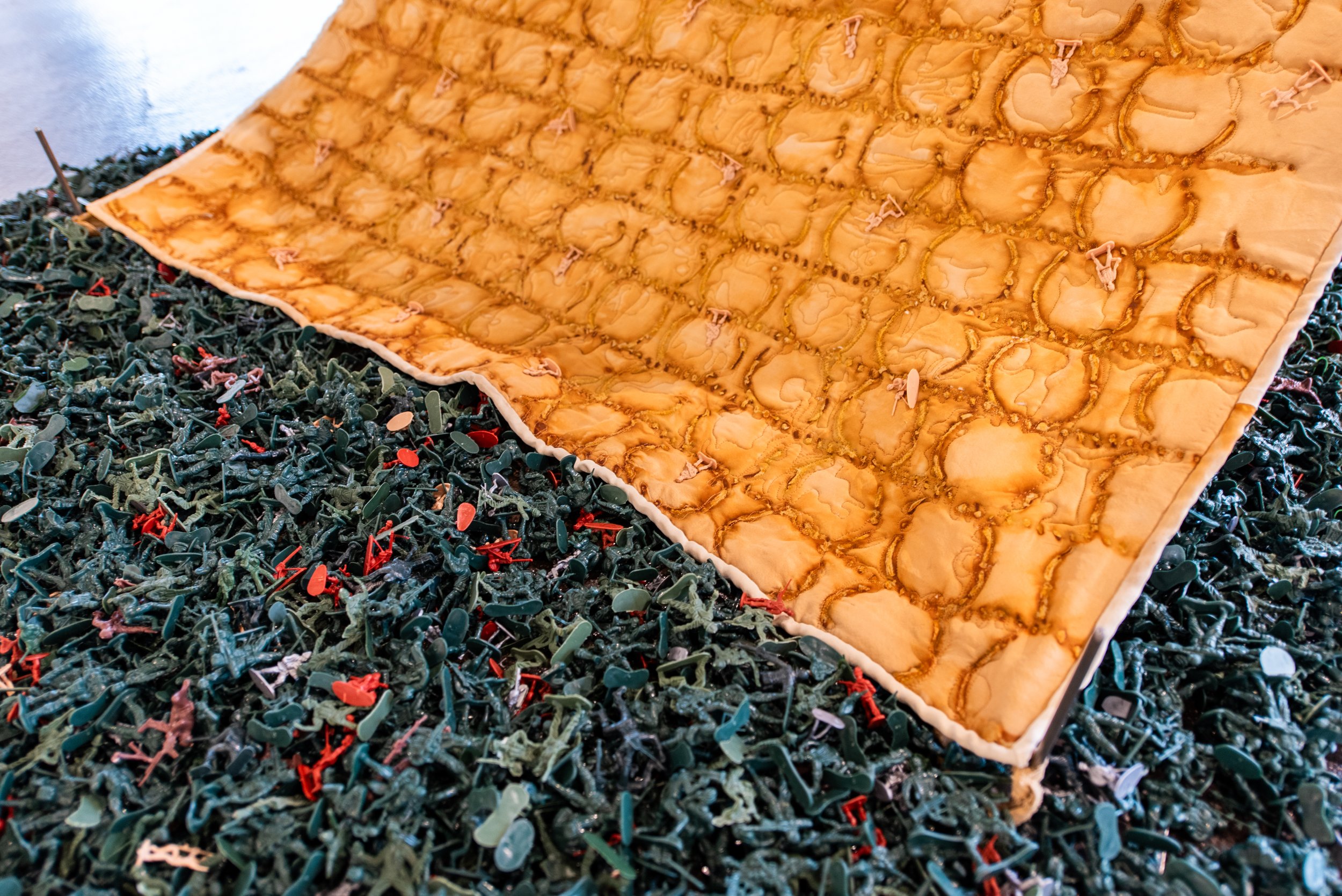
In their curatorial statement, Bickel cites the military history of camouflage and artists’ role in its conception during the First World War. This history is addressed in Brooks Harris Stevens’ The Set Up (Run, Hide & Fight) (2025). A tent made of rust-stained cloth resembles the desert camouflage employed by multiple Western military powers and, adorned with beige toy soldiers, is pitched crudely within a field of their hunter green and brown counterparts. Our wars may look different from those that the toys are modelled after, but their purposes still reflect the archaic imperialist goals of the ruling class–a fact that is stressed within the context of the South and its role in the modernization of warfare during the American Civil War.
Brooks Harris Stevens’ The Set Up (Run, Hide & Fight) (2025). Photo via Anna Blake.
Raymond Thompson’s New and Milly were last seen in Lenoir County (2023) poignantly underscores the use of concealment as a mode for survival within the Southern landscape. Through a combination of printed ephemera and photography, low-contrast and dark tones obfuscate portraits and landscapes while a backlit reproduction of an antebellum ad offers a reward for the capture of two enslaved people. Thompson’s work reveals the practices that allowed enslaved people to elude their captors, an example of the ways in which marginalized groups use the tactics of imperialism to elude their oppressors.
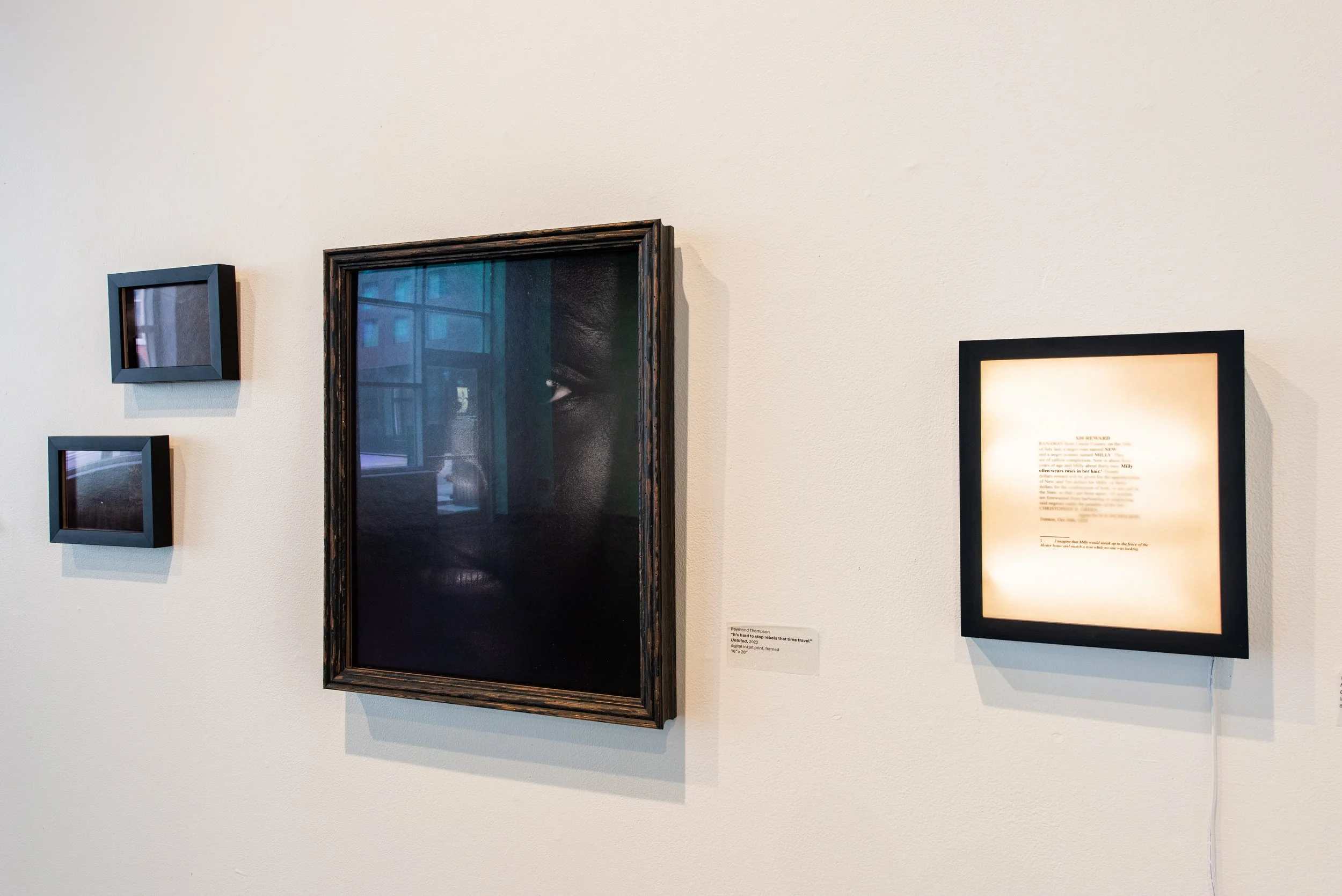
Raymond Thompson’s New and Milly were last seen in Lenoir County (2023) and “It’s hard to stop rebels that time travel”, Untitled (2022). Photo via Anna Blake.
In Elle Hendrickson’s work, Primordial Hermaphrodite (2025) and Ovid’s Metamorphosis Birth of Hermaphroditus (2026), human bodies and genitalia appear to morph in and out of tree-like forms, underscoring the similarities between the two. Immediately, I was reminded of gingko trees. An urban planner’s favorite, these trees are ubiquitous to Louisville’s tree canopy, lining urban streets and populating parks and other green spaces. Male trees are preferred, since the fruit from female trees carry a foul odor. In response to forced homogeneity, some ginkgo trees spontaneously grow limbs of the opposite sex, becoming hermaphrodite trees (One can be found in Cave Hill Cemetery). Drawing connections between social constructions that encourage hetero- and cisnormativity and the built environment, Hendrickson’s work offers a clear example of the inherent queerness of the natural world.
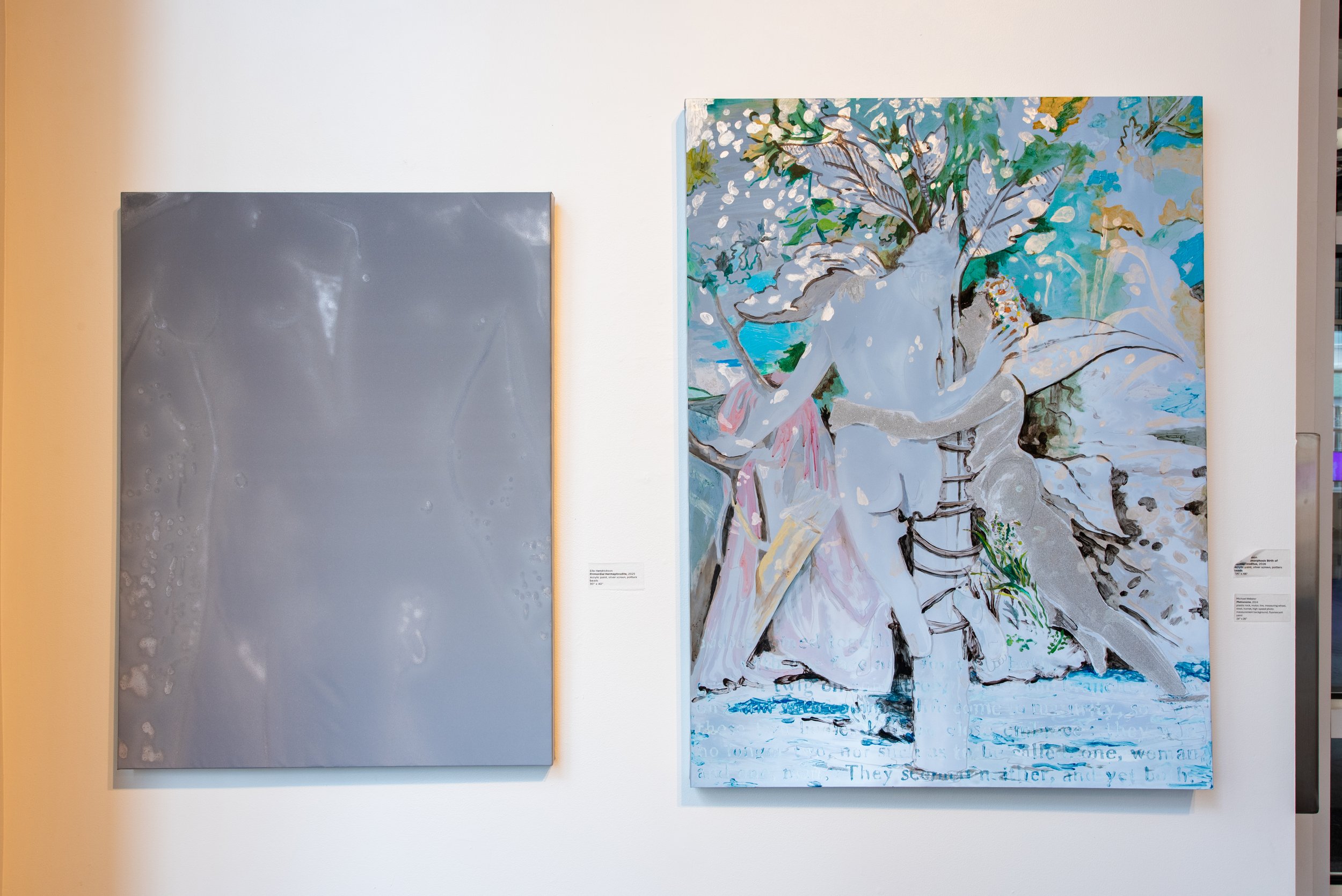
Elle Hendrickson’s Primordial Hermaphrodite (2025) and Ovid’s Metamorphosis Birth of Hermaphroditus (2026). Photo via Anna Blake.
Now might be an appropriate time to mention that I’m not from the South. I wasn’t raised in a rural area, and some may argue that Louisville isn’t even a Southern city. I’ve lived in Kentucky for long enough, though, to understand that two things can be true. The South can be a site of natural beauty with incredible people and culture. On the other hand, the South, in this moment, is a hostile environment for Black and brown bodies, birthing bodies, and queer bodies, among many others. It would be reductive to say “nature good, humans bad”, but that sentiment holds a grain of truth. The friction behind what makes this place home and what can make it feel threatening can be found in the places where our inherent natures go against Southern hegemony – a hegemony made up of whiteness, hetero- and cis-normativity, and Christianity. Bickel’s curation peaks behind this monolithic curtain, revealing radical bodies hidden in plain sight and offering modes for resistance in a rapidly changing environment of surveillance.