Southern White Amnesia
Kat Smith reviews Zak Foster’s show at Transylvania University’s Morlan Gallery.
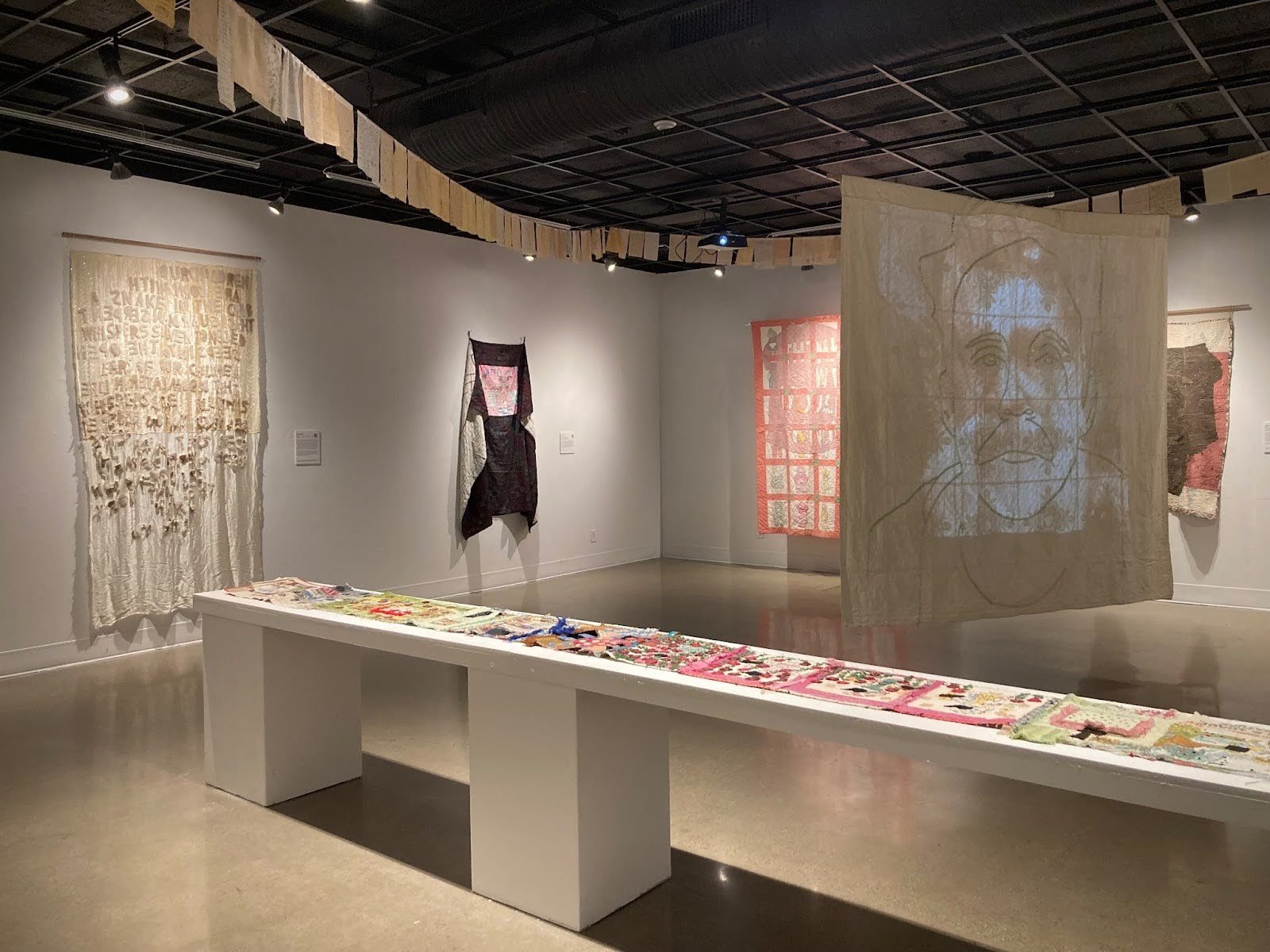
Photo via Kat Smith.
“It is the work of the living, me, you, all of us in this room today, to do what we can, to handle the snakes that need to be handled…. to undo the patterns that exist even today.”
Where can a question lead us? In Zak Foster’s case, a question about his ancestors' history as enslavers led to the creation of Southern White Amnesia. Throughout the Morlan Gallery, Foster utilizes soft fabrics to question the hard truths of inherited histories. The body of work surfaces the active choices we can make today to unknot and untie ourselves from these legacies. One knee-jerk response Foster received from a family member, when questioning his ancestral history, can be found in the first piece he created for this show titled, I Think We Would Know (2022). This translucent dismissal is stitched over a traditional American quilt pattern depicting Sunbonnet Sue and Overall Sam. These two white characters with backs eternally turned, call into question, what are the patterns stitched into white family histories that haven’t been considered?
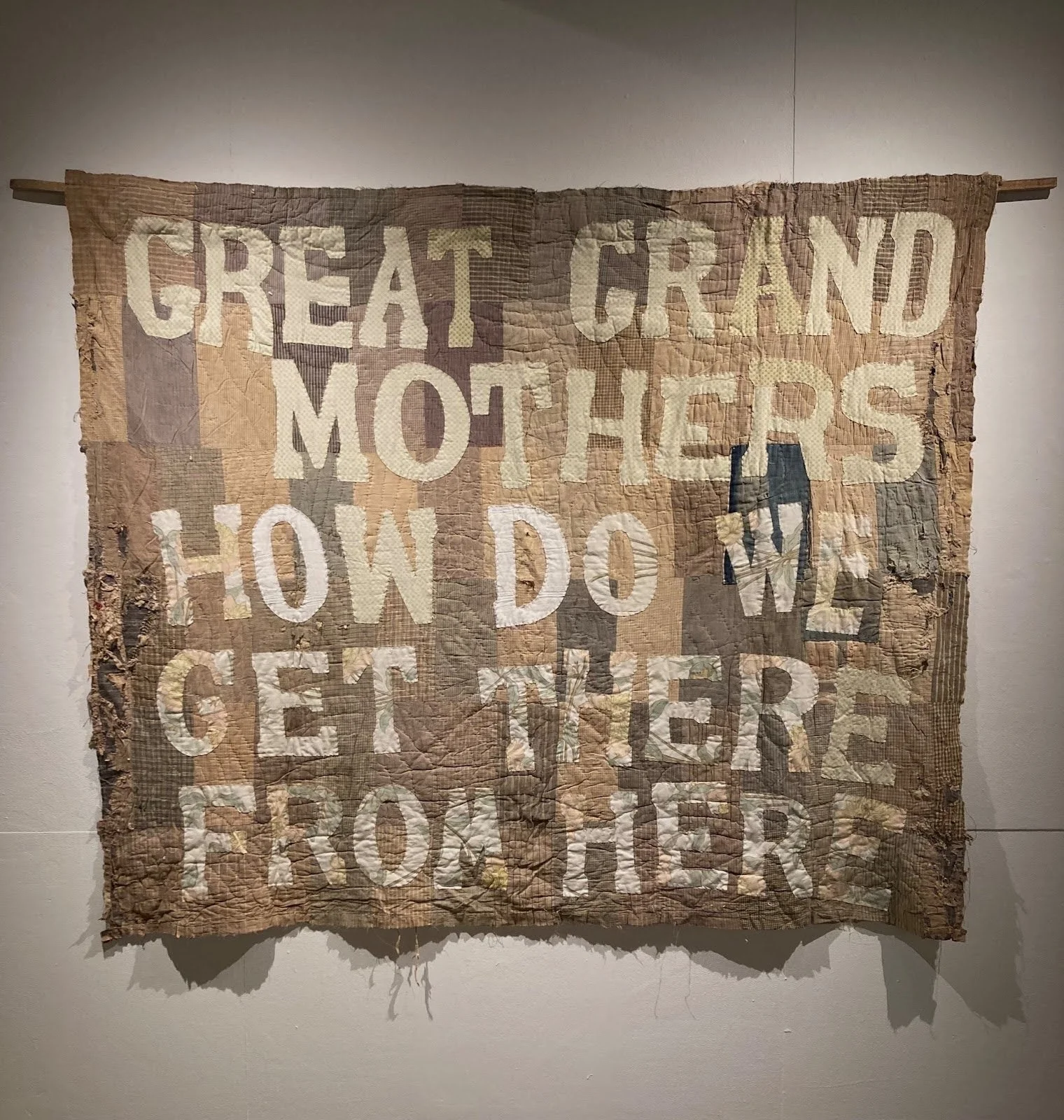
Zak Foster, Great Grandmothers, 2021, Civil War era quilt, reclaimed cotton bedsheets. Photo via Kat Smith.
Throughout the show, Foster explores his own white ancestry in three phases: discovery, inheritance, and repair. In his three silk chiffon works: 209 Letters (2025), Appraisement (2025), and a Fitting Climax (2025), the artist utilizes old family letters, historical archives and an obituary for his third great-grandfather Jacob Duiguid. Captured through these delicate enlargements are the chosen discrepancies in the stories shared about family members, with the documented reality of enslavement. Through the pairing of these pieces, Foster shows the warping of history and the heroism that can so easily be clung to when reflecting on bloodline lineage. Threaded stories manipulated by benefitting hands and fables of greatness, ultimately rob relationships of important complexities and lessons. He also uses the exhibition as an opportunity to honor those who were enslaved by his family, through what are most likely the only written documents that mark their existence. A sense of spiritual reckoning is felt through the show as he works with needle and thread to honor these forgotten lives. This is found in Like Family (2023), a quilted family cemetery, memorializing the lives of those who were enslaved by his family, and grappling with the reality of power structures present even in death. In Alva Bee (2024), Foster journeys into dream realms where communication with relatives is enlivened with the utilization of an embroidered dream oracle. A Baptist church banner beckons back the Sunday services of his childhood in Snake Handler! (2023), a testimony to the needed work of wrangling the serpent of injustice both in and beyond this earthly world.
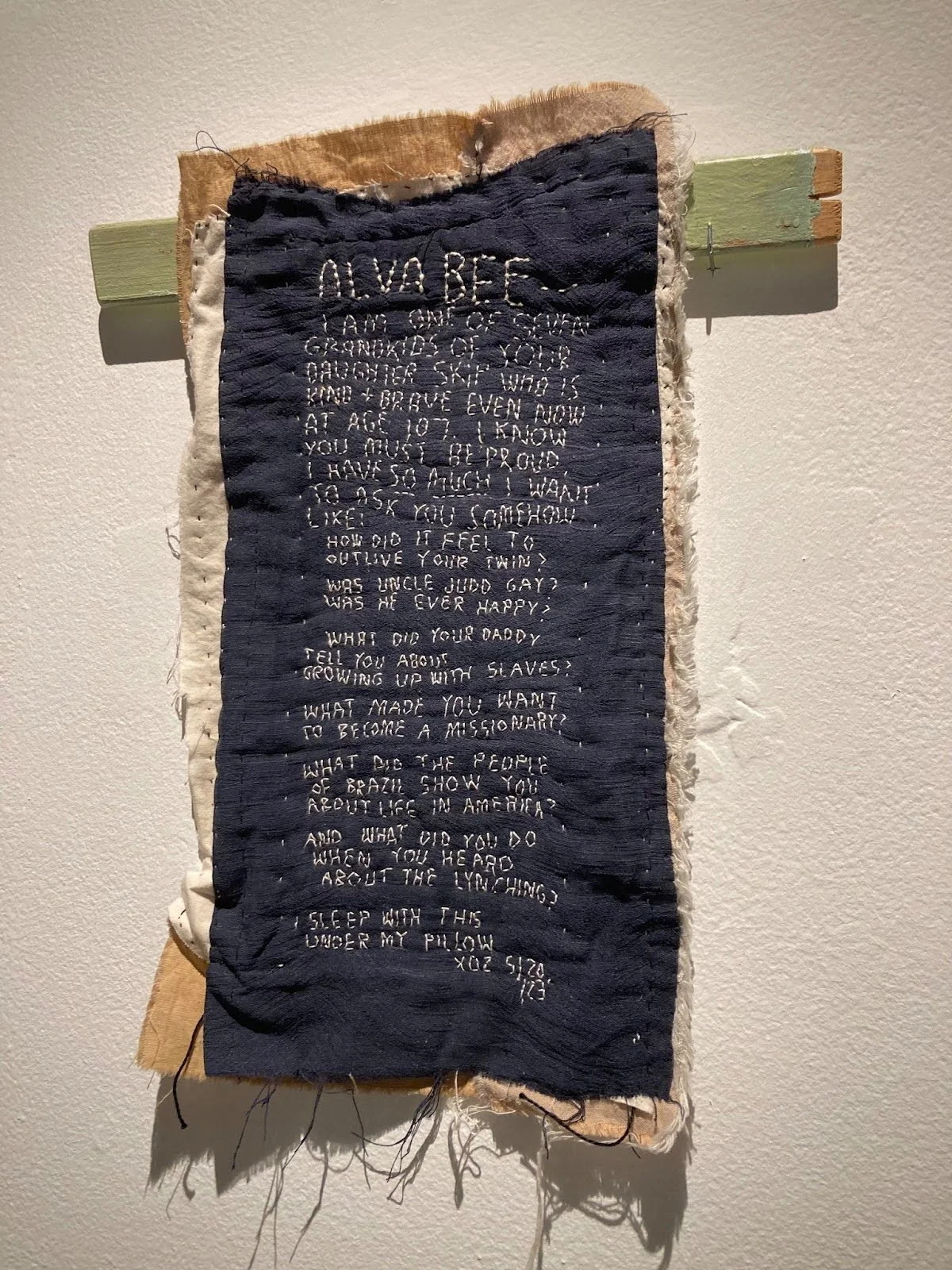
Zak Foster, Alva Bee, 2024, repurposed cotton. Photo via Kat Smith.
Foster continues his exploration with the inheritance of messages and material gain. He stitches hard-to-pin messages whispered down generations, often threaded into psyches unexamined and seeded in the ears of white babies. Mapped materiality of generational wealth stolen from the hands of forced labor is translated into the textured landscape of his own lineage. A physical silver dollar handed down is sewn into the color-coordinated family fan of Silver Dollar (2024). What is to be done with these silences uncovered? The work does not end with histories unearthed, but choices made now. The complicated truth of family, and an aversion to looking at the stained stories of power cannot be cut from the fabric of personal history. The uncomfortable air of heavy histories is dampened by the familiarity of the heirloom quilts hung throughout the gallery, mirroring the quilts we can find intimately tucked into the homes of many modern-day Americans. These fabrics work as a mediator, absorbing tensions that need to be tended in the same caring manner one would repair tattered patchworks that have been handed down family lines.
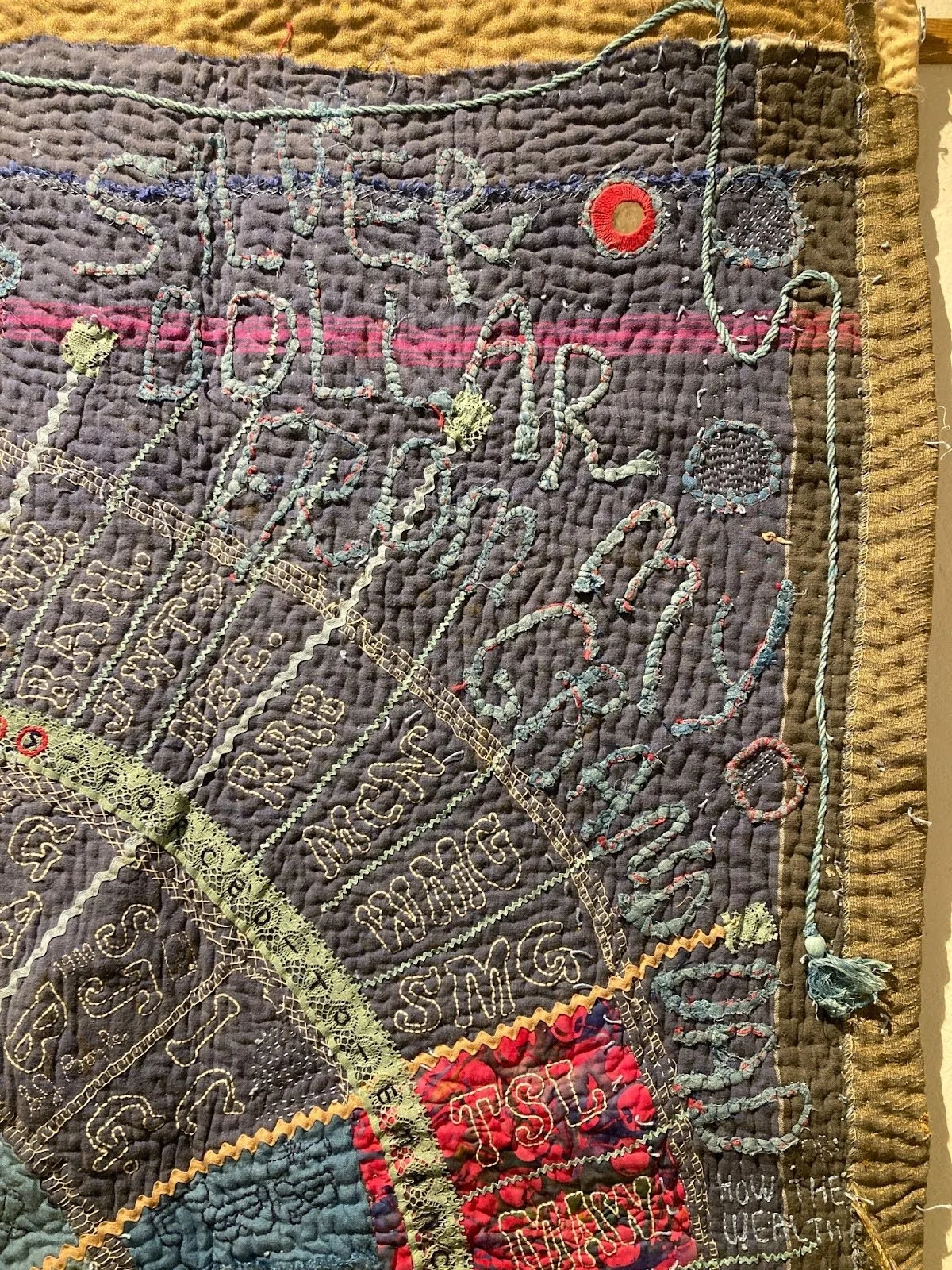
Details of Zak Foster, Silver Dollar, 2024, silver dollar, repurposed materials. Photo via Kat Smith.
Inquiries raised in the show ripple beyond Foster's own experience, prompting the viewer to examine their own histories. We see this call to action through the questions posed on artwork labels, such as ‘what does it mean to inherit both the beauty and the poison of our family stories? A more engaging experience is offered in the gallery with an invitation to touch Foster’s handmade family dolls, the addition of writing to an interactive family story wall, and through continued engagement with a vast array of resources on his website. Online you can find podcast episodes about the collection, a reading list offering tools for anyone reckoning with the past and present, and a scavenger hunt that can be used in the gallery. Through the invitation of engagement, these works can act as a doorway into deeper conversation, questioning, and combatting the continued infection of racialized capitalism woven into our present day America.
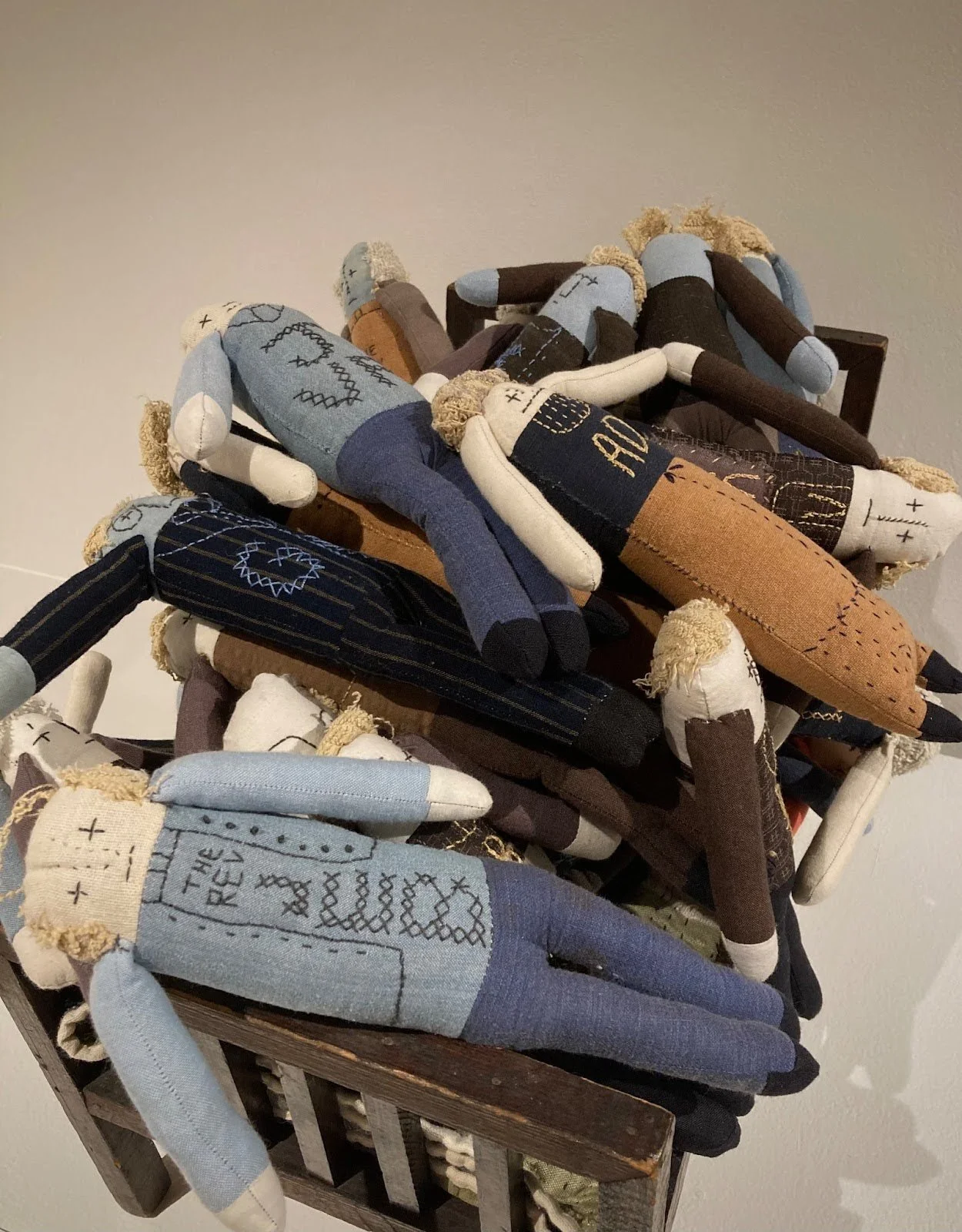
Zak Foster, Family Bed, 2025, antique handmade doll bed, repurposed cottons and silks, reclaimed pillow stuffing. Photo via Kat Smith.
Southern White Amnesia will be on view through February 27, 2026.