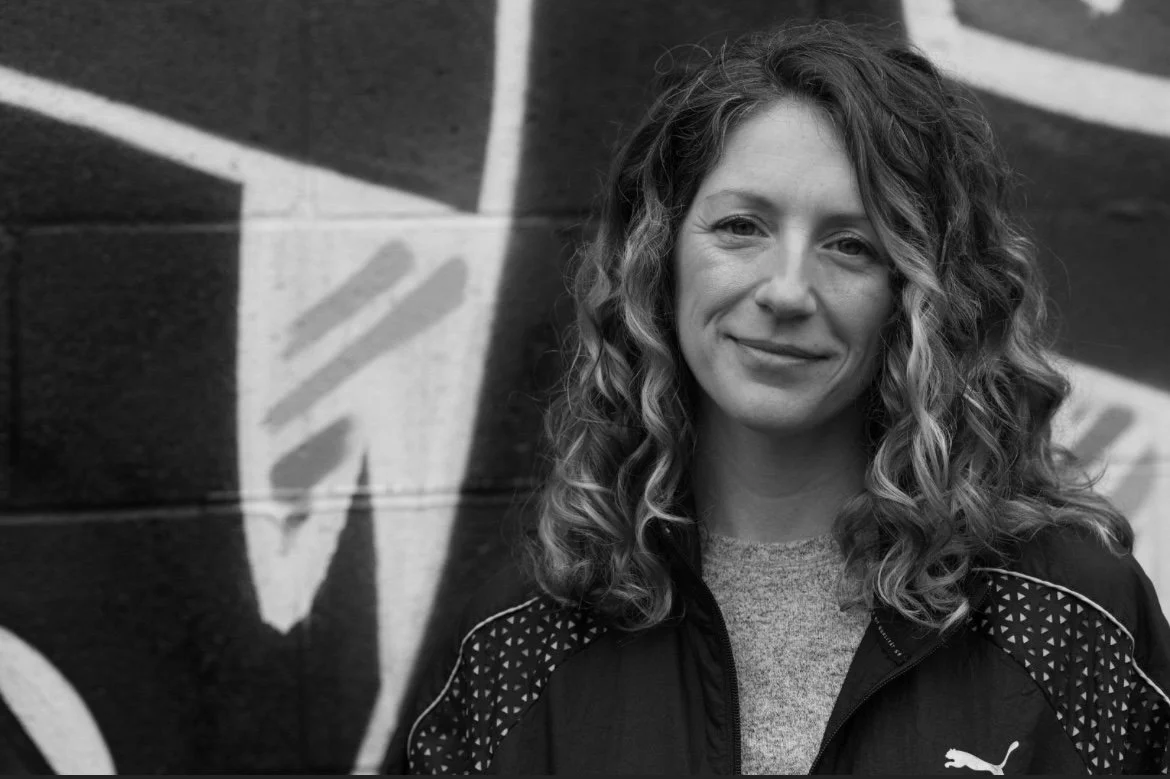

THE MAGICAL ONES
Field notes on Rebecca Norton’s Great Meadows Foundation APDG trip to Switzerland.
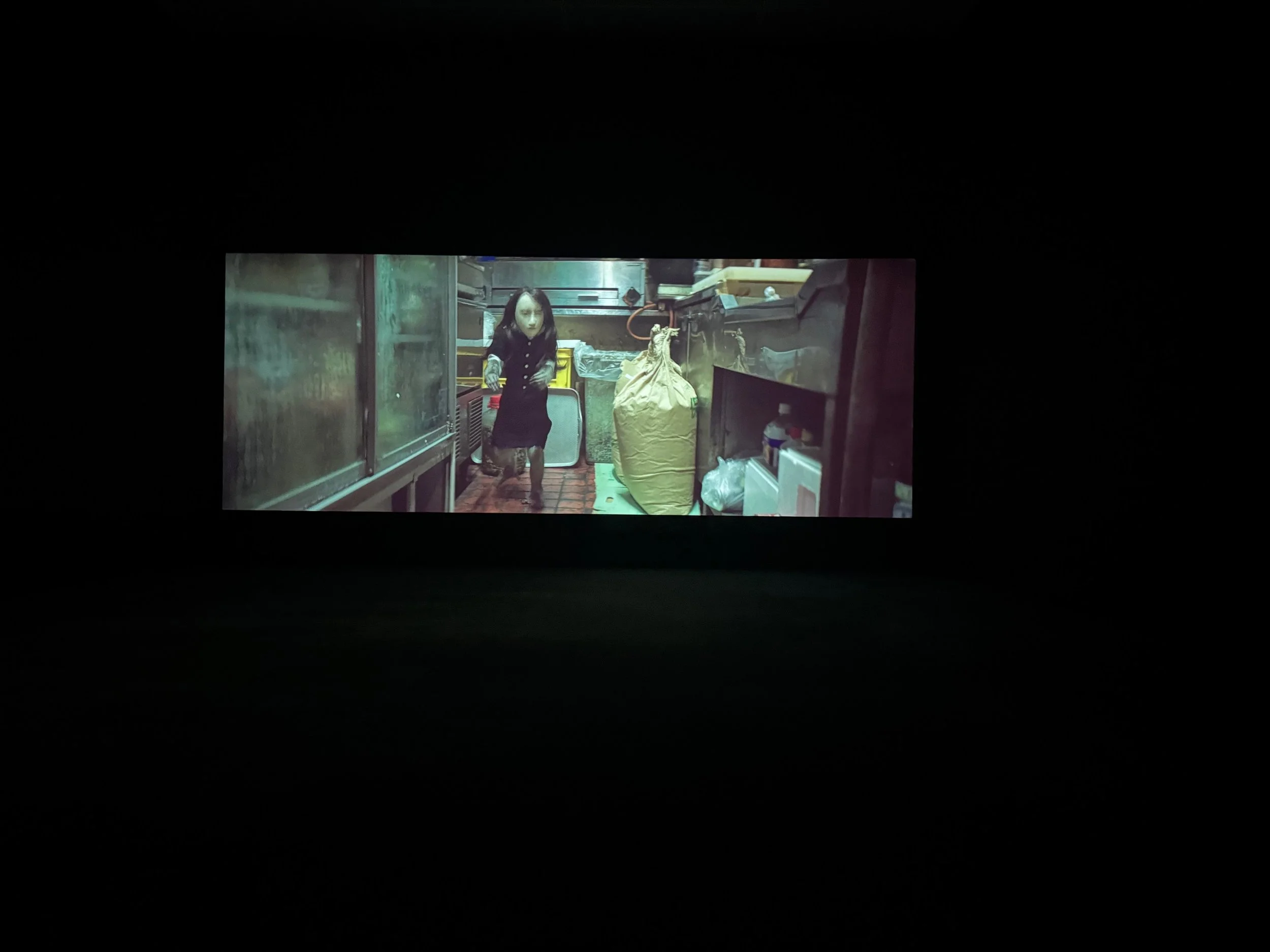
Pierre Huyghe, Untitled (Human Mask), 2014, Beyeler Foundation. Photos via Rebecca Norton.
Sorcery. Is this what mystics call the feeling of being deeply tapped in? Seeing something and it resonating as a specter of understanding through one’s bones, echoing silently… “yes.” In Basel, affirmation came to me in a veil of darkness. Despair, secrecy, the intangible… one must be some kind of magician to entice unspoken figures to dance into the light from behind masks and shadows.
Pierre Huyghe’s solo exhibition at the Beyeler Foundation in Basel first compelled me to apply for the Great Meadows Professional Development Grant for Artists to travel to Switzerland. I wanted to walk into something alive, a space that sensed me as I sensed it, where each element seemed to depend on the next, unfolding into possibilities I couldn’t have predicted. I had this experience with Huyghe’s work once before at MoMA PS1 in Brooklyn, NY.
Huyghe’s exhibition set a despondent tone. Ants crawled in and out of holes bored into the exhibition walls, while in an exit room an animatronic, oversized cream maggot-like form, alien to our world, writhed on the floor. Peering into random spots of blackness no larger than my fist, I wondered: was Huyghe drawing bugs from the surrounding landscape inside?
The first video I watched by Huyghe was Liminals, 2025. In it, a faceless AI-generated figure with the body of a woman walks lifelessly atop a ground that drops off into nothingness. It pokes holes in the dirt, ritualistically repeating the same actions on a surface floating in a void. Tormented yet pointless, empty of emotion. I walked away feeling apathetic indifference.
Then I wandered to the video Untitled (Human Mask), 2014. A macaque monkey wears a resin white theater mask and a young girl’s dress. It runs through an empty restaurant, reacting to its isolation through actions observed from the now-dead human staff. I saw in this our primitive discomfort with manmade isolation, set apart from the natural world. The monkey child acted as I do when suffering from severe depression: throwing ketchup bottles, wandering in circles, curled up in corners, sitting and staring at nothing. The beast in the young girl’s mask gave me a sense of how other lifeforms may inhabit our dwellings and institutions when we are gone. What will be done to them is similar to what we are doing to ourselves— it's a frightful picture of reality.
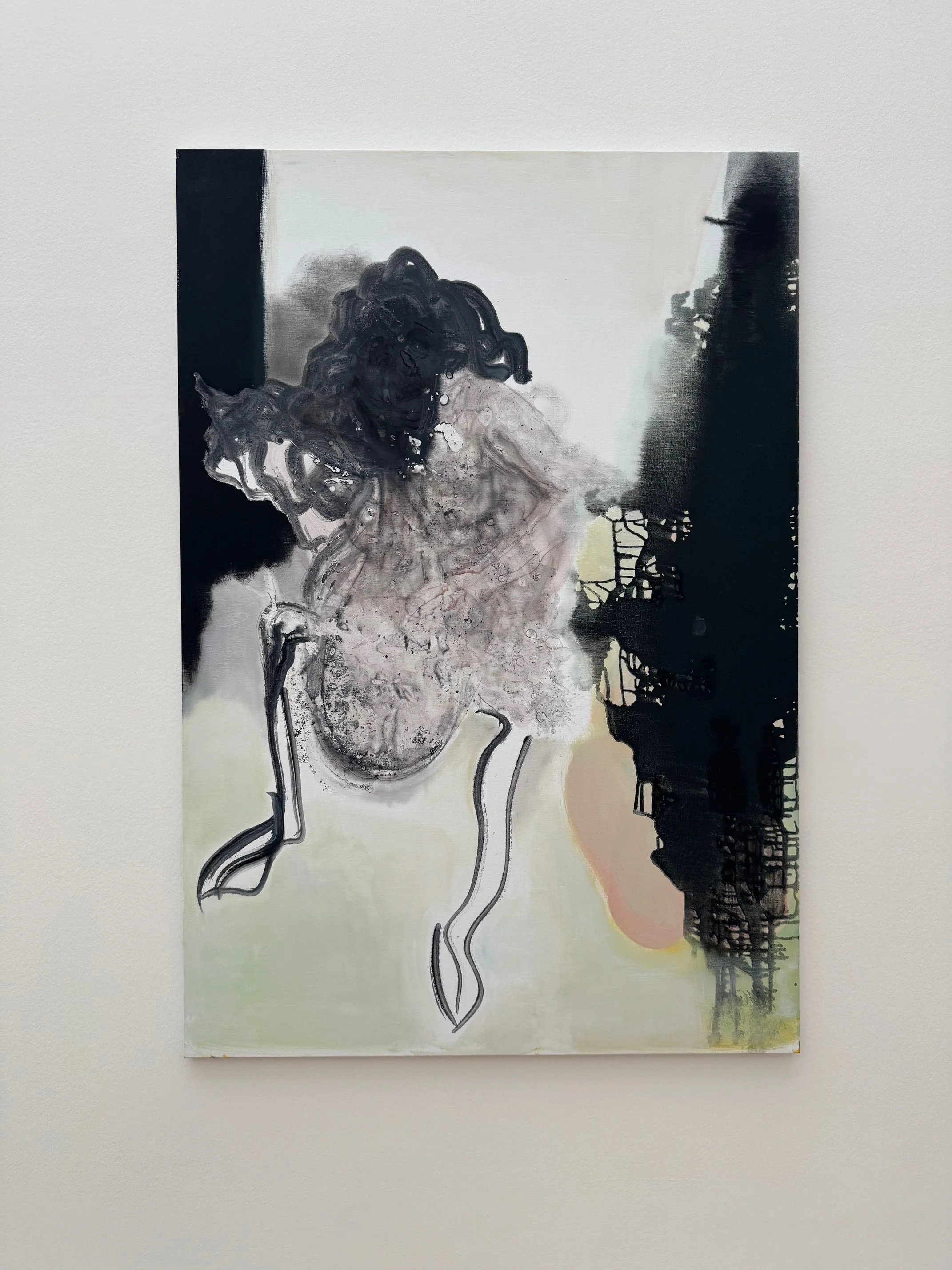
Marlene Dumas, Le desespoir de la vielle, 2020, Beyeler Foundation.
In the adjoining galleries, works from the Foundation’s collection hung in pairs: Louise Bourgeois with Francis Bacon, Marlene Dumas with Picasso, Sarah Morris with Kazimir Malevich, a sound installation by Susan Philipsz. All exuded despair, angst, mourning— feelings all too familiar and sometimes hard to put my finger on. Pain, in whatever form it shows up, is devastating, paralyzing, and buries us deep in estrangement. For a few hours, it was good to know that I do not carry this weight alone. I walked amongst those I look up to, who have been in a similar place, and felt with them a shared emotional depth of our lives.
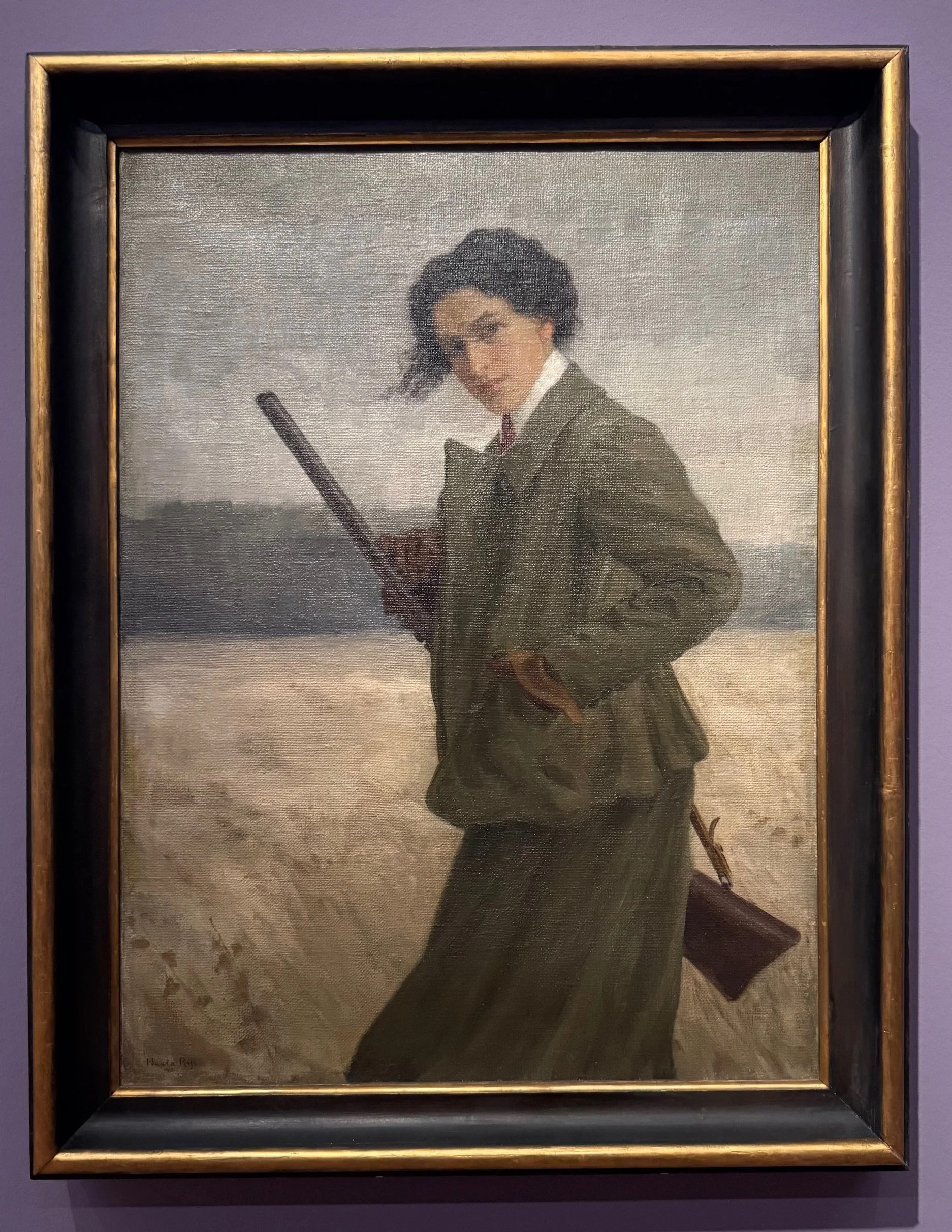
NASTA ROJC, Autoportret u lovackon odijelu, 1912, Kunstmuseum Basel.
At the Kunstmuseum Basel, The First Homosexuals: The Birth of a New Identity, 1869–1939 profoundly moved me. The painted faces peered out of their frames, tender and sweet, coded by clothing and gestures that communicated identities and desires. That code may miss the general public, but it spoke across the room, calling one picture to another. “Yes” was all I could think as my heart and body spoke back. For a while, in this safe place, I could be with these portraits, standing amongst individuals expressing statements of self-determination, and with them hear mine.
Downstairs, Marc Bauer’s exhibition Fear Rage Desire, Still Standing embodied his struggle as a queer individual, organized around the themes “Men in Power,” “Self-Determination of Queer Women,” “Ecstasy as Liberation,” and “Humiliation and Exclusion.” On the first floor, New Constellations followed the darker side of humanity (violence, conflict, war, transience), including prints by Goya and a film by Miriam Cahn that gripped my attention. A small figurative painting by Anselm Stalder penetrated me with its burning, yellow eyes. It seemed to ask, “Are you going to decide to act, or deny the fire that rages in you?” Damn.
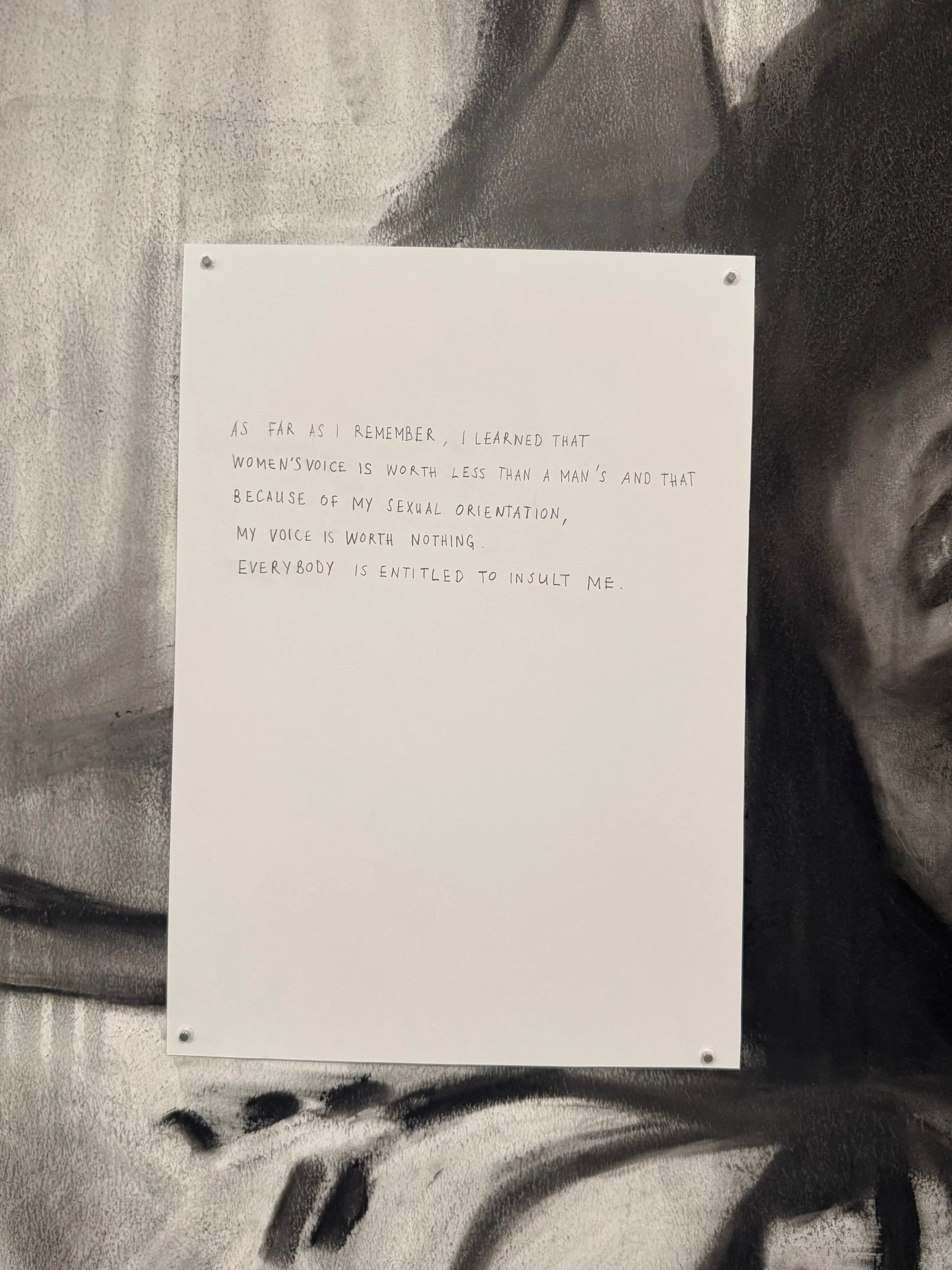
Marc Bauer’s solo exhibition Fear Rage Desire, Still Standing, Kunstmuseum Basel.
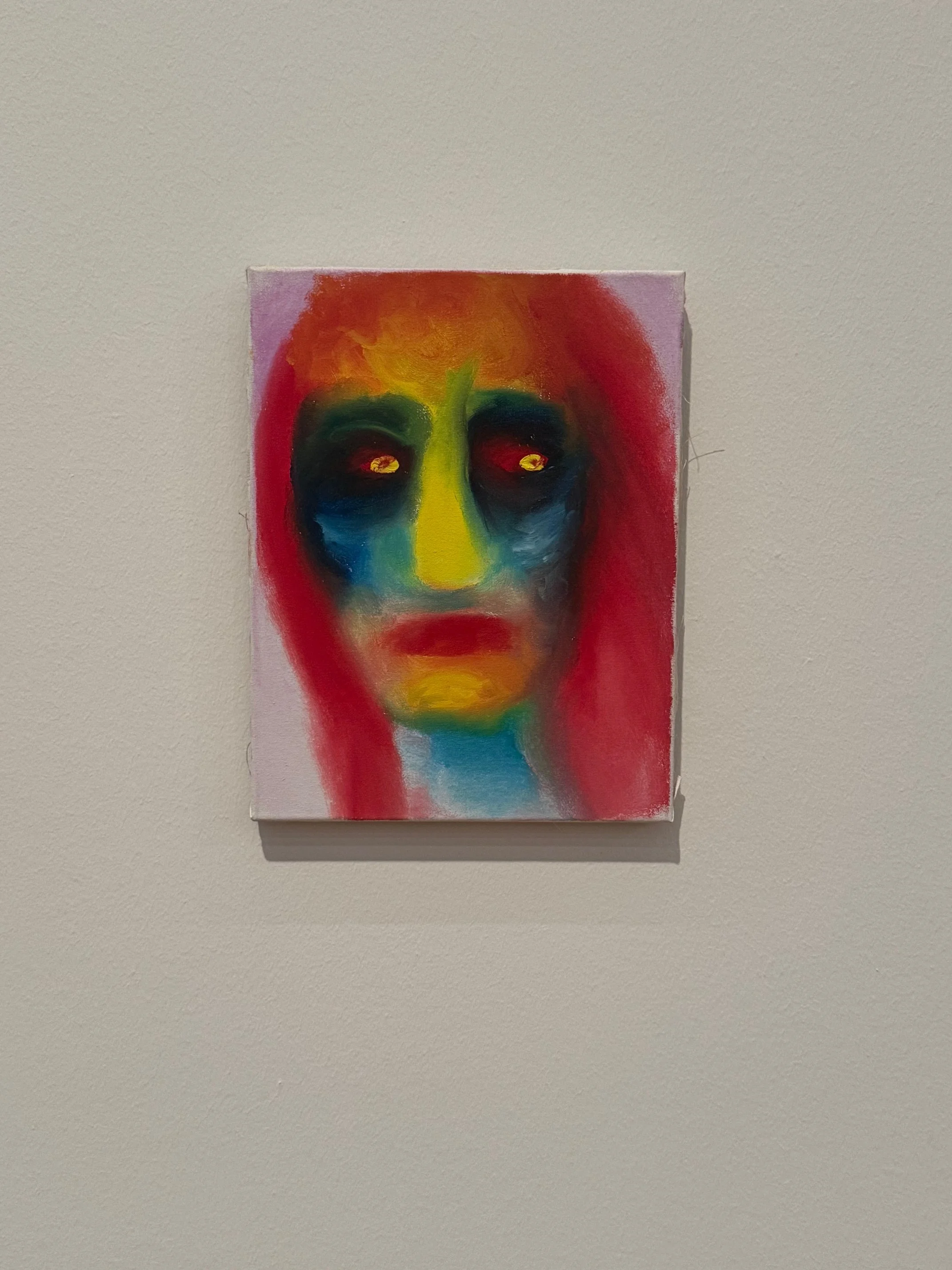
Anselm Stalder, included in New Constellations, Kunstmuseum Basel.
After visiting these exhibitions, I traveled to the town of Trogen to attend a salon organized by Mark Staff Brandl. There, I described the shows I had witnessed in Basel to an artist who was in attendance. He told me of Elisar von Kupffer’s mural at Monte Verità. “You should go before you leave.” And so Ascona became my final destination.
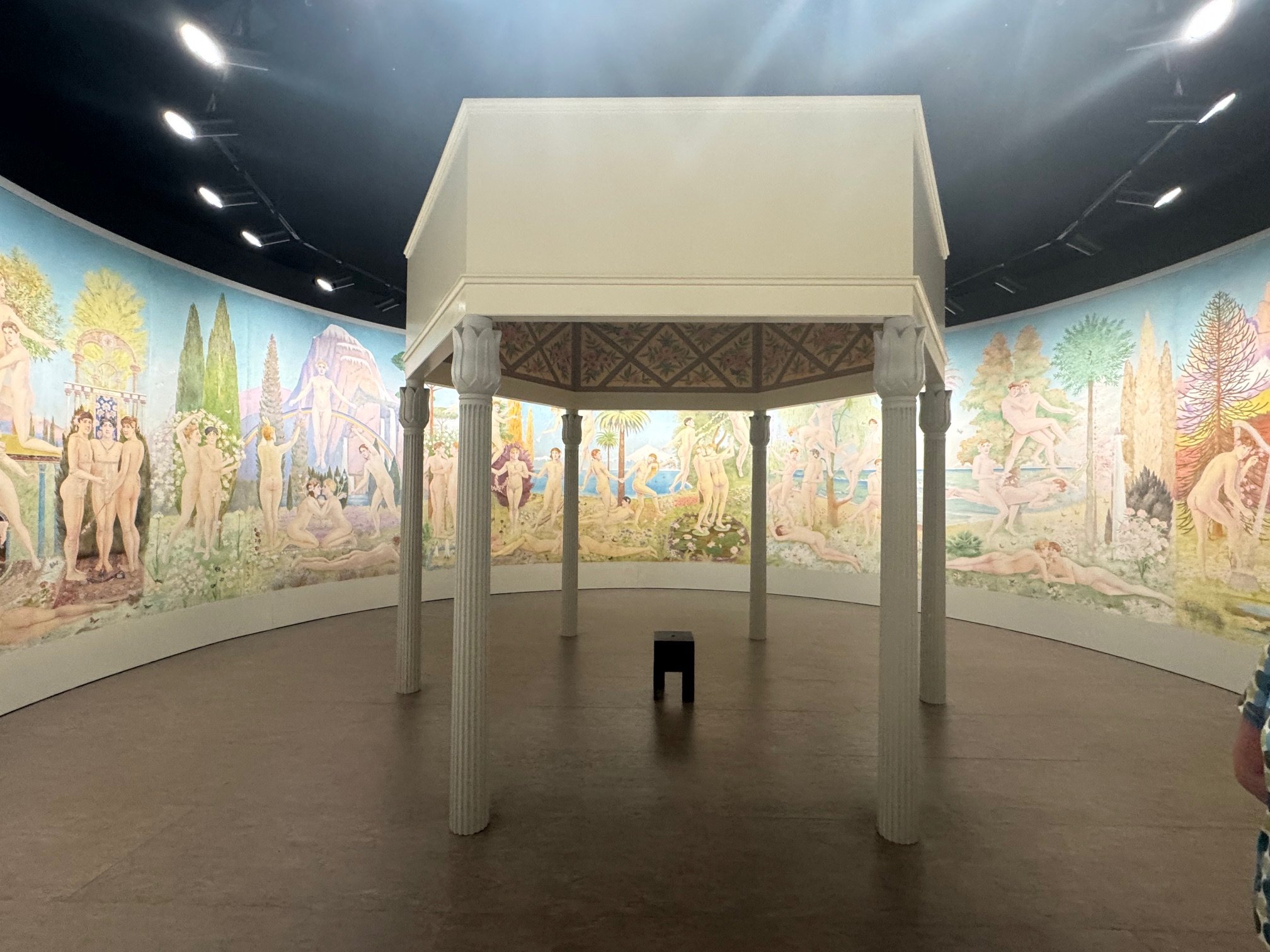
Elisa von Kupferr, Il Chiaro Mondo dei Beati, Monte Verità.
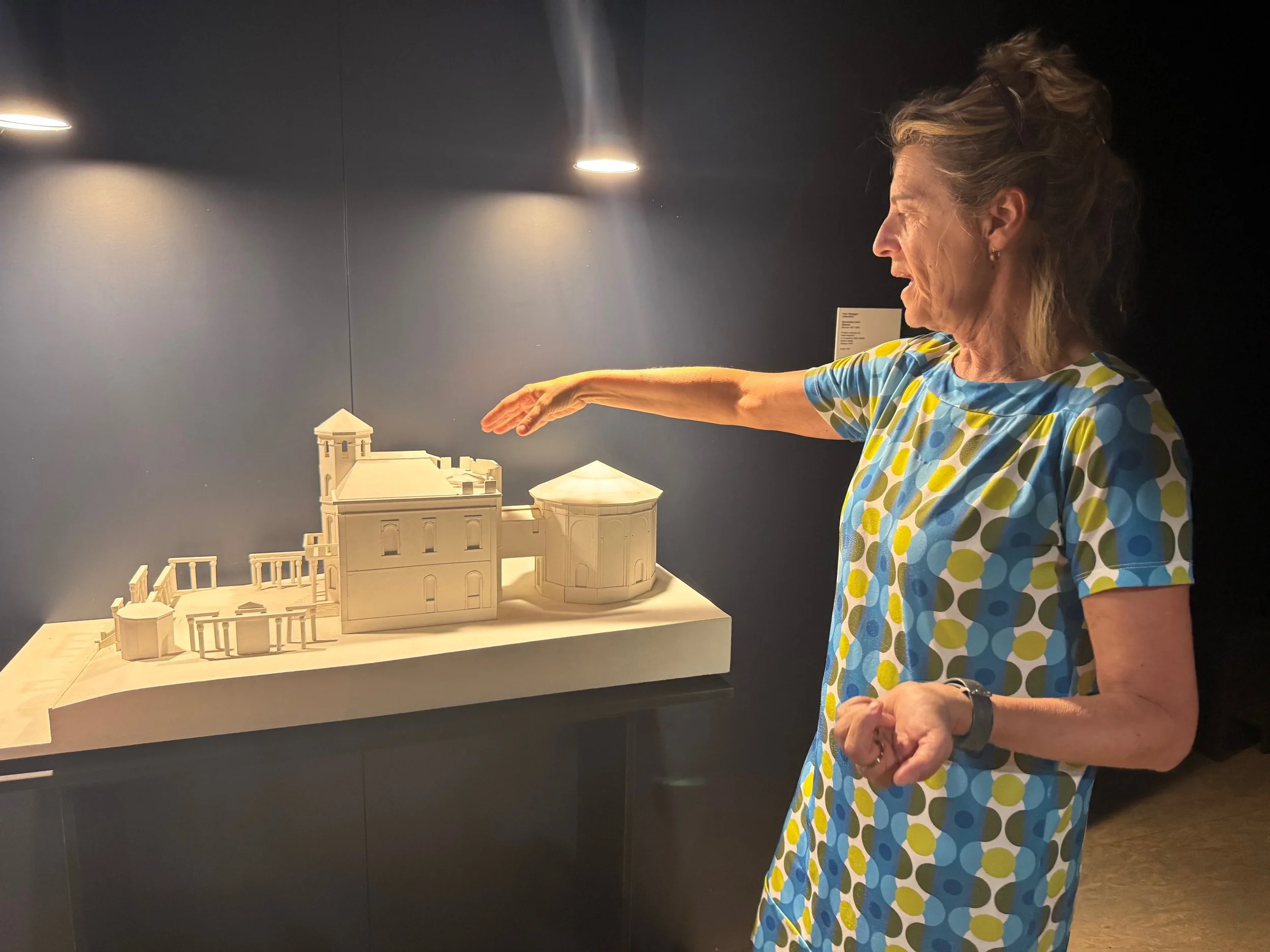
Director Nicoletta Mongini with a model of Elisar von Kupferr’s and Eduard von Mayer’s residence.
Nicoletta Mongini, Cultural Director at Monte Verità, gave me a private tour of von Kupffer’s mural, Il Chiaro Mondo dei Beati (The Clear World of the Blessed), in the Elisarion Pavilion. I had already seen one of his paintings in The First Homosexuals. It stood out as a strange, pastel idealist painting, structured by symbolic utopian philosophies. And so, I learned, it was. Von Kupffer and his partner, Eduard von Mayer, founded Clarism in 1911, a non-religious movement built on “queer mysticism” that challenged patriarchy and advocated for homosexuals. The pavilion, extending out from their home, was a space for their vision to materialize.
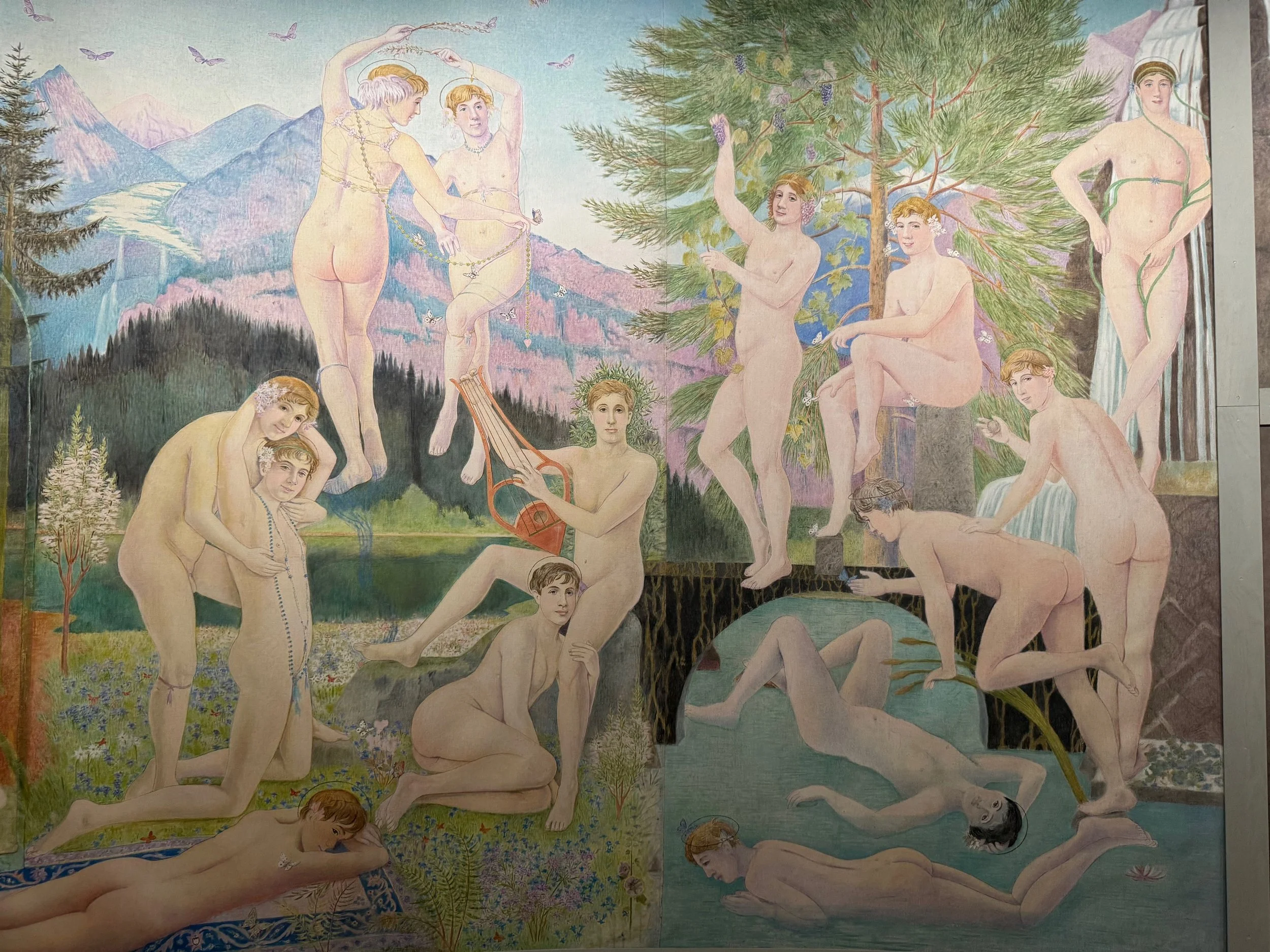
Detail, Elisar von Kupferr, Il Chiaro Mondo dei Beati, Monte Verità.
Monte Verità, the “hill of truth,” is regarded as an origin of counterculture movements. Its history is preserved in Casa Anatta. The house holds the paper clippings, photos, books, artworks, and models Harald Szeemann gathered for his 1978 exhibition Le mammelle della verità. Monte Verità was never one thing, but an evolution of people, ideas, and lifestyles. It drew return-to-land anti-industrialists, a “sanatorium” for radical life reform, and modern dance pioneer Rudolf von Laban. It hosted the Eranos Conferences with Carl Jung, along with Dadaists, anarchists, occultists, and artists. In 1899, Theosophists Alfredo Pioda, Franz Hartmann, and Constance Wachtmeister, close associates of Theosophy co-founder H. P. Blavatsky, planned a monastery, “Fraternitas,” on this site. It was, for them, a place to build a life of human brotherhood, far from the world, where students of theosophy could live freely, in fresh air and vegetarianism. The plan never came to fruition, but Monte Verita holds its spirit. This hill has placed itself in the minds of those who have landed there. What these individuals shaped remains in rituals and lifestyles passed on, from one person to another, one community to the next, generation to generation.
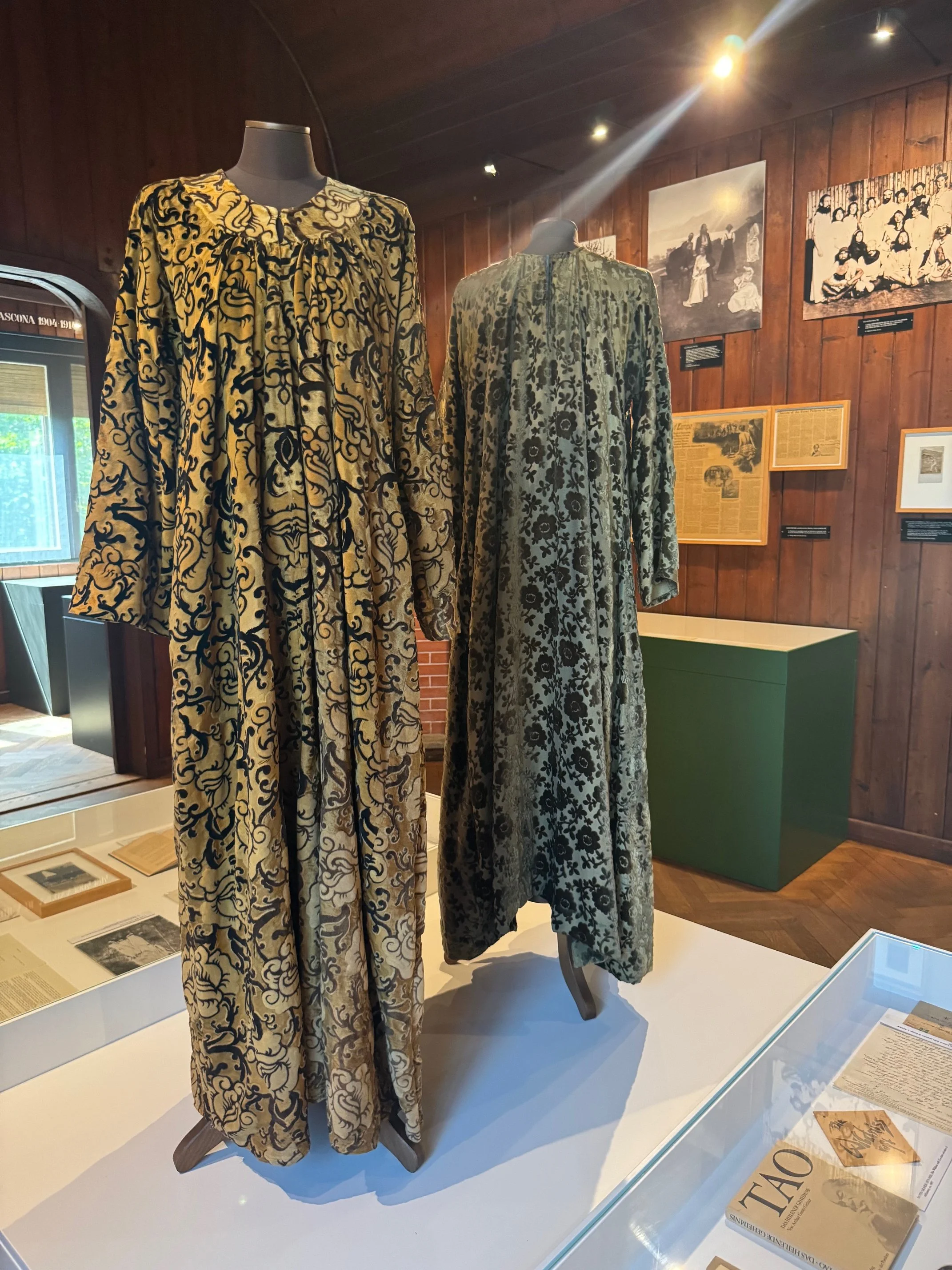
Works exhibiting in Casa Anetta, part of Harold Szeeman’s 1978 Mammelle de verita exhibition.
“Perhaps it rests on one of Earth’s chakra sites,” my mother later said to me after telling her about my trip. She was cool and matter-of-fact about that. How does she know? What does she know, deep in her bones? And why do I sense it, too? Whatever it is, coincidence or esoteric alignment, I felt guided to this trip. In Switzerland, the resonance of energies I encountered seemed to tell me, “Yes, like you, we are frightened by threats that accelerating technologies pose; we are in despair as we were in times before. Stay away from the sorcerers, the ones who practice their dark arts for selfish gains. Find your people, the magical ones who make you feel safe and allow you to be yourself; share your messy life with them and be vulnerable with them, rage together and decide to act, dream a better world and build it. We are with you, and have been since the dawn of time.”