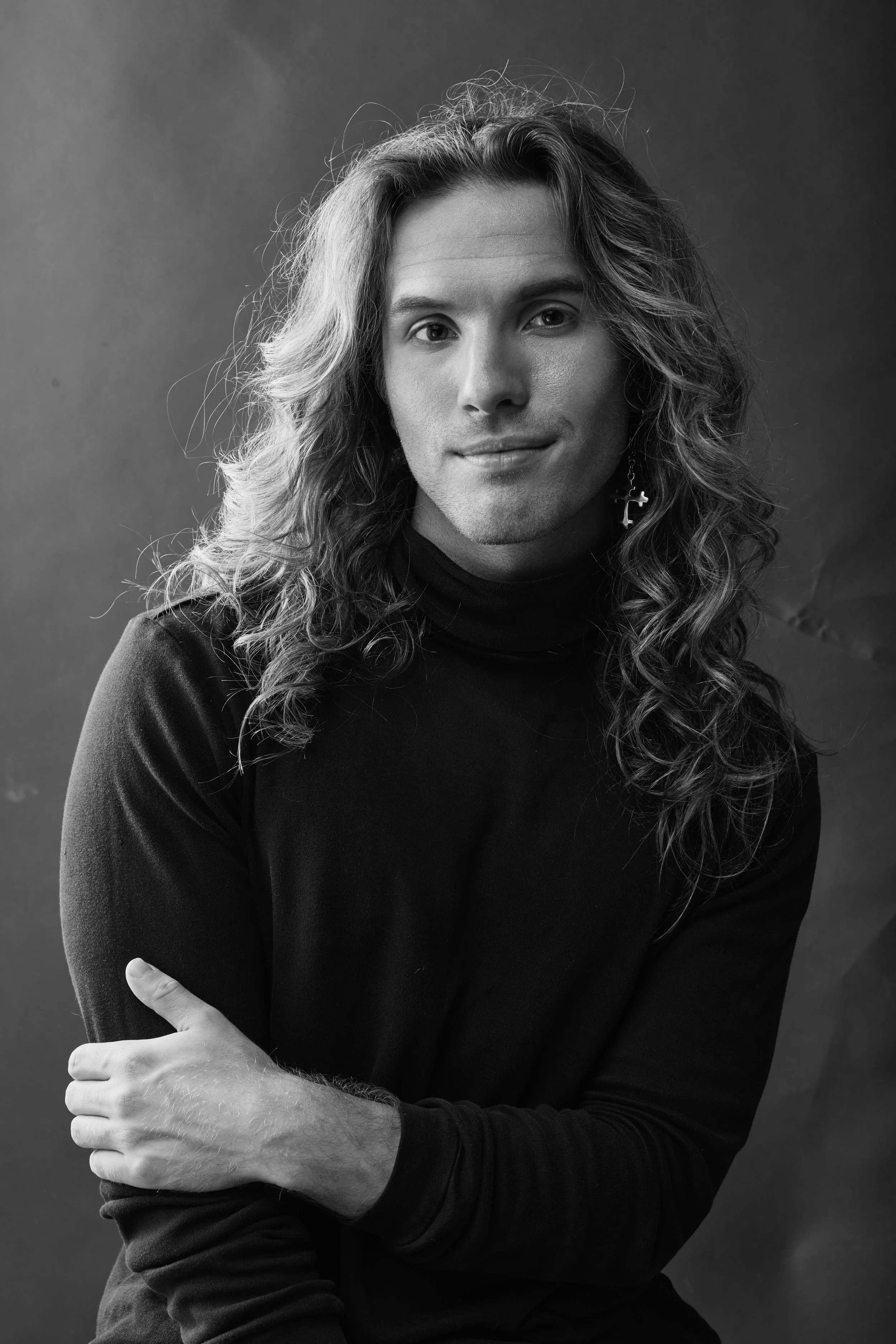

Review of Strangely Familiar Human Being, a two-person exhibition of work by John Paul Kelsing and R. Clint Colburn at WheelHouse Art Gallery
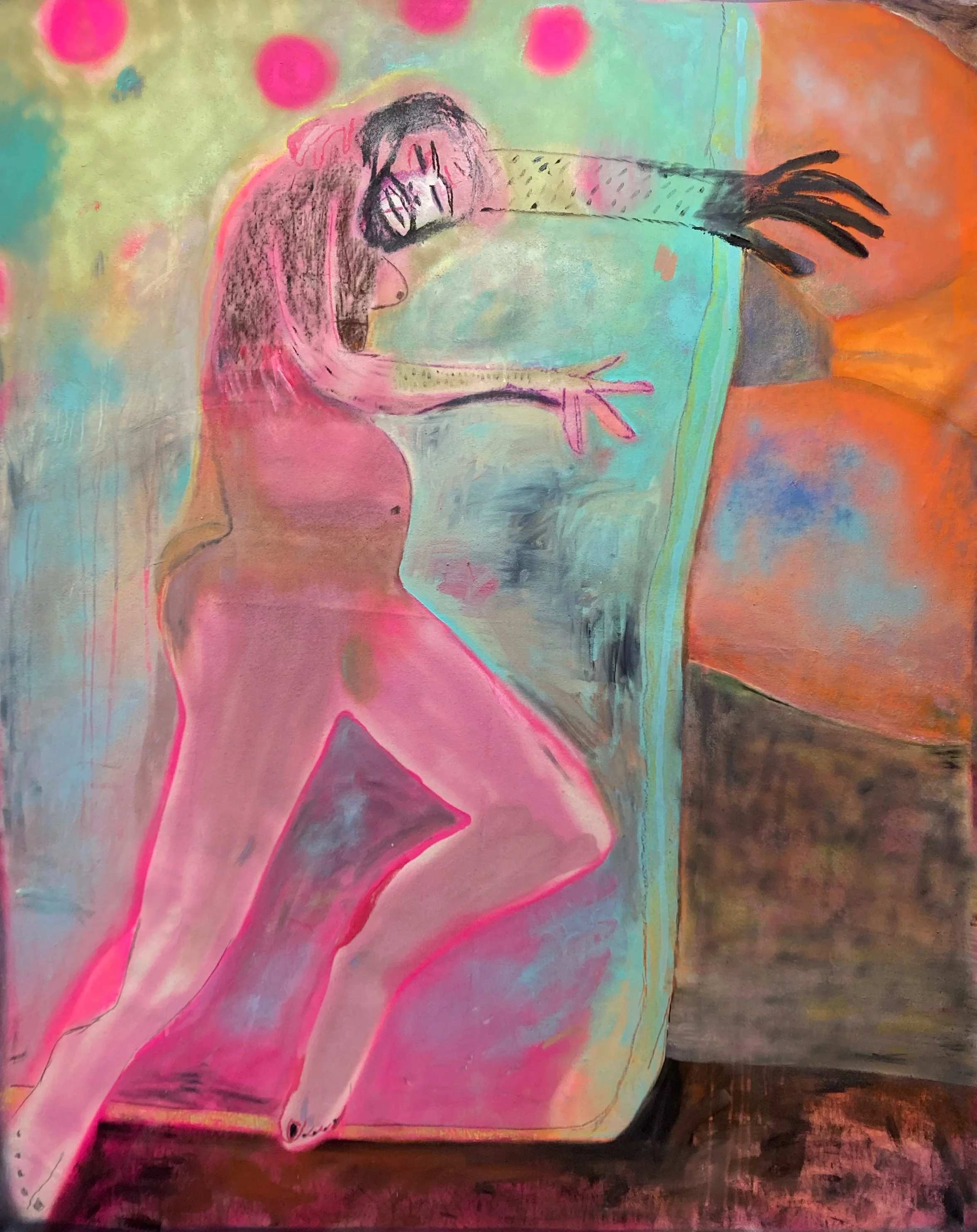
John Paul Kelsing, Couple's Therapy (2022). All photos via WheelHouse Art Gallery.
Familiarity is rarely as comfortable as it sounds. A face can be recognizable without being known; a body can appear intimate while remaining fundamentally strange. It is within this slippage between recognition and estrangement that Strangely Familiar Human Being, a two-person exhibition of work by John Paul Kelsing and R. Clint Colburn, finds its point of departure. This conversation emerges within a fresh artistic space seeking to embed itself in the surrounding community.
The exhibition’s venue, WheelHouse Art Gallery, has been a longtime staple of Kentucky's metropolitan art scene. Originating in Louisville as “B. Deemer Gallery” in 1990, the gallery has maintained a strong repertoire of shows and support for Kentucky’s art community. As a creative hub connecting artists and collectors, the gallery has shown work by various Kentucky artists like Sabra Crockett, Carolyn Plochmann (1926-2023), and Carlos Gamez de Francisco among countless others. WheelHouse expanded its presence to Lexington in February 2026, opening a second location operated by practicing artists and curators Daniel Pfalzgraf (Gallery Owner) and Lina Tharsing (Gallery Manager). Since its opening, Pfalzgraf and Tharsing have mounted Fragile Unfolding: From the Seat to the Horizon, GNATLAND: Neon Organisms of the New Age, and The World of Our Own Creation, establishing a curatorial rhythm for the new space before Strangely Familiar Human Being. These exhibitions begin to suggest how WheelHouse’s Lexington location is extending the gallery’s established interests while developing a distinct presence of its own.
In cultivating the Lexington exhibition program, Pfalzgraf and Tharsing have sought to connect artists with the city’s existing creative community while maintaining relationships with artists and audiences familiar to WheelHouse’s Louisville location. Given Lexington’s expansive artistic landscape, the program has emphasized group exhibitions as well as two, three, and four-person presentations. Tharsing explains that duo exhibitions “create an opportunity for each [artist] to reach a broader audience while allowing their work to enter into a dialogue with one another.” Both Kesling and Colburn have deep roots in the region’s art scene as well as Lexington spaces such as Institute 193, situating Strangely Familiar Human Being within an existing network rather than presenting the artists as discoveries made in isolation. This regional grounding informs both practices; Kesling is a northeastern Kentucky native who holds an MFA from the Savannah College of Art and Design, and spent years immersed in the Brooklyn art scene before returning to Tennessee and Kentucky to ground his practice in intuition, humor, and raw imagery. Conversely, Colburn has spent over two decades living and working directly within Lexington, developing an intuitive, non-formulaic approach to mark-making that acts as a tool for examining the subconscious. Visually, the artists share a similar language of bold colors, irregular mediums, and acrylic painting in expressionist and abstract manners.
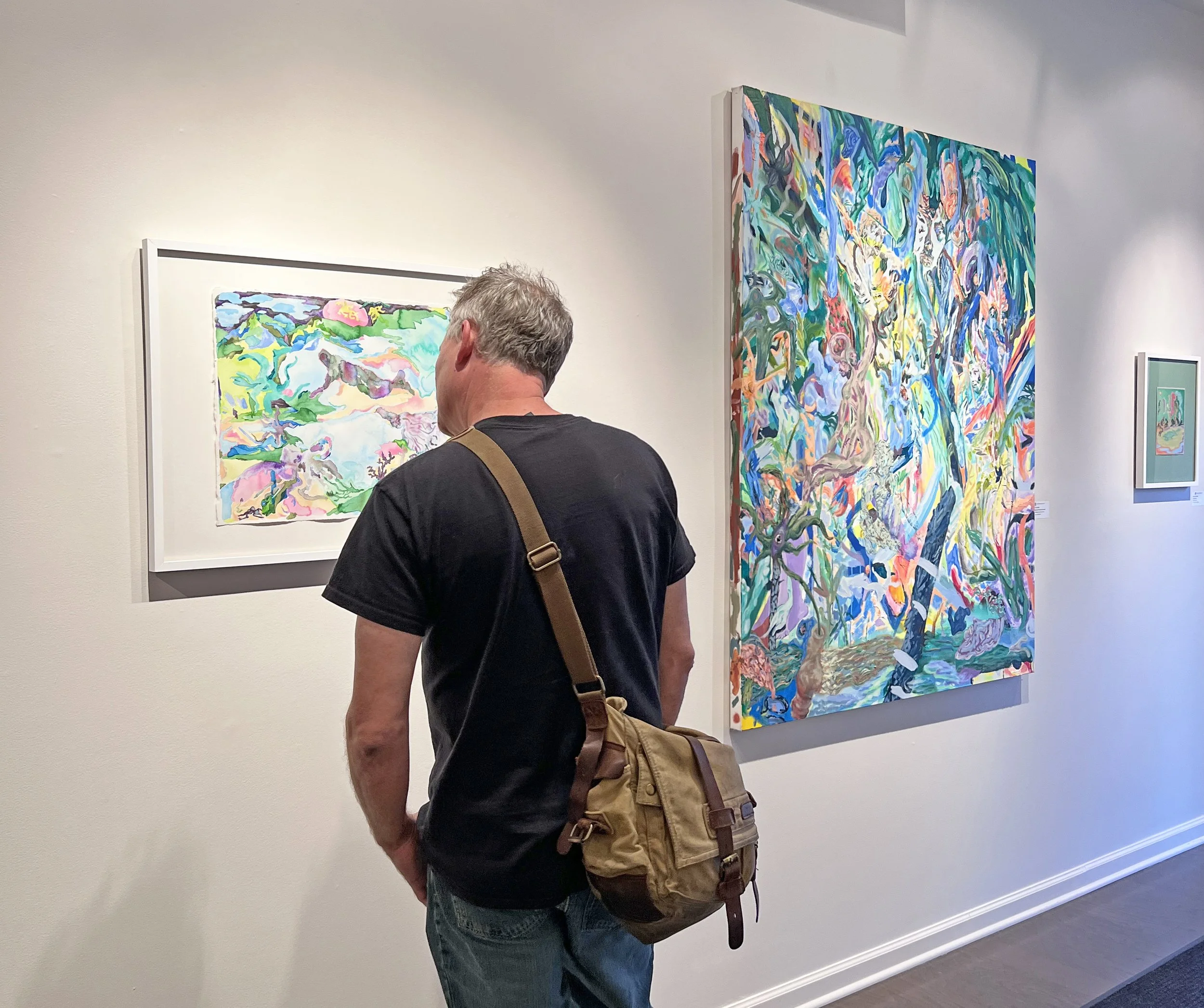
Strangely Familiar Human Being, installation view.
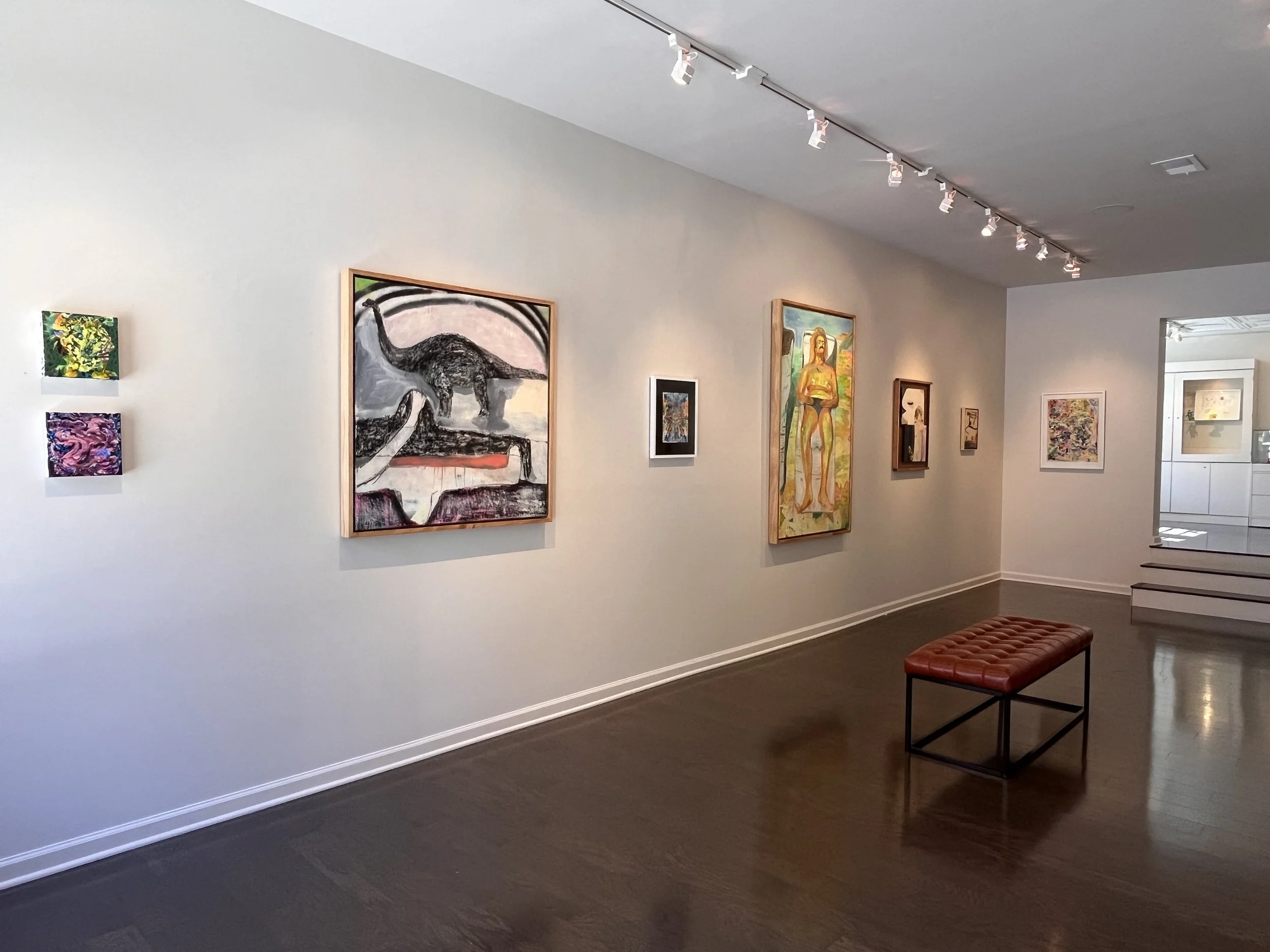
Strangely Familiar Human Being, installation view.
Re-emergence, then, becomes an action taken by both the artists and the gallery. Strangely Familiar Human Being unites Kelsing and Colburn’s bold paintings to excavate the interior of the self, balancing absurdist impulses with the weight of grief, longing, and an increasingly unstable sense of autonomy. Distributed across both floors of the gallery, the works are intentionally intermingled rather than separated by artist, allowing the viewer to oscillate between the distinct visual languages of Kelsing and Colburn. Their vivid palettes and exaggerated, often unrefined, figures create a contemplative experience in which the human form is continually made strange through another artist’s stylistic vocabulary. Familiarity emerges not through recognition alone, but through the repeated process of encountering the body anew.
When walking through the front doors of the space, visitors can experience an array of both artists' work across two walls. Here, Colburn’s Disentanglement from the Unnatural Order of Things (below) sits between smaller pieces of his and Kesling’s. The painting is a vast, emerald-filled forest where fallen tree limbs and greenery cascades into legs, faces, bodies, and other amorphous forms. No color of the palette is spared, with each addition becoming a feature in the violence of an otherwise abstracted scene. The artist is paying less mind to a technical concept and more into the anxieties of living in a world where the crisis of agency is at play. As we experience the personal hardships of life, the surrounding environment of politics, nature, and culture are rendered unstable. Throughout the abstraction, faces appear across the composition, materializing from the brushstroke and dense layers of color. A phenomenon of facial pareidolia, in which the eye begins to make out faces from ambiguous patterns, becomes an active part of the viewing experience. These fleeting faces and figures create a sense of discovery between the viewer and the work. Colburn does not allow the classical figure to retain its conventional authority. Hellenistic bodies and sculptural busts emerge from the vegetation alongside faces, arms, legs, and other fragments of human form, becoming just another set of images within the painting's crowded visual field. The antique body, historically associated with ideals of proportion, beauty, and human order, is absorbed into a composition governed instead by accumulation and instability. In this sense, the familiar does not disappear so much as lose its position of certainty. A classical body or portrait remains recognizable, but its meaning changes when it is surrounded by fragments, pareidolic faces, and an environment that refuses to settle into either landscape or figure.
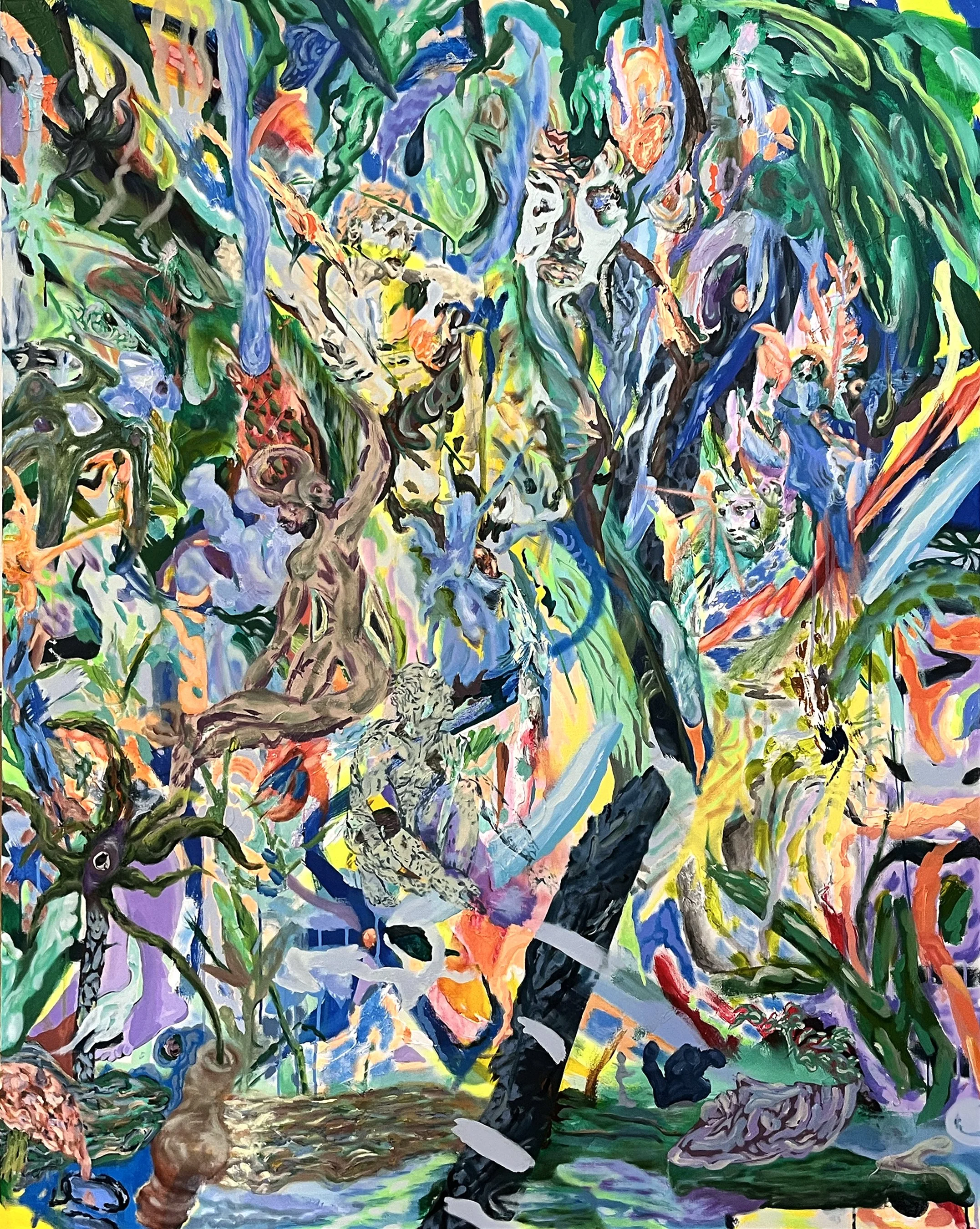
R. Clint Colburn, Disentanglement from the Unnatural Order of Things.
What the artists assert in this “re-emergence” is not a physical “thing” but a reevaluation of experience. As Kesling has said, his work is concerned with human intimacy, personal loss, mortality, and our place in nature; he specifically describes his mark-making as connected to the deaths of his younger brother and friends from the opioid epidemic in his Appalachian hometown. One painting from Kesling stood out particularly for its unhinged titling and ambiguity: Thinking About Dinosaurs While Having Sex (below), a multi-media piece consisting of acrylic, charcoal, spray paint, paper, and gesso on canvas. In the image, two figures are rendered in an intimate embrace while a brontosaurus is superimposed above them. One is lifted into view through line drawing, and the other is given form by a saturation of charcoal. There is a polarity here, literally with the colors indicating black and white, and the composition with the human figures in the bottom-half of the canvas, and the pre-historic creature on the top. It is indeed absurd, yet it became the strangest and most alluring aspect of this piece.
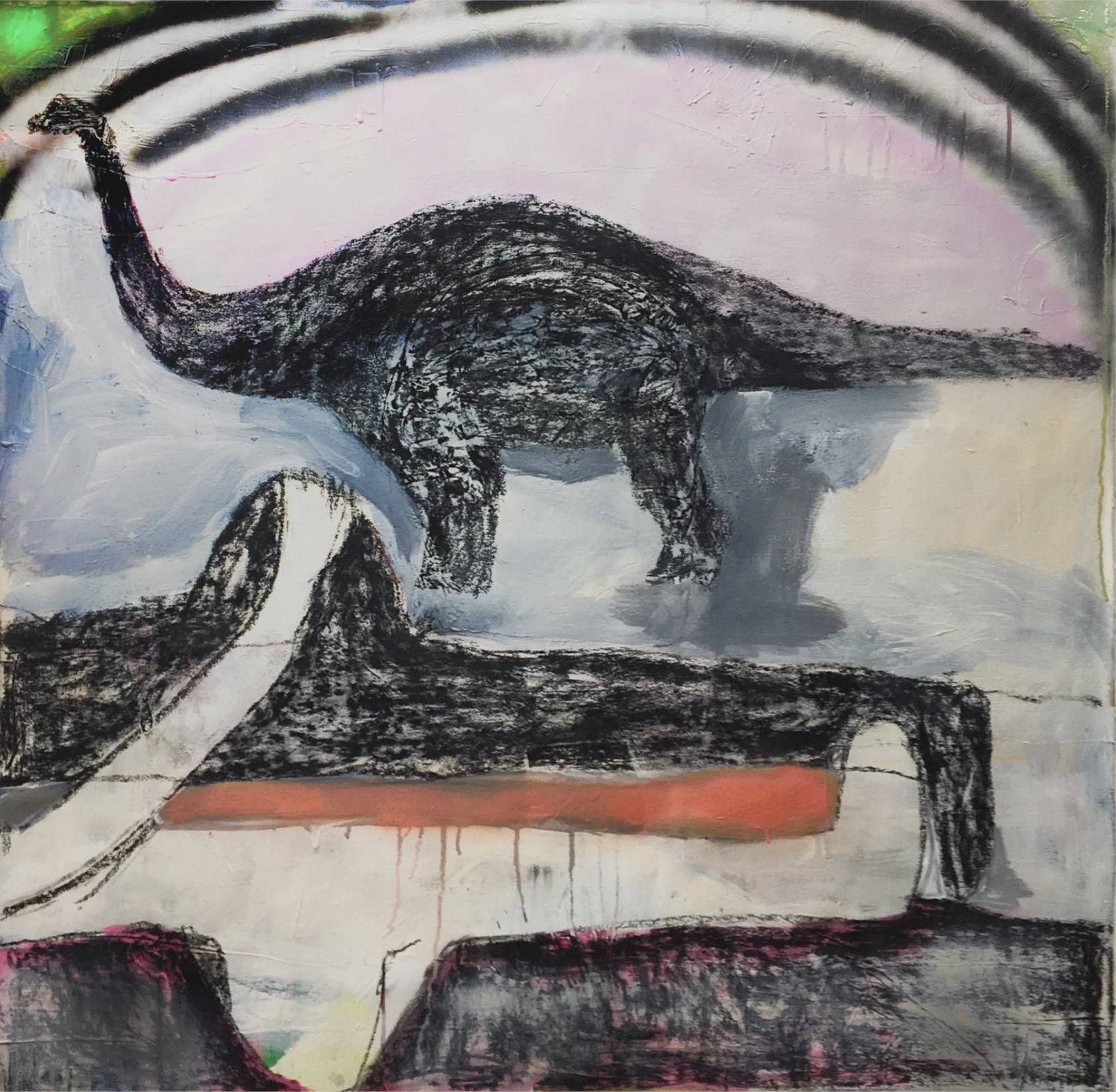
John Paul Kelsing, Thinking About Dinosaurs While Having Sex (2021).
After studying the painting for a moment, the relativity of its division became apparent by a composition and medium arrangement. The dinosaur, rendered with the same charcoal used to illustrate one half of the couple, is an invitation to associate the intimate with extinction. Given the context of his large-scale painting Couple’s Therapy (top of page), this becomes greatly evident. Longing is represented by a complete division in proportions. Those technical aspects seem to suggest or even inform the narrative being employed in these works. Even so, Thinking About Dinosaurs While Having Sex seems to have been created on top of an older painting, with ghost-like writing covered entirely in the top half of the canvas. The partially obscured writing in the upper portion of the canvas reinforces this sense of temporal layering. Something appears to have existed beneath the present image but has not been entirely erased, leaving the painting suspended between its current state and whatever preceded it. Charcoal, a material born from burnt organic matter, becomes a particularly fitting medium to express extinction while the image beneath the painting preserves the traces of an earlier approach. Colburn’s painting smartfully uses an absurdist image amongst disappearance, return, and reuse to exhibit the return of the oppressed.
Where Kesling takes a body and makes it unstable, Colburn takes many faces and fragments them into a collection. In Colburn’s seventeen-piece paper collage Persona Exercise Series (below), identities of each portrait or figure is left ambiguous. The installation is intended to emulate the arrangement of Colburn's collages in his studio, but in the gallery the cluster begins to resemble an archive or family album. Several figures seem to be wearing masks, while others have their faces partially erased or replaced. Some images are recognizable as portraits, but others feel almost grotesque or anonymous. That repetition is crucial. Rather than asking the viewer to understand one person, Colburn constructs a population of unstable, reworked identities. What occurs with the Persona Exercise Series is an attempt to preserve something that might otherwise disappear, and these distorted portraits play into the natural process of forgetting. As an archive, these fragments attempt to preserve recognition, while ultimately succumbing to distortion. This becomes especially resonant alongside Kesling’s work, where the body becomes inseparable from themes of personal loss and absence. Absence as the overarching tone expressed in these works is dually a technique in these paintings. If Kesling asks what remains of a person after they are gone, Colburn establishes what it means to hold on to the idea of a person without ever truly recognizing who they were or might have been.
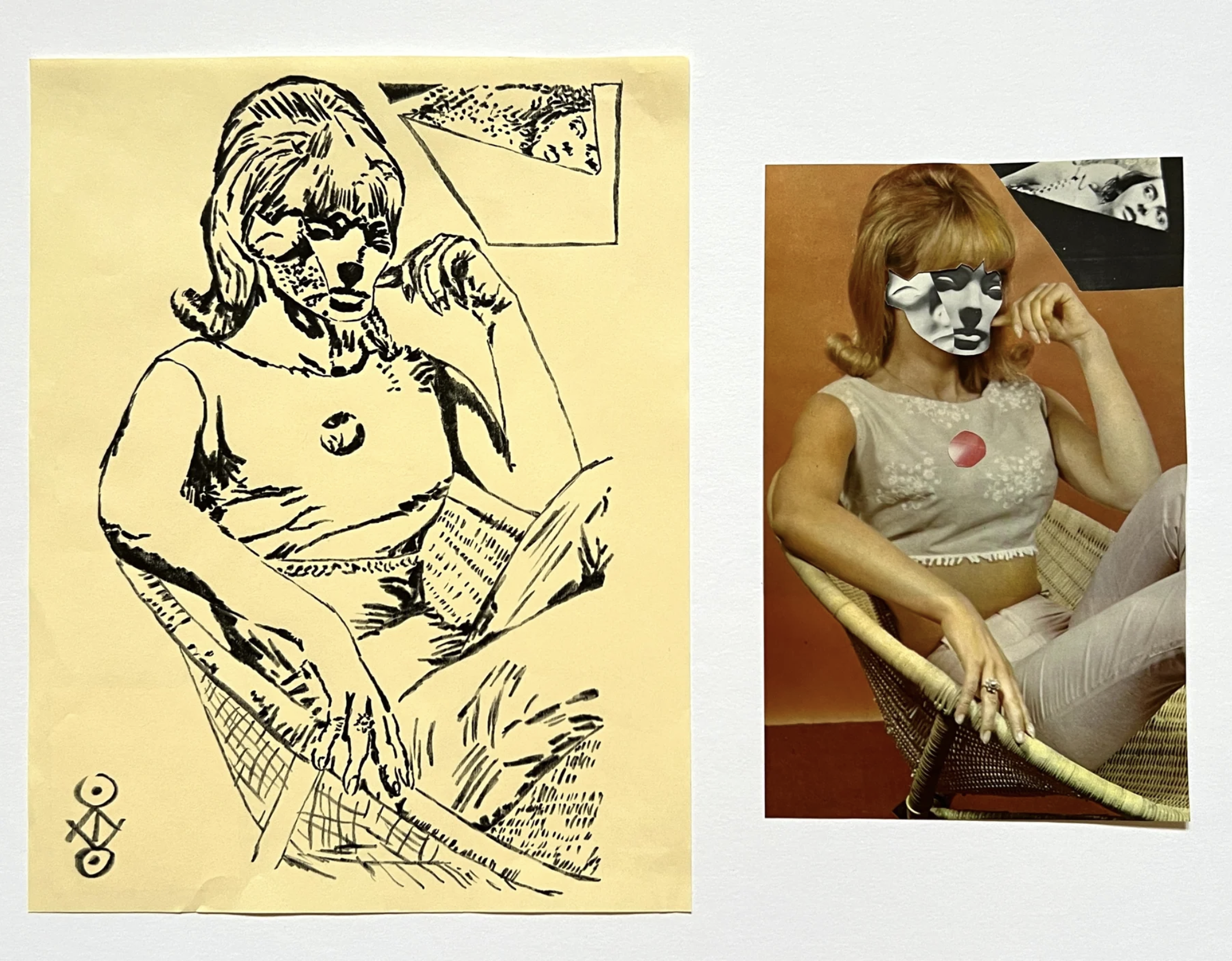
R. Clint Colburn, Persona Exercise (Seated Stone).
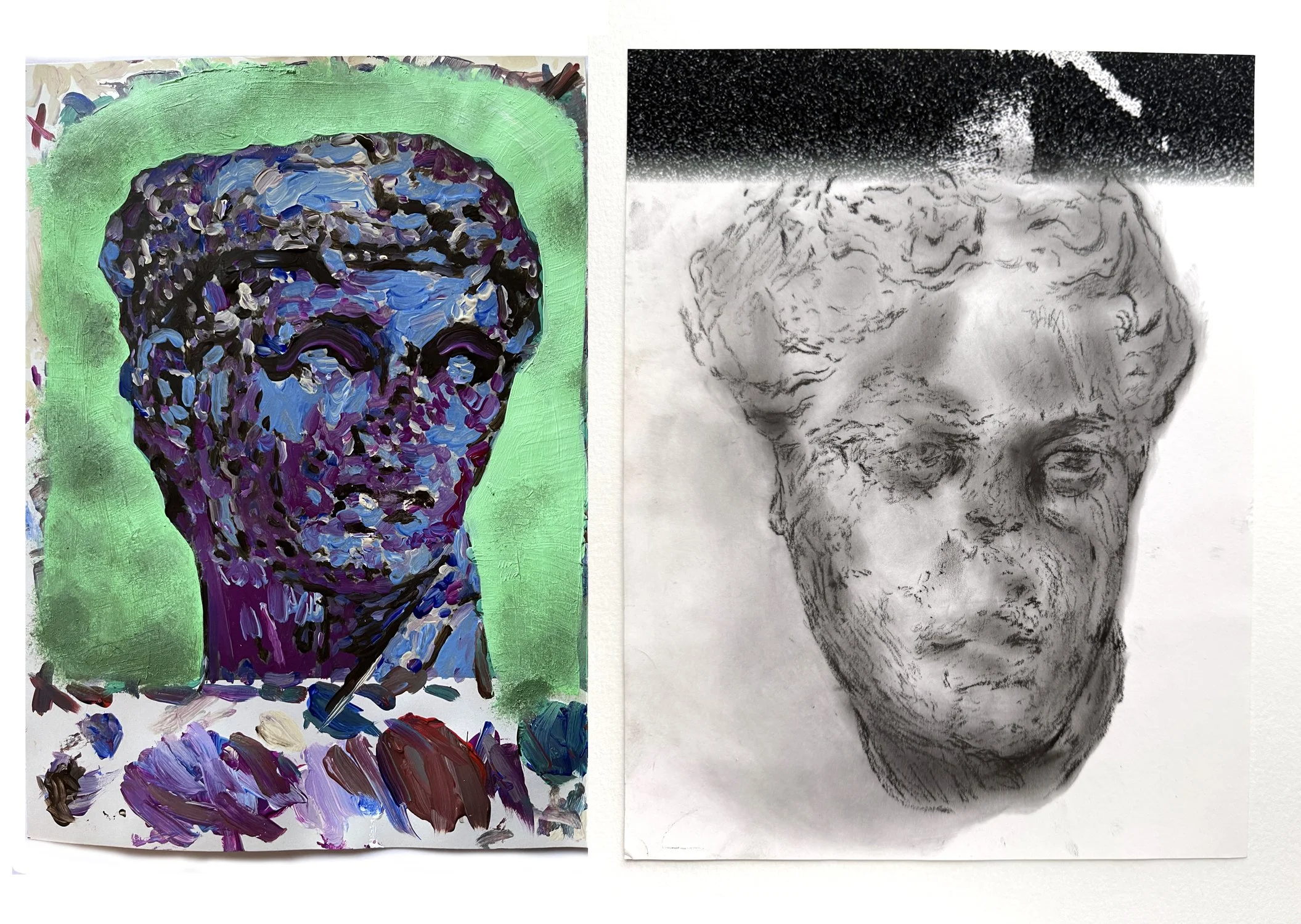
R. Clint Colburn, Mutilated Sculptures Series V2.
The exhibition’s mixed presentation is one of the elements that makes this dialogue succeed. The two collections meet in the middle, speaking to ideas of anxieties and loss while simultaneously holding their own. Kesling and Colburn both arrive at WheelHouse and offer variations of human matter; bodies, faces, intimacy, insinuations of memory, sexuality, nature, and recognizable cultural symbols. It is strange because neither artist permits those to be stable.
If Strangely Familiar Human Being demonstrates anything, it is that WheelHouse's new Lexington space has the potential to operate as more than an extension of an established commercial gallery, re-emerging as a unique addition to central Kentucky. Its strongest exhibitions may be those that use the resources of that established network while allowing unexpected relationships to form within it. Kelsing and Colburn provide a compelling narrative for such a program. What remains exciting is the possibility of seeing the gallery push those relationships further; between artists, between cities, and between the commercial and curatorial functions of the space.