
THE BODY ISN’T A BATTERY THAT DISCHARGES UPON DEATH
Curatorial reflection by Sean J Patrick Carney on the spring 2026 exhibition at The Carnegie.
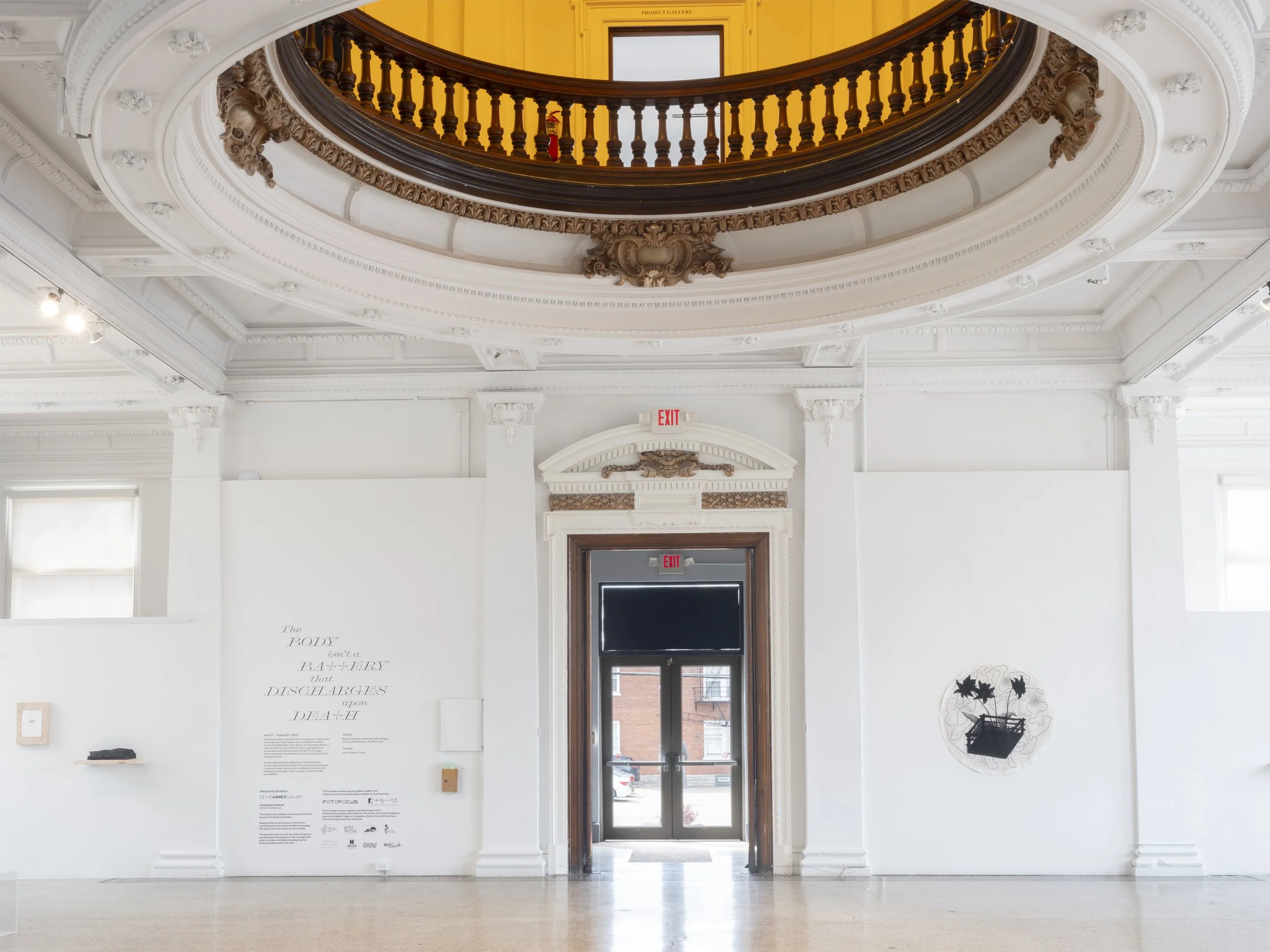
The body isn’t a battery that discharges upon death, installation view. Photo via Jesse Ly.
The Carnegie in Covington, Kentucky, is living an afterlife. It opened in 1904 as the Covington Public Library, bolstered by the wealth of industrialist Andrew Carnegie, but by midcentury had fallen into disrepair. Local community members eventually resuscitated the building into what is today a premier regional arts institution. As I organized the gallery’s spring 2026 exhibition, The body isn’t a battery that discharges upon death, I kept thinking about literature in which the setting feels sentient, like another character. Over time, I began to entertain the possibility that The Carnegie was an entity rather than a venue—an impression enhanced by the building’s former life as a library. I also recognized that its sweeping symmetries, heavy masonry, timbered rotunda, and dazzling dome would direct how bodies move through it.
It was energizing to work with Sso-Rha Kang, lead curator at The Carnegie, whose familiarity with the building’s eccentricities meant that I could actively collaborate with the architecture. I gravitated toward artists whose works might meet interior ornamentation with austere visual languages. Many of the pieces on view behave like relics or eulogies. Each work in The body rewards prolonged engagement, allowing afterimages and overtones to accumulate gradually. Natalie Lerner’s nebulous grave trinkets come to mind; rendered in smoky graphite and charcoal, their forms only materialize through sustained looking.
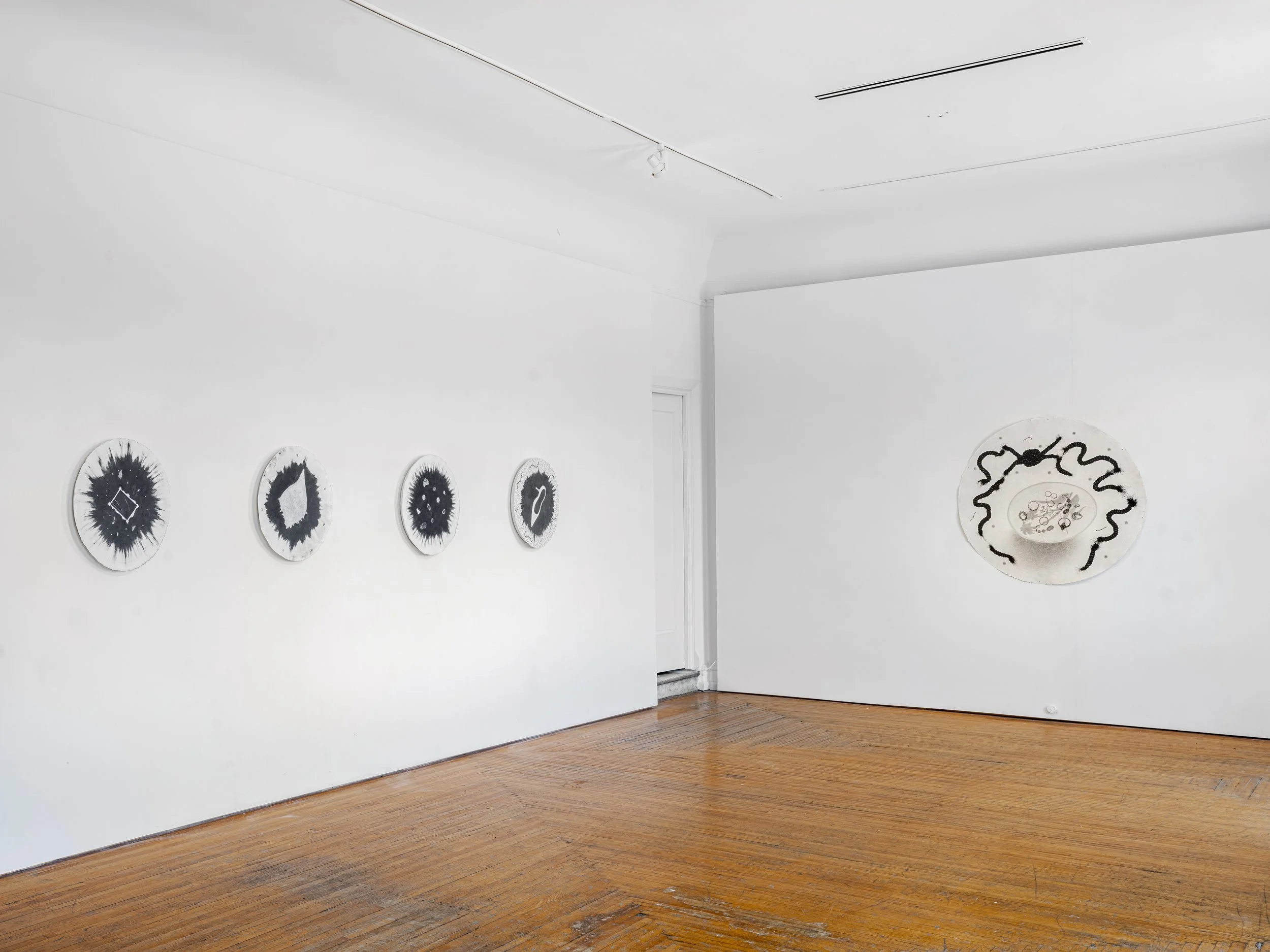
Works by Natalie Lerner. Photo via Jesse Ly.
What emerged between these six artists and the building was a gothic sensibility that, by spring, had grown unexpectedly luminous. Across this exhibition are offerings that harmonize with the labor required for reanimation. The body isn’t a battery that discharges upon death is a long title, though a relatively literal one.
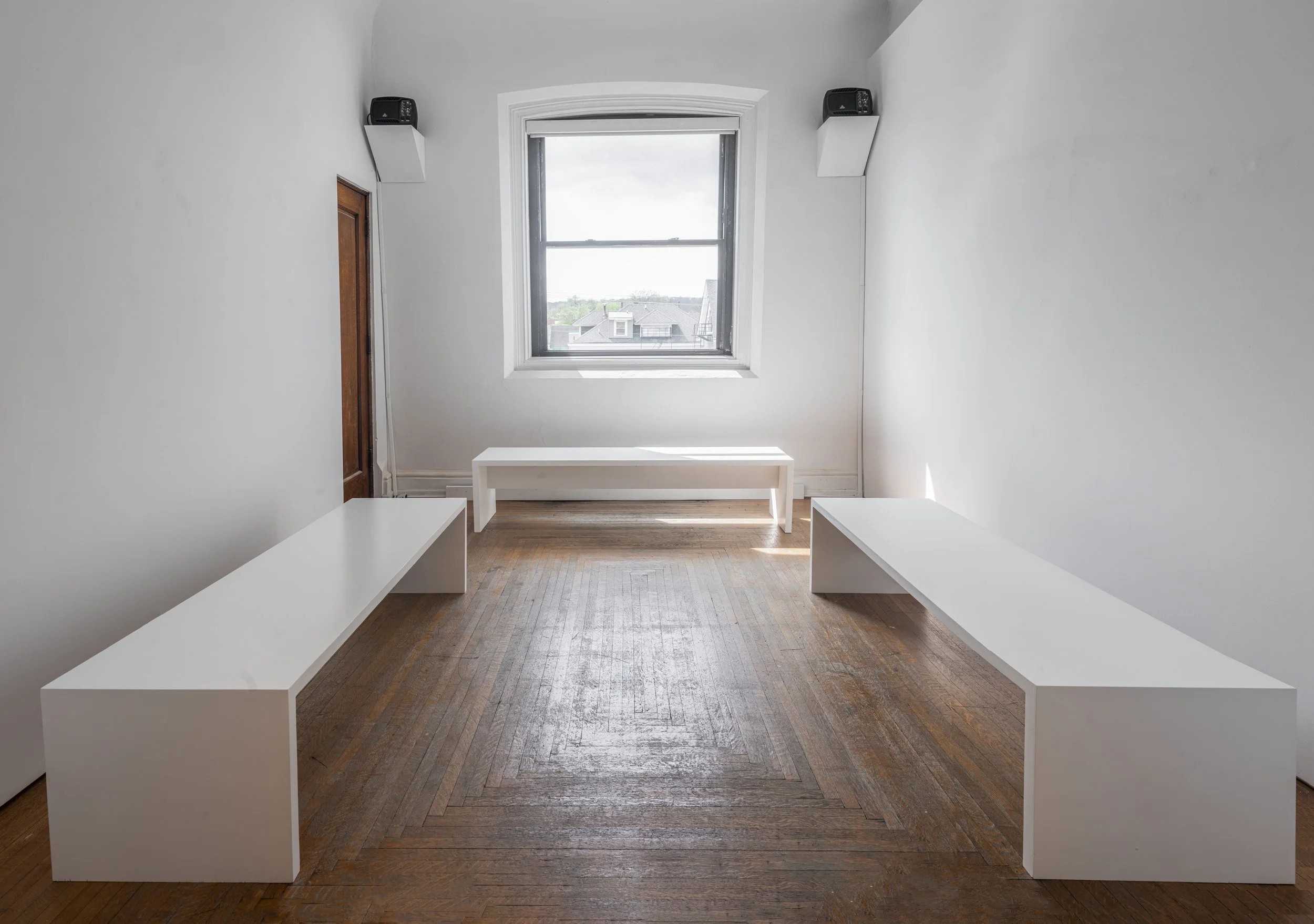
Plume Girl, Everything seems to be awake (2026), installation view. Photo via Jesse Ly.
Exploring the show, you’ll hear the warm tones of Everything seems to be awake (2026), an original rāga composition from Plume Girl, the stage name of Austin-based Hindustani singer and multi-instrumentalist Sowmya Somanath. I have seen a number of Plume Girl performances and have always thought of Somanath’s looping and layering as sonic sculpture. At The Carnegie, from speakers mounted in a simple gallery adorned only with wooden benches, her experimental score shimmers over the rotunda and into the building’s idiosyncratic interior. Somanath’s classically trained voice emerges, dissolves, and reforms around visitors exploring the exhibition. The circling springtime track—a site-specific audio response to the building and the other artists in the show—sounds markedly different depending on where you choose to stand.
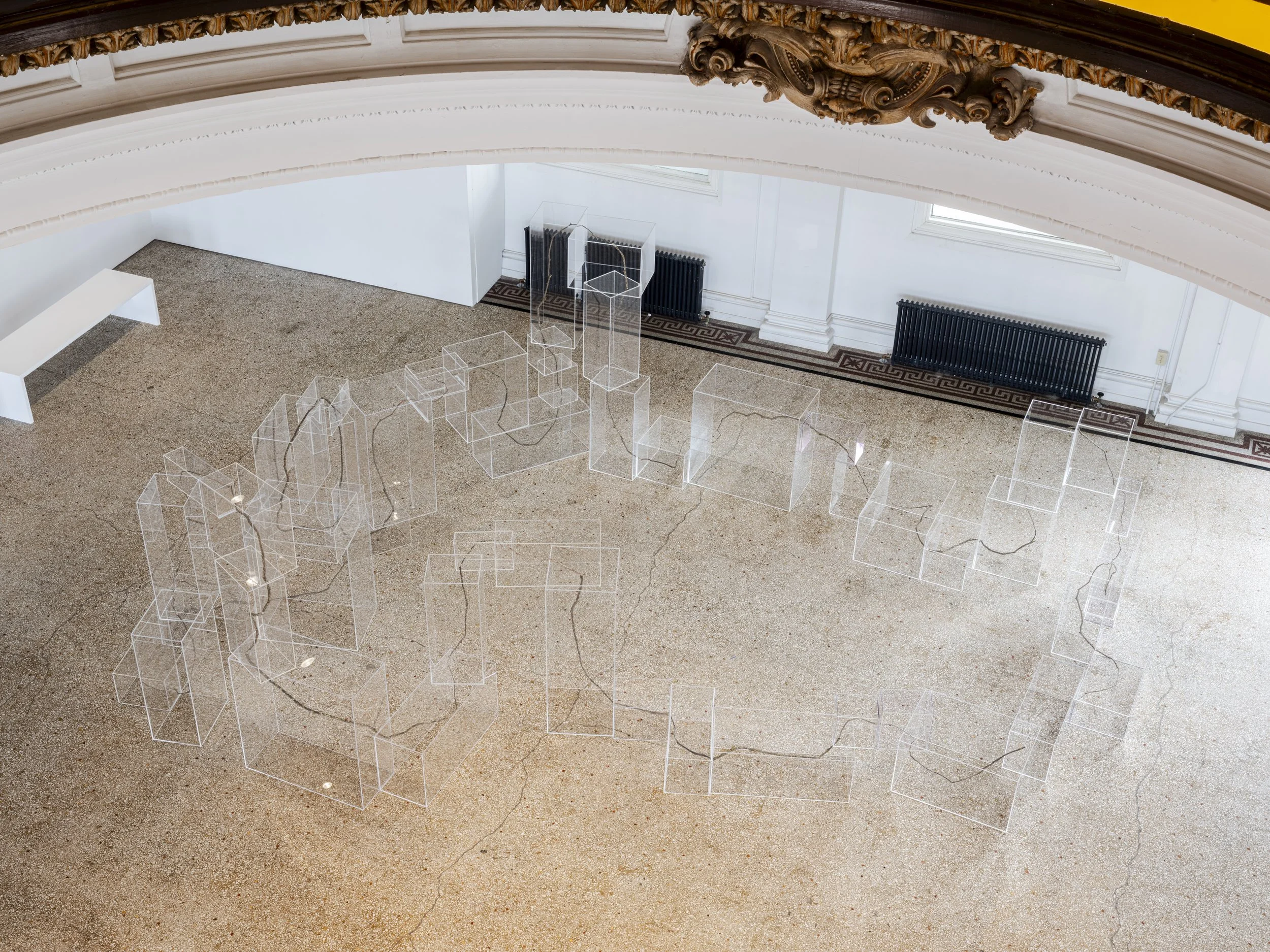
Manami Ishimura, En/円 #2 (2022). Photo via Jesse Ly.
In Manami Ishimura’s En/円 #2 (2022), long-dead tree branches, trimmed and sequenced into a single continuous coil, snake with metronomic insistence through stacked acrylic boxes. The translucent structure is monumental while, from certain angles, being practically invisible. I have seen grief fill rooms similarly. Though Ishimura first presented this work elsewhere four years ago, The Carnegie offers new conditions for seeing. Tall windows enhance the acrylic’s transparency while casting linear shadows that drift throughout the day. From the rotunda, Ishimura could, for the first time, view the branch-loop in its entirety, as if life, death, and decomposition might be perceived at once. Her acrylic enclosures suspend the branches between containment and circulation, translating ikebana—the Japanese practice of arranging cut plant forms to preserve their vitality—into an architectural meditation on our projected boundaries between emptiness and substance.
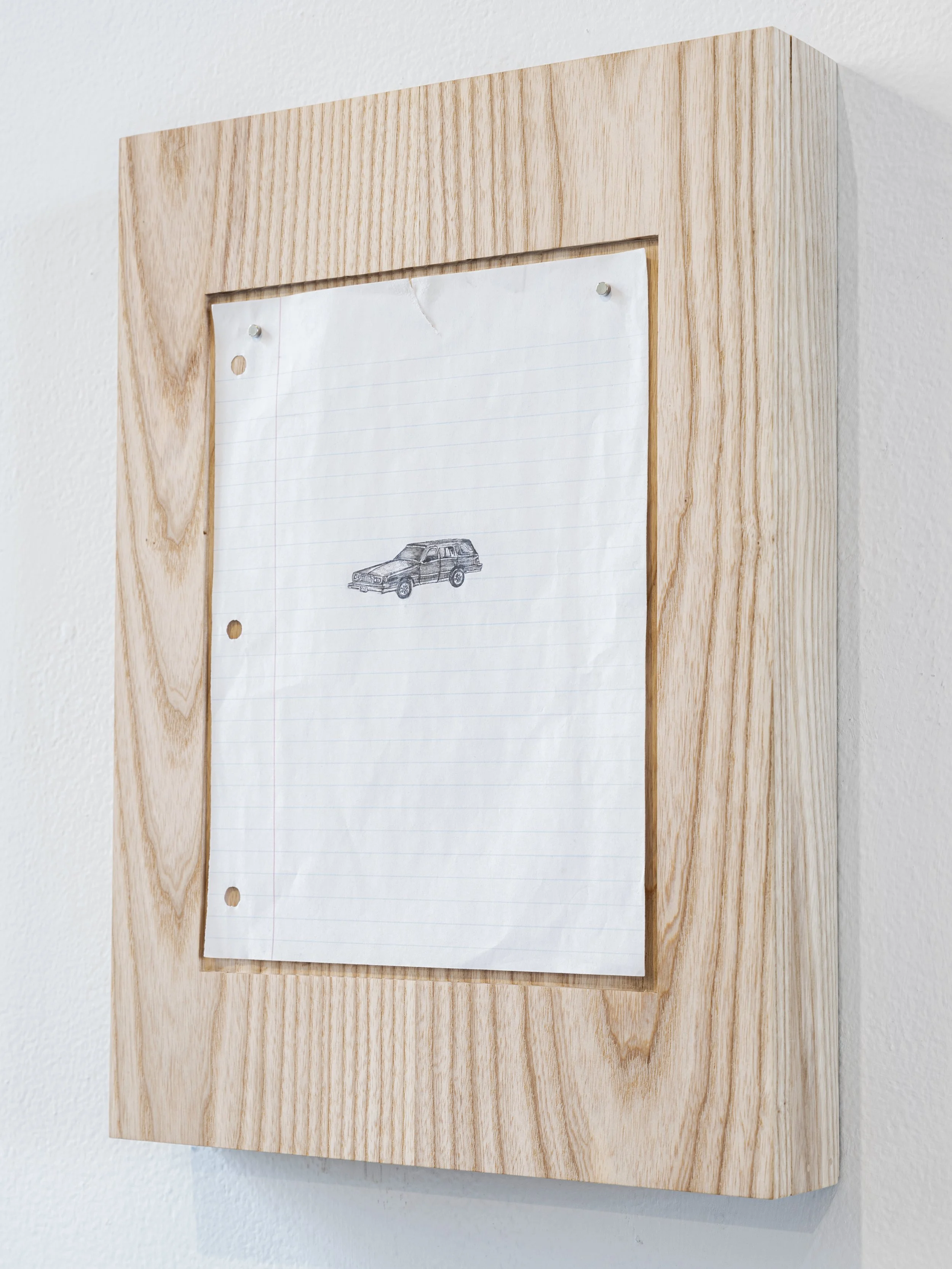
Ian Hersko, 1992 (2025). Photo via Jesse Ly.
During an October studio visit, Cincinnati artist Ian Hersko told me about his fascination with inhabiting one space while looking through a frame—a window or doorway—into another. Hersko described the allure of experiencing, at a low hum, confinement and the void simultaneously. I felt a version of this the first time I saw 1992 (2025), his pencil drawing of a hearse on notebook paper, which has become a sort of avatar for this exhibition. As we installed his sculptures in early April—in the same corner where he’d shown work years earlier—Hersko mentioned that he actually liked The Carnegie best when it was empty; it was more charged. I have been returning to this, intrigued that an object-maker would tune into memory through absence rather than talismans. Maybe this is why some spaces feel most effervescent before anything has filled them.
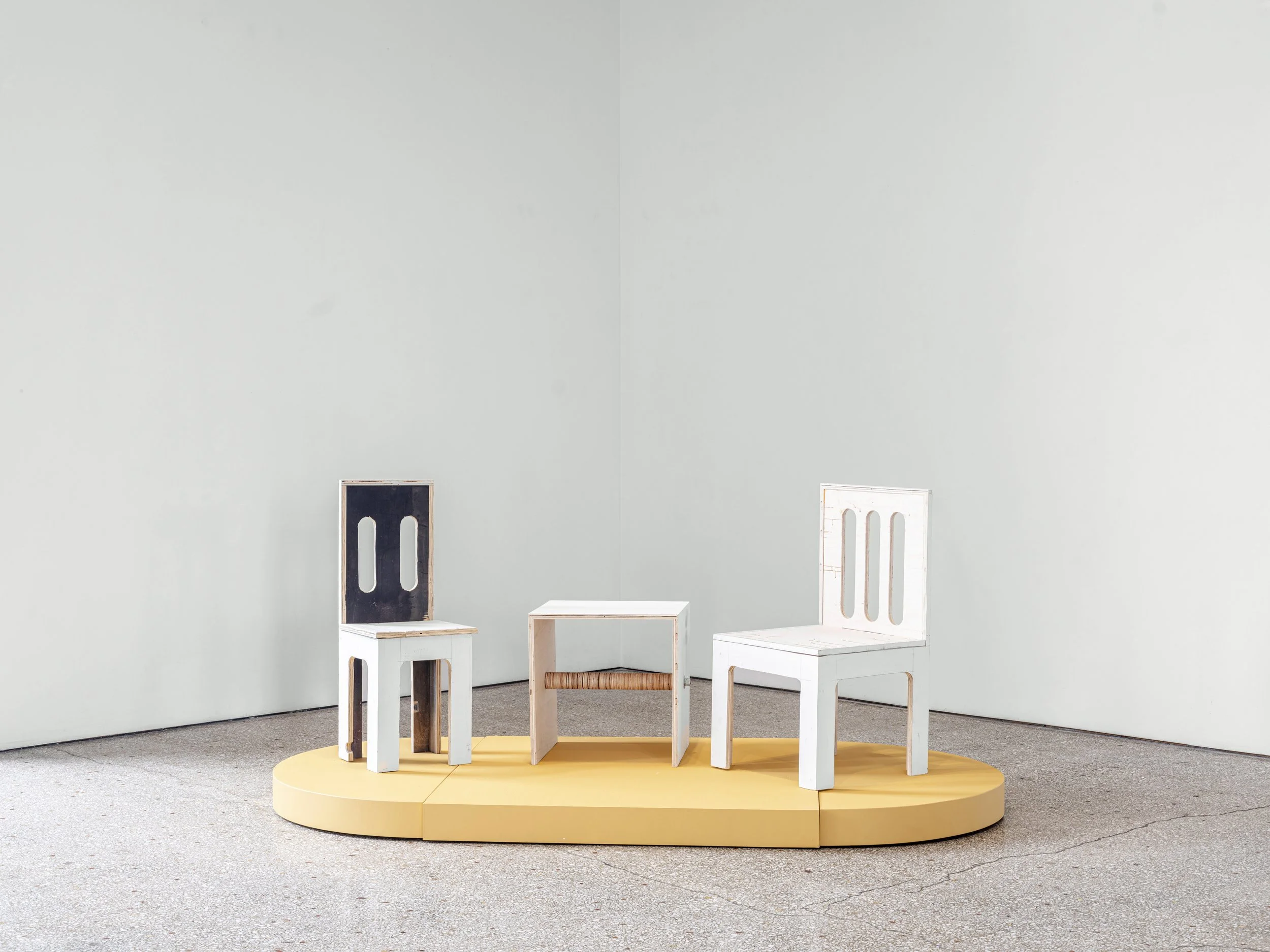
Justin Hodges, Gallery Furniture (2026). Photo via Jesse Ly.
Spatial austerity was fundamental to the Shakers, whose spartan meetinghouses and minimalist furniture treated simplicity as a condition for communal and spiritual life. These aesthetics captivated Justin Hodges, an artist and craftsperson in rural Georgia. When Hodges and I met in advance of The body, he showed me hand-drawn schematics for refashioning battered exhibition pedestals—often called “gallery furniture”—into unfussy, functional chairs. Over subsequent conversations, I learned that Hodges himself is as spiritually complex as his work (and just as deadpan, too). The Shakers, he explained, understood religious ecstasy as its own ornamentation, designing furniture in humble service to communal life and equitable labor.
Last October, Sso-Rha Kang and I drove from Cincinnati to Dayton to visit interdisciplinary photographer Jesse Ly’s home studio. I had first met Ly three years earlier at The Carnegie, where they have spent much of the past decade documenting exhibitions and developing an unusual familiarity with the building. Across one wall in Ly’s home studio, they’d plotted a constellation of instant photographs: portraits of friends and family, glimpses of living rooms, and shared meals laid out among flowers and tchotchkes. Nearby sat dozens of high-contrast photo prints mounted to panels and stacked like tiles. Ly had cut each from guard our gardens (2024), a marigold triptych originally installed in the windows of Dayton’s Blue House, printed so large that the film’s black-and-white grain flirted with the hazy edges of legibility.
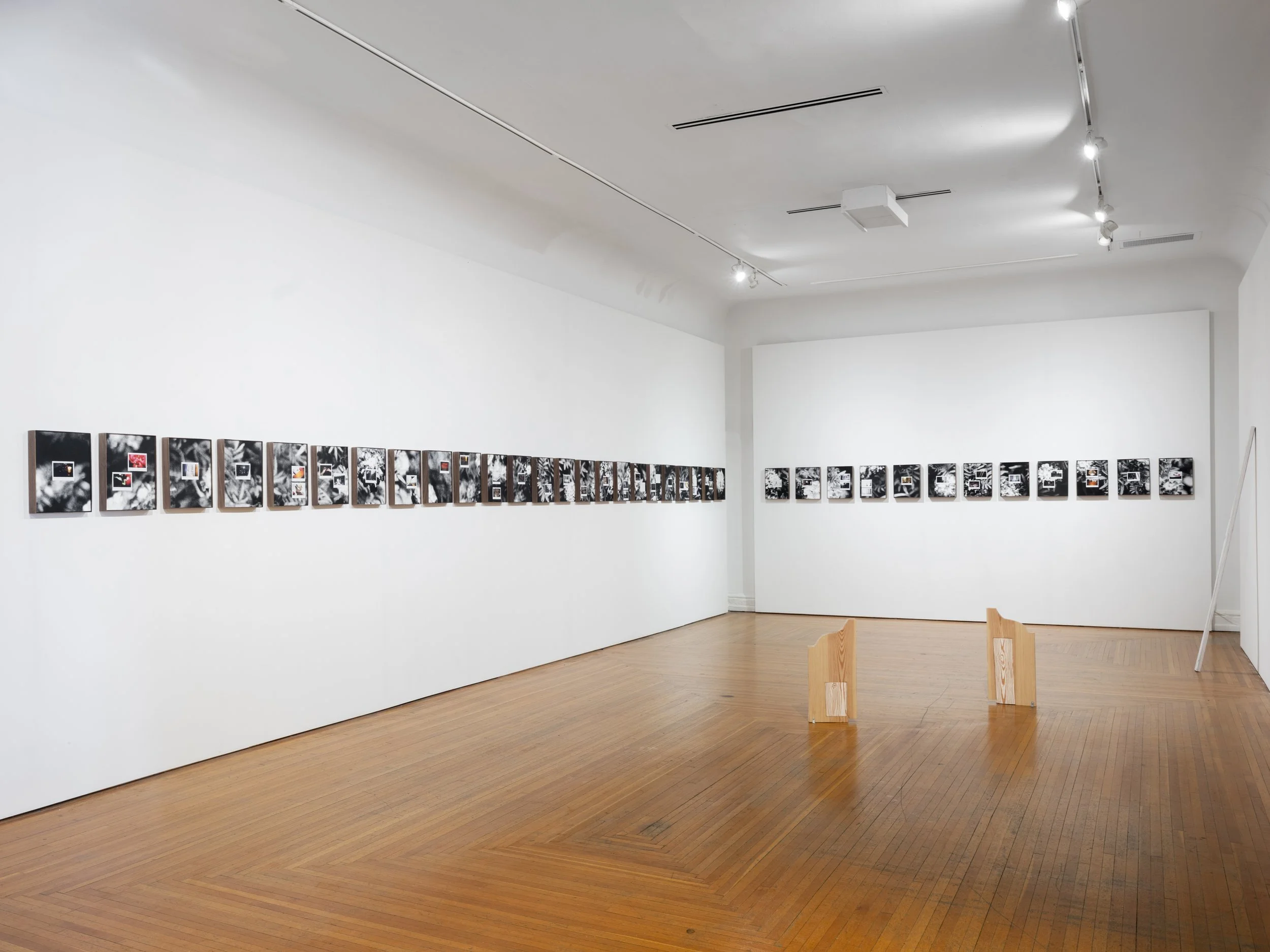
Jesse Ly, our gardens (2026), installation view. Photo via Jesse Ly.
Throughout the fall and winter, Ly affixed selections from that web of intimate photographs onto 36 marigold substrates, resurrecting the parceled floral image. Marigolds, Ly points out, often signify protection or remembrance. In a reciprocal gesture, they handbuilt wooden frames to safeguard and contain each repurposed piece. Such creative composting feels informed by Rust Belt home economics. Bridging two adjacent walls, the resulting work, our gardens (2026), reads as punk and tender in equal measure. Ly blends the high-contrast urgency of DIY fliers with the warmth of a family photo album (be that family of origin or chosen). Curtains, cabinets, and otherwise-common objects, captured at delightfully obtuse angles and embedded atop photocopy-like marigold fields, buzz with arcane vibrations.
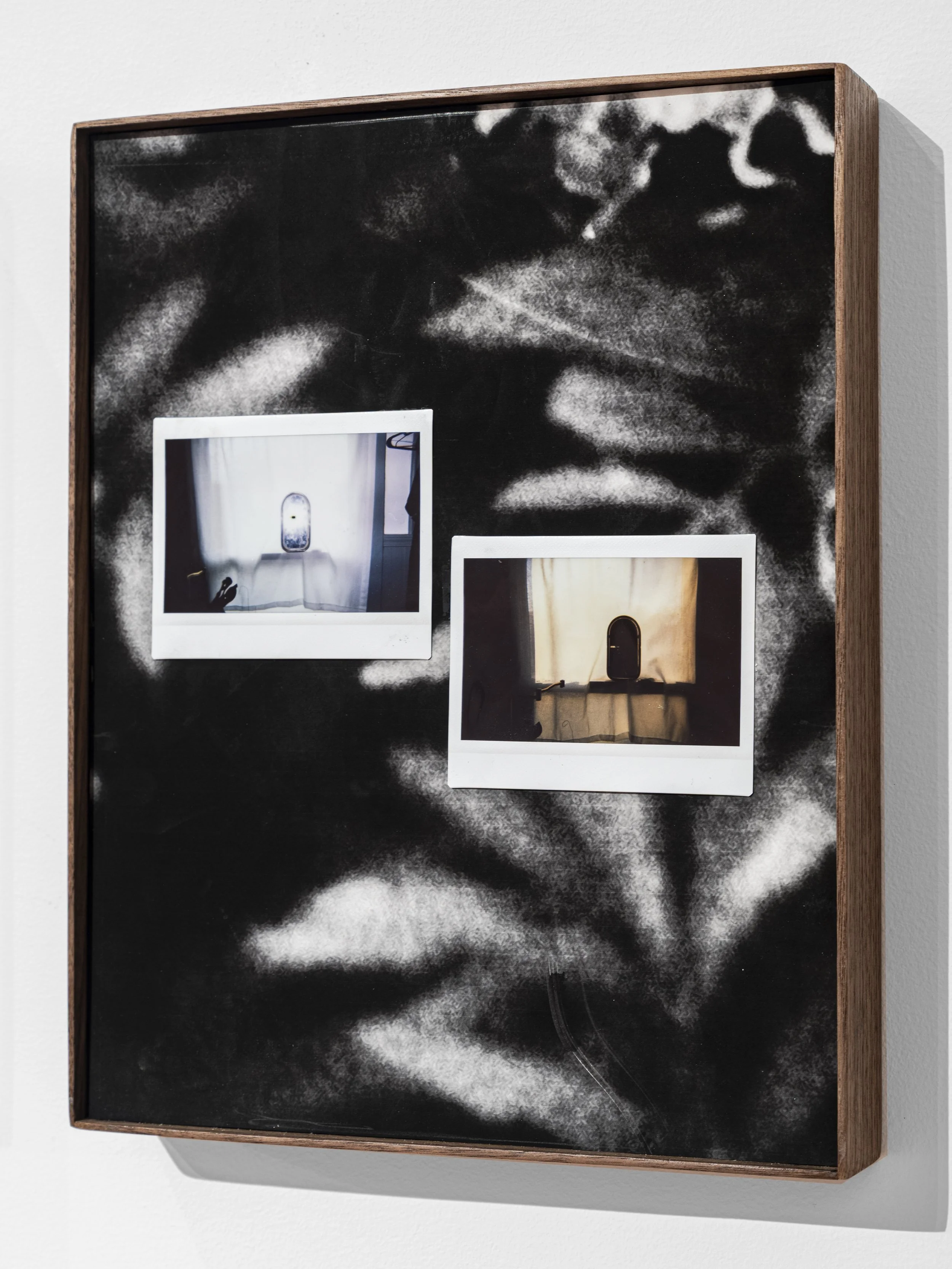
Jesse Ly, our gardens (2026), detail. Photo via Jesse Ly.
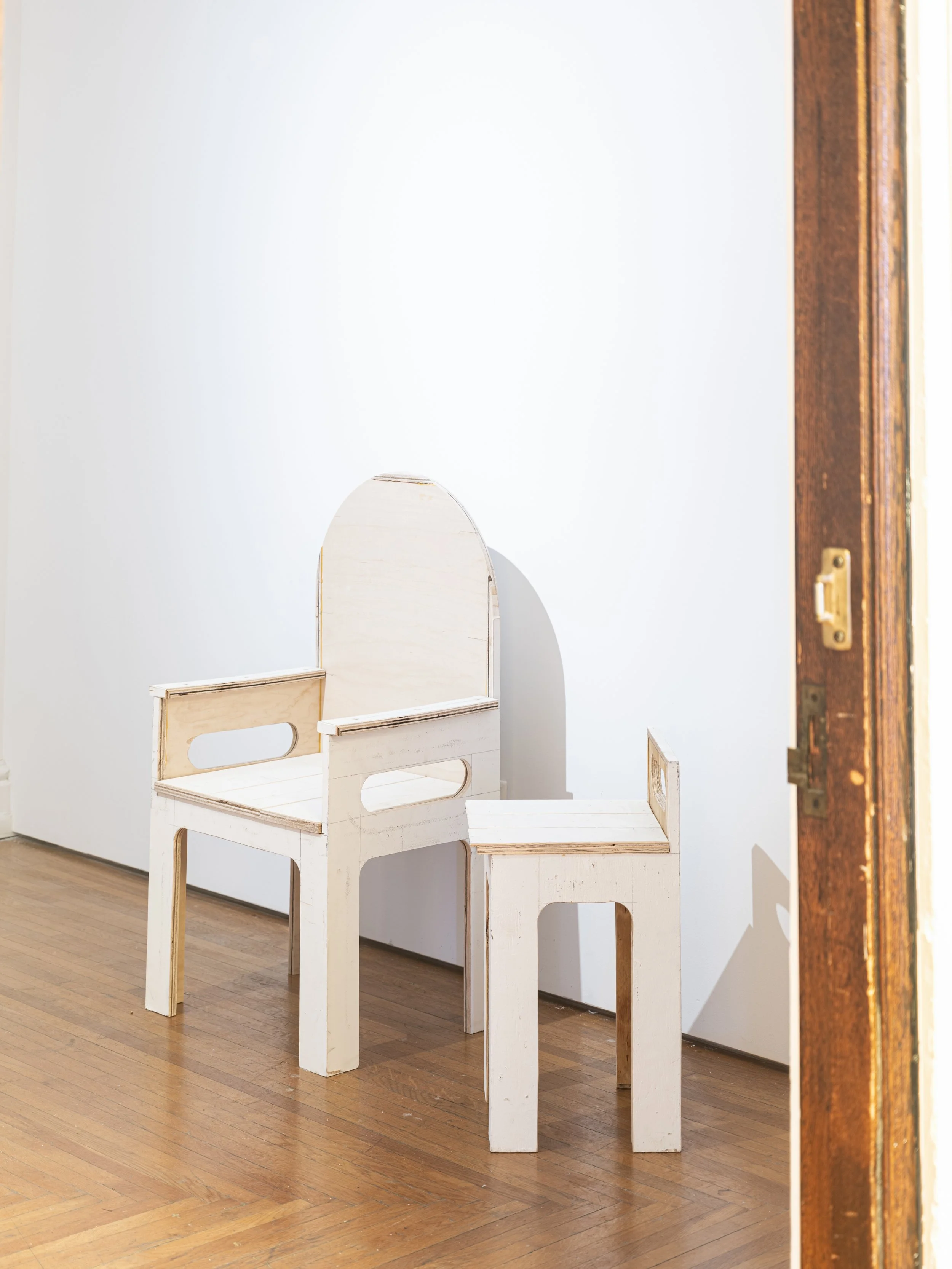
Justin Hodges, Gallery Furniture (2026), installation view. Photo via Jesse Ly.
The mystic resonances of everyday objects are pronounced in Gallery Furniture (2026), those barebones chairs that Justin Hodges built from disassembled pedestals, then elevated on a low oval riser. Visible carpenter’s pencil marks, glue drips, and knock-down hardware offer traces of the labor underlying institutional display. Hodges told me that he admires how careful work can sublimate “the prosaic into the profound.” Like Hodges, I see this ingenuity in Shaker meetinghouses, Appalachian scrap-quilting, and screened-in porches.
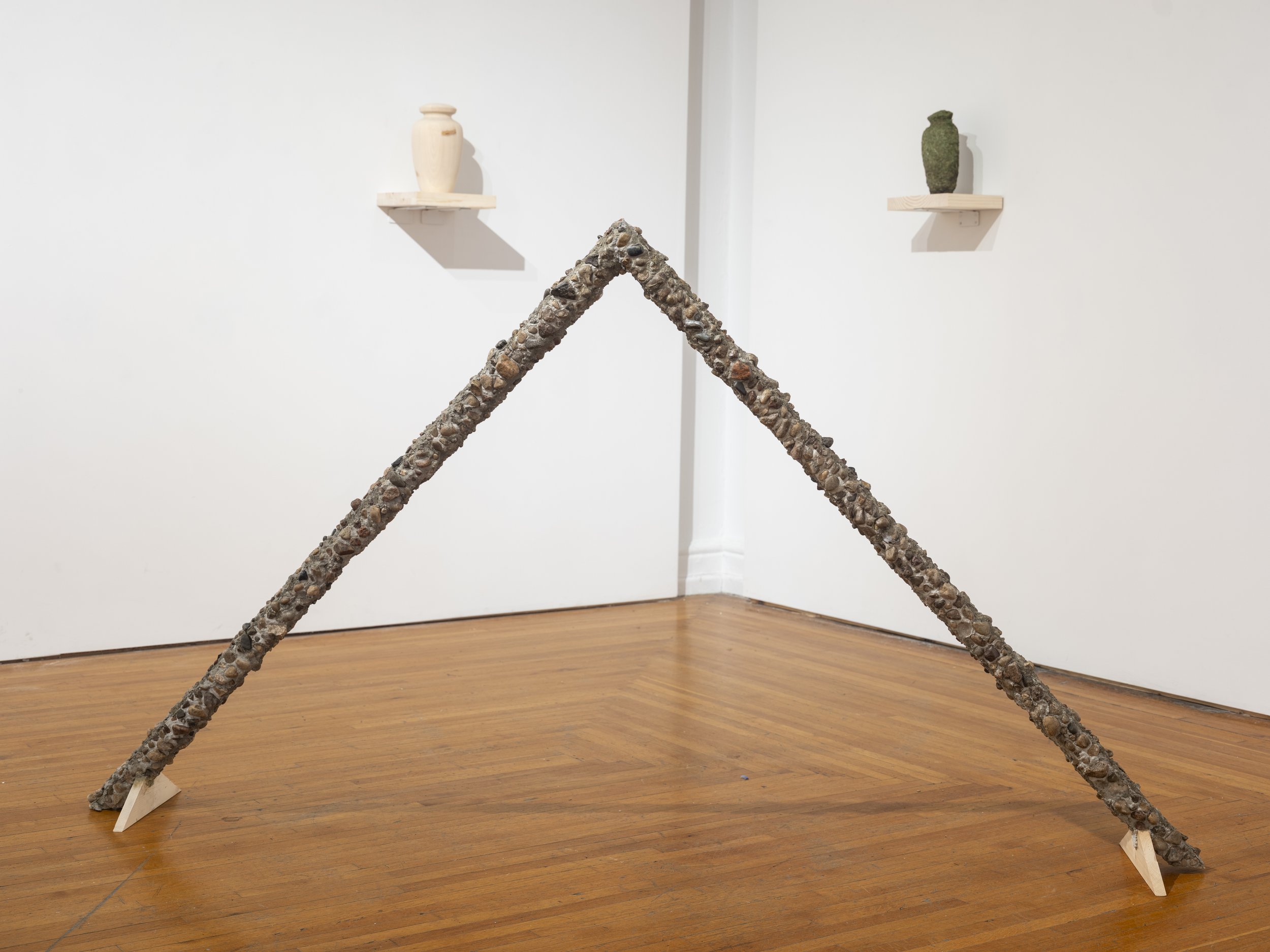
Ian Hersko, a blueprint doesn’t account for time (2025-2026), detail. Photo via Jesse Ly.
Ian Hersko’s sculptural installations borrow liberally from domestic vocabularies. Keys, blinds, doorknobs, shutters, and hinges recur throughout his work, often fashioned from or wrapped in grass, wood, ceramic, or stone. His arrangements are so deliberate that I regularly project onto them the logic of ritual objects—especially when they fuse directly into The Carnegie’s body. Yet Hersko has repeatedly suggested that memory adheres less to objects themselves than to the emptied spaces surrounding them.
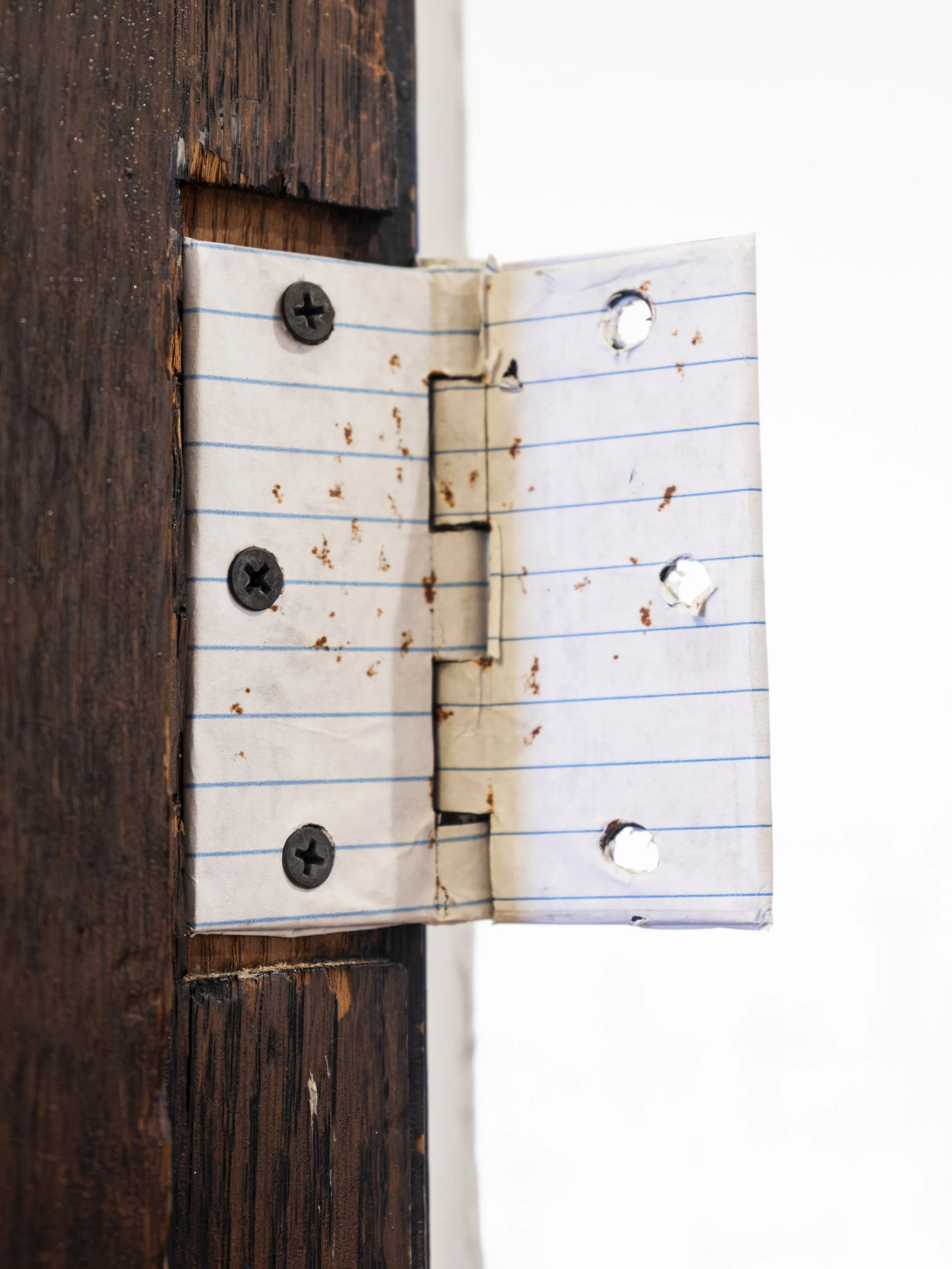
Ian Hersko, untitled (2026). Photo via Jesse Ly.
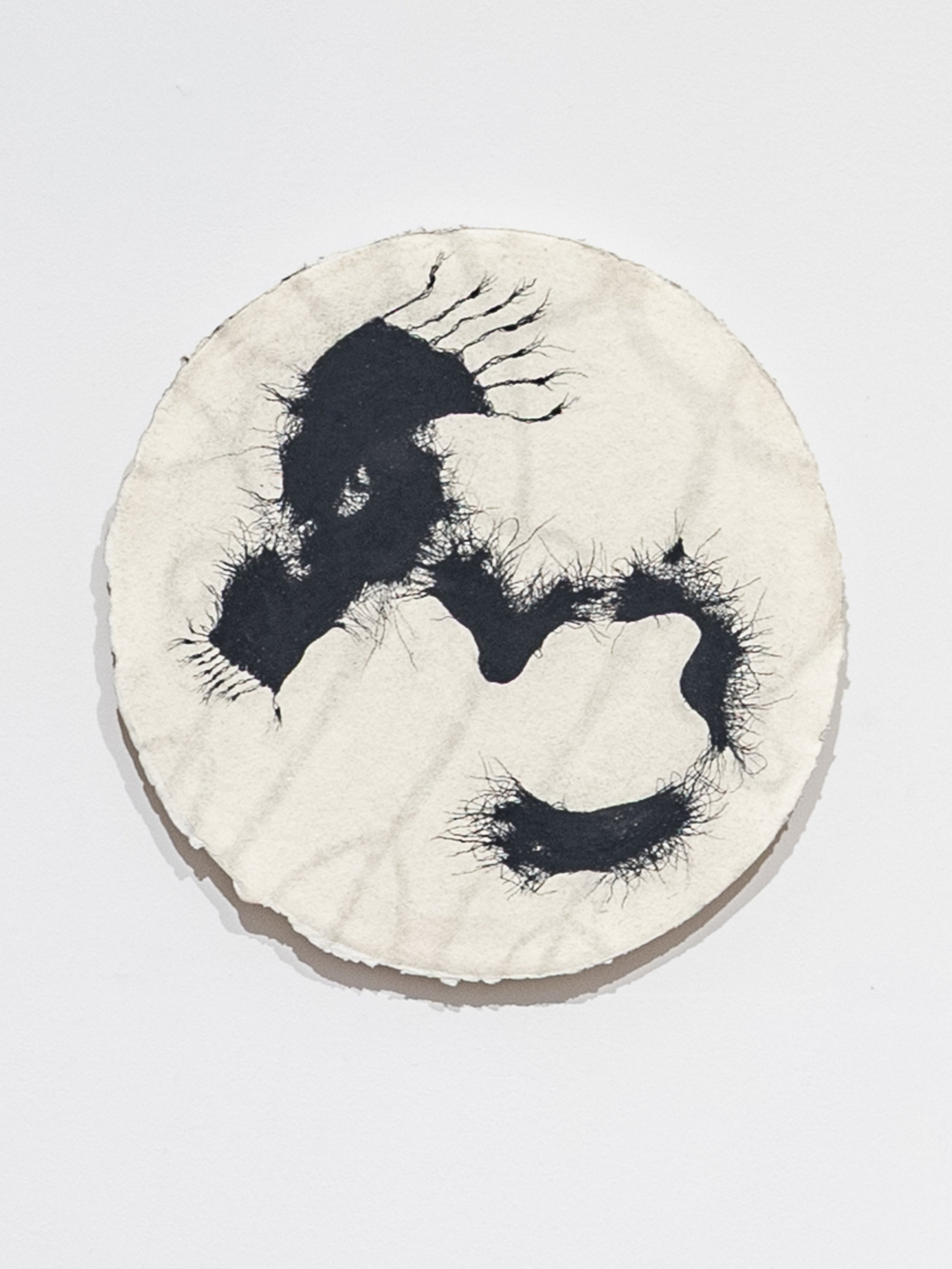
Natalie Lerner, Winter Lost (2026). Photo via Jesse Ly.
Brooklyn-based artist Natalie Lerner’s monochrome drawings evade quick recognition. From a distance, the circular works read as weather systems or the charred remains of campfires. Through prolonged attention, you’ll recognize jewelry, fibers, leaves, and seashells. I’m drawn to something that Lerner’s formal approach leaves pleasantly unresolved: are these haunted objects, or objects made spectral through rendering? Her layered marks accumulate slowly, not unlike sediment. Looking at Lerner’s works recalls the peculiarly rewarding sensation of entering a dim room and waiting for vision to adjust; ghostly fields gradually gain contours, then settle into familiar forms.
By April, I had started to suspect that the atmosphere developing between these artists and The Carnegie belonged to a lineage older than contemporary art. There was a moodiness, to be sure, though it felt neither theatrical nor consoling. I had quietly obsessed over the show’s relationship to the abject—the uncanny territory between subject and object, where horror and slapstick sometimes thrive—but I don’t think any of the artists would describe their work as overtly dark or comical. Each instead articulates residues and afterlives through a weird translucence I’ve come to think of as a Bright Gothic.
“In Sanskrit,” Sowmya Somanath told me, discussing her sound composition, “the word rāga means to tint, or dye, so there is a deep emphasis on the sonic color and mood that each rāga brings to the atmosphere.” Sound is invisible but somatic. Before the exhibition opened, I sat in The Carnegie listening to Somanath’s piece and to the building echoing it back, thinking about how people sometimes describe sensing ghosts without seeing them, as if attuned to percolations between energetic planes.
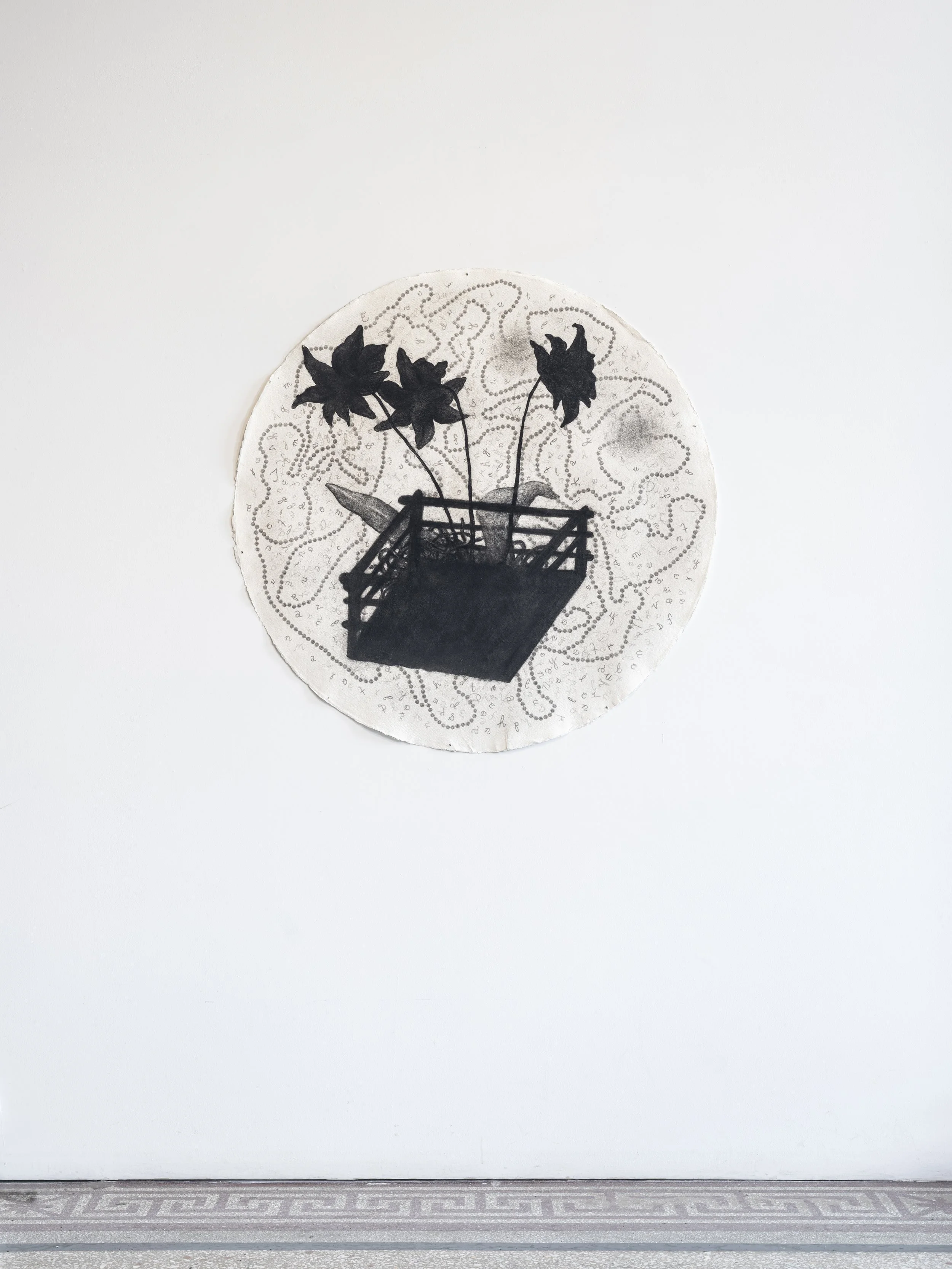
Natalie Lerner, Elder Language (2026). Photo via Jesse Ly.
Natalie Lerner’s Elder Language (2026), located in the airy main gallery, buries us beneath what appears to be a floating flower bed and invites us to decompose into nutrients for orchids blooming overhead. Illustrated in heavy charcoal, the flowers are anonymized silhouettes—Lerner often depicts the shadow of the thing, rather than the thing itself. Her orchids sway against an open sky, animated by Somanath’s rāga seeping over the rotunda. Around Lerner’s marks, hand-spun Khadi paper glows brightly.
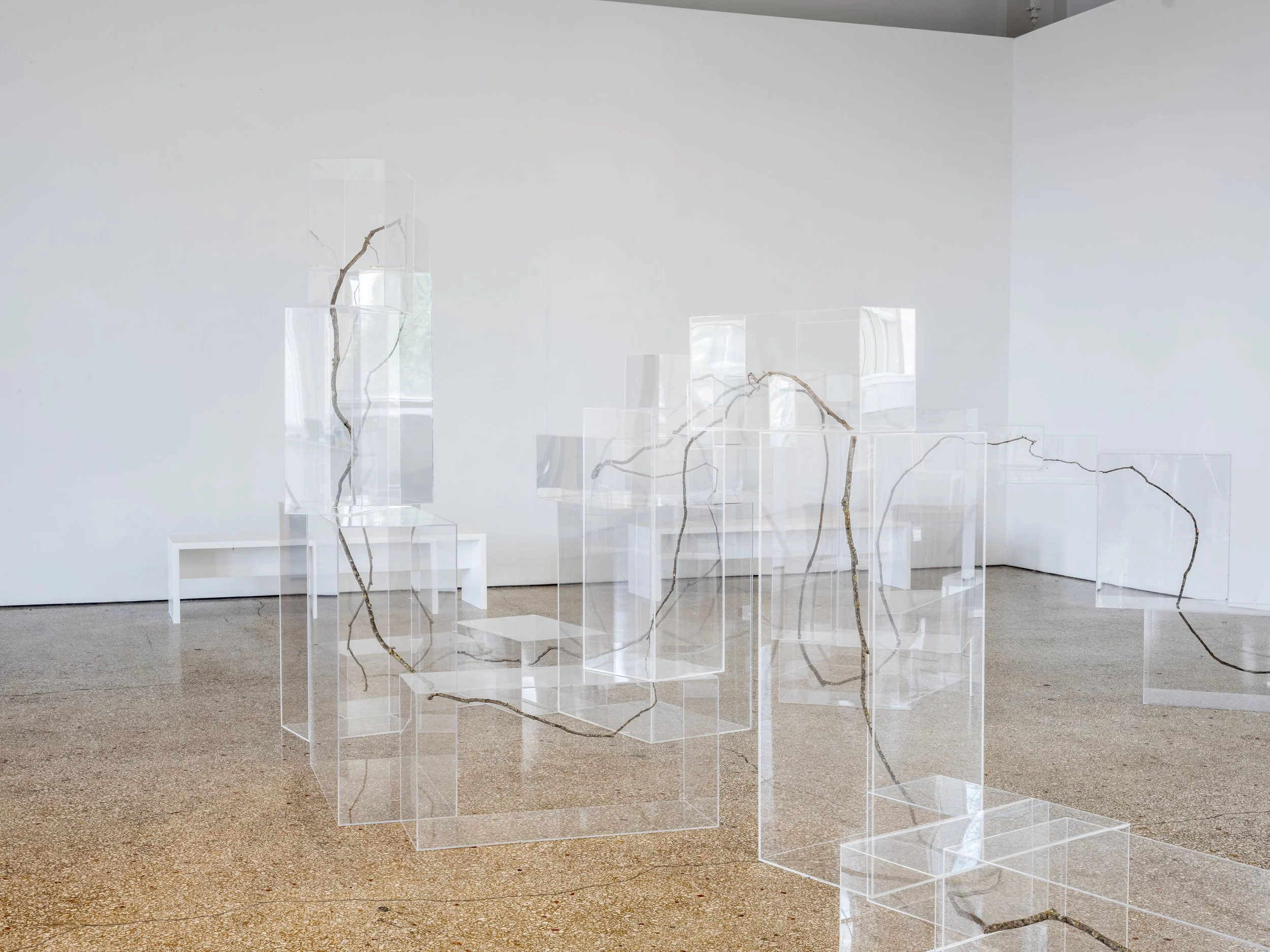
Manami Ishimura, En/円 #2 (2022), detail. Photo via Jesse Ly.
Nearby, Manami Ishimura’s endless branch, suspended in transparent geometries, catches light from The Carnegie’s dome, then seems to share it with Lerner’s orchid, Hersko’s hearse, and Hodges’s understated furniture. Somanath’s rāga finds the works, too, tinting the atmosphere around them. Above, Hersko’s household relics and Jesse Ly’s matrix of marigolds watch over the building with the warmth of familiar objects. Slowly, but perceptibly, a Bright Gothic shines in the strange luminosities that gather around objects made attentive to death.
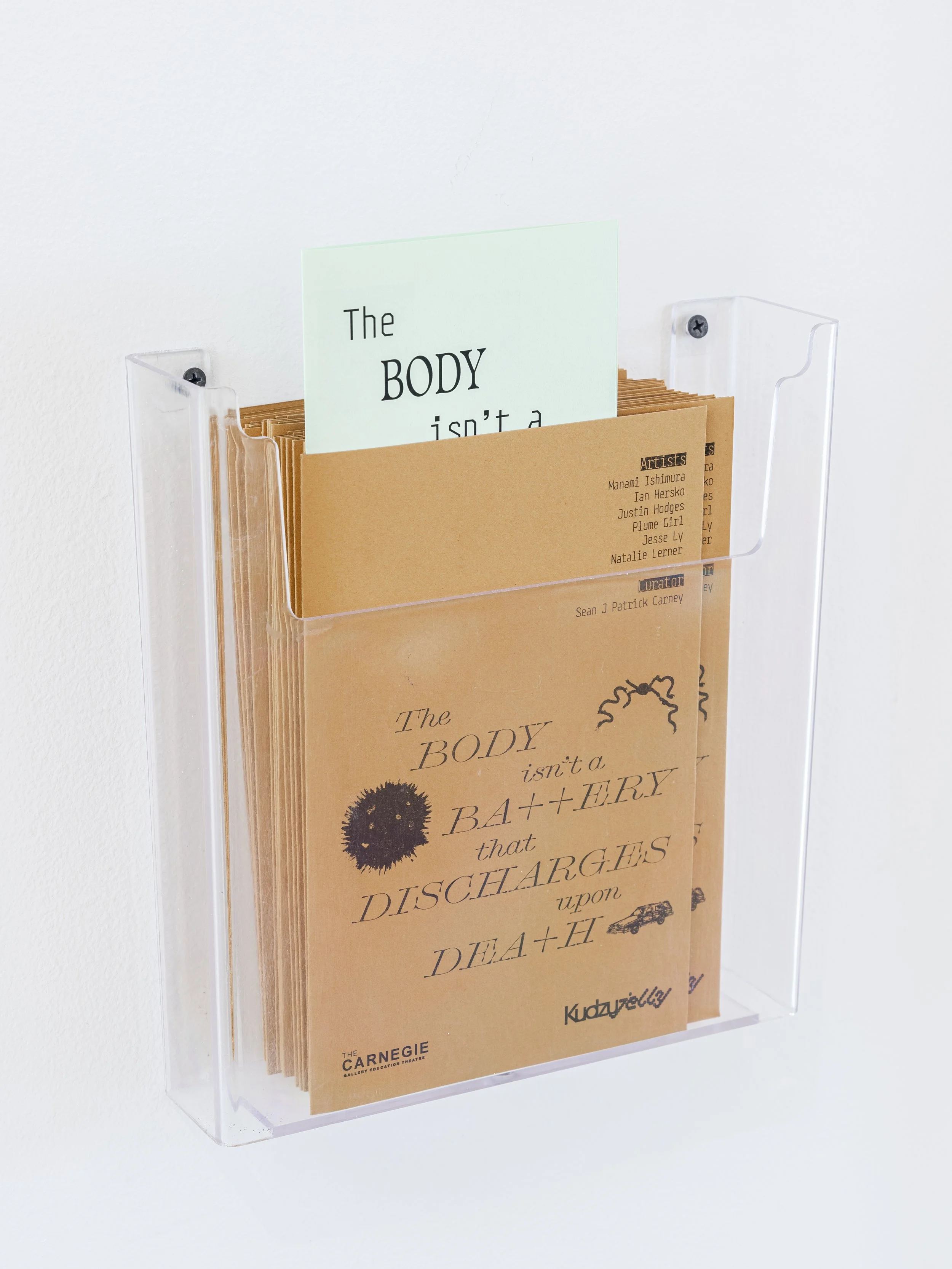
Gallery guide and map, designed by El Bruner. Photo via Jesse Ly.
The body isn’t a battery that discharges upon death has clarified several things for me, a writer who is also an artist and composer, though less frequently a curator. I have become more attentive to the pace at which artworks unfold. I remain aesthetically attracted to work that would translate well on a Xerox machine, but I’m more interested in spending time with images, objects, and sounds that reveal themselves slowly. Art that sustains my attention often has a drone about it and seems comfortable steeping in grief. Autumn and winter were useful seasons for this kind of looking.
The artists and I are fortunate to count among us photographer Jesse Ly, whose years-long familiarity with The Carnegie’s eccentric layout—designed for library stacks and civic gathering rather than contemporary art—resulted in documentation images that collaborate with the building. Months after the opening, Ly’s thoughtful framing continues to draw out narratives between objects, architecture, and light that I hadn’t previously noticed. I suspect this is partly what happens when art is shown in a building once filled to the brim with books.